CHARLIE CHAPLIN: THE GOLD RUSH

Ensemble 360 & George Morton

Crucible Theatre, Sheffield
Monday 19 October 2026, 7.15pm

Tickets:
£23
£14 UC, PIP & DLA
£5 Students & Under 35s 

Tickets go on sale at 10.00am on 24 March

ON PRIORITY SALE TO FRIENDS OF MUSIC IN THE ROUND FROM TUESDAY 24 MARCH

ON GENERAL SALE FROM TUESDAY 31 MARCH

Silent film with live music
CHAPLIN (arr. Timothy Brock) The Gold Rush (85’)

“A delightful blend of slapstick humour, poignant emotion and social commentary” Rotten Tomatoes, 98%

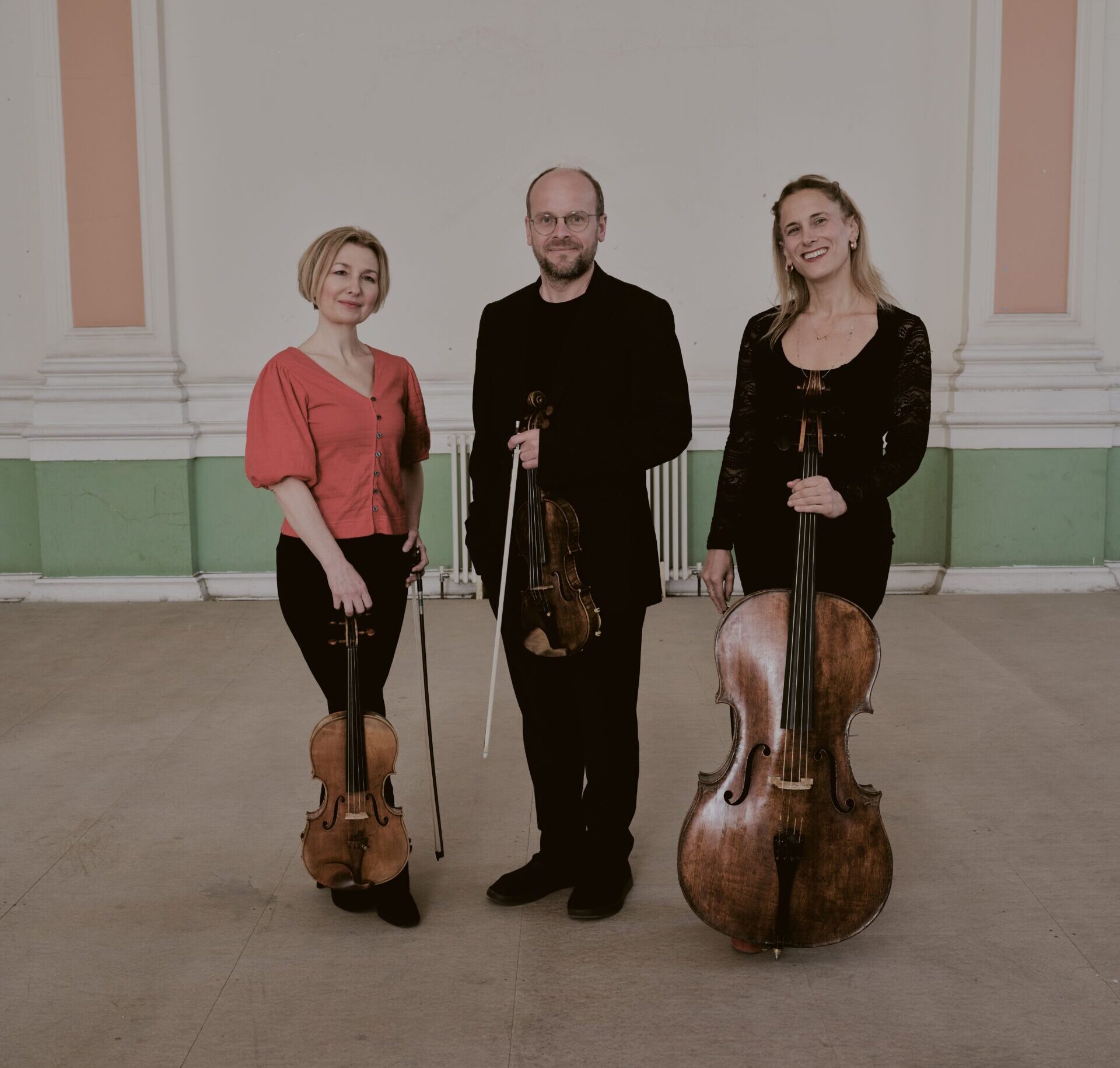
Charlie Chaplin’s most ambitious and successful silent comedy is presented in a gorgeous restoration with Chaplin’s own Academy Award-nominated score performed live by Ensemble 360 and friends, conducted by George Morton.

The Gold Rush follows two hapless prospectors in search of fortune during the Klondike gold rush. It features everything that made Chaplin’s name across the globe: acrobatic slapstick, poignant romance, high-octane dance and dazzling stunts. The iconic film combines riotous comedy and piercing social insight as Chaplin’s most celebrated on-screen character “the little tramp” walks the tightrope between humour and tragedy.

Packed with some of the most memorable moments from Chaplin’s films, including a dancing dinner rolls routine and a meal of a boiled shoe, combined with unprecedented technical marvels such as a cabin teetering on a cliff edge, this timeless classic was, in Chaplin’s own words, “the picture that I want to be remembered by”.

Following two previous sold-out concerts featuring live music with silent film, Saint Saëns’ L’assasinat de duc de Guise (1908) and Edmund Meisel’s Battleship Potemkin (1925), Ensemble 360 and George Morton return for their most ambitious and large-scale collaboration yet.

THE ART OF STORYTELLING

Nicholas Jubber

Crucible Playhouse, Sheffield
Wednesday 20 May 2026, 11.00am

Tickets:
£10
£7 UC, PIP & DLA
£5 Students & Under 35s

Book Tickets

Launching a day of music inspired by myths, legends and fairytales, author and storyteller, Nicholas Jubber (The Fairy Tellers, 2022 and Monsterland, 2025), explores the enduring appeal of enchanting folk tales, often laced with a monstrous darkness.  

Join him for a fascinating morning of illustrated storytelling, as he delves deeper into some of these wondrously strange traditional tales and their origins. 

Save 20% when you book for 10 or more Music in the Round Sheffield concerts in one transaction. 
Save 10% when you book for 5 or more Music in the Round Sheffield concerts in one transaction. Find out more. 

“Jubber masterfully uses these legends as jumping-off points for meditations on the longevity of such stories and on what they mean for society … Fans of folk horror will love this.”

Publishers Weekly

LA VOIX HUMAINE

Claire Booth & Christopher Glynn

Crucible Playhouse, Sheffield
Tuesday 19 May 2026, 7.00pm

Tickets:
£23
£14 UC, PIP & DLA
£5 Students & Under 35s

Book Tickets
Soprano Claire Booth and pianist Christopher Glynn

POULENC
   La Dame de Monte Carlo (7’)  
   Toréador (2’)
   Corcardes (6’)
DUREY Trois Chansons Basques (4’)
AURIC Huit Poèmes de Jean Cocteau (19’)
MILHAUD Trois Poèmes de Jean Cocteau Op.59 (3’)
POULENC La Voix Humaine (40’) [semi-staged] 

A voice. A telephone. A fractured love affair. 

Claire Booth is joined by GRAMMY-winning pianist Christopher Glynn to present Poulenc’s searing operatic melodrama. Take a seat at the heart of the action to absorb this most intimate operatic setting of Jean Cocteau’s ground-breaking play, eavesdropping on a life in the balance. 

Opening with a bravura tour through a variety of songs influenced by Cocteau’s poetry, you are invited to a recital which becomes an opera like no other. 

Save 20% when you book for 10 or more Music in the Round Sheffield concerts in one transaction. 
Save 10% when you book for 5 or more Music in the Round Sheffield concerts in one transaction. Find out more. 


“Booth’s expressiveness [is] so intense, the colours of the voice so beautiful… [she] makes it wholly unforgettable.”

The Guardian

PLAYING PATTERNS: PERCUSSION & STRINGS

Colin Currie & Ensemble 360

Upper Chapel, Sheffield
Saturday 14 February 2026, 7.00pm

Tickets:
£23
£14 UC, PIP & DLA
£5 Students & Under 35s 

Past Event
Colin Currie playing percussion

KEVIN VOLANS Asanga (7’)
DAVID HORNE Pulse (12’)
ANDY AKIHO Spiel (7’)
BRYCE DESSNER Tromp Miniature (7’)
ROLF WALLIN Realismos Magicos (10’)
ANDY AKIHO Aluminous (8’)
ROBERT HONSTEIN Continuous Interior (18’)
SAM ADAMS Sundial (16’) 

Virtuoso percussionist Colin Currie, described by Steve Reich as “one of the greatest musicians in the world today” and by Gramophone as “at the summit of percussion performance”, is joined by members of Ensemble 360 for this concert of life-affirming music for percussion and string quartet. Highlights include ‘Tromp Miniature’, a hypnotic, meditative marimba solo by GRAMMY-winning composer Bryce Dessner (also guitarist with rock band, The National), and Andy Akiho’s ‘Aluminous’, in which minimalist percussion loops are underscored by ravishingly expressive strings.  

Part of our Percussion, Pattern & Primes weekend. 

Save 20% when you book for 10 or more Music in the Round Sheffield concerts in one transaction. 
Save 10% when you book for 5 or more Music in the Round Sheffield concerts in one transaction. Find out more. 

VOLANS Kevin, Asanga

The Sanskrit title Asanga means ‘freedom from attachment’ I wrote the piece as a gift for Robyn Schulkowsky on the death of her father. It was written with no conscious techniques or concept. The first performance was in Stockholm in 1998.

© Kevin Volans

HONSTEIN Robert, Continuous Interior

Imagine walking through a shopping mall, a large warehouse, an airport terminal, Ikea. These are spaces with seemingly no end or beginning. They unfold in one unbroken path, creating a sense of limitless interior within a bounded, enclosed space. As you walk details change, but the feeling of being within the same, vast, open space remains. This is a very modern feeling. In thinking about this, I felt resonance with the idea of moving through a musical space. I often experience music similarly: contained by the form, yet also a sense of being within one stretch of a long, continuous stream of musical thought. For my piece, Continuous Interior, I imagined a stroll through this kind of limitless space, with each movement being a stop along the way. On this walk we experience three distinct places. The first movement draws out waves of rocking strings against a ringing vibraphone texture. Long lines emerge as echoes of accented  ibraphone tones float plaintively above the undulating string texture. The second movement is slow and lyrical, somewhat wistful yet also mysterious and dreamy. The final movement pushes forward with a churning, dance-like energy, reveling in the vibraphone sound against the clock-like, mechanical pulsation of the string quartet. The piece ends, certainly, but perhaps it could also go on and on.

© Robert Honstein

ADAMS Samuel, Sundial

Sundial, scored for string quartet and percussion, engages with the tradition of works for string quartet ‘plus one’—works like W.A. Mozart’s Clarinet Quintet, Franz Schubert’s Cello Quintet D956, not to mention the numerous piano quintets.

Like much of my recent music, this work explores ideas of resonance and brightness. I treat the five voices a little bit like a sustain pedal on a piano. In many passages, the strings elongate the percussion sounds and vice versa, so much so that the instruments on stage might sound like one polyphonic organism arranged not in a hierarchy but in a symbiotic web in which the roles of the instruments are balanced and consistently in flux.

The form possesses a shape similar to its namesake: the five musicians project a series of musical shadows that, unbroken, reveal the passage of time in the shape of an inverted arc. The work is made of two distinct types of music: rocking music—fast, pulsing dual harmonies that sway back and forth—and cyclic music—slightly off-kilter contrapuntal figurations that blossom over long stretches of time. Only in the final minutes of the work does the music break out of these two types of material, ascending to a ringing, intensely bright conclusion.

Although the piece is not explicitly autobiographical, I wrote it during a period that saw a number of immense personal changes, not the least of which was the birth of my first child. The almost blinding joy of having him around has been a counterbalance to the bizarre, shadowy last two years. To me, this duality is the essence of the piece: it is at once a rippling shadow and a meridian sun.

© Samuel Adams

“A five-star percussive performance… Almost as much drama and tension came from seeing what was happening on stage as from the sounds. ”

The Times

FRACTALS AND FUGUES: MATHEMATICS IN MUSIC

Prof Sarah Hart

Channing Hall, Sheffield
Saturday 14 February 2026, 2.00pm

Tickets:
£5 / free for ticket-holders for any of the Percussion, Pattern & Primes concerts, though booking is required

Past Event

What role do magic squares, fractals and probability theory play in music composition? How does pattern underpin a Bach fugue? And why is the mathematics of Pythagoras key to understanding music’s emotional power? Professor Sarah Hart, Professor Emerita of Mathematics at Birkbeck, University of London, and Gresham Professor of Geometry, answers these questions and more as she explores the connections between music and mathematics. Author of ‘Once Upon a Prime’, she is sure to shine an entertaining light onto the intriguing links between numbers and notes. 

Part of our Percussion, Pattern & Primes weekend. 

RELAXED CONCERT: PETER AND THE WOLF

Claire Booth, Ensemble 360 & Nicholas Jubber

Crucible Playhouse, Sheffield
Wednesday 20 May 2026, 2.00pm

Tickets:
£5 / carers free

Book Tickets
Ensemble 360 musicians

RAVEL (arr. Strivens) Shéhérazade (20’)  
PROKOFIEV Peter and the Wolf (30)  
 
For this ‘Relaxed’ concert of storytelling music featuring Prokofiev’s beloved musical folk story, doors will be left open, lights raised, a break-out space provided, and there will be less emphasis on the audience being quiet during the performance.  
 
People with an Autism Spectrum, sensory or communication disorder or learning disability, those with age-related impairments and parents/carers with babies are all especially welcome.

PETER AND THE WOLF & OTHER STORIES

Claire Booth, Ensemble 360 & Nicholas Jubber

Crucible Playhouse, Sheffield
Wednesday 20 May 2026, 5.00pm

Tickets:
£23
£14 UC, PIP & DLA
£5 Students & Under 35s

Book Tickets
Ensemble 360 musicians

DEBUSSY Danse Sacrée et Profane (10’) 
RAVEL (arr. Strivens) Shéhérazade (20’)
DEBUSSY Trio for Flute, Viola and Harp (16’) 
PROKOFIEV ‘Peter and the Wolf’ (30’)

Timeless tales of far-off adventure and daring triumphs have long inspired composers to bring stories to life through music.  

Prokofiev’s beloved symphonic tale, ‘Peter and the Wolf’, delights audiences of all ages, with its story of the fearless Peter and his encounter with a ferocious wolf, narrated here by storyteller and author Nicholas Jubber.  

Ravel’s ‘Shéhérazade’ (in an intimate chamber arrangement) evocatively conjures an ancient wonderland of fairytales and lovers through captivating melodies.  

Music for harp and strings by Debussy completes this charming programme. 

Save 20% when you book for 10 or more Music in the Round Sheffield concerts in one transaction. 
Save 10% when you book for 5 or more Music in the Round Sheffield concerts in one transaction. Find out more. 

DEBUSSY Claude, Sonata for Flute, Viola and Harp

Pastorale 
Interlude 
Finale 
 

Debussy originally planned a set of six instrumental sonatas but only lived to complete three of them. The first was for cello and piano (August 1915), the third for violin and piano (finished in April 1917), but in terms of instrumentation the most unusual of the three was the second sonata, scored for flute, viola and harp. Debussy completed it in October 1915 at the end of a productive summer spent on the Normandy coast, and the first performance took place on 7 November in Boston, Massachusetts. Debussy heard the work for the first time a month later, on 10 December, when it was given in Paris at one of the concerts put on by his publisher Durand. The viola part was played on that occasion by Darius Milhaud. 


The work was inspired by the clarity and elegant proportions of French Baroque music, but the musical language is very much of its own time. The ethereal Pastorale is based on fragmentary but distinctive musical ideas, while the central Interlude, delicately coloured in places by whole-tone harmonies, is marked ‘Tempo di minuetto’ – the most obvious nod to the Baroque. The finale is directed to be played ‘Allegro moderato ma risoluto’ and the muscular quality of the ideas presented at the start dominate the movement. There’s a brief recollection of the ‘Pastorale’ before a short, exultant coda. 


© Nigel Simeone 

BIRD TUNES: MIRANDA RUTTER, SAM SWEENEY & ROB HARBRON

Miranda Rutter, Sam Sweeney & Rob Harbron

Crucible Playhouse, Sheffield
Wednesday 20 May 2026, 8.00pm

Tickets:
£23
£14 UC, PIP & DLA
£5 Students & Under 35s

Book Tickets

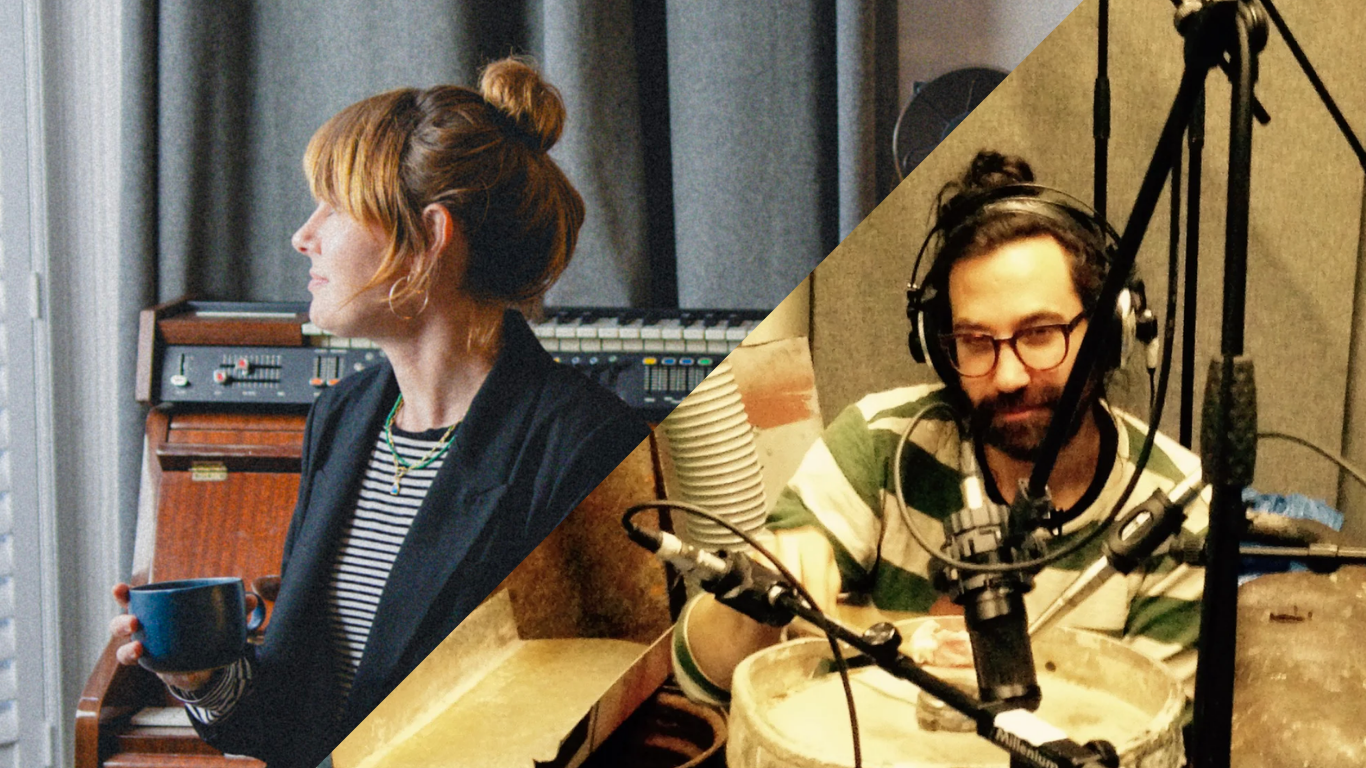
Three of the finest folk musicians working today perform a new suite of tunes, crafted from fragments of birdsong recorded on woodland walks by the brilliant fiddle player and composer Miranda Rutter.  

Performed with “concertina wizard” (The Guardian) Rob Harbron and “the fiddler with the golden ear” (BBC Radio 3) Sam Sweeney, as well as field recordings of this most elemental form of music, it is a love-song to avian beauty and a timely reminder of the struggles faced by migrating birds. 

“I follow in a long line of musicians from prehistory who’ve been inspired by birdsong – it being such an enchanting wonder of the world!  For me, listening deeper, discovering intricacies and learning to recognise birds by their song has made me care even more about birds and their habitat. As so many species are struggling in this rapidly changing, human-dominated world, I hope that my contribution can help spark intrigue, spread awareness and in turn, generate action to turn the tide of fortune for these awe-inspiring creatures.”
Miranda Rutter 

“Bird Tunes is, very simply, utterly beautiful. A glorious bringing together of field recordings, birdsong and three incredible musicians. Nature and music in perfect harmony.”

Tradfolk

BEETHOVEN & FRIENDS

Consone Quartet

Crucible Playhouse, Sheffield
Thursday 21 May 2026, 7.00pm

Tickets:
£17
£10 UC, PIP & DLA
£5 Students & Under 35s

Book Tickets
Musicians from the Consone Quartet with their instruments

Programme includes music by:
BEETHOVEN, CHERUBINI, CZERNY, HAYDN, FANNY HENSEL-MENDELSSOHN, HUMMEL, MAYER, FELIX MENDELSSOHN, REICHA & RIES

Our Visiting Quartet presents music by Beethoven set amongst composers who influenced or were in close contact with the musical genius.  

Dr Katy Hamilton, one of the most sought-after speakers and writers on music, introduces this evening’s music. Her insights will help to bring Beethoven’s creative world vividly to life through the selection of personal discoveries, hidden gems and celebrated musical moments, interspersed with historical detail and storytelling.

This promises to be a captivating concert by one of the most rigorous and approachable quartets playing today, who have already been taken to heart by Sheffield audiences. 

Supported by the Continuo Foundation

Tickets: £17 / £10 / £5 

Save 20% when you book for 10 or more Music in the Round Sheffield concerts in one transaction. 
Save 10% when you book for 5 or more Music in the Round Sheffield concerts in one transaction. Find out more. 

KAFKA FRAGMENTS

Claire Booth & Tamsin Waley-Cohen

Crucible Playhouse, Sheffield
Thursday 21 May 2026, 9.00pm

Tickets:
£17
£10 UC, PIP & DLA
£5 Students & Under 35s

Book Tickets

KURTÁG Kafka Fragments (60’)  

Comprising 40 short excerpts from Kafka’s writings, diaries, and letters – often heartfelt and confessional – Kurtág’s Kafka Fragments is a work of sparse, lyrical beauty. Scored for violin and soprano, this wide-ranging work encapsulates the scale of the human experience, from dreamlike surrealism to moments of sardonic humour and lyrical beauty.  

Save 20% when you book for 10 or more Music in the Round Sheffield concerts in one transaction. 
Save 10% when you book for 5 or more Music in the Round Sheffield concerts in one transaction. Find out more. 

“[Booth’s] voice blazes with energy and subsides in exhausted despair. It’s a real tour de force. She has done nothing finer.”

The Guardian

THIS SCEPTERED ISLE: BRITISH SONG

Claire Booth & Ensemble 360

Crucible Playhouse, Sheffield
Friday 22 May 2026, 2.00pm

Tickets:
£23
£14 UC, PIP & DLA
£5 Students & Under 35s

Book Tickets
Photo of singer Claire Booth, soprano

BRITTEN Phantasy Quartet (15’) 
BRITTEN / PURCELL She Loves and She Confesses Too (2’)
BRITTEN / PURCELL Oh Solitude (6’)
BRITTEN / PURCELL Bess of Bedlam (4’)
MATTHEWS Seascapes (13’)
KNUSSEN Whitman Settings – When I heard the learn’d Astronomer (3’)
KNUSSEN Whitman Settings – A Noiseless patient Spider (3’)
KNUSSEN Whitman Settings – The Dalliance of the Eagles (2’)
KNUSSEN Whitman Settings – The Voice of the Rain (3’)
WALTON Piano Quartet (30’) 

A celebration of British song from one of its finest exponents. Praised for her “radiant, rapturous, wonderfully nuanced performances” (The Scotsman), Claire Booth performs a selection of her best-loved music, from Britten’s stirring reimagining of Purcell songs to Colin Matthews’ evocative seascapes in celebration of the prolific composer’s 80th birthday.  

Save 20% when you book for 10 or more Music in the Round Sheffield concerts in one transaction. 
Save 10% when you book for 5 or more Music in the Round Sheffield concerts in one transaction. Find out more. 

BRITTEN Benjamin, Phantasy Quartet in F sharp minor

Andante con moto – Allegro vivace – Andante con moto

Bridge had already been successful in Walter Wilson Cobbett’s competition to write a ‘Phantasy’ – Cobbett’s reinvention of the Elizabeth Fantasy as new single-movement chamber works – and in 1910 he (along with Vaughan Williams and others) was commissioned by Cobbett to compose a Phantasy Piano Quartet. It’s a work in a satisfying arch form based on free-flowing musical ideas all of which derive from the powerful opening gesture. Bridge’s most famous pupil, Benjamin Britten, wrote in a programme note for the Aldeburgh Festival about this piece. He described the music as ‘Sonorous yet lucid, with clear, clean lines, grateful to listen to and to play. It is the music of a practical musician, brought up in German orthodoxy, but who loved French romanticism and conception of sound—Brahms happily tempered with Fauré.’

Nigel Simeone 2013

SONGS WITHOUT WORDS: MENDELSSOHN, BRAHMS & RACHMANINOV

Ensemble 360

Crucible Playhouse, Sheffield
Friday 22 May 2026, 7.00pm

Tickets:
£23
£14 UC, PIP & DLA
£5 Students & Under 35s

Book Tickets
Musicians from Ensemble 360

MENDELSSOHN Song without Words Op.109 (4′)
MENDELSSOHN Songs without Words Op.62 No.6 ‘Spring Song’ (3′)
MENDELSSOHN Songs without Words Op.19b No.6 ‘Venetian Gondola Song’ (3′)
RACHMANINOV Vocalise from 14 Romances Op.34 No.14 (5′)
BRAHMS Horn Trio in E flat Op.40 (30′)
KNUSSEN Songs without Voices (11′)
DOHNÁNYI Sextet Op.37 (30′)

Mendelssohn’s exquisite ‘Songs Without Words’ – richly lyrical and profoundly heartfelt miniatures – are performed alongside glittering masterpieces of the Romantic era that showcase the vocal influence on instrumental music.  

Brahms’s uniquely expressive Horn Trio is at times muted and intimate, at others soaring and declamatory; Rachmaninov’s ‘Vocalise’ brings poignancy; and Dohnányi’s magnificent Sextet is a passionate, rhapsodic piece full of ardent fervour and lyrical intensity.  


This concert is dedicated to Maurice Millward, who loved music and was a generous supporter of Music in the Round for many years.


Save 20% when you book for 10 or more Music in the Round Sheffield concerts in one transaction. 
Save 10% when you book for 5 or more Music in the Round Sheffield concerts in one transaction. Find out more. 

MENDELSSOHN Felix, Song without Words Op.109

Mendelssohn’s sets of Songs without Words for solo piano include some of the most original of his piano pieces – lyrical miniatures that he started to compose in 1830. The Song without Words Op. 109 was composed in 1845, with a dedication to Lisa Cristiani and this short but warmly expressive piece turned out to be Mendelssohn’s last work for cello and piano. Cristiani was a French cellist who had played with Mendelssohn at a chamber music concert in Leipzig in October 1845 and he was instantly charmed by her. One of the first women to have a successful career as a solo cellist, Cristiani was 18 years old when she met Mendelssohn, and the travelled Europe over the next few years. During a particularly arduous tour to Russia in 1853, Cristiani succumbed to cholera, and she died at the age of 26.

MENDELSSOHN Felix, Songs without Words Op.19b

Andante con moto
Andante espressivo
Molto allegro e vivace
Moderato
Poco agitato
Andante sostenuto (Venetian Gondola Song)


Mendelssohn’s Songs without Words were highly original character pieces for solo piano. He composed eight sets (of six pieces each) between 1829 and 1845, starting with the present group from 1829–30. Mendelssohn seems to have coined the term: his sister Fanny wrote in 1828 that Felix had written ‘a Song without Words’ for her album, and that he was at work on several others – presumably some of them made their way into the Op. 19b set. (Incidentally, the pieces were originally issued Op. 19, but so were a set of six quite different songs for voice and piano; for the sake of clarity these became known as Op. 19a, and the piano pieces as Op. 19b). Mendelssohn’s careful grouping of the pieces in Op. 19b provide an extremely satisfying sequence, beginning with two Andante movements that are contrasted by key (E major and A minor), a brilliant and rhythmic piece in A major (sometimes known as ‘Hunting Song’), a slower piece in the same key, and an uneasy Poco agitato in F sharp minor, before the final rather melancholy ‘Venetian Gondola Song’ in G minor.

© Nigel Simone 2015

RACHMANINOV Sergei, Vocalise Op.34 No.14

The last of a group of songs published in 1912, the Vocalise is, as its title suggests, a wordless piece for voice and piano. Dedicated to the Russian soprano Antonina Nezhdanova, Rachmaninov quickly set about arranging it himself for soprano and orchestra, then produced a version for orchestra alone. Subsequently it has been transcribed for many different instruments, but the saxophone is an apt choice, not only because of its closeness to the sound of a human voice, but also because Rachmaninov himself used the alto saxophone as a solo instrument on one memorable occasion, in the first of his Symphonic Dances.

Nigel Simeone 2013

BRAHMS Johannes, Trio in E flat Op.40

Andante
Scherzo (Allegro)
Adagio mesto
Allegro con brio 


Composed in May 1865 at Baden-Baden, Brahms’s Trio was written for piano, violin and natural horn. It was first performed on 28 November 1865 at a concert in Zurich, with Brahms at the piano, the violinist Friedrich Hegar and a horn-player called Mr. Gläss. It was – and remains – an extremely unusual instrumental combination, and Brahms adapts the sonata form of the first movement to the exigencies of the natural horn (without too many excursions into remote keys), evoking a mood that seems to capture something of the shadowy romantic forests that surrounded Brahms in Baden-Baden when he wrote the piece. The second movement exploits the ‘hunting’ characteristic of the horn to memorable effect, with a darker contrasting section in the unusual key of A flat minor. The Trio is at its most personal in the slow movement, with its rare marking of mesto (sad, or melancholy). Brahms’s mother had died three months before he composed this piece, and it is easy to hear this heartfelt movement as a lament for her. Just before the end, the horn, then the violin, play a melody that is a premonition of the main theme of the finale. The finale itself is a bucolic delight, galloping to a joyful conclusion.  


Nigel Simeone © 2014 

DOHNÁNYI Ernst von, Sextet in C Op.37

Allegro appassionato
Intermezzo
Allegro con sentimento
Presto, quasi l’istesso tempo

Born in Hungary, Dohnányi’s early compositions had been praised by Brahms, and he always had a strong sense of being part of the Austro-German Romantic tradition. In this respect he was very different from his classmate at the Budapest Academy, Béla Bartók, but his music is always beautifully crafted and has very individual harmonic touches. The Sextet for piano, violin, viola, cello, clarinet and horn was completed on 3 April 1935 and it is the most unusually scored of his chamber works. It was first performed in Budapest on 17 June 1935, with the composer at the piano, and received warm reviews. One critic specifically praised the unusual choice of instruments, commenting that ‘the combination … is neither coincidental nor arbitrary.’

The musical structure is unified by Dohnányi’s use of a dramatic rising motif – often on the horn – that is first heard right at the start. The first movement is brooding and tense, but ends with hope (the rising motif returning in triumph). The Intermezzo includes a rather sinister march, while the third movement is a set of variations that includes one that is scherzo-like. This leads directly into the finale – an almost dizzyingly ebullient movement which suggests a kind of jazzed-up Brahms.

Nigel Simeone © 2011