
BOHEMIAN DIALOGUES
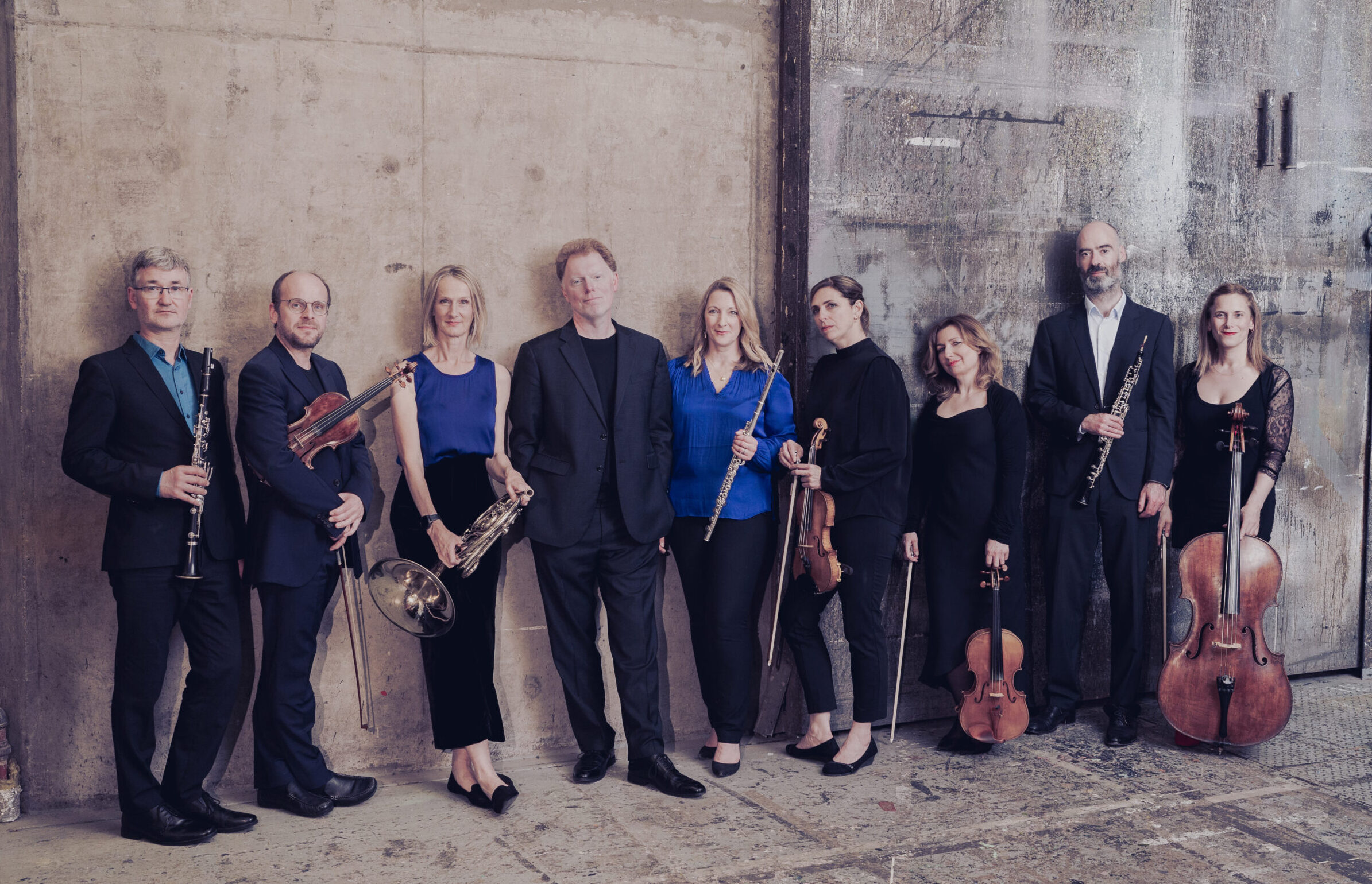
Ensemble 360
Royal Spa Centre, Leamington Spa
Sunday 8 March 2026, 3.00pm
Tickets
£23
£11.50 Under 35s
£3 Child/Student
SUK Piano Quartet Op.1
PHYLLIS TATE Sonata for Clarinet and Cello
MARTINŮ Three Madrigals for Violin and Viola H.313
DOHNÁNYI Sextet in C Op. 37
Czech music is one of Leamington Music’s specialities and Suk’s youthful Piano Quartet Op.1 – dedicated to his teacher Antonín Dvořák – is brimming with character and confidence. Martinů’s Three Madrigals represent the determination of the composer’s creative spirit to continue despite major obstacles and are beautifully balanced by the Sonata for Clarinet and Cello by Phyllis Tate, who was known for her idiosyncratic musical imagination and her unique sensitivity to musical colour. We round off the afternoon with the Sextet by Dohnányi – a Romantic work, richly scored and bubbling with tunes.
Concert generously supported by Howard Skempton
SUK JOSEF, Piano Trio in C Minor, Op.2
- Allegro
- Andante
- Vivace
Suk composed the earliest version of his Piano Trio in 1889 during his first year as a composition pupil at the Prague Conservatory, originally in four movements. A year later, he revised while in the class of Karel Stecker (to whom the trio is dedicated), and the first
performance was given at an evening of music by student composers on 15 January 1891. Suk completed the revision process once he had joined Dvořák’s composition class (he later married Dvořák’s daughter), completing the definitive version in spring 1891. The opening of the Allegro is muscular and impassioned; its bold opening theme gives way to a more tender contrasting theme and these two characterful ideas form the basis of what follows. Even though Suk was still a student, his handling of form is impressively confident and closely-argued. He brings this admirably compact movement to an affirmative close in C major. The second movement is marked Andante and it resembles a gentle folk dance, reaching a dramatic climax before moving into a tranquil coda, still dominated by the dotted rhythms that have permeated the whole movement. The third movement, marked Vivace, is a vigorous finale, with some enchanting moments of repose. A change from C minor to C major sets up the coda which brings the work to an impressive conclusion.
© Nigel Simeone 2026
TATE PHYLLIS, Sonata for Clarinet and Cello
Tate wrote Sonata for Clarinet and Cello upon discovering that (at that time) only one work had been written for this duo of instruments. It was first performed in 1947 by Frederick Thurston and William Pleeth, to whom she dedicated the piece.
The Sonata for Clarinet and Cello is one of Phyllis’s most performed works.
Phyllis discovered that only one work had been written for these instruments, a duet of 1894 by a clarinettist named Johann Sobeck. She set to work on the Sonata, which was critically acclaimed as a ‘minor masterpiece’ and ‘a tour de force of the first order, revealing a wonderful sense of colour’ (Music and Letters 1950).
The first movement is fairly slow and mostly cantabile. A feature is the persistent interruption of the flow by a curious sotto voce semitonal passage between the two instruments, as if played in brackets. The second and third movements are fairly straightforward from the audience’s point of view. The fourth movement is the most elaborate and takes the form of free variations on thematic material heard in the first movement, but now much transformed.
Following the first performance at the Wigmore Hall, Martin Cooper wrote in The Spectator: ‘At this concert the work of a young English composer, Phyllis Tate, quite overshadowed the small works by great names which composed the rest of the programme. The imaginative power, the real mercurial emotion and the wit and skill with which the two instruments are blended and contrasted makes this essay entirely successful.’
The Sonata was one of the works chosen to represent our country at the International Society of Contemporary Music Festival in Salzburg in 1952. Since then it has been performed many times, recently by The Varenne Ensemble (Elaine Cocks, clarinet and Robin Michael, cello) at a NASDA concert in 2014.
MARTINŮ Bohuslav, Three Madrigals
Poco allegro
Poco andante
Allegro
It was hearing a performance of Mozart’s Duo in B flat played by Josef and Lillian Fuchs (brother and sister) that inspired Martinů to compose his Three Madrigals in February–March 1947, with the subtitle ‘Duo No. 1’ on the autograph manuscript. Martinů wrote to his friend Miloš Šafránek on 16 May 1947: ‘I have written Three Madrigals for violin and viola … for J. Fuchs and Lillian (his sister) who is a great and unique viola player. I heard them at a concert and was amazed by their artistic quality, so I wrote the Duo for them, and it seems to be good. They are both excited and will put it in their Carnegie recital.’ This was given on 22 December 1947 and in the next day’s New York Times, the venerated critic Virgil Thomson gave a warm welcome to the new work: ‘a delight for musical fantasy, for ingenious figuration [and] for Renaissance-style evocation.’ Josef and Lillian Fuchs performed the Madrigals on many more occasions and when their recording of the work was issued in 1950, it was coupled, appropriately, with the Mozart Duo in B flat.
© Nigel Simeone
DOHNÁNYI Ernst von, Sextet in C Op.37
Allegro appassionato
Intermezzo
Allegro con sentimento
Presto, quasi l’istesso tempo
Born in Hungary, Dohnányi’s early compositions had been praised by Brahms, and he always had a strong sense of being part of the Austro-German Romantic tradition. In this respect he was very different from his classmate at the Budapest Academy, Béla Bartók, but his music is always beautifully crafted and has very individual harmonic touches. The Sextet for piano, violin, viola, cello, clarinet and horn was completed on 3 April 1935 and it is the most unusually scored of his chamber works. It was first performed in Budapest on 17 June 1935, with the composer at the piano, and received warm reviews. One critic specifically praised the unusual choice of instruments, commenting that ‘the combination … is neither coincidental nor arbitrary.’
The musical structure is unified by Dohnányi’s use of a dramatic rising motif – often on the horn – that is first heard right at the start. The first movement is brooding and tense, but ends with hope (the rising motif returning in triumph). The Intermezzo includes a rather sinister march, while the third movement is a set of variations that includes one that is scherzo-like. This leads directly into the finale – an almost dizzyingly ebullient movement which suggests a kind of jazzed-up Brahms.
Nigel Simeone © 2011
