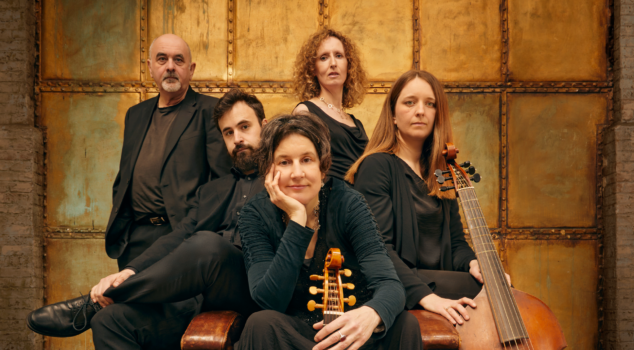
FRETWORK: TAKE FIVE
Fretwork Viol Consort
Crucible Playhouse, Sheffield
Tuesday 3 February 2026, 7.00pm
Tickets:
£23
£14 UC, PIP & DLA
£5 Students & Under 35s
BACH Pièce d’Orgue BWV572 (6’)
GIBBONS Two In Nomines in 5 parts (8’)
DEBUSSY La fille aux cheveux de lin (3’)
PURCELL Fantazia Upon One Note (3’)
BALDWIN Proporcions to the minim(3’)
PARSONS In Nomine (2’)
TYE Trust (2’)
DESMOND & REES Take Five In Nomines (6’)
PÄRT Fratres (9’)
WEELKES In Nomine in 5 parts (3’)
GOUGH Birds on Fire, Part I (6’)
BYRD Fantasy: two parts in one the fourth above (6’)
BYRD Browning (4’)
BUSH/BEAMISH Running Up That Hill (5’)
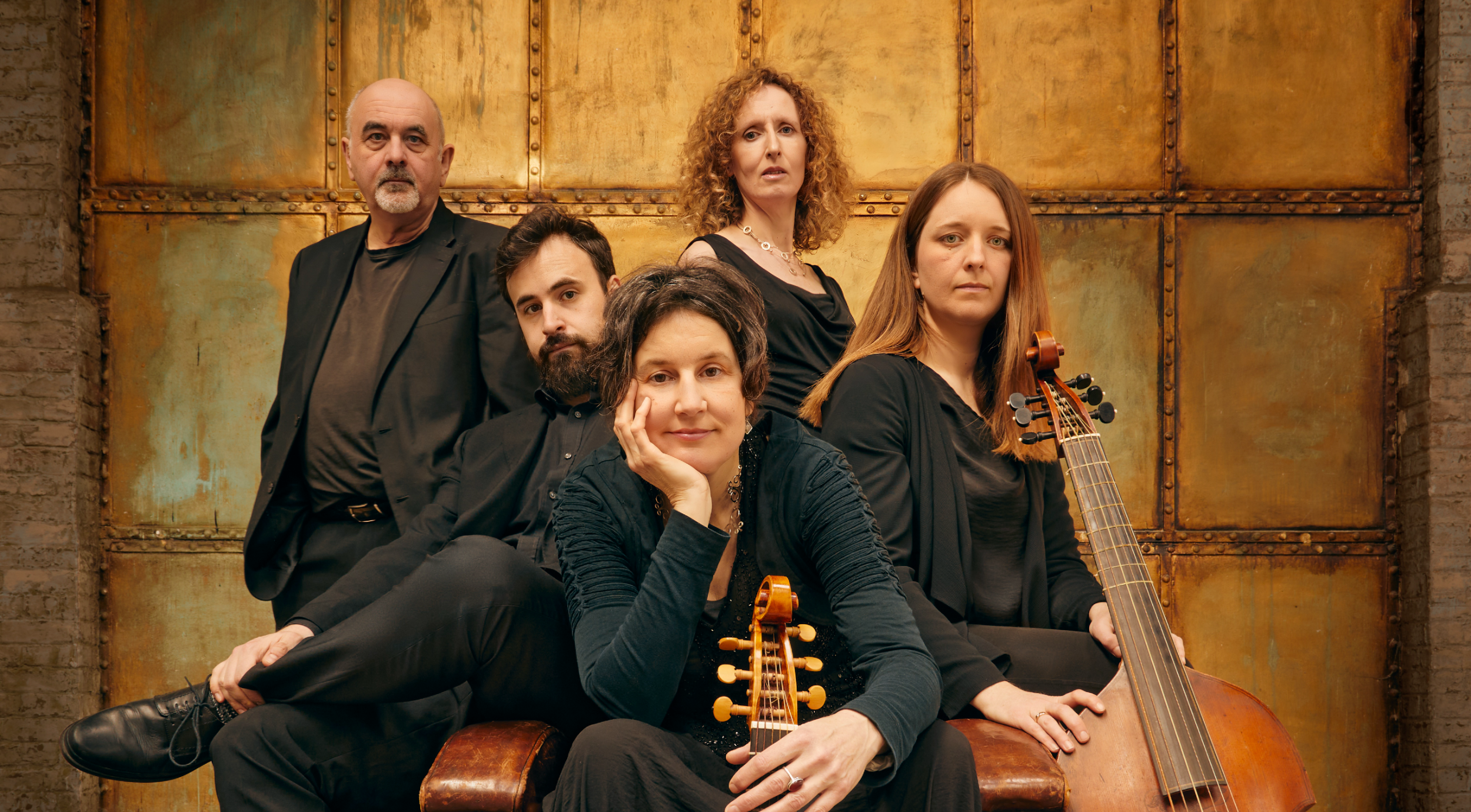
For nearly 40 years, Fretwork has been celebrated as the world’s leading viol consort.
Returning to the Crucible Playhouse for the first time in over a decade, these acclaimed musicians share a playful and imaginative evening of music. Together, they trace a journey through core viol repertoire from Byrd and Weelkes, a Bach transcription, arrangements of great Romantic works and Arvo Pärt’s stirring modern classic ‘Fratres’. The concert culminates in an arrangement of a Kate Bush classic by one of Britain’s leading contemporary composers.
Save 20% when you book for 10 or more Music in the Round Sheffield concerts in one transaction.
Save 10% when you book for 5 or more Music in the Round Sheffield concerts in one transaction. Find out more.
Fretwork: Take Five
Bach’s Fantasia or Piece d’Orgue was originally written, as the name suggests, for organ. In it, a dynamic and cheerful opening leads to a contrapuntal central section in five voices, realised here on the five viols of the consort. Orlando Gibbons (1583-1625) was an English composer and keyboard player. His Nomine in 5 Parts, composed around 1610, are among the most celebrated consort works of the Jacobean era. By contrast, Debussy’s La fille aux cheveux de lin, originally a solo piano piece, evokes the ‘girl with flaxen hair’ of Leconte de Lisle’s poem of the same name. The number five continues later in the programme with the jazz standard, composed by Paul Desmond and made famous by the Dave Brubeck Quartet.
Estonian composer Arvo Pärt’s Fratres has fast become a modern classic. Written without fixed instrumentation, it is driven by three voices that unfold simple repeating melodic material. Back in England, William Byrd (c.1540-1623) was one of the most influential composers of the Renaissance. The Fantasia was a popular form; with roots in improvisation, it seldom followed a strict musical form but was instead composed around an imaginative musical idea. The programme ends with music of an altogether different kind – Sally Beamish’s arrangement of Kate Bush’s iconic Running Up That Hill.
Dr Benjamin Tassie © 2026
“Fretwork is the finest viol consort on the planet”
London Evening Standard