BEETHOVEN & BRAHMS STRING QUARTETS
Opus13
Upper Chapel, Sheffield
Saturday 24 October 2026, 7.00pm
Tickets:
£23
£14 UC, PIP & DLA
£5 Students & Under 35s
BEETHOVEN String Quartet in D Op.18 No.3 (25’)
ADÈS Arcadiana (20’)
BRAHMS String Quartet No.1 in C minor (35’)
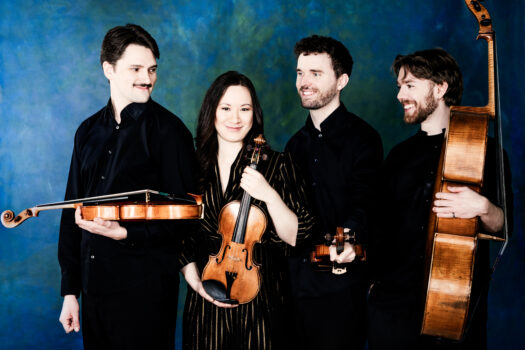
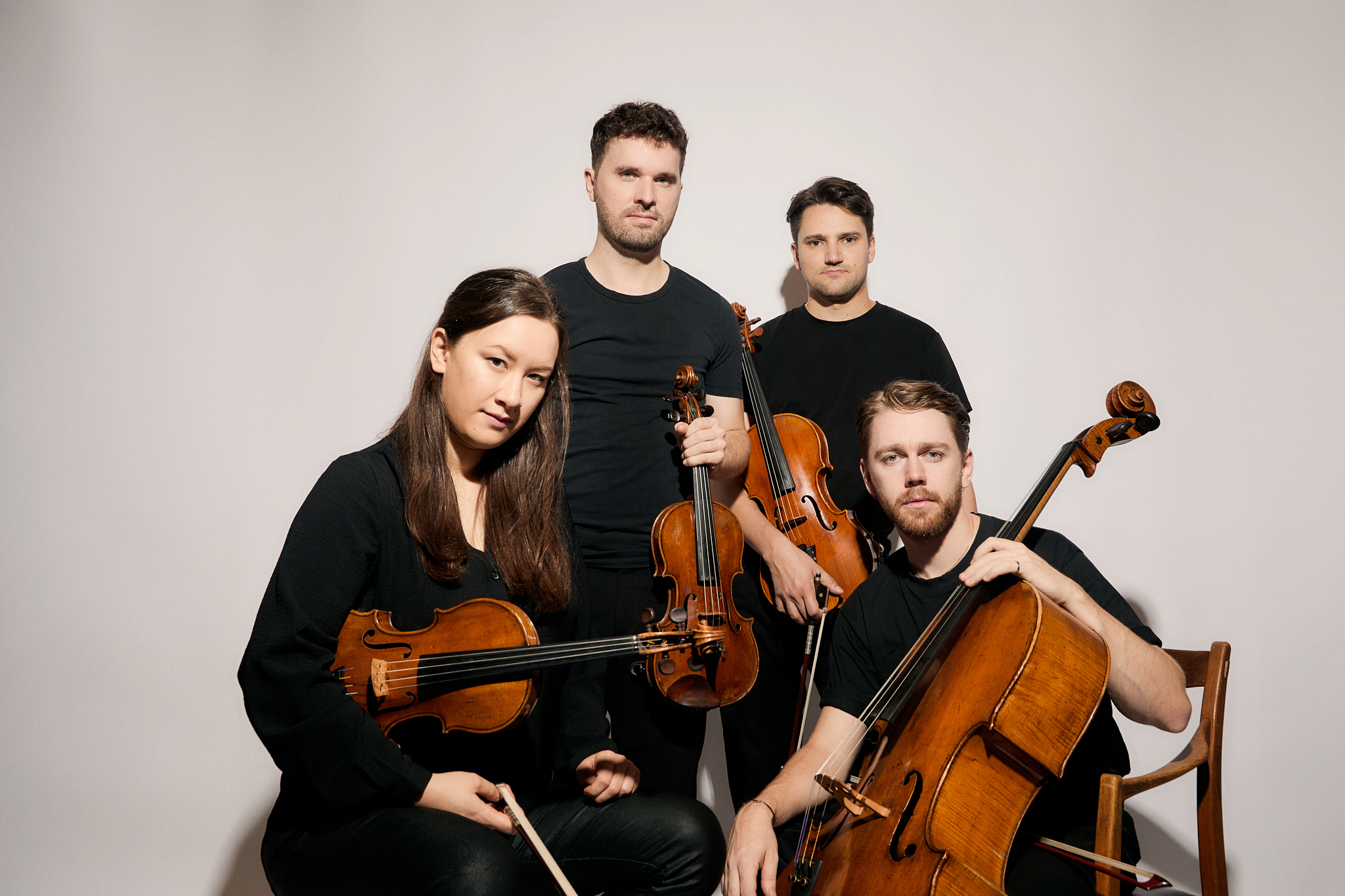
Opus 13, the most recent winner of the prestigious Wigmore Hall International String Quartet competition, makes its Sheffield debut with a programme of bold and lyrical works.
Praised by the judges for “technically superb and emotionally compelling” performances, the Quartet follows in the footsteps of a glittering roster of past winners, including the internationally renowned Leonkoro Quartet, Quartet Van Kuijk and the Takacs Quartet.
Beethoven’s first string quartet is a bright, lyrical and humorous work, undercut by a deeply affecting slow movement. Indebted to Beethoven’s later work, Brahms’s String Quartet No.1 is a bold, passionate piece, from its striking opening bars to its rapturous conclusion.
Arcadiana, the first string quartet by Thomas Adès, “one of the most accomplished and complete musicians of his generation” (The New York Times) also features, portraying an evocation of paradise with references to Mozart’s opera The Magic Flute, the painter Poussin and Greek mythology.
Save 20% when you book for 10 or more Music in the Round Sheffield concerts in one transaction.
Save 10% when you book for 5 or more Music in the Round Sheffield concerts in one transaction. Find out more.
BEETHOVEN Ludwig van, String Quartet in D Op.18 No.3
Allegro
Andante con moto
Allegro
Presto
The Quartet Op.18 No.3 is a landmark in Beethoven’s career: it’s his first string quartet. He began it in the Autumn of 1798, finishing it early the following year, and eventually placed it as the third of the Op.18 set. As a preparation, Beethoven immersed himself in quartets by other composers, especially Mozart and his teacher Haydn – he copied out two of Mozart’s Haydn quartets just as he was beginning work on his Op.18.
The first movement opens with an arching theme (characterised by a leap of a minor seventh between the first two notes). The slow movement, in B flat major, begins with a luxuriant presentation of the main theme, but the texture soon becomes more spare and fragmented, with numerous dramatic contrasts. The Scherzo-like third movement has a minor key Trio section, while the final Presto is notable for its unquenchable energy. Composer Robert Simpson wrote that this music ‘flies at once into the sky, alighting when and where it wishes’ – from the stormy development section to the unexpectedly quiet ending.
© Nigel Simeone
ADÈS Thomas, Arcadiana
Composed in 1994 and now firmly established as part of the contemporary string quartet repertoire, Arcadiana is one of Thomas Adès’s early masterpieces. Six of its seven movements evoke various vanished or vanishing idylls. The odd-numbered movements are all aquatic. I might be the ballad of some lugubrious gondolier; III takes a title and a figuration from a Schubert Lied; in V a ship is seen swirling away to L’Isle Joyeuse; VII is the River of Oblivion. The second and sixth movements inhabit pastoral Arcadias, respectively: Mozart’s ‘Kingdom of Night’, and more local fields. The joker in this pack is the fourth movement, the literal dead centre: Poussin’s tomb bearing the inscription ‘Even in Arcady am I’.
Faber Music
BRAHMS Johannes, String Quartet in C minor Op.51 No.1
Allegro
Romanze. Poco adagio
Allegretto molto moderato e comodo
Allegro
The string quartet was a form that gave Brahms a great deal of trouble and the masterpieces of Haydn, Mozart and Beethoven meant that Brahms was especially critical of his efforts at quartet writing. The C minor Quartet was finished in the mid-1860s, but Brahms revised it extensively over the next decade and re-wrote it during the summer of 1873. The first performance took place in Vienna in December 1873 by the Hellmesberger Quartet. The work is dedicated to Brahms’s friend Theodor Billroth, one of the most innovative surgeons of his time and a keen amateur musician. There’s a very close relationship between the main themes in each of the four movements, each of which grow from the same basic idea, and the overall structure sees two intimate miniatures framed by the more symphonic outer movements.
Nigel Simeone ©2014
“Arcadiana, Adès’s first string quartet, remains one of his most engaging pieces, the brilliance offset by tenderness, even the odd, quickly-brushed-away tear of sentimentality.”
The Financial Times