CHOPIN NOCTURNES
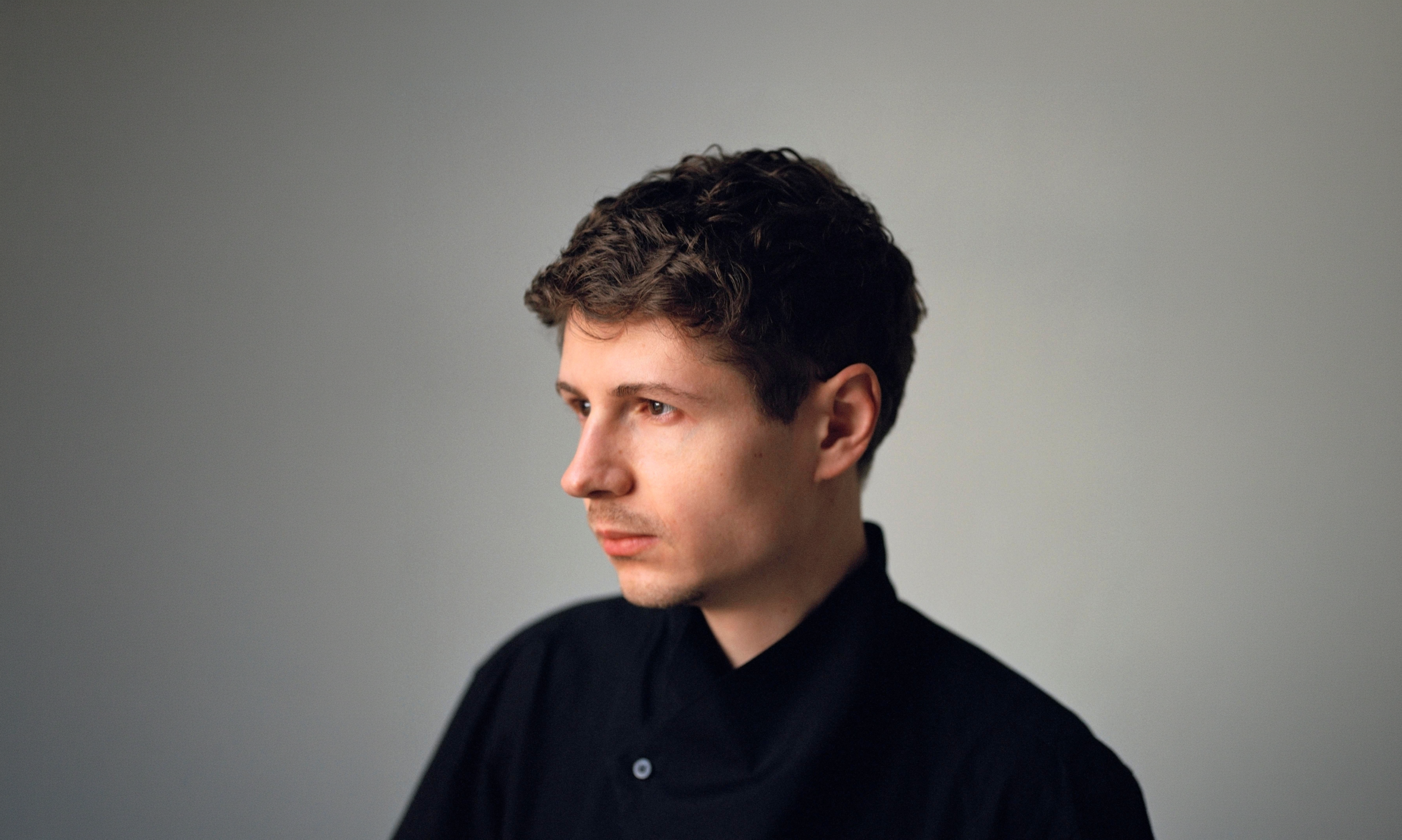
Pavel Kolesnikov
Crucible Playhouse, Sheffield
Saturday 14 November 2026, 7.00pm
Tickets:
£23
£14 UC, PIP & DLA
£5 Students & Under 35s
★ ★ ★ ★ ★ The Telegraph
★ ★ ★ ★ ★ The Times
★ ★ ★ ★ ★ The Guardian
★ ★ ★ ★ ★ BBC Music Magazine
“Chopin by a pianist whose name is rapidly becoming synonymous with searching originality, rhetorical aptness and kinaesthetic authority… Kolesnikov, always eager for the deep dive, here resurfaces with rare pearls of perfect proportion and lustre from the long-picked-over beds of Chopin interpretation” Gramophone on Pavel Kolesnikov
CHOPIN Complete Nocturnes
i. Dreams
ii. Memories
iii. Visions
Described by Bachtrack as “a poet of the piano”, Pavel Kolesnikov is one of the world’s most exciting young pianists. Lauded for his staggering ability to cast new light on familiar repertoire, he makes his Music in the Round debut with a sumptuous tour through the complete Chopin Nocturnes.
Among the most gorgeous music for piano ever written, these intimate dramas of powerful intensity cover a vast emotional spectrum, from the lyrical and dreamy to unparalleled passion. This epic musical journey, up close, promises to be an unforgettable highlight of the season.
Please note, there will be two intervals due to the length of this concert, which is scheduled to finish at around 9.50pm.
Save 20% when you book for 10 or more Music in the Round Sheffield concerts in one transaction.
Save 10% when you book for 5 or more Music in the Round Sheffield concerts in one transaction. Find out more.
CHOPIN Frédéric, Nocturnes
I. Dreams
Op. 9, Nos. 1-3
Op. 15, No. 3
Op. posth. in C minor
Op. 55, No. 1
Op. 15, No. 1
Op. 48, No. 1
II. Memories
Op. 27, Nos. 1-2
Op. 37, No. 1
Op. 15, No. 2
Op. 32, Nos. 1-2
Op. posth. in C sharp minor
III. Visions
Op. 55, No. 2
Op. 48, No. 2
Op. 37, No. 2
Op. 62, Nos. 1-2
Op. posth. in E minor
This concert traces a single continuous thread through Chopin’s creative life: the 21 nocturnes he composed between roughly 1827 and 1846, from the young émigré barely arrived in Paris to the composer entering the last, shadowed years of his career. Heard together, they form something closer to a diary than a song cycle: intimate, private, written in the register of night rather than the concert hall.
The nocturne was not Chopin’s invention. He inherited the form from the Irish pianist John Field, who had pioneered a genre of lyrical, songful piano pieces built around a singing right-hand melody floating over a broken, arpeggiated left-hand accompaniment. Chopin absorbed Field’s model as a student and then, characteristically, outgrew it almost immediately. Where Field’s nocturnes are content to charm, Chopin’s brood, storm and confess. He kept the outward shape of a songlike melody, rocking bass, but filled it with a harmonic restlessness, an ornamental freedom and an emotional range that Field’s polite salon pieces never approached.
What unites the 21 nocturnes is less a formula than a sensibility. Nearly all are in ternary (A–B–A) form, opening with a melody of vocal, almost operatic character. Chopin was a devoted listener to bel canto opera, and it shows in the long, elastically phrased lines he asks the right hand to sing. The middle sections often turn stormier or more agitated before the opening material returns, now typically transfigured: more heavily ornamented, harmonically richer, weighted with everything that has happened in between.
The Nocturne in E flat major, Op.9 No.2, with its endlessly varied return of a single melodic idea, remains perhaps the most beloved piece Chopin ever wrote. The Nocturne in C-sharp minor (published posthumously, written for his sister as a study piece) has taken on an independent life through its use in film. The two nocturnes of Op.27 show Chopin at his most harmonically daring, the D flat major especially, with its long-breathed melody suspended over a bass that seems to dissolve the ground beneath it. The late nocturnes of Op.55 and Op.62, composed as Chopin’s health was failing, are leaner and more inward than the earlier works, their ornamentation pared back to something closer to plainspoken utterance.
To hear all 21 in sequence is to hear a composer testing the limits of a small form, discovering, piece by piece, how much weather a single texture can hold. The nocturnes ask for a particular kind of listening: patient, close, willing to sit with recurring gestures and hear how differently they land each time. They were, after all, music written for candlelit rooms rather than concert stages.
Chopin Nocturnes – Performer’s notes #1
These notes were initially written for my album of the complete Chopin Nocturnes released by Harmonia Mundi. For this concert, they are reproduced almost verbatim save for their order, as the performance sequence differs from that of the album. There are few instances where the order was impossible to reconcile. I hope this doesn’t cause any confusion.
Writing these notes, the first temptation is to write none. Leaving a few blank pages seems the very best idea when it comes to Chopin, his supernaturally immaculate artistry, and particularly the Nocturnes. I myself searched for purity – perhaps a kind of blankness – as my guide. I have done most of the work on this album with my eyes shut, quite literally. At night before falling asleep, lying in bed in the darkness, I would summon one nocturne or another to come and let me hear it in my mind. I tried to memorise the exact hue and weight of those visitations so I could revive them in my waking hours. And this is how I would like them to reach you, too – behind closed eyelids, in the ultimate privacy of the mind, like a memory, a dream, or a vision.
I knew Chopin’s music before I could speak. My father, a scientist and a gifted amateur musician, played Chopin, including many of these nocturnes, when I was an infant. I remember, at the age of five or six, looking at a photograph of Chopin’s white hand – a plaster cast – and comparing it to the hand of my father. Later, recalling that image would sometimes make me intuitively shift my phrasing or articulation at the keyboard.
A musician is a little bit of everything: an actor, a translator, a prestidigitator. Also, in part, a traveller, an explorer. I love to go and play in distant, unfamiliar places. I search for unique, authentic gifts to bring back to my friends, and I also bring back stories. The same is true of traversing music. One ventures into its distant worlds, bringing back rare, exquisite gems, trying not to damage them in transit. There are also many stories to tell, even if it is hard to find the right words.
These notes are marginal; they offer little in the way of objective fact. They are, rather, observations, reflections, and impressions – a diary, or a voyager’s journal.
Op.9 No.1
The voicelessness of snow engulfing the world on a winter morning; a grisaille dreaming of distant colour. Sound comes from afar as a barely emerging thought, suspended in weightless slumber. That curved shape of the opening phrase, devoid of any anchor, hovering with the lightness of a breath, remains one of the greatest challenges for a pianist. Grey is the most exquisite colour in Chopin’s limitless palette.
Op.9 No.2
The effortless floating of bel canto is an illusion born of hidden muscular tension, breath anchored deep in the diaphragm. Gliding implies resistance. The taut canvas of a sail; the surface tension of water. Poised between calm and rapture, the melody sails haloed by harmonics, carried by the invisible resonance of the bass. For the accompaniment, Chopin asks for a ‘chorus of guitars.’ An exotic, exquisite, impossible sonority!
Op.9 No.3
In a black-and-white photograph, it is sometimes impossible to tell noon from midnight. B major is a sunlit key, yet the sly agility of the melody scatters reflected light, flickering and withholding its source. Ultimately, this is not a night piece; with a double exposure, day and night are mixed together in the same frame. Chopin’s way of achieving balance often relies on ingenious asymmetry. The middle section arrives unprepared, sudden like a summer storm. When the first theme returns, it seems to drift without direction, bewildered by that inexplicable outburst. But in the final moments, Chopin releases an inspired, resplendent flourish, equally disproportionate and astonishing. Thus, in the last possible moment the balance is restored through an act of paradoxical excess.
Op.15 No.1
Rubato, a way of free playing, translates from Italian as ‘robbed time’ – a bending of the rhythmic structure that still keeps it unbroken. Liszt compared Chopin’s rubato to wind playing in the branches of a tree. The more I ponder this, the more I find it a revealing metaphor for Chopin’s music in general. Everything is connected. Each element is neither passive nor active: the transparent layers of writing constantly react and trigger one another. The accompaniment supports the melody, but the melody is shaped by the bass line. They follow each other, split apart, and come together again, always connected at the core. The entire first theme, down to the subtlest harmonic shading, seems as if initiated by its first intonation of a rising fourth. It appears as a complex consequence of a simple impulse, the prolonged rippling of a surface produced by a single touch. Even the deepest contrasts operate on this exact principle of mutual reaction. Shadow is triggered by light; agitation is born in calm; beauty is fuelled by the fear of its own loss.
Op.15 No.2
Stepping a half-tone up from F major to the F-sharp major of this nocturne is like missing a step, skipping a heartbeat, sinking into the embrace of inky darkness. On the circle of fifths, F-sharp major sits at the furthest point from the home of C major. This distance makes it the key of the exquisite, the innermost, and the metaphysical. It is no coincidence it became the favoured key of Scriabin. Here, it yields a rare colour, one of the deepest ever used by Chopin – a dark shade of blue with an intense luminosity within. Against it, the glow of the melody is ravishing and precious, a yellow topaz on dark velvet.
Op.15 No.3
Chopin only very rarely suggests a programme, and when he does, it can be difficult to align. His own remark concerning this nocturne’s relation to Hamlet is baffling. Nothing seems to match the idiosyncratic, somewhat effeminate and irregular melody that paces and stops, sighs, rises to an impossibly long top note – but cannot hold it, and drops, disperses, vanishes. I search for something to help me out, and at last I think of Ophelia. Does the hypnotic, illogical unfolding of this nocturne follow in her footsteps? It is a revealing thought, an interesting affinity for Chopin. There is a mystical, disembodied chorale heard from afar like an off-stage chorus in a Verdi opera. Similar chorales appear a few times in Chopin’s music, but this is the only moment in his entire oeuvre where he adds a very special marking: religioso.
Op.27 No.1
A pianist keeps the swirling and furling bass under the dome of the palm like a storm cloud, protuberances of grey mist seeping between the fingers. This is a physical sensation rather than a poetic metaphor, the result of a string resonance that is volatile and fragile. Impatience or inaccuracy dispels the dark magic. This quality of Chopin’s writing is seldom discussed: his ability to make the music not only sound, but feel true under the fingers. A delicate run slides out of the hand like fine silk. A silvery melody feels cold to the touch. His original fingerings, often preserved in the score, are imaginatively tactile. They demand a caressing slide of a single finger, or paradoxical combinations whose aim is not purely practical. Trusting and following these instructions, sometimes bewildering at first glance, a pianist feels a sort of supernatural presence, becoming a medium emanating musical ectoplasm.
Op.27 No.2
I once held a sheet of pinkish paper; on it there was a delicate silverpoint drawing of the Virgin’s head by Raphael. I knew that drawing, but nothing could prepare me for the sublimity of the object. As I glanced at it, I suddenly felt a pang of a logical and poetic completeness I had not known before. I relive and extend the moment with this piece, which makes that inexplicable, fleeting feeling last. The infinite melody, sung in one gigantic breath, is a transparent bridge, a pathway into the ideal. I hold this piece as a pinnacle, an evidence of the unknowable and unattainable beauty.
C-sharp minor Op.posth.
A specifically private piece, it was composed for Chopin’s sister Ludwika and sent to Poland from Vienna, very soon after Chopin had left his motherland forever. ‘Dla siostry mej Ludwiki ’, says my score, before the music begins – and in my mind, I repeat these words in Polish before I begin to play. Here is a letter, a sketch, a note full of ellipses. It also has a special sound that never occurs again in any of Chopin’s music. It is transparent, piercing, and penetrating like a distant whistle – empty fifths, fourths, and octaves placed at a great distance with nothing in between. This is not the mellow tone of Chopin’s inimitable bel canto. It is gentle but sharp, almost breaking off, and incredibly expressive. I consider this to be Chopin’s own voice, speaking in Polish – not French – at twenty years old.
Chopin Nocturnes – Performer’s notes #2
Op.48 No.2
Chopin described the vast middle section of this nocturne to one of his students: ‘a tyrant commands, and the other asks for mercy.’ For years this remark has been an unsurpassable obstacle for me. Intuitively, I rebelled against it. It seemed almost primitive, incompatible with the complex psychology of the music – and with the proud spirit of Chopin himself.
Then, an image dawned on me: Orpheus at the gates of the underworld. Could this be what Chopin was hinting at? I will never know, but suddenly the piece opened up before me. The gates opened, just as they do in the final bar of the piece, with a glissando of celestial light.
Op.32 No.1
Chopin is an architect with a penchant for clarity, able to make the simplest forms bear the weight of extraordinary emotional sophistication. While most of his nocturnes employ logical structures as vehicles for his refined ideas, this piece truly stands apart. Along the way, the form is thrown off balance as if by an external gesture. The music itself is caught off guard, its blissful logic contravened. This is so unusual, almost conceptual, that one begins to suspect a hidden message. The peaceful, Mozartian flow is repeatedly interrupted by a small sting, a smudge – a mistake. A sudden, uncontrollable surge of unease betrays an inner flaw. Unable to sustain serenity, the piece slips into an eerie, unexpected coda. It disintegrates, fading into darkness where nothing remains of its delicate glow.
Op.37 No.2
Again, I close my eyes. I feel shifting patterns of the sun running over my face; I feel warmth. Why call this a nocturne? A quiet, somewhat disquieting anomaly, like the pale outline of the moon in a bright, sunlit sky. I am lost in this luminous hallucination. There is something Escheresque in the sly bending of treacherous arches, in the ease of smooth modulations, in the deceptiveness of cadences. This piece is a trompe l’oeil, a solarized and inverted image, a dream inside a dream inside a dream.
Op.55 No.1
The grotesque is a language Chopin hardly ever speaks. Yet this curious nocturne trespasses into the feverish realm of Schumann’s Nachtstücke. The tiptoeing march of the accompaniment is fused to an exquisitely wrought melody that sways with the gait of a street tune. The middle section breaks this somnambulant dance with senseless, short-lived violence. The image, balancing on the verge of vulgarity, is so eerie it could have come from Goya’s Los Caprichos. This unsettling spell holds until the coda, where a breathless, fairytale accelerando abruptly strips the hallucination of its weight, dissolving the vision into fine stardust.
Op.32 No.2
Sometimes, Chopin comes up with a phrase that possesses the uncanny expression of speech—a direct, human utterance. In this nocturne, the melody swirls around a miraculously humanised intonation, repeating it ad infinitum, intoxicated by it. The sinuous line is layered with delicious, shifting colours, dappled now, brilliant next moment. It is lost and regained in this mirrored labyrinth. An intimate truth, a secret message, it is whispered and sung, murmured and exclaimed, again and again until it is finally understood.
Op.48 No.1
In Chopin’s world, C minor often means a catastrophe: a crash, a tsunami. In pieces like the Prelude Op.28 No.20, the Polonaise Op.40 No.2, and the Etudes Op.10 No.12 and Op.25 No.12, it carries tragedy. Among these works, this nocturne is particular for its elegiac tone. The dramatic balance of its architecture relies on withheld force, on a refusal of power. The tension is accumulated slowly in the haunted world of mezza voce. When it finally erupts, it doesn’t bring the violent storm one might expect. A thundering roar takes over the keyboard, shaking the whole body of the piano – but the main theme reappears, transfigured all of a sudden, soaring like a wounded bird. Those fluttering and palpitating chords are urgent yet powerless, immaterial like a memory or a premonition. A hand ready to strike gives in to reckless tenderness; it flounces and brushes over the keys in a paroxysm of compassion.
C minor Op.posth.
E minor Op.posth.
Chopin’s life was cut in half by his exile from Poland at the age of twenty. The inability to return makes us understand the properties of memory more deeply and sooner: space teaching about time. It is telling how clearly the frontier shows in Chopin’s oeuvre. The works written in Poland are youthfully transparent, and time in them stands still; the works in exile almost immediately gain richness and mellowness, and time begins to flow. This qualitative change is akin to the breaking of a voice.
Simultaneously, and somewhat conversely, I believe that there is a kind of return, most probably deeply subconscious, to some of the youthful tropes in his late compositions. It can be felt in the newly found, often unexpected simplicity of one or another melodic turn, or the disarming innocence of a harmonic resolution; or in an occasional refusal of lush sonority in favour of clarity; or else, in a particular spontaneity of adornment and embellishment.
Thinking of that reversal, the case of the E minor Nocturne is particularly interesting. Its form and principle of construction so strongly resemble the Nocturne Op. 55 No. 2 that some scholars suggest it belongs to his final period. It does, indeed, bear a striking similarity to the late masterpiece, even in the way the melody is pulled forward by incessant waves of the accompaniment, never overpowering but always predominant. But relying not only on my analysis and intuition but also on the physical feeling of the writing under the fingers, I consider this undoubtedly an early work.
The C minor Nocturne is a little enigma. As the last nocturne to be published, appearing as late as 1938, its origin remains entirely unknown. Even its dating is highly controversial: while it seems to belong stylistically to the early period with absolute certainty, the provenance of the two existing manuscripts and the paper used indicate a date close to the end of Chopin’s life. For me, it is impossible to imagine Chopin writing something like this at that point – almost vernacular, with a sly Slavic tilt. This story does not add up. It only does if we assume that Chopin returned to his juvenile works and wrote some of them down – maybe from memory, or copying an earlier manuscript. It means that despite not deeming them suitable for publication, he still placed value in them. It makes sense, considering that a barely perceptible gleam of that early writing begins to emerge in his most mature works.
Op.37 No.1
Under the fingers, the rocking figure in the left hand is smooth and heavy like an oar in murky, dark water. The economy of means, Chopin’s aristocratic parsimony, is extreme. The stage set has only the bare essentials, the simplest means for the drama to unfold. Heaving surge and fall carries the never-resolving gravity right into the final bars, where the gentlest blooming, a half-smile, miraculously lifts the entire piece into the light. This seemingly spontaneous gesture achieves an astonishing structural illusion: the entire piece is overturned, becoming a mere preface to this simple yet mysterious resolution.
Op.55 No.2
Op.62 No.1
Op.62 No.2
It makes more sense for me to talk about these three last nocturnes together. Written in the final years of Chopin’s life, they stand entirely apart from the rest of the collection. The earlier ones are evocative, reflective of the outer or inner world – each in their own way; these final pieces seem to venture beyond, into the territory of ever greater abstraction and greater originality. Saying that doesn’t mean that I see them as ‘pure music’, music for music’s sake. It is just that the inexplicable, the unspeakable comes to the fore in them; the definable is dispelled.
The greatest works of art embrace us like the ocean. They take us in entirely, almost like death – and grant us back to us. I step into these pieces rather than play or perform them. I approach them with the same mix of joy, fear, and wonder with which I step into the sea.
I am carried by the powerful interlocking, interwoven streams of E-flat Major, submerging and resurfacing, Wagnerian waves rising and falling and exposing the seabed under their transparent folds. I hold on to the melody to stay afloat.
In B major, I trail my fingers through the rippled surface of sound; I am lost in the patterns of shine and lustre, I dissolve between the trills and murmurs, becoming another gentle, transparent stream.
And in E major, I walk in the water of music. Each step is soft and slow. I follow the infinite line illuminated by an incredible radiance of overtones. I long for both the past and the future. And as I reach the final bars, the words of John Banville come to my mind. In The Sea, he writes about a surge, a swell of water, ‘a great world’s shrug of indifference’ that lifts and carries us a little before setting us back on our feet. And I feel lifted delicately by the last transparent wave of sound, and then placed back down.