DEBUSSY: LA MER
Ensemble 360
Upper Chapel, Sheffield
Thursday 24 September 2026, 7.00pm
Tickets:
£23
£14 UC, PIP & DLA
£5 Students & Under 35s
R SCHUMANN Adagio and Allegro (8’)
D HOWARD Unravelled (Music in the Round co-commission) (13’)
N BOULANGER 3 Pieces for Cello and Piano (7’)
SAINT-SAËNS Romance Op.36 (4’)
DEBUSSY (arr. Beamish) La mer (30’)
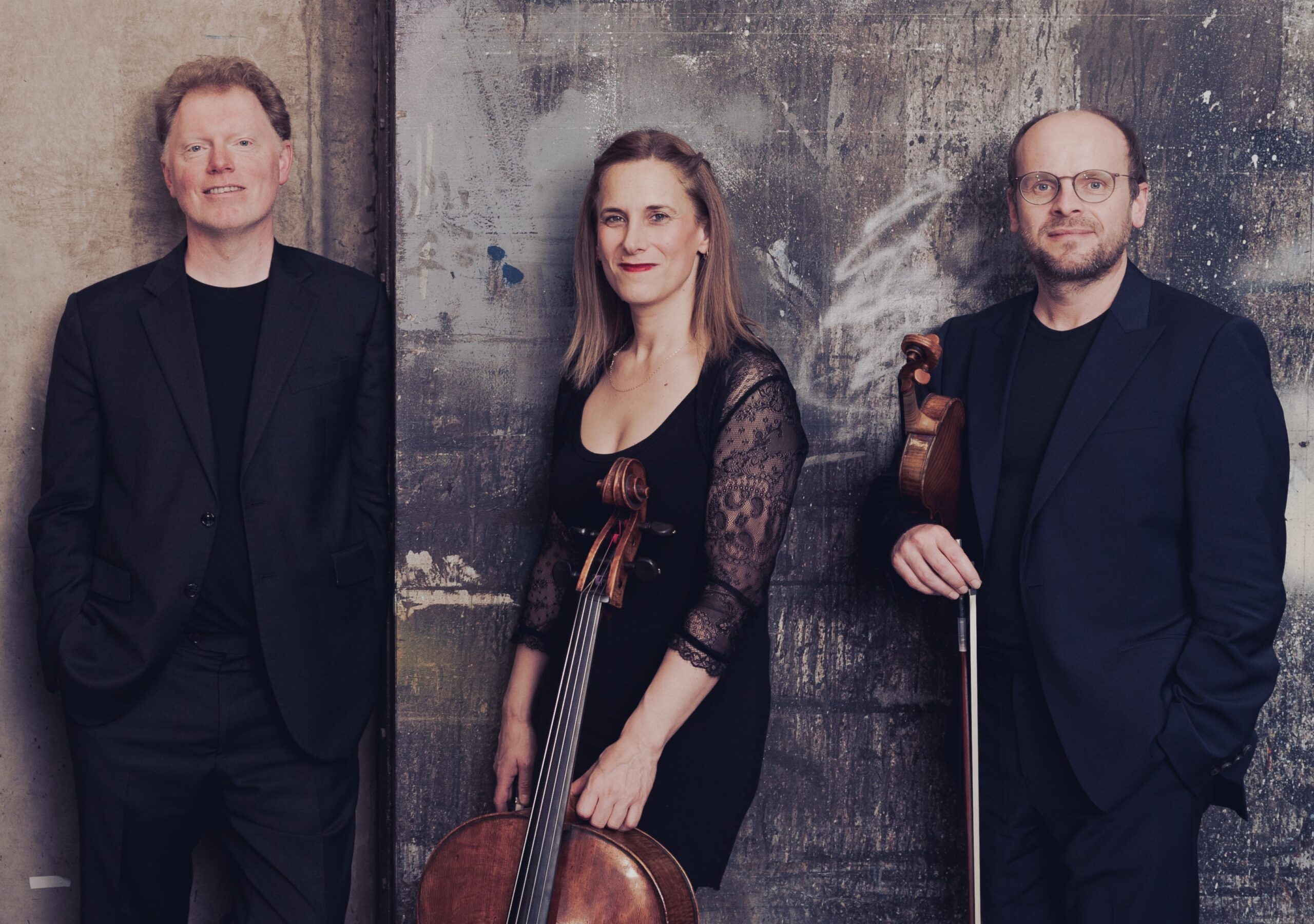
This lustrous evening brings together exquisite sound paintings for piano, strings and horn, showcasing the range and reach of our resident Ensemble 360.
From the mellifluous warmth of Schumann, through the delicate, dappled colours of Dani Howard’s new piano trio (co-commissioned by Music in the Round with Presteigne Festival) and culminating in Debussy’s impressionistic seascape masterpiece, skillfully arranged for piano and strings by Sally Beamish, this is a concert that shimmers with colour.
Save 20% when you book for 10 or more Music in the Round Sheffield concerts in one transaction.
Save 10% when you book for 5 or more Music in the Round Sheffield concerts in one transaction. Find out more.
SCHUMANN Robert, Adagio and Allegro Op.70
Schumann wrote this work in Dresden in February 1849. On the original manuscript the title is given as ‘Romance and Allegro’ but this was evidently changed before the first publication six months later. It was first played privately on 2 March 1849 by the horn player Julius Schlitterlau (a member of the Dresden Staatskapelle) with Clara Schumann at the piano. Schumann composed the Adagio and Allegro for the ‘Ventilhorn’ (valve horn) that was coming to prominence as a more versatile successor to the natural horn (with no valves). He wasn’t the first composer to do so – several years earlier, Schumann’s friend Mendelssohn had written for it in the Nocturne of his Midsummer Night’s Dream incidental music – but Schumann was enchanted with the possibilities of the instrument, and it clearly fired his imagination. The day after finishing the Adagio and Allegro he set to work on the astonishing Konzerstück for four horns and orchestra. When the Adagio and Allegro was first published in August 1849, the solo instrument was given as horn or violin or cello, a way of widening the market for this fiery and exciting work. While the cello version is often played now, the first public performance in 1850 was given on the violin (when the soloist was the confusingly-named Franz Schubert), perhaps because the piece as originally conceived for horn was thought to be too difficult: Schumann brilliantly exploits the instrument, but must have presented a formidable challenge to a player in the mid-nineteenth century.
NIGEL SIMEONE 2010
BOULANGER Nadia, Three pieces for cello and piano
Moderato
Sans vitesse et à l’aise
Vite et nerveusement rythmé
Nadia Boulanger, teacher, conductor, early music pioneer and trusted adviser to the likes of Stravinsky and Poulenc, was also a gifted composer. Fiercely self-critical, she always claimed her own music was nothing like as significant as that of her brilliant younger sister, Lili, but with the rediscovery of Nadia’s music it has become clear that she was a remarkable talent in her own right. She entered the Paris Conservatoire at the age of nine and subsequently studied composition with Fauré. Most of her music dates from between 1904 and 1918 (the year Lili died), including the Three Pieces for cello and piano, composed in 1914 and first published the following year. The first, in E flat minor, presents a song-like melody on the cello over a hushed piano part marked doux et vague. After a brief climactic central section, the opening music returns for a serene close in E flat major. The second piece, in A minor, treats a deceptively simple tune – almost a folksong – in an ingenious canon between the cello and the piano. The last piece, in C sharp minor, is quick, with a middle section that provides a contrast in both rhythm and texture to the playful but muscular mood of the rest.
Nigel Simeone © 2022
SAINT-SAËNS Camille, Romance in F Op.36
The short Romance in F was composed by early 1874, with a dedication to the French horn player Henri-Jean Garrigue. Garigue gave the first performance in February 1874, with Saint-Saëns at the piano, and other horn players quickly took up the Romance. The first edition mentions that the work can also be played on the cello – and Saint-Saëns himself accompanied a performance of the Romance with a cellist on at least one occasion. Garigue was subsequently the author of an important horn tutor, the Méthode pour le cor à pistons, published in 1888. Saint-Saëns arranged the Romance for horn and orchestra and in March 1878 he conducted a performance in Strasbourg with another soloist, Joseph Stennebruggen. Saint-Saëns originally wrote the piece to expand the very limited repertoire of music for horn and piano at the time: it’s in his most elegant and polished style, unpretentious and beautifully crafted, based on two main melodic ideas, both of them typically alluring.
Nigel Simeone 2013
DEBUSSY Claude, (arr. Beamish) La Mer
De L’Aube a Midi sur la mer. Tres lent
Jeux de Vagues. Allegro
Dialogue du vent et de la Mer. Anime et tumultueux
To arrange La Mer for piano trio was one of the biggest challenges I’ve encountered. The temptation was to represent every note from Debussy’s score, but in order to do that (in any case nigh on impossible) all three musicians would have had to be playing all the time, which could have led to an unchanging, dense texture.
I decided instead to look at the piano trio itself as a medium – particularly works such as the Ravel – and reinvent Debussy’s orchestral score with the piano trio in mind. I needed to create light and shade, and subtleties of colour. This meant exploring what strings and piano can do in terms of texture, and concentrating on idiomatic and natural techniques. This led to use of harmonics, mutes, bow position – such as sul ponticello (a glassy sound made by playing very near the bridge) – and various doublings between piano and strings, using unisons to create new ‘instruments’ – like mixing blue and yellow to make green.
Once I’d completed the score, I worked with Matthew, Thomas and Ashley, who often suggested feats of virtuosity I hadn’t thought possible, thereby opening up new possibilities previously discounted.
It has been an immensely satisfying experience to collaborate on re-creating this iconic score for these inspirational players.
Sally Beamish, 2014