FELDMAN & BECKETT: WORDS & MUSIC
Siobhán McSweeney, Jonjo O'Neill, Ensemble 360, George Morton & Vicky Featherstone
Crucible Playhouse, Sheffield
Monday 18 May 2026, 7.00pm
Tickets:
£23
£14 UC, PIP & DLA
£5 Students & Under 35s
BECKETT Rockaby (15’)
FELDMAN Why Patterns? (30’)
BECKETT / FELDMAN Words & Music (25’)
‘Siobhán McSweeney brings masterful touch to Beckett’s masterpiece’
The Guardian (on Landmark Productions’ Happy Days)
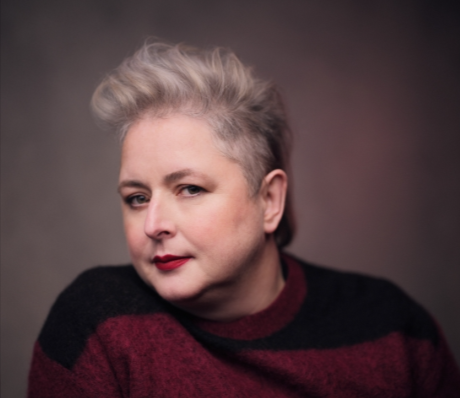
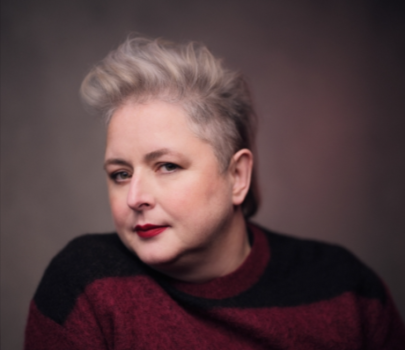
For one night only, Bafta award-winning Siobhán McSweeney (Derry Girls, Amandaland, Great Pottery Throw Down and Traitors Ireland) stars in Rockaby, Beckett’s evocative monologue of memory and loss.
Join us for an enthralling evening of theatre, music and a dramatic meeting of the two, with this tribute to playwright Samuel Beckett and composer Morton Feldman.
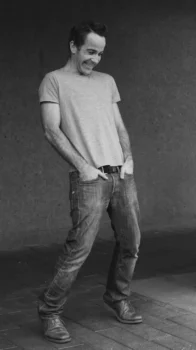
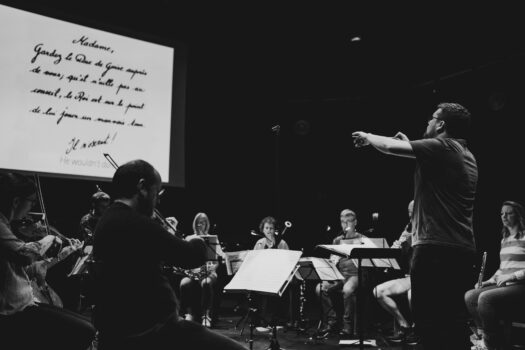
Visionary titans in their respective artforms, the warm friendship of the composer and playwright resulted in some of the most extraordinary artworks of the 20th century. Their unique collaboration Words & Music features a small group of musicians playing a distinctively taut Feldman score, which becomes a character in the drama, with Siobhán McSweeney playing ‘Words’ and Ensemble 360 ‘Music’, the two servants of ‘Croak’ played by Jonjo O’Neill.
Ensemble 360 will also give a performance of Feldman’s contemplative music for flute, percussion and piano Why Patterns?
Don’t miss your only chance to experience this extraordinary evening of music and drama, directed by Vicky Featherstone (Artistic Director, Royal Court Theatre and Founding Artistic Director, National Theatre of Scotland).
Save 20% when you book for 10 or more Music in the Round Sheffield concerts in one transaction.
Save 10% when you book for 5 or more Music in the Round Sheffield concerts in one transaction. Find out more.
Feldman & Beckett
Morton Feldman was a composer like no other. He studied with Stefan Wolpe and received guidance from Edgard Varèse. Of key importance were his friendships with John Cage and the New York painters, one of whom, Philip Guston, inspired Feldman to steer a path between the physical and the metaphysical; between concrete reality and subtle refinement; between impact and resonance. He could seem to go out on a limb but he also set great store by beauty. Like most truly original composers, Feldman was like his music: disarmingly transparent and intriguingly enigmatic. He had the confidence and intelligence to savour contradiction.
When I worked as Feldman’s editor in the late Seventies, he once remarked, “For most composers, form follows function; for me, function follows form”. He also told me that the salient aspects of music, for him, were rhythm and form. Rhythmic inventiveness is beguilingly evident in Why Patterns? and remained paramount in the works that followed, even as he moved from form to scale; and towards those extremely long pieces which he regarded as “like evolving things”.
Feldman worked on the music for Words & Music in 1987, just a few months before he died of cancer. His deep respect for Samuel Beckett (who had written the text for his opera, Neither) allowed Feldman to recover the warmth of what many of his admirers would have called a more familiar language: one that was, yes, distinctively painterly.
In an interview recorded in 1987, Feldman commented that Beckett was “a word man, a fantastic word man” and that “I always felt that I was a note man”. I would argue that Feldman and Beckett were also makers of images. The combination of words and notes in Words & Music (paradoxically, a ‘radio play’) is arrestingly dramatic.
Howard Skempton 2026 ©
“a gift of theatre … dazzling ”
WhatsonStage (on Landmark Productions’ Happy Days)
“There isn’t a hint of sentimentality in Vicky Featherstone’s delicately calibrated production of Samuel Beckett’s monologue about mortality.”
The Guardian
Siobhán McSweeney
Jonjo O’Neill

Ensemble 360
George Morton