NORTHERN LIGHTS: MUSIC FROM ICELAND
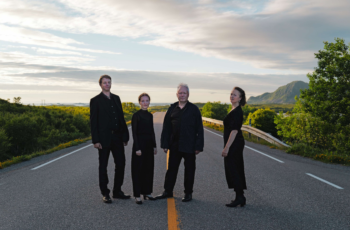
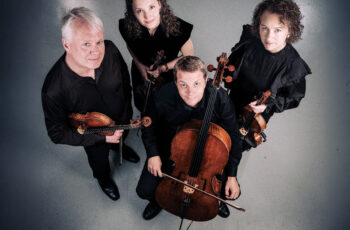
Phaedra Ensemble
Crucible Playhouse, Sheffield
Friday 27 November 2026, 7.00pm
Tickets:
£23
£14 UC, PIP & DLA
£5 Students & Under 35s

THORVALDSDÓTTIR Spectra (11’)
ARNALDS This Place is a Shelter (4’)
ÁRNADÓTTIR Skýin eru skuggar (10’)
SIGURÐSSON Nebraska (11’)
THORVALDSDÓTTIR Reminiscence (7’)
BJÖRK (arr. Chris Lawry) Unravel (4’)
BJÖRK (arr. Chris Lawry) Jóga (5’)
ARNALDS Beth’s Theme (from the soundtrack to Broadchurch) (5’)
BJARNASON Stillshot (11’)
JOHANNSSON Passacaglia (6’)
Phaedra Ensemble launches our Northern Lights weekend with a dazzling portrait of contemporary Icelandic music ranging from celebrated glacial works by Anna Thorvaldsdóttir and Oscar-winning Hildur Guðnadóttir, to new arrangements of the ever-inventive Björk and Ólafur Arnalds’ haunting original music for Broadchurch.
Evoking distant plains, shimmering permafrost landscapes, the flickering of flames and the chill of the tundra: this is music from the land of fire and ice.
Part of NORTHERN LIGHTS A sweeping weekend of elemental music from the frozen north.
Friday 27 November – Sunday 29 November 2026
Save 20% when you book for 10 or more Music in the Round Sheffield concerts in one transaction.
Save 10% when you book for 5 or more Music in the Round Sheffield concerts in one transaction. Find out more.
MUSIC FROM ICELAND: An Introduction to the Concert
Iceland has long punched above its weight, musically. A nation of fewer than four hundred thousand people, it has produced experimental pop icon Björk, ethereal post-rock soft boys Sigur Rós, anthemic indie-folksters Of Monsters and Men, and – of greatest cultural import –Eurovision star Daði Freyr. Perhaps there is something to be said for spending much of your day in darkness.
This concert traces a journey through Iceland’s music: TV scores and pop arrangements are placed alongside works by the island’s leading contemporary composers – Anna Thorvaldsdóttir and Valgeir Sigurðsson among them. While these musicians share certain preoccupations (timbral colour, richly emotive string melodies) what emerges is a portrait of a musical culture of extraordinary diversity. There is also, perhaps, a throughline: music of finely wrought detail, textural, stark, and variegated, mirroring the landscape of Iceland itself.
Benjamin Tassie
THORVALDSDÓTTIR Anna, Spectra
“When I start to write a piece,” Anna Thorvaldsdóttir told me when I interviewed her in 2021, “it always starts with an internal process of dreaming: what is this piece that hasn’t been written yet?” That dreaming infuses Anna’s music with a uniquely organic sense of form, grain, and colour. She holds structure in her imagination, conceiving of her works as ecosystems of material. Spectra – her 2017 piece for string trio – typifies this quality. Composed in six short movements that flow, seamlessly, one into the next, it begins with harmonics – glassy tones brought out by pressing lightly on the strings or bowing next to the bridge. Out of this sonority emerge elegiac melodies, translucent harmony, the downwards sweep of glissandi, and hurried chromatic scurries. It – like all of Anna’s gorgeously textural compositions – is music of contrast. And there is, in this, a feeling of the Icelandic landscape. “The balance between different forces in nature is absolutely fascinating and very inspiring,” she explains. “It’s not about mimicking sounds, it’s about experiencing different elements and how they come together, and how it is possible to think about musical material in that way.”
Benjamin Tassie
ARNALDS Ólafur, This Place is a Shelter / Beth’s Theme (from the soundtrack to Broadchurch)
The two works by Ólafur Arnalds point to another side of Iceland’s distinctive musical output. Where Anna and Hildur distil their music into the textures and spectra that make up instrumental sound, Ólafur embraces clarity of a different sort. In This Place is a Shelter – the last of the seven Living Room Songs, written, recorded, and filmed one a day in his Reykjavík apartment across a week in October 2011 – he writes minimal piano figures, underscored by strings that swell toward a rich intensity. The piece is, on its surface, deceptively simple. But what this simplicity belies is the music’s emotional openness. Unadorned, Ólafur’s music offers a moment of safety and sanctuary. The title, he has said, refers to his own home: the place he comes back to. This emotional resonance is perhaps what makes his music so well suited to film and television. This was especially evident in his breakout television score, the soundtrack to the 2013 series Broadchurch. Starring Olivia Colman and David Tennant, the series followed the police investigation into the murder of a child. Ólafur’s music was the emotional heart of the series. And this symbiosis – the music’s distinctive pall mirroring the despair of the plot – was no accident. As Graeme Virtue has noted, the composer was shaping the series before he was hired to score it: writer Chris Chibnall mapped out the whole saga while listening to Arnalds’ earlier albums of ‘instrumental melancholia’.
Benjamin Tassie
ÁRNADÓTTIR Arngerður, Skýin eru skuggar
The work was commissioned by the Icelandic ensemble Negla Piano Quartet and premiered in July 2025. It’s inspired by a poem by Jon Fosse, with a lyrical, atmospheric quality and influences from Icelandic folk music.
The Clouds Are Shadows
of seconds
and what then was the mountain beneath which
the bottomless darkness turned black
I have to speak
of the currents of days gone by
and these persistent drops of cold
inside my chest
and these burning stabs
well then
death in springtime is my weather of the sky
like fading dreams
while my heart struggles in my chest
against the death that wants to get inside
Jon Fosse (unofficial English translation)
SIGURÐSSON Valgeir, Nebraska
Valgeir Sigurðsson made his name as a producer and engineer – he founded the Bedroom Community label, home to Nico Muhly, Ben Frost, and Daníel Bjarnason, and has a long association with Björk. His string quartet Nebraska (2011) was written for the Chiara Quartet, then resident at the University of Nebraska. The piece evokes not Valgeir’s native Iceland, but his imagined impressions of Nebraska, a landscape he had never visited. What he found were echoes: two ‘sparsely populated, erosive lands’, flat and vast. The four movements – Flat Water, Landlocked, Erosion, Plainsong – map the character of those twin landscapes: hazy tremolo lines, pizzicato figures, close contrapuntal writing. It is music of long horizons, repetition and texture working like geologic forces: unhurried, stark, wearing its material down.
Benjamin Tassie
BJÖRK, Unravel / Jóga
The second half of the programme opens with two arrangements of songs by Björk: Unravel and Jóga, both from the singer’s 1997 album Homogenic. That album – following the success of Debut and Post – marked a return to Björk’s Icelandic roots: ‘she wanted the beats to sound volcanic, for the strings and the lyrics to be almost comically epic, and for the album to be a modern take on Icelandic pop,’ writes Michael Cragg. Unravel – presented here in an arrangement taken from the singer’s own 34 Scores for Piano, Organ, Harpsichord and Celeste – sees the voice in counterpoint with a lilting, two-note accompaniment that grows into Björk’s characteristic soaring lyricism. Jóga begins more stridently with a folk-like melody on the cello. Stripped of the track’s industrial beats, this arrangement reveals the intimate interior of Björk’s writing; its rhythmic complexities, melodic genius, and harmonic oddities. There is – again – the evocation of Iceland’s striking, alien landscapes. Written for her best friend Jóhanna (‘Jóga’) Jóhannsdóttir, Björk said of the song (in a typically idiosyncratically punctuated Instagram post): ‘for me , mother earth , jóga , moss and lava is the same thing … i wanted to open my chest and reveal my lava-heart.’
Benjamin Tassie
BJARNASON Daníel, Stillshot
Daníel Bjarnason’s Stillshot (2015) is fragmentary and dreamy. The title of the piece alludes to the early days of photography: the Daguerreotypes of the 1840s which required a subject to sit motionless for up to twenty minutes so that the plate could be exposed clearly. The resulting images are curious – nostalgic in hue, reflecting not so much the person as their effort to remain still. Daníel’s particular image, for the piece, was the fragmented memory of a fictional noblewoman. The recollections appear abruptly and vanish quickly, some of them distant, others clearer. In form, the piece resembles a chaconne: the same chord progression repeating throughout. The music deviates from this at the work’s centre, at the reverie’s deepest moment (the picture haziest), before returning at the quartet’s close.
Benjamin Tassie
JÓHANNSSON Jóhann, Passacaglia
The programme ends with Jóhann Jóhannsson’s Passacaglia. In many ways, this is an unusual end to a concert. It will not leave you with a spring in your step. Instead, it reveals a thread that has run through the programme: the extraordinary power and beauty of sound pared back; music stripped to its essence; the magic of instruments; the echo of a landscape likewise stark, forbidding and breathtaking in equal measure. Jóhann, who died in 2018 (aged only 48), was best known for his film scores: The Theory of Everything (2014), Sicario (2015), and Arrival (2016). Passacaglia is an earlier and more private thing: a string-quartet version of the finale of IBM 1401, A User’s Manual – his fourth full-length studio album, released on 4AD in 2006. Here, Jóhann works in the tradition of the Baroque Passacaglia, a dance form from the 17th century characterised by its slow, solemn atmosphere and repeating bass line. That line begins – in Passacaglia – in high strings that descend, stepwise, until the music folds back in on itself, line accompanying its own echo. The result is a lament, stark and simple. Then, the piece ends in something more violent: urgently repeated figures on tutti strings, alternating with fragments of the earlier, more elegiac material. This contrast – the same music of extremes heard throughout the programme – closing, perhaps, on that echo of the Icelandic landscape: black earth, green moss, and white snow.
Benjamin Tassie