NORTHERN LIGHTS: ENGEGÅRD QUARTET
Engegård Quartet
Crucible Playhouse, Sheffield
Saturday 28 November 2026, 7.00pm
Tickets:
£23
£14 UC, PIP & DLA
£5 Students & Under 35s
MOZART String Quartet No.15 in D minor K.421 (33’)
BEETHOVEN String Quartet No.11 Op.95, ‘Serioso’ (20’)
GRIEG String Quartet (33’)
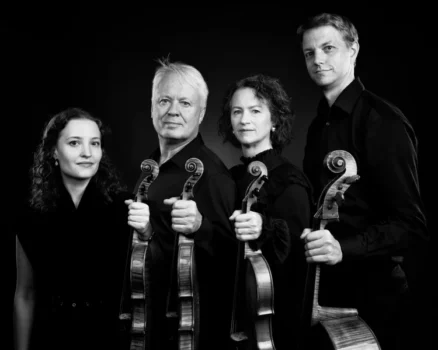
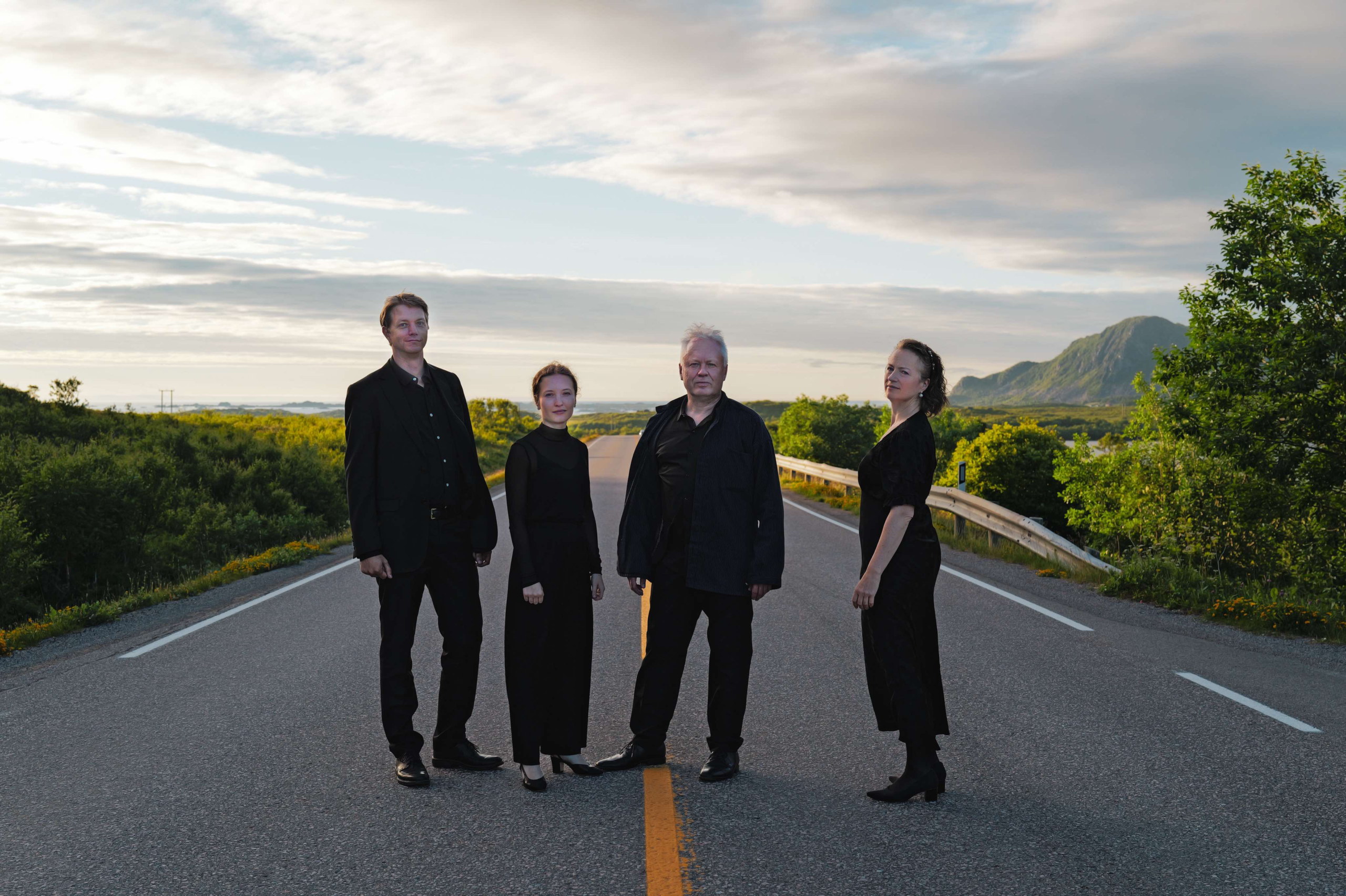
Norway’s multi-award-winning Engegård Quartet brings its customary boldness, energy and freshness to Sheffield. It is a quartet with a deep affinity with Mozart and Beethoven and a profound commitment to Norwegian music.
Fresh from releasing a highly praised complete recorded cycle of Mozart’s string quartets, this concert brings together key strands of their musical life.
Beethoven’s Serioso retains its power to move as it veers violently between brutish power and yearning lyricism before tumbling to its thrilling conclusion. Grieg’s only completed string quartet is joyously inspired by the unique sound of the hardanger fiddle, evoking singing, dancing and quarrels in a distinctly Norwegian musical language.
Part of NORTHERN LIGHTS A sweeping weekend of elemental music from the frozen north.
Friday 27 November – Sunday 29 November 2026
Save 20% when you book for 10 or more Music in the Round Sheffield concerts in one transaction.
Save 10% when you book for 5 or more Music in the Round Sheffield concerts in one transaction. Find out more.
MOZART Wolfgang Amadeus, String Quartet in D minor K421
Allegro
Andante
Menuetto
Allagretto ma non troppo
The warmth of the friendship between Mozart and Haydn is wonderfully demonstated by the set of Mozart string quartets published by Artaria in the Autumn of 1785: ‘Six Quartets for two violins, viola and violoncello, composed and dedicated to Signor Joseph Haydn, Master of Music for the Prince of Esterhazy, by his friend W.A. Mozart.’ This was very unusual for the time: composers almost always dedicated works to aristocratic supporters, not to fellow musicians. The first edition includes a long epistle addressed ‘To my dear friend Haydn’, where Mozart writes: ‘A father who had resolved to send his children out into the world took it to be his duty to confide them to the protection and guidance of a very celebrated man, especially when the latter by good fortune was at the same time his best friend. Here they are then, O great man and dearest friend.’ Mozart goes on to say that they are ‘the fruit of a long and laborious study,’ and that Haydn expressed his ‘satisfaction with them … May it therefore please you to receive them kindly and to be their father, guide and friend! … W.A. Mozart, 1 September 1785.’ The Quartet K421 is the only one of the ‘Haydn’ Quartets in a minor key, and D minor is a key that Mozart used for some of his most serious works, such as the Piano Concerto K466 and the Requiem. The opening theme is marked by a downward leap of an octave that dominates the first movement. While the Andate is more consoling, the Minuet is one of the most anguished Mozart ever wrote. The finale – a set of variations – is begins wisfully, but becomes increasingly austere and agitated.
Nigel Simeone 2013
BEETHOVEN Ludwig van, String Quartet in F minor Op.95 Serioso
Allegro con brio
Allegretto ma non troppo, attacca subito
Allegro assai vivace ma serioso. Più allegro
Larghetto espressivo. Allegretto agitato. Allegro
‘The Quartet is written for a small circle of connoisseurs and is never to be performed in public.’ Thus wrote Beethoven to Sir George Smart in October 1816. The kind of public concerts he had in mind – mixed programmes of vocal and instrumental music – would indeed make an odd setting for a work of such concentrated intensity. Composed in 1810 and revised for publication in 1815, Beethoven dedicated it to his friend, Nikolaus Zmeskall von Domanovetz, a talented amateur cellist who worked as Hungarian Court Secretary in Vienna.
One of Beethoven’s shortest and most tautly argued quartets, it was the composer himself who called it Quartetto serioso on the autograph manuscript. The Beethoven expert William Kinderman sums up its character as ‘dark, introspective, and vehement’, and it’s no surprise that Beethoven takes a similarly pithy approach to form: a much-shortened recapitulation in the first movement, a slow movement that eschews lyricism in favour of a chromatic fugal section, and a prickly Scherzo (more of an anti-Scherzo really, since it is not only completely lacking in any kind of humour, but is even marked ‘serioso’). The finale sustains this tension and agitation until the last moment – then something extraordinary happens: the music takes a sudden turn to F major, and there’s a dash to the finish. The American composer Randall Thompson commented that ‘no bottle of champagne was ever uncorked at a better time.’
© Nigel Simeone
GRIEG Edvard, String Quartet
Like Sibelius, Grieg tried the string quartet several times, but left only one mature, completed essay in the form. He began writing the Quartet in G minor in the summer of 1877, and worked on it through the winter in a composing retreat in Lofthus, in the Hardanger district of Norway. “I have recently finished a string quartet which I still haven’t heard,” the composer wrote to a friend in the summer of 1878. “It is in G minor and not planned to be meat for small minds! It aims at breadth, vigor, flight of imagination, and, above all, fullness of tone for the instruments for which it is written.”
An astonishingly rich sonority is indeed an obvious characteristic of this piece. All four parts have an extraordinary amount of double-stopping, creating a full-bodied sound that is orchestral but also often folkloric, like the Hardanger fiddle music that Grieg knew and loved so well.
The main theme of the work, however, comes from Grieg’s own song “Spillemaend” (Minstrels, or Fiddlers). The poem that Grieg set in 1876 as the first of six Ibsen songs (Op. 25) is about the Hulder, a water spirit who offers minstrels great musical gifts in exchange for their happiness, and the choice of this song here suggests an allusive and elusive personal program. The theme from the song is boldly stated at the outset and recurs often throughout the first movement. Motives from it appear in the middle movements, and the motto theme returns again in the leaping finale.
In many ways, Grieg’s bold rethinking of the venerable medium clearly inspired Claude Debussy in his own String Quartet, composed 10 years later and also in G minor. Harmony, rhythm, and sheer sound are all more important than the intimate polyphonic interplay that characterized the classical string quartet. The Romanze movement, with its increasingly abrupt mood swings between sunny lyricism and darkly agitated passion, takes its point of departure from late Beethoven, while the scherzo-like Intermezzo is the most folkloric in its rough dancing energy and spirited play with meter.
John Henken