TANGRAM: RITUALS FOR A CHANGING WORLD
Tangram Music Ensemble
Crucible Playhouse, Sheffield
Saturday 17 October 2026, 7.00pm
Tickets:
£17
£10 UC, PIP & DLA
£5 Students & Under 35s
Trad. Peach Blossom Spring (3’)
YONG River Song (4’)
CAGE Four³ (excerpt) (10’)
HOSOKAWA Small Chant (5’)
J. S. BACH Partita in G minor BWV 1004 – Sarabanda (arr. Daniel Shao) (4’)
YANG Origin 源
YONG River Song (8’)
VON BINGEN O vis eternitatis (arr. Alex Ho) (8’)
From the intimate to the divine: an intriguing musical exploration of Chinese music and philosophy alongside European classical traditions.
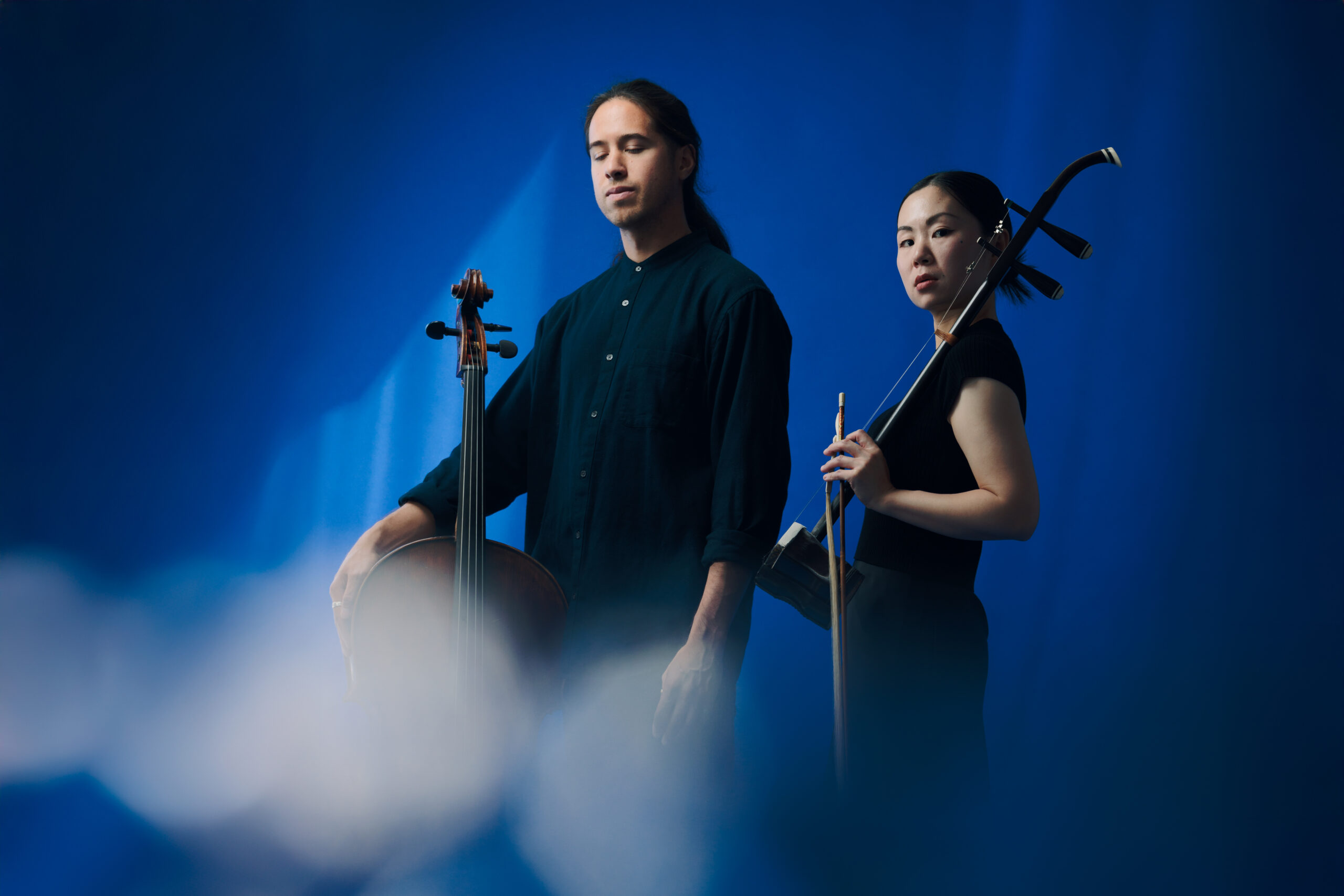
Moving between eastern and western instruments, these innovative musicians explore how ancient divination practices have inspired music, ritual and performance for over 1,000 years.
Praised for their “highly imaginative” (I Care If You Listen) and “powerfully theatrical performance” (Tempo) with an “intoxicating […] mood of poetry, restraint and elegance”, (The Stage) Tangram specialise in cross-cultural productions and are Associate Artists at LSO St Luke’s.
Save 20% when you book for 10 or more Music in the Round Sheffield concerts in one transaction.
Save 10% when you book for 5 or more Music in the Round Sheffield concerts in one transaction. Find out more.
Rituals for a Changing World
Inspired by one of the earliest texts of Chinese philosophy- the I Ching (The Book of Changes). This ancient text was originally used as a divination text and was later the inspiration behind the development of binary code by the philosopher and polymath Gottfried Wilhelm Leibniz. This concert explores this connection between East and West, past and future and how nearly a thousand years of musical thought can be translated into contemporary sound. This performance also explores how this link between past and future can bring us more into the present moment, through the integration of live improvisations directed from the philosophies of the I Ching.
During the performance, visual representations of hexagrams from the ancient Chinese text I Ching will be generated in real time, projected around the space. These combinations of Yin and Yang guide a series of structured improvisations between the musicians, shaping the music and allowing each performance to take a different path. Music by John Cage and J S Bach appears alongside a medieval chant by Hildegard von Bingen, and works by Yang Yong, Li bo and Kang Yang. Although separated by time, geography and musical language, these works share a sensitivity to resonance, stillness and the subtle forces that shape the natural world.
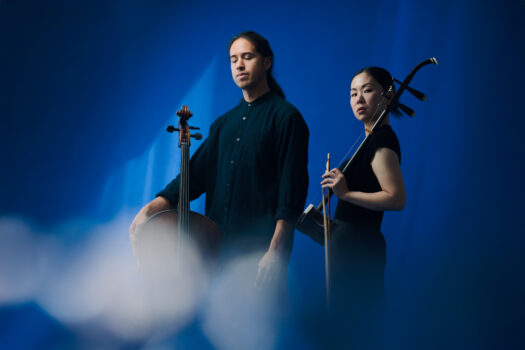
The performance will feature a unique combination of instrumentation, with Yi-Hsuen Chen on flute, Peng Cheng on erhu, Garwyn Linnell on cello and Kang Yang on Guzheng.
Visual aspect and lighting design
The musicians will be surrounded by a responsive LED installation created by artist Ke Peng, with visuals by Chang Meng. Light shifts in colour and pattern across the performance, forming a changing visual landscape around the musicians along with a changing visual landscape representing the elements of the I Ching which will direct the performers in their improvisations.