A brand-new storybook concert, based on the modern classic book series by Benji Davies.
The Storm Whale tells the story of a child, and a whale washed up on the beach, and friendships that will change their lives forever and echo down the generations. These heart-warming tales of friendship, love and courage are brought to life through music specially written to accompany the book by our Children’s Composer-in-Residence, Paul Rissmann.
Perfect for 3– 7-year-olds, this is a fun introduction to a live concert experience, brimming with wonderful music, memorable songs, images from the book and plenty of chances to join in.
“The Storm Whale tells a simple but powerful story about loneliness and the love between a parent and child… The world may be as big and lonely and incomprehensible as the ocean, but still it’s possible to find tremendous, heart-stopping tenderness.” The New York Times on the book
Save 20% when you book for 10 or more Music in the Round concerts in one transaction. Save 10% when you book for 5 or more Music in the Round concerts in one transaction. Find out more.
With many thanks to all our funders, including:
The Sarah Nulty Power of Music Foundation, Gripple Foundation, JG Graves Charitable Trust, Sheffield Town Trust and Wise Music Foundation
“The musicians did a wonderful job of introducing the young audience to enjoyment of the theatre, live music and engaging story-telling. Proof of their success [were] the lines of excited children coming up to meet the musicians who had gathered in the foyer with their instruments.”
The Yorkshire Post (on a previous Music in the Round storybook concert)
Tickets*: £19 Pay it forward ticket – pay a little more to subsidise other tickets
£16
£12 Supported ticket – solidarity price for anyone feeling the pinch
A history of land rights and protest in folk song and story, the show connects the Norman Conquest and Peasants’ Revolt with current issues like the housing crisis, reparations, climate breakdown and food sovereignty via the Enclosures, English Civil War and Industrial Revolution, drawing a compelling narrative through the history of England in folk song, stories and poems. Part TED talk, part history lecture, part folk club sing-a-long, part storytelling session… Come and share in these tales as they have been shared for generations. See http://threeacresandacow.co.uk/ for more information. “I think about this show all the time. It has totally changed the way I think about colonialism, direct action and English nationalism. Thinking about it today, four years after seeing the show, it’s clear it was a life changing event for me.” Monique, Audience member “The history lesson I’ve always wanted. Thank you for a very entertaining/life changing evening. I’ll be looking at the land and listening to folk songs in a very different way” Emily, Audience member
*This event does not qualify for any other Music in the Round ticket offers or discounts.
MENDELSSOHN Variations concertantes (10’) CHOPIN Piano Trio (30’) C SCHUMANN Three Romances for Violin and Piano (10’) MENDELSSOHN Piano Trio No.2 in C minor (30’)
Astirringevening of romantic favourites performed with customary flair and intimacy by Sheffield favourites, the Leonore Piano Trio. From Chopin’s passionate Trio – his only work for the combination of piano, violin and cello,described by the English composer Charles Willeby as “one of the most perfect… of Chopin’s works”– to Mendelssohn’s lyrical Second Piano Trio, this is music to enchant, captivate and delight.
Save 20% when you book for 10 or more Music in the Round concerts in one transaction. Save 10% when you book for 5 or more Music in the Round concerts in one transaction. Find out more.
This concert is generously sponsored by Alison Batchelor, in memory of Aidan Batchelor
MENDELSSOHN Felix, Variations concertantes, Op.17
Mendelssohn wrote the Variations concertantes for cello and piano when he was twenty years old. It is one of two pieces that Mendelssohn devoted to his brother Paul, who played cello as a hobby, rather than as a profession like his better-known siblings. Consisting of a theme and 8 following variations, the entire setis lyrical and elegant andshowcases a clever thematic dialogue between the cello and the piano. The shifting attention between the two instruments is subtle, with the final variation bringing the piece to a close with an understated ending.
CHOPIN Frédéric, Piano Trio in G minor, Op. 8
i. Allegro con fuoco
ii. Scherzo
iii. Adagio sostenuto
iv. Finale: Allegretto
Chopin completed his only Piano Trio in 1829, the year in which he graduated from the Warsaw Conservatoire. It was an exciting time for the young composer: in the space of a few months he met Hummel and heard Paganini play. He also gave his début recital in Vienna and, back in Warsaw, gave the first performance of his Piano Concerto No. 2 in F minor (which – confusingly – was the first of the two concertos to be written). The Trio opens with a stern series of chords marked ‘risoluto’, and the first movement is dark and impassioned. The Scherzo is more relaxed and benign, while the slow movement is quite surprising, since much of it is a dramatic dialogue between the three instruments that only occasionally blossoms into more extended melodic passages. The finale is very much in the style of the last movements of his piano concertos, written at the same time, but there’s also a ruggedness to the Trio that suggests the influence of Beethoven on the young Chopin. His letters reveal two interesting aspects of this work: firstly, it was composed quite slowly, over a the course of about a year; and second, Chopin contemplated a much more unusual scoring, using a viola instead of a violin, in order to achieve the kind of instrumental colour he was seeking here. As it turned out, he ended up with the traditional piano trio ensemble, but in 1830, a year after it was finished, he was still writing to a friend that is should be published with a viola part as an alternative to the violin, though this didn’t happen. Chopin’s Premier Trio (as it was described on the title page) was first printed by the Leipzig firm of Kistner in 1832 and in Paris and London (as his ‘First Grand Trio’) the following year, with a dedication to Prince Anton Radziwill – a name more often associated with Beethoven.
NIGEL SIMEONE 2010
SCHUMANN Clara, Three Romances for violin and piano, Op.22
i. Andante molto
ii. Allegretto, mit zarten Vortrage
iii. Leidenschaftlich schnell
Clara and Robert Schumann moved to Düsseldorf in early 1853, and found a house where Clara could practice and compose without disturbing her husband. She made the most of their improved circumstances and wrote several new pieces during the summer of 1853, including the Three Romances dedicated to Joseph Joachim, a close friend of both Robert and Clara. These character pieces, of which the third is much the longest, are among the last pieces Clara composed: Robert’s mental health took a turn for the worst the following year and he was moved to a sanatorium where Clara was only allowed to visit when it was clear that he was dying in 1856. After his death, she composed almost nothing, concentrating on playing the piano and overseeing Robert’s musical legacy.
Nigel Simeone 2014
MENDELSSOHN Felix, Piano Trio No. 2 in C minor, Op. 66
i. Allegro energico e fuoco
ii. Andante espressivo
iii. Scherzo. Molto Allegro quasi Presto
iv. Allegro appassionato
The C minor Piano Trio was started in February 1845 and finished in Frankfurt on 30 April. Mendelssohn gave the manuscript to his sister Fanny on her birthday, 14 May, and the published score has a dedication to Louis Spohr. The first performance was given in the Leipzig Gewandhaus on 20 December 1845, performed by Ferdinand David, Carl Wittmann and Mendelssohn himself. Mendelssohn’s own view of the work was equivocal: he told Spohr that ‘nothing seems good enough to me, and in fact neither does this trio.’ But this is to underestimate the power and intensity of the work. While it may not have the melodic exuberance of its predecessor (the better-known Piano Trio in D minor), it is dramatic and serious.
In the first movement, the darkly energetic opening theme on the piano accompanied by sustained strings sets the tone for much of what follows, and as a contrast it, Mendelssohn produces a gloriously ardent second theme in E flat major which provides most of the material for the development section, while the close of the movement has a vehemence that recalls Beethoven. The slow movement is a kind of Barcarolle (a favourite Mendelssohn form in solo piano works: there are several ‘Venetian Gondola Songs’ among his Songs without Words). The Scherzo is one of Mendelssohn’s distinctive and very fast duple-time movements, similar to the scherzo in A Midsummer Night’s Dream (composed in 1843). For the finale, Mendelssohn took his inspiration from J.S. Bach whose music he had done so much to revive. It begins as a kind of titanic Gigue, but it’s at the centre of the movement that the Bachian parallels are most striking. Mendelssohn introduces a chorale-like idea on the piano, its second phrase resembling the second line of the chorale known in English-speaking world as ‘All people that on earth do dwell’ (‘Sing to the Lord with cheerful voice’). As a composer with thoroughly Romantic sensibilities, Mendelssohn uses this to drive towards an exultant climax in C major.
MOZART Sonata in E minor K304 (12’) R SCHUMANN F-A-E sonata (mvt 2) (3’) MOZART Sonata in G K301 (15’) R SCHUMANN Sonata No.1 in A minor Op.105 (17’) MOZART Sonata in A K305 (15’)
Mozart’s glorious violin sonatas – among the composer’s most charming works – nestle between music by Robert Schumannin this hour-long recital for violin and piano. Violinist Claudia Ajmone-Marsan and pianist Tim Hortonpromise an hour of exuberant, lyrical, and joyful music from two of the greatest composers of the Classical and Romantic periods.
Save 20% when you book for 10 or more Music in the Round concerts in one transaction. Save 10% when you book for 5 or more Music in the Round concerts in one transaction. Find out more.
MOZART Wolfgang Amadeus, Sonata for Violin and Piano in E minor K304
Allegro
Tempo di Menuetto
Mozart’s visit to Paris in 1778 – fifteen years after his dazzling first appearance in the city as a child prodigy – was not a success, and the composer was irritated by the apparent indifference of both the musical public and the aristocracy. The highlight of his stay was probably the first performance of the ‘Paris’ Symphony K297 on 18 June. Among the works he composed in Paris was the Violin Sonata in E minor (a key seldom used by Mozart). It has been suggested that the desolate mood of this work – headed “Sonata IV à Paris” in Mozart’s hand on the manuscript – may reflect the tragic illness and death (on 3 July) of Mozart’s mother, who was with him in Paris. While this may be an unduly Romantic interpretation, it is certainly one of Mozart’s bleakest works from this period, and also one of remarkable concentration – in just two movements, the second of which is a melancholy, restrained Minuet in which both players are directed to play sotto voce at several points in the score.
The F-A-E Sonata wascreated in 1853, as a gift for violinist Joseph Joachim. Writtenfor violin and piano, and made up of four movements, the sonatawas actually composed by 3 individuals; Robert Schumann, Johannes Brahams, and Albert Dietrich, who was a pupil of Schumann’s. The three composers had recently befriended the violinist and challenged Joachim to work out who had composed which movement. Schumann was responsible for movements 2 and 4, the 2nd movement being a short Intermezzo. The Sonata’s movements are all based on the musical notes of F, A and E, and are taken from the first letters of Joachim’s adopted motto “Frei abereinsam”, meaning “free, but lonely”. Schumann would later add two more movements to the ones written for Joachim, to make his Violin Sonata No.3 in A minor. The F-A-E Sonata wasn’t published in its entirety until 1935, 82 years after it was first written.
MOZART Wolfgang Amadeus, Sonata for Violin and Piano in G, K301
Allegretto con spirito
Allegro The G Major Sonata for Violin and Piano is the first of a group of six for piano and violin composed in Mannheim and Paris during the course of the tour undertaken by Mozart and his mother during 1777 and 1778. Mozart seems to have been inspired to write these works after a chance discovery. On October 6, 1777, he wrote a letter to his father about a set of sonatas by the Dresden musician Joseph Schuster (1748–1812): “I send my sister herewith six duets for harpsichord and violin by Schuster, which I have often played here. They are not bad. If I stay on I shall write six myself in the same style, as they are very popular here.” What seems to have struck Mozart about Schuster’s sonatas is the independence of the two instrumental parts – with much more prominent writing for violin than in Mozart’s earlier sonatas for this combination. These six sonatas were published in Paris in as Mozart’s “Opus 1”, dedicated to Maria Elisabeth, Electress of the Palatinate. The first movement is a variant of sonata form (without a significant development of the ideas), and the second suggests a bucolic dance, with a minor-key episode at its centre providing a contrast to the sunnier outer sections.
Nigel Simeone 2013
SCHUMANN Robert, Sonata for Violin and Piano in A minor, Op.105
Mit leidenschaftlichem Ausdruck [With passionate expression]
Allegretto
Lebhaft [Lively]
Schumann often composed in bursts of creative speed, and his Violin Sonata No.1 Op.105 was written in less than a week in September 1851 – starting on his wedding anniversary (12 September) and finishing five days later. Originally he described the work as a ‘Duo for piano and violin’ and it was the first of what Linda Correll Roesner has described as ‘an exceptional group of three chamber works’ written within a couple of months – along with the Piano Trio in G minor Op.110 and the Violin Sonata No.2 Op.121. In his articles, Schumann often wrote about the challenges of musical form for any composer after Beethoven. In this sonata, Schumann uses great economy of means, evident right from the start: the themes of the first movement are based on a limited range of notes, characterised by a falling semitone figure that is heavy with melancholy. The central movement is less anguished – a kind of quirky intermezzo in F major –while the finale is urgent and uncompromising. Near the close, a recollection of the sonata’s opening theme is undermined by the restless, rapid semiquavers that dominate the movement.
The sonata was first played by Joseph von Wasilewski (leader of Schumann’s orchestra in Düsseldorf) and Clara Schumann, at a private run-through on 16 October 1851. The public premiere was given a few months later in Leipzig on 21 March 1852, performed by Ferdinand David with Clara Schumann. Both Clara and Wasilewski recalled playing the piece through for Schumann. According to Clara, ‘I was so restless, I had to try Robert’s new sonata this very day. We played it, and were particularly moved by the very elegiac first movement and the lovely second movement. Only the somewhat less charming third movement caused us some difficulty.’ Wasilewski recalled that ‘on the whole Schumann was satisfied with my performance. Only my playing of the finale failed to please him. We went through it three more times, but Schumann said that he had expected the violin part to have a different effect. I was unable to convey the unyielding, brusque tone of the piece to his satisfaction.’ The finale clearly proved troublesome for both pianist and violinist. Clara’s suggestion that it is ‘less charming’ is puzzling. While the music is indeed brusque (as Wasilewski says) – Schumann resists any hint of easy allure by interrupting its more tender moments with abrupt chords – it is strong and intense, bringing this highly original piece to an impassioned conclusion.
Sonata in A was inspired by Joseph Schuster’s piano and violin duets, which Mozart first played whilst looking for jobs in Mannheim, Germany. The sonatais made of 2 movements. The first is in sonata form, which follows the structure of introducing a musical idea or ideas, exploring it and then returning to the main themes at the end. It is one of Mozart’s most joyous melodies ofall his violin sonatas. The second movement is a theme–and–variation form and completely contrasts with the tone of the first. It has a slower tempo and a much more subdued melody and is followed by six variations on the main theme. Typical of theme-and-variation pieces of the time, the penultimate variation is very stark, and in a minor mode. The set ends with an up-tempo dance and is the only piece of the lot that is in triple metre instead of duple.
Music in the Round invites your class to take part in a brilliant music project, culminating in a live concert at The Civic, Barnsley.
Paul Rissmann (composer) has created a fantastic piece of music based around the children’s book Giddy Goat (Jamie Rix and Lynne Chapman) which includes songs for your class to learn and join in with in the concert.
Our EY and KS1 practitioners will support you to embed singing and music-making in classroom learning throughout the project, with training, resources, and in-school support newly developed around the Giddy Goat story. The project introduces young children to classical music in a fun and educational setting, including a concert featuring strings, woodwind and horn, presented together with story-telling and projected illustrations.
Being a mountain goat is no fun when you are scared of heights! Stand poor Giddy on a mountain ledge and his head starts spinning and his knees turn to jelly. But can he find the fearless goat inside himself in time to rescue little Edmund?
Performed by the wonderfully dynamic and hugely engaging musicians from Ensemble 360, this concert is a great introduction to live music for early years and KS1 children. It’s full of wit, invention, songs and actions, and plenty of opportunities to join in.
HOLST Phantasy String Quartet BRITTEN Three Divertimenti for String Quartet
HOWELLS Phantasy Sting Quartet PURCELL Three-part Fantasias
VAUGHAN WILLIAMS(arr. Gerigk) The Lark Ascending
The violin soars melodiously above the rest of the quartet in the gorgeous arrangement of Vaughan Williams’ most popular work The Lark Ascending, which concludes this concert of English music. Fantasies from the Baroque gems of Purcell’s Three-part Fantasias to Imogen Holst’s Phantasy String Quartet sit alongside this perennial favourite.
SHEFFIELD JAZZ
The Pocket Ellington, Alan Barnes & Dave Green & Vimala Rowe
Double bill featuring a classic Ellington sound followed by award-winning singer Vimala Rowe, a major talent on the British jazz scene.
The Pocket Ellington featuring Alan Barnes & Dave Green ALAN BARNES baritone & alto sax, clarinet ROBERT FOWLER tenor sax SIMON FINCH trumpet DAVID LALLJEE trombone ALEX WEBB piano/MD DAVE GREEN bass ALFONSO VITALE drums
Born out of a love of the music of the great Duke Ellington, The Pocket Ellington manages what ought to be impossible. Great charts are presented in clever new arrangements which evoke the period but also offer solo space to these top-flight musicians. Their repertoire also includes pieces from artists and arrangers who were influenced by the Duke – Mingus, Monk and Gil Evans. It’s a big sound from a pocket band.
“A terrific band with a rhythm section as good as any on the planet” – Blue Light, magazine of the Duke Ellington Society UK
Vimala Rowe Quartet
VIMALA ROWE vocals
CHARLIE FLINT piano
MIKELE MONTOLLI bass
DARREN BECKETT drums
From her training in Hindustani classical music, to world music, soul and effortlessly swinging jazz, award-winning singer Vimala Rowe has rapidly become recognised as a major talent on the British jazz scene. Sell out performances at Ronnie Scott’s, London Jazz Festival and countrywide, she delights and enchants her audiences with her naturally passionate and emotive range of expression.
“… a singer of quite astonishing versatility and adaptability…” – London Jazz News
*Sheffield Jazz tickets do not qualify for any other Music in the Round ticket offers or discounts.
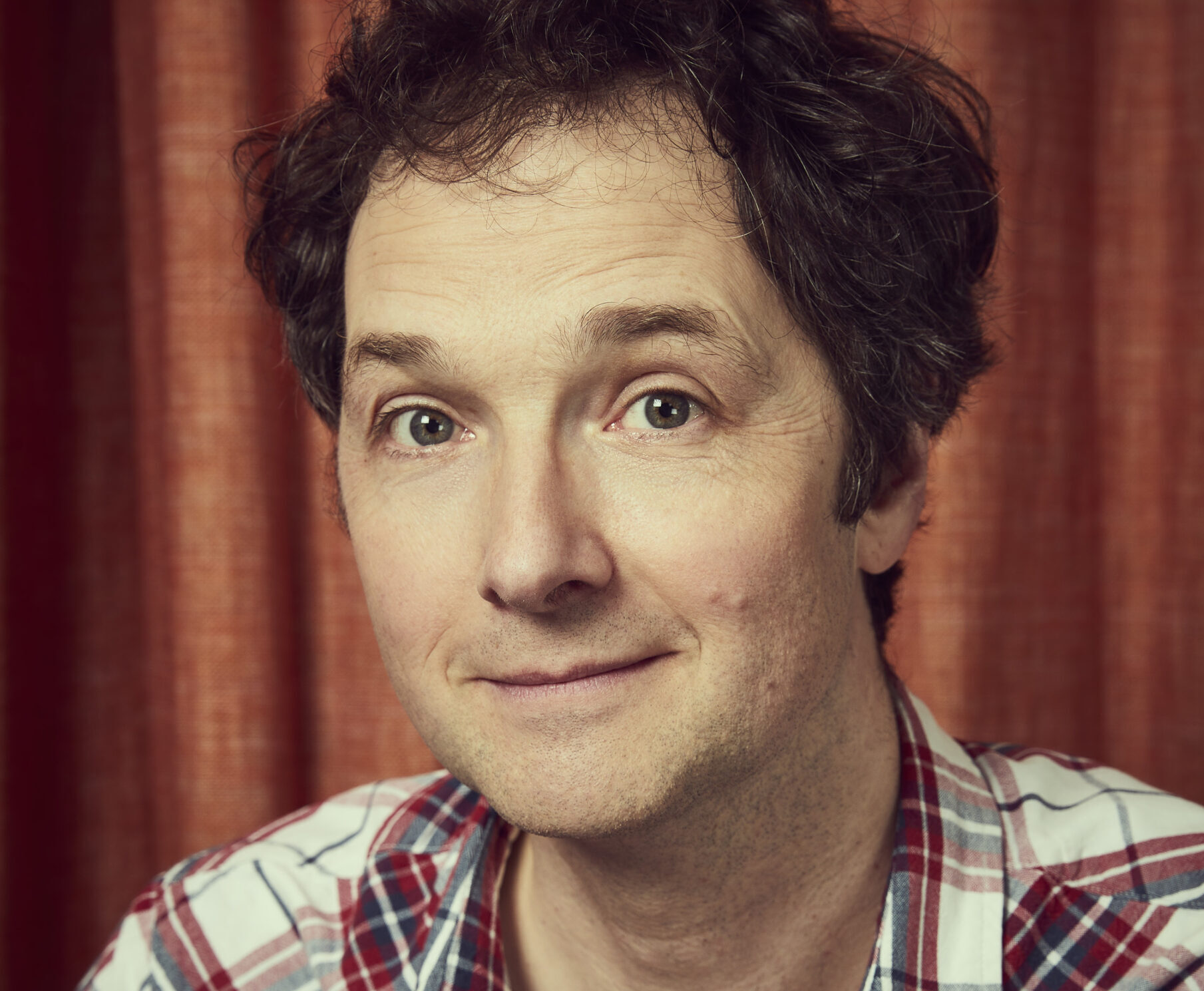
Chris Addison (The Thick of It, Mock the Week) joins Ensemble 360 to bring his infectious enthusiasm for classical music to the Crucible.
Telling the story of Europe from the courts of 17th century Italy, through the political and social revolutions of 18th and 19th century Europe, to the weird and wonderful sounds conjured by today’s contemporary composers, Chris takes us on a journey through the rich, vibrant – and sometimes bizarre – history of classical chamber music.
Discover how a bassoonist beat up Bach, Mozart’s passion for the newly-invented clarinet (and for crude poetry), Beethoven’s embattled relationship with his failing hearing and the Emperor of France, and how Schoenberg tore up the musical rule book in a continent ravaged by war. Featuring live performances from some of the UK’s finest musicians and the inimitable curiosity and wit of Chris Addison’s storytelling, this will be an evening of insight, laughter and spine-tingling music.
Programme includes excerpts from: CORELLI Trio Sonata da Camera Op.2 No.1 in D STROZZI(arr. Birchall) Che si può fare Op.8 JS BACH Prelude from Cello Suite No.1 in G CPE BACH Flute concerto in D minor HAYDN String Quartet Op.76 No. 3 ‘Emperor’ MOZART Trio for Piano, Clarinet and Viola K.498 ‘Kegelstatt’ BEETHOVEN Quintet for Piano and Wind Op.16 CHOPIN Nocturne No.20 in C sharp minor DEBUSSY Syrinx S. COLERIDGE-TAYLOR Nonet in F minor Op.2 SMYTH Piano Trio in D minor SHOSTAKOVICH String Quartet No.8 in C minor Op.110 LIGETI 10 Pieces for Wind Quintet REICH New York Counterpoint MEREDITH Tuggemo
Save 20% when you book for 10 or more Music in the Round concerts in one transaction. Save 10% when you book for 5 or more Music in the Round concerts in one transaction. Find out more.
BACH Allemanda, Sarabanda and Giga from Partita No.2 GRAPELLI Swing 39 HANDEL Passacaglia SAKAMOTO Merry Christmas Mr Lawrence
Nigel Kennedy, the best-selling classical violinist of all time, takes to the Crucible Theatre stage for this electrifying evening of music for violin and cello. Kennedy – playing violin, electric violin and piano – will be joined by leading cellist Beata Urbanek-Kalinowska (cello, electric cello), to perform music by Bach, Ryuichi Sakamoto and others, alongside Kennedy’s own compositions and violin favourites.
One of the great violin virtuosos, Kennedy’s singular career has included collaborations with Paul McCartney, Kate Bush, The Who and Led Zeppelin, as well as performances with the world’s leading orchestras.
Save 20% when you book for 10 or more Music in the Round concerts in one transaction. Save 10% when you book for 5 or more Music in the Round concerts in one transaction. Find out more.
The White Rock Theatre & Music in the Round invites your class to take part in a brilliant free music project, culminating in a live concert at the White Rock Theatre for the first time!
Paul Rissmann (composer) has created a fantastic piece of music based around the children’s book Giddy Goat (Jamie Rix and Lynne Chapman) which includes songs for your class to learn and join in with in the concert.
EY and KS1 practitioners will support you to embed singing and music-making in classroom learning throughout the project, with an INSET and resources, newly developed around the Giddy Goat story. The project introduces young children to classical music in a fun and educational setting, including a concert featuring strings, woodwind and horn, presented together with story-telling and projected illustrations.
Being a mountain goat is no fun when you are scared of heights! Stand poor Giddy on a mountain ledge and his head starts spinning and his knees turn to jelly. But can he find the fearless goat inside himself in time to rescue little Edmund?
Performed by the wonderfully dynamic and hugely engaging musicians from Ensemble 360, this concert is a great introduction to live music for early years and KS1 children. It’s full of wit, invention, songs and actions, and plenty of opportunities to join in.
Jasdeep Singh Degun (sitar) and Gurdain Rayatt (tabla).
Multi-award-winning sitarist Jasdeep Singh Degun has collaborated with musicians from a wide range of musical backgrounds, including Cerys Matthews, Nitin Sawhney, Mel C and as artist-in-residence with Opera North.
This concert sees Jasdeep sharing intimate duets with tabla player Gurdain Rayatt in masterful improvisations rooted in thousands of years of Indian tradition.
Jasdeep is highly regarded as an artist who is continually pushing the versatility of his instrument and reshaping the musical landscape for his peers, and for generations to come. Amid artist residencies and fellowships, an international concert schedule and royal command performances, Jasdeep’s lifelong training in gayaki ang – a lyrical approach to the sitar that mimics the human voice – has remained his anchor and his passion.
Book all four Music in the Round concerts at Cast in the same transaction and save 20% on your tickets!
MOZART Sonata in E minor K304 (12′) SCHUMANN F-A-E sonata, ‘II. Intermezzo’ (3′) LUTOSLAWSKI Subito (6′) SCHUMANN Sonata No.1 in A minor Op.105 (17′) MOZART Sonata in G K301 (15′) MESSIAEN Theme and variations (11′) MOZART Sonata in A K.305 (15′)
Elegant, moving and charming, these gems of chamber music range from the playful and witty to the profound and exquisite. Paired with other works for this most intimate and expressive duo of violin with piano, this delightful programme combines familiar favourites with new discoveries.
Book all four Music in the Round concerts at Cast in the same transaction and save 20% on your tickets!
MOZART Wolfgang Amadeus, Sonata for Violin and Piano in E minor K304
Allegro
Tempo di Menuetto
Mozart’s visit to Paris in 1778 – fifteen years after his dazzling first appearance in the city as a child prodigy – was not a success, and the composer was irritated by the apparent indifference of both the musical public and the aristocracy. The highlight of his stay was probably the first performance of the ‘Paris’ Symphony K297 on 18 June. Among the works he composed in Paris was the Violin Sonata in E minor (a key seldom used by Mozart). It has been suggested that the desolate mood of this work – headed “Sonata IV à Paris” in Mozart’s hand on the manuscript – may reflect the tragic illness and death (on 3 July) of Mozart’s mother, who was with him in Paris. While this may be an unduly Romantic interpretation, it is certainly one of Mozart’s bleakest works from this period, and also one of remarkable concentration – in just two movements, the second of which is a melancholy, restrained Minuet in which both players are directed to play sotto voce at several points in the score.
The F-A-E Sonata wascreated in 1853, as a gift for violinist Joseph Joachim. Writtenfor violin and piano, and made up of four movements, the sonatawas actually composed by 3 individuals; Robert Schumann, Johannes Brahams, and Albert Dietrich, who was a pupil of Schumann’s. The three composers had recently befriended the violinist and challenged Joachim to work out who had composed which movement. Schumann was responsible for movements 2 and 4, the 2nd movement being a short Intermezzo. The Sonata’s movements are all based on the musical notes of F, A and E, and are taken from the first letters of Joachim’s adopted motto “Frei abereinsam”, meaning “free, but lonely”. Schumann would later add two more movements to the ones written for Joachim, to make his Violin Sonata No.3 in A minor. The F-A-E Sonata wasn’t published in its entirety until 1935, 82 years after it was first written.
LUTOSŁAWSKI Witold, Subito
One of Lutosławski’s final works, Subito was commissioned in 1992 by Joseph Gingold for the 1994 Indianapolis International Violin Competition. He had learned to play the violin as a child, something that served him in good stead when composing for strings throughout his life. Lutosławski believed the piece to be a “functional” challenge that would show off a competitor’s virtuosity, with a refrain from the opening bars being used to form four episodes that come together to create a story of violinistic excellence.This commission arrived shortly after Lutosławski was diagnosed with cancer, putting on hold a violin concerto that he had been writing for acclaimed violinist Anne-Sophie Mutter. Fragments of this concerto were only discovered posthumously, making Subito his final published work for violin before his death.
SCHUMANN Robert, Sonata for Violin and Piano in A minor, Op.105
Mit leidenschaftlichem Ausdruck [With passionate expression]
Allegretto
Lebhaft [Lively]
Schumann often composed in bursts of creative speed, and his Violin Sonata No.1 Op.105 was written in less than a week in September 1851 – starting on his wedding anniversary (12 September) and finishing five days later. Originally he described the work as a ‘Duo for piano and violin’ and it was the first of what Linda Correll Roesner has described as ‘an exceptional group of three chamber works’ written within a couple of months – along with the Piano Trio in G minor Op.110 and the Violin Sonata No.2 Op.121. In his articles, Schumann often wrote about the challenges of musical form for any composer after Beethoven. In this sonata, Schumann uses great economy of means, evident right from the start: the themes of the first movement are based on a limited range of notes, characterised by a falling semitone figure that is heavy with melancholy. The central movement is less anguished – a kind of quirky intermezzo in F major –while the finale is urgent and uncompromising. Near the close, a recollection of the sonata’s opening theme is undermined by the restless, rapid semiquavers that dominate the movement.
The sonata was first played by Joseph von Wasilewski (leader of Schumann’s orchestra in Düsseldorf) and Clara Schumann, at a private run-through on 16 October 1851. The public premiere was given a few months later in Leipzig on 21 March 1852, performed by Ferdinand David with Clara Schumann. Both Clara and Wasilewski recalled playing the piece through for Schumann. According to Clara, ‘I was so restless, I had to try Robert’s new sonata this very day. We played it, and were particularly moved by the very elegiac first movement and the lovely second movement. Only the somewhat less charming third movement caused us some difficulty.’ Wasilewski recalled that ‘on the whole Schumann was satisfied with my performance. Only my playing of the finale failed to please him. We went through it three more times, but Schumann said that he had expected the violin part to have a different effect. I was unable to convey the unyielding, brusque tone of the piece to his satisfaction.’ The finale clearly proved troublesome for both pianist and violinist. Clara’s suggestion that it is ‘less charming’ is puzzling. While the music is indeed brusque (as Wasilewski says) – Schumann resists any hint of easy allure by interrupting its more tender moments with abrupt chords – it is strong and intense, bringing this highly original piece to an impassioned conclusion.
MOZART Wolfgang Amadeus, Sonata for Violin and Piano in G, K301
Allegretto con spirito
Allegro The G Major Sonata for Violin and Piano is the first of a group of six for piano and violin composed in Mannheim and Paris during the course of the tour undertaken by Mozart and his mother during 1777 and 1778. Mozart seems to have been inspired to write these works after a chance discovery. On October 6, 1777, he wrote a letter to his father about a set of sonatas by the Dresden musician Joseph Schuster (1748–1812): “I send my sister herewith six duets for harpsichord and violin by Schuster, which I have often played here. They are not bad. If I stay on I shall write six myself in the same style, as they are very popular here.” What seems to have struck Mozart about Schuster’s sonatas is the independence of the two instrumental parts – with much more prominent writing for violin than in Mozart’s earlier sonatas for this combination. These six sonatas were published in Paris in as Mozart’s “Opus 1”, dedicated to Maria Elisabeth, Electress of the Palatinate. The first movement is a variant of sonata form (without a significant development of the ideas), and the second suggests a bucolic dance, with a minor-key episode at its centre providing a contrast to the sunnier outer sections.
Nigel Simeone 2013
MESSIAEN Olivier, Theme and variations
Thème – Modéré Variation 1 – Modéré Variation 2 – Un peu moins Modére Variation 3 – Modéré, avec éclat Variation 4 – Vif et passionné Variation 5 – Tres modéré
Messian wrote his Theme and variations as a wedding present for his first wife, violinist Claire Delbos in 1932. The first performance of the piece was held at the Cercle Musical de Paris on 22nd November (which also happened to be Delbos’ birthday). Although this was Messiaen’s first piece of chamber music, it is as equally characteristic and emotionally accessible as his most well-known chamber piece, the Quartet for the End of Time. Structurally, Theme and variations is one of more straightforward works, with a tender and lyrical theme that is followed by increasingly animated variations. The use of a classical theme and variation form is unusual in Messiaen’s writing, but the intense slow burn created by the very slow tempo markings creates a fantastical world entirely within keeping of the rapturous individualism that he is known for.
MOZART Wolfgang Amadeus, Sonata in A, K305
i. Allegro di molto ii. Andante grazioso
Sonata in A was inspired by Joseph Schuster’s piano and violin duets, which Mozart first played whilst looking for jobs in Mannheim, Germany. The sonatais made of 2 movements. The first is in sonata form, which follows the structure of introducing a musical idea or ideas, exploring it and then returning to the main themes at the end. It is one of Mozart’s most joyous melodies ofall his violin sonatas. The second movement is a theme–and–variation form and completely contrasts with the tone of the first. It has a slower tempo and a much more subdued melody and is followed by six variations on the main theme. Typical of theme-and-variation pieces of the time, the penultimate variation is very stark, and in a minor mode. The set ends with an up-tempo dance and is the only piece of the lot that is in triple metre instead of duple.
We use cookies on our website to give you the most relevant experience by remembering your preferences and repeat visits. By clicking “Accept All”, you consent to the use of ALL the cookies. However, you may visit "Cookie Settings" to provide a controlled consent. You can find out how we use and process your data by reading our Privacy Policy
This website uses cookies to improve your experience while you navigate through the website. Out of these, the cookies that are categorized as necessary are stored on your browser as they are essential for the working of basic functionalities of the website. We also use third-party cookies that help us analyze and understand how you use this website. These cookies will be stored in your browser only with your consent. You also have the option to opt-out of these cookies. But opting out of some of these cookies may affect your browsing experience.
Necessary cookies are absolutely essential for the website to function properly. These cookies ensure basic functionalities and security features of the website, anonymously.
Cookie
Duration
Description
cookielawinfo-checkbox-analytics
11 months
This cookie is set by GDPR Cookie Consent plugin. The cookie is used to store the user consent for the cookies in the category "Analytics".
cookielawinfo-checkbox-functional
11 months
The cookie is set by GDPR cookie consent to record the user consent for the cookies in the category "Functional".
cookielawinfo-checkbox-necessary
11 months
This cookie is set by GDPR Cookie Consent plugin. The cookies is used to store the user consent for the cookies in the category "Necessary".
cookielawinfo-checkbox-others
11 months
This cookie is set by GDPR Cookie Consent plugin. The cookie is used to store the user consent for the cookies in the category "Other.
cookielawinfo-checkbox-performance
11 months
This cookie is set by GDPR Cookie Consent plugin. The cookie is used to store the user consent for the cookies in the category "Performance".
viewed_cookie_policy
11 months
The cookie is set by the GDPR Cookie Consent plugin and is used to store whether or not user has consented to the use of cookies. It does not store any personal data.
Functional cookies help to perform certain functionalities like sharing the content of the website on social media platforms, collect feedbacks, and other third-party features.
Performance cookies are used to understand and analyze the key performance indexes of the website which helps in delivering a better user experience for the visitors.
Analytical cookies are used to understand how visitors interact with the website. These cookies help provide information on metrics the number of visitors, bounce rate, traffic source, etc.
Advertisement cookies are used to provide visitors with relevant ads and marketing campaigns. These cookies track visitors across websites and collect information to provide customized ads.