
RELAXED CONCERT: PETER AND THE WOLF
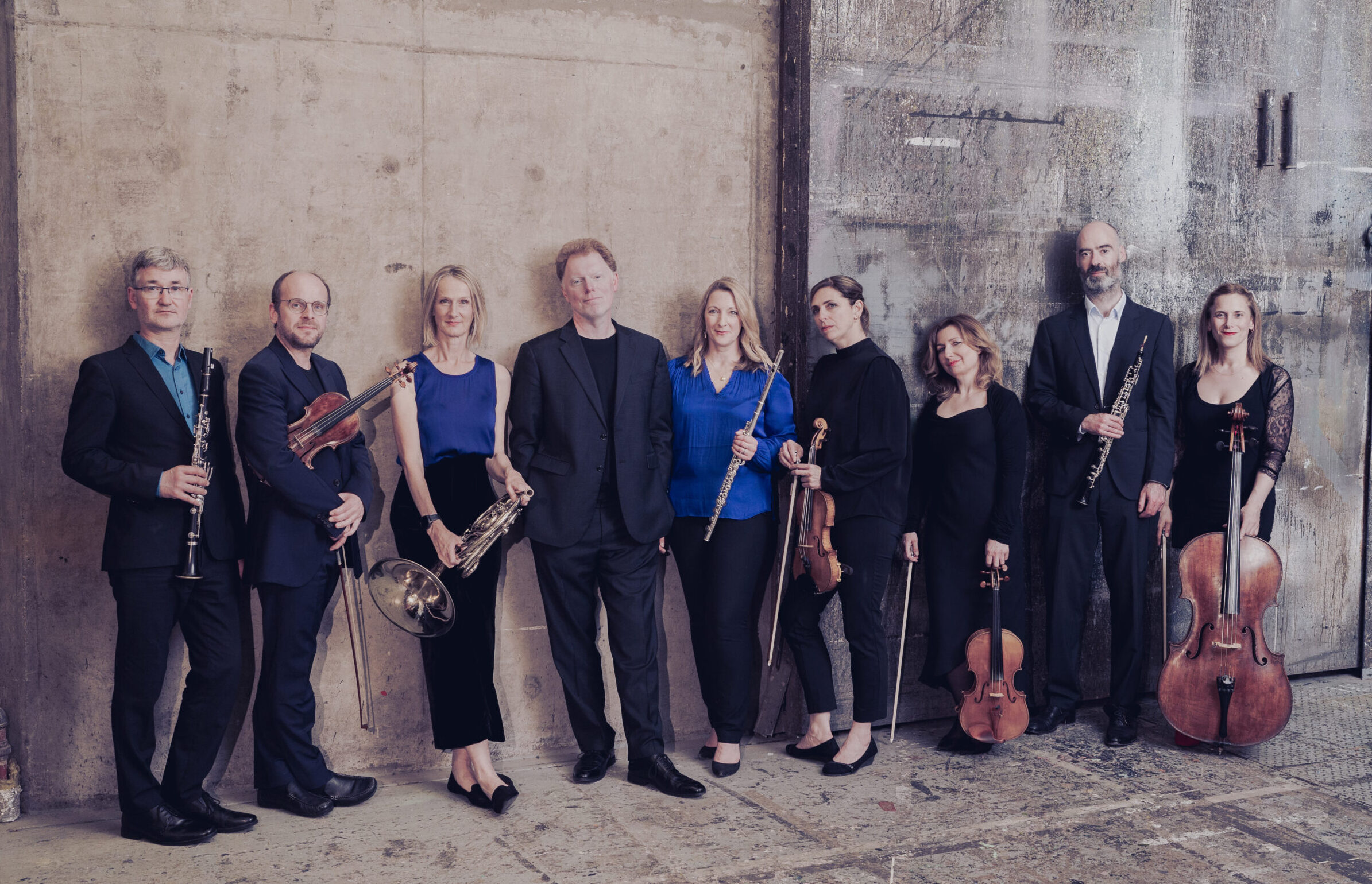
Claire Booth, Ensemble 360 & Nicholas Jubber
Crucible Playhouse, Sheffield
Wednesday 20 May 2026, 2.00pm
Tickets:
£5 / carers free
RAVEL (arr. Strivens) Shéhérazade (20’)
PROKOFIEV Peter and the Wolf (30’)
For this ‘Relaxed’ concert of storytelling music featuring Prokofiev’s beloved musical folk story, doors will be left open, lights raised, a break-out space provided, and there will be less emphasis on the audience being quiet during the performance.
People with an Autism Spectrum, sensory or communication disorder or learning disability, those with age-related impairments and parents/carers with babies are all especially welcome.
Find out more about what to expect with our Relaxed Performance information pack.
 Download
RAVEL Maurice, Shéhérazade
Asie (Asia)
La flûte enchantée (The enchanted flute)
L’indifférent (The indifferent one)
In 1903 Ravel suffered two major traumas: his String Quartet was rejected for the composition prize at the Paris Conservatoire (leading to his expulsion) and he failed in his fourth attempt to win the Prix de Rome. Both experiences must have reinforced his sense of rebellion against academic discipline and inspired him to write a work that he later described as the one that best captured “the freshness of youth”.
Tristan Klingsor was the pseudonym of the poet, musician and artist Arthur Justin Léon Leclère (1874–1966), whom Ravel met in the company of a group of self-styled artistic outcasts, the ‘Apaches’ (Parisian slang for underworld hooligans). Klingsor had just published a collection of 100 ‘orientalist’ poems under the title Shéhérazade. Imagined visions of ‘the East’ was a topic that had fascinated the French ever since Napoleon’s incursion into Egypt, inspiring (among other things) paintings by Delacroix as well as exhibits in the Paris Exposition of 1889. Like much orientalist work of previous centuries, these poems reflect the tendency of a European ‘lens’ to construct and represent Eastern societies as static, exotic, and fundamentally different, thereby justifying colonial domination and the cultural superiority of Europe.
Ravel was attracted to the supposed exoticism as well as the free-verse structure of Klingsor’s poems, and chose to set three of them. The lines are set syllable by syllable, almost in recitative style; the influence of Debussy’s opera Pelléas et Mélisande, first heard the previous year, is evident.
The poems that make up Shéhérazade can make for uncomfortable reading today. Asie (Asia) attempts to be a sweeping tour of the continent, supported by flowing themes on the oboe and clarinets; the result is a vivid and kaleidoscopic tone-painting. La flûte enchantée (The enchanted flute) imagines the passionate thoughts of an enslaved girl, waiting by her sleeping master while she hears her lover playing the flute outside the window. L’indifférent (The indifferent one) is a sensuous song about an unattainable object of physical attraction, and dedicated to Emma Bardac (who had recently begun an affair with Debussy). They are nonetheless beautiful and thrilling songs, which reflect the social mores of the world in which they were written.
Originally written for soprano and orchestra, this arrangement for piano and wind quintet was written by horn player George Strivens and premiered at the Wigmore Hall in 2023.
Programme note Thomas Radice with Music in the Round.
PROKOFIEV Sergei, Peter and the Wolf
In 1936 Prokofiev was asked by Natalya Sats, Director of the Moscow Children’s Theatre, to write a piece that would introduce children to the instruments of the orchestra. The Prokofiev scholar Simon Morrison describes the creative process in detail: a poetic text was rejected by the composer who devised his own, in consultation with Sats, calling it How Pioneer Peter Caught the Wolf – a tale of a brave Soviet boy scout defying the orders of his grandfather to rescue the bird from the cat, and to see the wolf brought to justice.
He wrote the music very quickly, in less than a week, and tried it out on the piano with a group of schoolchildren, who were delighted – as they were by the full instrumental version when it was subsequently performed at the Moscow Children’s Theatre. However, the official premiere for adults on 2 May 1936 was, according to Morrison, ‘lacklustre’. Prokofiev’s detailed instructions, written while he was working on the piece, explain what he set out to achieve:
Each character of this tale is represented by a corresponding instrument in the orchestra: the bird by a flute, the duck by an oboe, the cat by a clarinet playing staccato in a low register, the grandfather by a bassoon, the wolf by three horns, Peter by the string quartet, the shooting of the hunters by the timpani and bass drum. Before an orchestral performance it is desirable to show these instruments to the children and to play on them the corresponding leitmotivs. Thereby, the children learn to distinguish the sonorities of the instruments during the performance of this tale.
And so they have ever since. Peter soon reached a vast international audience thanks to the private performance Prokofiev gave to Walt Disney in 1938. This chamber version was written by David Matthews in 1936.
© Nigel Simeone 2015

Claire Booth

Ensemble 360
