FRIDAY NIGHT IN PARIS

Roderick Williams & Ensemble 360

Crucible Playhouse, Sheffield
Friday 24 May 2024, 7.15pm

Tickets
£21
£14 UC, DLA or PIP
£5 Under 35s & Students

Past Event
Singer Roderick Williams and Ensemble 360's Rachel Roberts by Matthew Johnson

FAURÉ Piano Quintet No.1 (31’)
RAVEL Chansons Madécasses (13’)
POULENC Sextet (18’)
FAURÉ La Bonne Chanson (33′) 

Musical national treasure Roderick Williams, soloist at King Charles III’s Coronation and Singer-in-Residence with Music in the Round, returns to the Crucible Playhouse with Ensemble 360 for a magical tour through the City of Light.  

Fauré’s first Piano Quintet was a labour of love that he nurtured over many years, and the song cycles and works for violin he wrote alongside it echo through this exquisitely constructed piece. 

Poulenc’s kaleidoscopic sextet encompasses jazz, ragtime, pastiche of Mozart and a tribute to Ravel, whose ‘Madagascan’ songs they follow, in this programme luxuriating in the many sounds of fin de siècle Paris.  

Culminating in Fauré’s intricate song-cycle, crafted from the poems of Paul Verlaine, this concert reunites Ensemble 360, with Music in the Round’s singer-in-residence Roderick Williams for the first time since 2017. 

Note from Guest Curator, Steven Isserlis 

“What a treat it will be to hear Roderick Williams in Fauré’s seductive ‘La Bonne Chanson’ (the first time he’s ever sung it, I understand!). Before that Ravel takes us away from Paris on a magic carpet for his bittersweet Chansons Madécasses. Poulenc is perhaps the ultimate Parisian composer, and so manages to make an appearance here – despite his disgraceful sin of (apparently) not appreciating Fauré’s music. Well – apart from that, he’s a wonderful composer…” 

Part of Sheffield Chamber Music Festival 2024. 

View the brochure online here or download it below.

DOWNLOAD

Save £s when you book for 5 Music in the Round concerts or more at the same timeFind out more here.

FAURÉ Gabriel, Piano Quintet No.1

Molto moderato
Adagio
Allegretto moderato


No other work by Fauré gave his as much trouble as the First Piano Quintet. The earliest sketches date from 1887 (in the same sketch-book as the ‘Pie Jesu’ from the Requiem), the bulk of the composition was done between 1890 and 1894, and the work was completed and revised in 1903–5. When it was published in 1907, it was not in Paris, but in New York, issued by G. Schirmer. The first performance was given on 23 March 1906 when Fauré himself and a quartet led by Eugène Ysaÿe (the work’s dedicatee) played it in Brussels at the home of Octave Maus. A week later (30 March) they gave it at the Salle Pleyel in Paris.


One early enthusiast for the work was the young Aaron Copland. In the early 1920s he studied in Paris with Nadia Boulanger – a Fauré pupil – and it was through her that Copland came to love this music. In 1924, he published an article in Musical Quarterly entitled ‘Gabriel Fauré: a neglected master’, likening Fauré to Brahms, with ‘a genius as great, a style as individual and a technique as perfect’. Copland described the first movement of the quintet: ‘The initial theme is an excellent example of that continuity of line that [is] peculiar to Faure’s late manner. A short subsidiary theme for strings alone, which later plays so important a part in the development, brings us to the second idea – an ardent, yearning phrase which must convince the most recalcitrant ear of Faure’s great powers of melody-making. Note with what technical mastery the recapitulation is made the inevitable climax of the development and is so varied as to take away all feeling of repetition.’ The extended Adagio – melancholy and introspective – is followed by a last movement that Copland described as ‘a sort of combination Scherzo–Finale’.


Nigel Simeone

RAVEL Maurice, Chanson Madécasses

Nahandove, O belle nahandove! 
Aoua! Aoua! Mefiez-vous des blancs! 
Il est doux de se coucher 
 

The Chansons madécasses, scored for voice, flute, cello and piano, were commissioned by the American patron Elizabeth Sprague Coolidge and composed in 1925–6. The texts by Évariste de Parny (1753–1814) are among the earliest prose poems in French, published in 1787. Equally striking are the strong anti-colonialist sentiments of these poems written by a French aristocrat who had been born on what is now the island of Réunion, east of Madagascar. Ravel himself wrote that the songs included ‘a new element, dramatic, even erotic, as a result of the subject matter of Parny’s poems’, and there is no doubting the sensuous erotic charge in ‘Nahandove’. But there is drama of a different kind in the powerfully anti-slavery themes of the second song, ‘Aoua!’, beginning with the warning ‘Méfiez-vous des blancs’ (‘Do not trust the white men’), its words lamenting the violence of the settlers who dispossessed and then enslaved the indigenous population. Ravel creates a harsh and terrifying musical counterpart for the poem, with unflinching dissonance, piercing high notes and motoric rhythms. This is Ravel at his most experimental, and also at his most provocative. The third song comes as a relief, somehow serving to ease the impact of ‘Aoua!’ And yet for all the stillness and simplicity of ‘Il est doux de se coucher’, there is no easy serenity.  


© Nigel Simeone

POULENC Francis, Sextet for Flute, Oboe, Clarinet, Bassoon, Horn and Piano FP 100

Très vite et emporté

Divertissement. Andantino

Finale. Prestissimo


The Sextet for piano, flute, oboe, clarinet, bassoon and horn was a work over which Poulenc lavished a great deal of time and effort – the final results did not come easily or quickly. First performed in its original version at an all-Poulenc concert at the Salle Chopin in Paris on 19 June 1931 (and described in the Chesterian magazine as one of two ‘intelligent and lovely’ new compositions heard that evening), Poulenc reworked the Sextet several times before it reached a definitive form in 1939. On 29 August 1939 he wrote to Marie-Blanche Polignac that he had ‘thoroughly revised my entire Sextet (now very good)’. The result of this decade of reflection and rewriting is indeed ‘very good’: Poulenc’s most imposing chamber work is notable from the outset for its muscularity and seriousness – though the central ‘Divertissement’ provides an oasis of Mozartian repose – and, after an almost wild Prestissimo, the finale closes with an epilogue notable for its solemn stillness: Stravinsky-like austerity here is softened by Poulenc’s more emollient harmonic language. The first performance of the Sextet in its finished form took place during the early months of the German Occupation of Paris, on 9 December 1940, at a concert given by the Association de Musique Contemporaine, with Poulenc at the piano and the Quintette à vent de Paris. Poulenc kept the manuscript to himself during the years of the war and eventually sent it to Wilhelm Hansen in Copenhagen for publication in 1945. This brought to an end what Poulenc’s biographer Carl B. Schmidt has aptly described as ‘one of the most complicated compositional sagas of Poulenc’s career.’ Poulenc recorded the Sextet not with the original French players, but with the Philadelphia Wind Quintet in March 1960, during one of his last visits to the United States.


Nigel Simeone © 2010

FAURÉ Gabriel, La Bonne Chanson

La bonne chanson was the most ambitious of Fauré’s settings of Verlaine’s poetry. The first eight songs were completed in 1893 but the ninth was only added in February 1894. A true cycle, La bonne chanson has several recurring themes which bring musical unity to the whole structure. According to the Fauré scholar Jean-Michel Nectoux, the result is ‘far more than just a volume of songs. It reaches the proportions almost of a vocal symphony.’ The inspiration for the work was the singer Emma Bardac, with whom Fauré became infatuated in the early 1890s. She gave Fauré advice about revisions while he was working on the songs, and sang them in private at her home in Bougival, with the composer at the piano. La bonne chanson was first given in a concert by the tenor Maurice Bagès on 25 April 1894. Bagès also gave the first London performance on 1 April 1898 (at Frank Schuster’s home in Old Queen Street) and it was for this occasion that Fauré made the version for piano and string quintet (though he later wondered if this arrangement was ‘unnecessary’, it has a tone colour all its own, quite distinct from the solo piano version). Reactions to the new cycle were mixed: Marcel Proust was enchanted by it, writing that ‘I adore this collection’, but he noted that Debussy (who later married Emma Bardac) thought it was ‘too complicated.’ History has come down firmly on Proust’s side: La bonne chanson is recognised as one of Fauré’s greatest achievements, combining sophisticated musical design with lyrical inspiration.  


© Nigel Simeone

ROMANTIC PIANO

Mishka Rushdie Momen

Crucible Playhouse, Sheffield
Thursday 23 May 2024, 11.00am

Tickets
£16
£10 UC, DLA or PIP
£5 Under 35s & Students

Past Event

R SCHUMANN Gesänge der Frühe No.1 (3′)
FAURÉ Nocturne No.13 (8′)  
RAMEAU Le Rappel des oiseaux, Rigaudons I, II & Double, Les tendres plaintes (7′)
MENDELSSOHN Variations Sérieuses Op.54 (12′)
R SCHUMANN Waldszenen (extracts) Einsame Blumen, Verrufene Stelle, Freundliche Landschaft, Vogel als Prophet (10′)
RAVEL Miroirs (extracts) Oiseaux tristes, Alborada del gracioso, Vallée des cloches (18′) 

No interval 

Named ‘Critics’ Classical Music Breakthrough Artist’ in The Times Arts Awards 2021, Mishka Rushdie Momen was praised as “one of the most thoughtful and sensitive of British pianists” shortly before she gave her debut recital at the Crucible Playhouse in January 2022. This recital highlights her versatility, with music encompassing three centuries, from the baroque lyricism of Rameau to the impressionism of Ravel.  The work of Robert Schumann also features, a composer with whom Mishka has a special affinity and of whom she is a sensitive and arresting interpreter. 

Part of Sheffield Chamber Music Festival 2024. 

View the brochure online here or download it below.

Download

Save £s when you book for 5 Music in the Round concerts or more at the same timeFind out more here.


SCHUMANN Robert, Gesänge der Frühe No.1

Nature was always a potent source for composers, and this recital includes several pieces which were inspired by the sights and sounds of the natural world. Robert Schumann (1810–1856) composed the Gesänge der Frühe, Op.133, in October 1853, just after completing his Violin Concerto. The five pieces were described by Clara Schumann in her diary as ‘dawn-songs, very original as always but hard to understand, their tone is so very strange’. This elusive mood is apparent in the first piece, marked Im ruhigen tempo. A chorale-like theme, occasionally coloured with Schumann’s characteristic harmonic dissonances, the music was described by Schumann himself as ‘impressions at the approach and growth of the morning, but more as an expression of feeling than painting.’


Nigel Simeone

FAURÉ Gabriel, Nocturne No.13

Gabriel Fauré composed thirteen nocturnes for piano between 1875 and 1921. The last of them, No.13 in B minor, Op.119, was completed on 31 December 1921, two weeks after the death of his friend Saint-Saëns. This event may have influenced the noble and introspective mood of the work, much of which seems to inhabit a world of private meditation, though it rises to a climax of great intensity before a return of the opening material. This substantial work moves through passion, anger, consolation, and grief, finally reaching what the British musicologist Robert Orledge described as ‘a visionary coda’ which gradually sinks into silence. 

Nigel Simeone

RAMEAU Jean-Philippe, Le Rappel des oiseaux, Rigaudons I, II & Double, Les tendres plaintes

Jean-Philippe Rameau (1683–1764) published his first collection of harpsichord pieces in 1706 and further collections appeared in the 1720s. Though widely admired at the time, these works lapsed into obscurity and it took their rediscovery at the end of the nineteenth century, when a handsome edition, prepared by Camille Saint-Saëns, was published by Durand in 1895. Rameau’s collections mostly comprise dance movements, such as the two Rigaudons and ‘Double’ from the 1724 volume of Pièces de clavecin. This was also the source of one of his most celebrated imitative pieces, Le rappel des oiseaux with its evocations of chirruping birdsong, and of Les tendres plaintes, a more subtle evocation of melancholy.  


Nigel Simeone

MENDELSSOHN Felix, Variations Sérieuses Op.54

Felix Mendelssohn’s Variations sérieuses were completed on 4 June 1841 and had been written to encourage contributions for a statue of Beethoven in Bonn. The work was published along with pieces by Liszt, Chopin, Moscheles and Henselt (among others) in a fund-raising ‘Beethoven-Album’. The piece was much admired at the time by Ignaz Moscheles, Mendelssohn’s friend and fellow-contributor to the album, who often included it in his recital programme. It comprises an original theme followed by 17 sharply contrasted variations, the first group gradually building momentum, a solemn chorale (Variation 14), and the brilliant virtuosity of the closing pages. 


Nigel Simeone

SCHUMANN Robert, Waldszenen (extracts) Einsame Blumen, Verrufene Stelle, Freundliche Landschaft, Vogel als Prophet

Schumann’s Waldszenen, Op.82, dates from 1848, just after finishing his opera Genoveva, the last act of which takes place in a forest. The woodland inspiration evidently persisted and the new set of pieces was completed in January 1849, with the last of them, ‘Vogel als Prophet’ (‘The Prophet Bird’) added as an inspired afterthought. One early review captured the spirit of these pieces, delighting in ‘the enigmatic rustlings, the distant melodies, the mystical flowers in this magical forest.’ 


Nigel Simeone

RAVEL Maurice, Miroirs (extracts) Oiseaux tristes, Alborada del gracioso, Vallée des cloches

Maurice Ravel composed Miroirs in 1904–5, and each piece was dedicated to a fellow member of Les Apaches, the group of musical friends formed in 1903. They included the pianist Ricardo Viñes (‘Oiseaux tristes’), the critic Michel-Dimitri Calvocoressi (‘Alborada del gracioso’) and the composer Maurice Delage (‘La vallée des cloches’). ‘Oiseaux triste’ is an evocation of a solitary bird, joined by others in due course. ‘Alborada del gracioso’ is a virtuoso piece, based on the rhythms and melodic shapes of an exciting Spanish folk dance. Like Debussy, Ravel heard the gamelan music at the 1889 Exposition universelle in Paris, and memories of those sounds may well have been in his mind when he composed ‘La vallée des cloches’, a piece in which different layers of bell sounds mingle in the most atmospheric way. 


Nigel Simeone

FAURÉ STRING QUARTET

Irène Duval & Ensemble 360

Crucible Playhouse, Sheffield
Friday 24 May 2024, 1.00pm

Tickets
£16
£10 UC, DLA or PIP
£5 Under 35s & Students

Past Event

ENESCU Violin Sonata No.2 (24′)
FAURÉ Violin Concerto (12’)
FAURÉ String Quartet (23′) 

No interval 

Violinist Irène Duval, a prize-winner at the 2021 Young Classical Artists Trust International Auditions, opens this concert with a monumental sonata written by Fauré’s violin virtuoso pupil, George Enescu. Irène joins Ensemble 360 for Fauré’s only string quartet, an ethereal piece that derives its principal melody from Fauré’s early Violin Concerto. It was his final work and is a fitting swan-song that resolves into an ultimately life-affirming finale. 

Note from Guest Curator, Steven Isserlis 

“Enescu’s impassioned Violin Sonata No.2 reveals the strong influence of his revered teacher Fauré. Like his beloved Schumann, Fauré used a theme from his Violin Concerto in his final work, his only string quartet. Unlike Schumann, however, Fauré did so deliberately; having discarded the Violin Concerto, he must have been loath to waste such a beautiful melody. It provides a poignantly human response to the chant-like opening of a work that gently, lovingly bids us farewell. Fauré’s work here is done, he seems to tell us; and it is time for him to pass on to the better world he has so often allowed us to experience through his music.” 

Part of Sheffield Chamber Music Festival 2024. 

View the brochure online here or download it below.

DOWNLOAD

Save £s when you book for 5 Music in the Round concerts or more at the same timeFind out more here.

ENESCU George, Violin Sonata No.2 Op.6

Assez mouvementé 
Tranquillement 
Vif 
 

Born in Romania, George Enescu was a child prodigy and he entered the Vienna Conservatory at the age of seven. His teachers there included Joseph Hellmesberger and Robert Fuchs, and in 1891 Enescu was introduced to Brahms. After graduating in Vienna at the age of twelve, Enescu moved to Paris where he studied with Fauré and André Gedalge – both of whom also taught Ravel. Enescu’s Violin Sonata No. 2 was written in April 1899 when he was 17 years old – and still a student. Its premiere was given in Paris on 22 February 1900 by Jacques Thibaud with the composer at the piano, and the sonata was dedicated to Thibaud and his pianist brother, Joseph. Enescu himself recalled that the opening theme first came into his head during a walk when he was 14: ‘I carried it inside me for three years; then, at the age of seventeen, I wrote my Second Violin Sonata in the space of a fortnight.’ As Enescu’s biographer Noel Malcolm has noted, the work has ‘an extraordinary unity, mainly because of the way it is pervaded by the long, mysterious … theme which opens the first movement.’ This theme is developed and transformed throughout the Sonata, giving the whole work a powerful coherence. The musical language has occasional echoes of Fauré, but even in this early work, Enescu was a highly original creative voice, even incorporating elements of the modes and harmonies of his native Romanian folk music in the slow movement.  


© Nigel Simeone

FAURÉ Gabriel, Violin Concerto

Fauré worked on a violin concerto in 1878–9, but the project was destined to remain unfinished. Though the first two movements were performed by the violinist Ovide Musin and the Colonne Orchestra on 12 April 1880, the finale was never written. The slow movement of the concerto was destroyed, but was probably reworked as the Andante for violin and piano Op.75. The first movement – lyrical and expansive – survived complete, and turned out to be a surprisingly fruitful source for the composer: Fauré’s biographer Robert Orledge noted that its two main themes ‘proved far better suited to the more intimate medium of the String Quartet’ when they were reused ‘in the light of a lifetime’s experience’ in his last work, written in 1923–4. 


© Nigel Simeone

FAURÉ Gabriel, String Quartet

Allegro moderato 
Andante 
Allegro 
 

Fauré’s String Quartet was his last composition, completed in 1924 shortly before his death. It was also his first chamber work without piano. For the first movement he drew on ideas composed 45 years earlier for his Violin Concerto, but now reworked in a much more compact and tightly organised sonata form structure. The Andante was written first, in September 1923 at Annecy. The opening Allegro moderato was completed in Paris and the third movement (combining elements of scherzo and finale) was finished in 1924, back in Annecy. The result is a work of great expressive power, with, as the British musicologist Robert Orledge has noted, ‘the craftsmanship being so consummate that we need to listen hard even to notice the joins or the thematic counterpoint that gives the Quartet its virile strength.’ On 12 September 1924, Fauré wrote to his wife from Annecy announcing that ‘yesterday evening I finished the finale. So that’s the quartet finished’. A month later, weakened by a bout of pneumonia, Fauré returned to Paris where he died peacefully early in the morning of 4 November. Two days later, the composer Albert Roussel wrote a moving tribute in the magazine Comoedia: Fauré ‘occupied a place apart in the history of music and, without noise or fuss or meaningless gesture, he pointed the way towards marvellous horizons overflowing with freshness and light.’ 


© Nigel Simeone, 2024 

AN EVENING WITH STEVEN ISSERLIS

Steven Isserlis, Irène Duval & Mishka Rushdie Momen

Crucible Playhouse, Sheffield
Thursday 23 May 2024, 7.15pm

Tickets
£21
£14 UC, DLA or PIP
£5 Under 35s & Students

Past Event
Pianist Mishka Rushdie Momen, cellist Steven Isserlis and violinist Irene Duval

N BOULANGER Three pieces for cello and piano (8’)
DEBUSSY Cello Sonata (12’)
RAVEL Sonata for violin and cello (20’) 
R SCHUMANN (arr. Isserlis) Violin Concerto (mvt 2) (12’) 
R SCHUMANN Ghost Variations for piano (12’)
FAURÉ Piano Trio (21’) 

Three acclaimed musicians and frequent collaborators perform music they adore. This thoughtfully crafted programme celebrates the musical loves and legacy of the French composer, Gabriel Fauré. 

Highlights include our Guest Curator’s arrangement of a movement from Schumann’s beloved Violin Concerto, which shares a theme with the delicate and haunting ‘Ghost Variations’ for piano; the final work by one of the giants of Romantic music. Fauré’s miraculous Piano Trio, his penultimate work, radiates ecstatic joy to conclude what promises to be a very special evening of music. 

Note from Guest Curator, Steven Isserlis 

Schumann’s Geister Variations for piano have a tragic history: they were effectively his final work,
written in the last days before he was taken to the asylum where he was to spend his remaining years. He believed that the spirits of Schubert and Mendelssohn, surrounded by angels, had appeared to him in a dream and dictated the theme; he seems never to have realised that he had actually composed the theme earlier, as the violin’s main melody in the slow movement of his violin concerto (as well as another, much earlier, version in a ‘song for the young’). The variations really seem to be his farewell to life. Fauré’s Piano Trio, although his penultimate work, is quite different, pulsing with ecstatic energy from its opening bars; the slow movement is simply breathtaking – I know nothing like it in the whole of music. For me, this is one of Fauré’s very greatest works.” 

Part of Sheffield Chamber Music Festival 2024. 

View the brochure online here or download it below.

DOWNLOAD

Save £s when you book for 5 Music in the Round concerts or more at the same timeFind out more here.

BOULANGER Nadia, Three pieces for cello and piano 

Moderato
Sans vitesse et à l’aise
Vite et nerveusement rythmé 

Nadia Boulanger, teacher, conductor, early music pioneer and trusted adviser to the likes of Stravinsky and Poulenc, was also a gifted composer. Fiercely self-critical, she always claimed her own music was nothing like as significant as that of her brilliant younger sister, Lili, but with the rediscovery of Nadia’s music it has become clear that she was a remarkable talent in her own right. She entered the Paris Conservatoire at the age of nine and subsequently studied composition with Fauré. Most of her music dates from between 1904 and 1918 (the year Lili died), including the Three Pieces for cello and piano, composed in 1914 and first published the following year. The first, in E flat minor, presents a song-like melody on the cello over a hushed piano part marked doux et vague. After a brief climactic central section, the opening music returns for a serene close in E flat major. The second piece, in A minor, treats a deceptively simple tune – almost a folksong – in an ingenious canon between the cello and the piano. The last piece, in C sharp minor, is quick, with a middle section that provides a contrast in both rhythm and texture to the playful but muscular mood of the rest.   

Nigel Simeone © 2022 

DEBUSSY Claude, Cello Sonata

Prologue. Lent, sostenuto e molto risoluto – Poco animando
Sérénade. Modérément animé
Final. Animé, léger et nerveux


‘Where is French music? Where are the old harpsichordists who had so much true music?’ It was thoughts like this that prompted Debussy to embark on a series of sonatas at the start of World War One. Weakened by cancer, he only lived to complete three of them. The Cello Sonata was the first to be finished, in the summer of 1915, and it was originally going to have a title: ‘Pierrot angry with the moon’. As well as its links to a vanished past, the Cello Sonata has debts to more recent music including use of a cyclic theme. Debussy used this device in his early String Quartet but now there is greater refinement and austerity. The first movement opens with a gesture that introduces the motif which unites many of the musical ideas in the work (and which recalls Baroque ornamentation). The second movement is a ghostly Serenade full of enigmatic harmonies, and this leads to a more flowing and animated finale which seems reluctant to settle until the closing D minor chords.


© Nigel Simeone 2015

RAVEL Maurice, Sonata for violin and cello

Allegro
Très vif
Lent
Vif, avec entrain

In 1920, Ravel was asked to contribute to a musical supplement in memory of Debussy for the Revue musicale (other contributors included Bartók, Satie and Stravinsky). This ‘Tombeau’ for Debussy (with a front cover specially drawn by Dufy) appeared in December 1920 and included a ‘Duo’ for violin and cello that would become the first movement of the Sonata for Violin and Cello. It was another two years before Ravel completed the other movements and the whole work was published in 1922 with a dedication to Debussy’s memory. Ravel himself described the austere, pared-down language of the Sonata as ‘stripped to the bone’ and said that ‘harmonic charm is renounced’. The Sonata is also remarkable for its thematic unity, and some ingenious cyclic transformations. For instance, the violin theme heard at the start returns later in the work as do other ideas. The Scherzo suggests that Ravel was familiar with Kodály’s 1914 Duo for violin and cello: Ravel includes elements of Hungarian music in a movement of formidable drive and energy. The slow movement is stark and serious and after building slowly to an impassioned climax, its ending is remote and strange. The finale is brilliantly written for both instruments, bringing this extraordinary work to an athletic close, the dissonances finally resolving on to a chord of C major.

© Nigel Simeone 2018

SCHUMANN Robert (arr. Isserlis), Violin Concerto (mvt.2)

Schumann wrote his Violin Concerto in September and October 1853 for his friend Joseph Joachim. Though Joachim played it through with the Hannover Court Orchestra for the composer, he never performed it in public, coming to believe that it was the product of Schumann’s disturbed mental state at the time. Evidently Clara Schumann and Brahms agreed, as the concerto was not included in the edition of Robert’s collected works which they prepared. It was not until 1937 that the work was given its belated premiere. The slow movement is the expressive heart of the work, its main theme very similar to that of the Ghost Variations, though in a different key. Its intimate character – in the style of an intermezzo – lends itself very well to the present arrangement for piano trio.  


© Nigel Simeone 

SCHUMANN Robert, Ghost Variations for piano

In February 1854, Schumann’s mental health was in a steep decline; at the end of that month he attempted suicide and, after being rescued from the river, asked to be admitted to the psychiatric hospital in Endenich, where he was to remain until his death. The ‘Ghost’ Variations were composed in the midst of this traumatic crisis. Dogged by increasingly disturbing visions, on the night of 17 February he claimed to hear angels singing a theme which he immediately wrote down – though in fact it is very similar to the slow movement of his Violin Concerto, composed six months earlier. A few days after this vision, Schumann started to compose a set of variations on the ‘angel’ theme, writing out a fair copy on 27 February. Before finishing it, he left the house and threw himself into the Rhine. After being brought home, he finished the work the next day. It was the last music he wrote. A year later, Clara Schumann had a copy made which she gave to Brahms (who subsequently composed variations on the theme as his Op.23). It is impossible to imagine the harrowing circumstances in which Schumann wrote this work which comprises a theme followed by five variations. Apart from the copy made for Brahms, Clara kept the work entirely private and it was not published until 1939.  


© Nigel Simeone

FAURÉ Gabriel, Piano Trio Op.120

1. Allegro ma non troppo
2. Andantino
3. Allegro vivo


Fauré retired as Director of the Paris Conservatoire in 1920, at the age of 75. Though he was increasingly troubled by a kind of deafness that distorted musical sounds, he produced several late works that demonstrate a wonderful economy and concentration: the Second Piano Quintet, Second Cello Sonata and the song cycle L’Horizon chimérique were completed in 1921, and his only String Quartet was to occupy him from 1923 until just before he died the following year. The Piano Trio was started in his favourite retreat of Annecy-le-Vieux in August 1922 and his original idea was to write it for clarinet, cello and piano but he soon settled on having a violin as the top part. Progress was slow. Fauré wrote to his wife: ‘I can’t work for long stretches of time. My worst problem is perpetual tiredness.’ There’s no sense of fatigue in this work, partly because Fauré took his time. The slow movement was the first to be completed, and the outer movements of the Trio were finished by February 1923. The first performance was given on 12 May 1923 at a concert of the Société Nationale de Musique by Fauré was too ill to attend. He did hear a performance the following year given by the celebrated trio of Alfred Cortot, Jacques Thibaud and Pablo Casals. The music demonstrates Fauré at his most subtle harmonically and rhythmically in the first movement, at his most elegantly restrained in the slow movement, and at his most vigorous in the finale (the resemblance between its main theme and ‘Vesti la giubba’ from Pagliacci – an opera Fauré particularly disliked – was, according to Fauré himself, entirely accidental).


Nigel Simeone

“An extraordinarily moving performance where time, very briefly, seemed to stand still.”

The Guardian

FRENCH GEMS

Ensemble 360

Crucible Playhouse, Sheffield
Wednesday 22 May 2024, 7.15pm

Tickets
£21
£14 UC, DLA or PIP
£5 Under 35s & Students

Past Event

RAVEL Berceuse sur le nom de Gabriel Fauré for violin & piano (3′)
SAINT-SAËNS Oboe Sonata (12′)
ADÈS Alchymia for clarinet quintet (24′)
MESSAGER Solo de Concours for solo clarinet (6′)
FRANCK Piano Quintet (35′) 

The heart of César Franck’s Piano Quintet contains some of the most darkly passionate music he ever composed, surrounded by storms and drama that make this magnificent work a truly captivating experience. Thomas Adès is one of our greatest living composers and his chamber music glimmers with intricate beauty and exquisite colours. Alchymia is inspired by the world of Tudor England, and Adès makes reference to composers of that time as well as the influence of Shakespeare. Opening with Maurice Ravel’s homage to his teacher Gabriel Fauré, this concert looks back to those who shaped him and forward to those writing today for whom he remains a guiding light. 

Note from Guest Curator, Steven Isserlis 

Thomas Adès, with his deep love of both Couperin and Fauré, makes a guest appearance in this mostly Gallic affair, with his magnificent clarinet quintet. The programme ends with César Franck’s stormy piano quintet, a shockingly bold outpouring from a composer who until then had been known for his quiet piety; it is said that the transformation was effected by his passionate love for Augusta Holmés. If so, that was quite a passion! 

This concert is generously sponsored by Kim Staniforth. 

Part of Sheffield Chamber Music Festival 2024. 

View the brochure online here or download it below.

DOWNLOAD

Save £s when you book for 5 Music in the Round concerts or more at the same timeFind out more here.

RAVEL Maurice, Berceuse sur le nom de Gabriel Fauré for violin and piano

Ravel composed this Berceuse for a special Fauré number of the Revue musicale. He had remained on friendly terms with his former teacher and was thus delighted to contribute to the special celebratory supplement entitled Hommage à Gabriel Fauré (the other contributors were also Fauré pupils: Georges Enesco, Florent Schmitt, Louis Aubert, Charles Koechlin, Paul Ladmirault and Roger-Ducasse). The ‘name of Gabriel Fauré’ of Ravel’s title was a representation of his name in music: a legend at the head of Ravel’s score shows how ‘Gabriel Fauré’ was transformed into a melody based on the notes GABDBEE FAGDE. This short piece is marked to be played ‘Semplice’ and the theme is presented by a muted violin over piano chords.

Nigel Simeone

SAINT-SAËNS Camille, Oboe Sonata in D, Op.166

Andantino 
Ad libitum. Allegretto 
Molto allegro 
 

Composed in May–June 1921, this is one of three woodwind sonatas composed by Saint-Saëns at the very end of his life. It is dedicated to Louis Bas, first oboe of the Paris Opéra and the Société des Concerts du Conservatoire. The opening has an eighteenth-century flavour and the whole work is notable for its restraint and classical poise. One of the most memorable moments in this exquisitely crafted piece occurs at the start of the second movement, where the oboe plays freely over arpeggiated chords on the piano before moving into an elegant triple-time Allegretto. The Finale, in quick compound time, is delicately written and witty. 


Nigel Simeone ©2014 

ADÈS Thomas, Alchymia for for clarinet quintet

  1. A Sea-Change (…those are pearls…)
  2. The Woods So Wild

III. Lachrymae 

  1. Divisions on a Lute-song: Wedekind’s Round


The clarinet quintet Alchymia is woven from four threads leading out of the alchemical world of Elizabethan London. The movement titles refer to: 

William Shakespeare, The Tempest 1611 – the  king’s eyes transformed by the sea into pearls. 

The Woods So Wild 1612 – Tudor popular song transformed by William Byrd into keyboard divisions (variations). 

Lachrymae 1600 – (Tears) – John Dowland’s lute-song, which he transformed into viol consort Fantasias.  

Divisions on a Lute-song: Wedekind’s Round – variations on the playwright Frank Wedekind’s Lautenlied (lute-song), which is played by clarinet, imitating a barrel-organ in the London street, in the final scene of Alban Berg’s opera Lulu. 


© Thomas Adès 

MESSAGER André, Solo de concours for solo clarinet

Starting in 1897, the French Ministry of Education commissioned a new solo de concours for the annual competition at the Paris Conservatoire. Within a few years, these included works by Charles-Marie Widor, André Messager, Augusta Holmès, Reynaldo Hahn and Debussy (the Première rhapsodie). Messager’s piece was written for the competition in 1899. By this time, he had become an extremely successful theatre composer, with works such as the ballet Les deux pigeons and the comic opera Véronique, but in 1898 he agreed to become conductor of the Opéra-comique in Paris and for several years had much less time for composing. He conducted the first performances in France of Puccini’s Tosca and Humperdinck’s Hänsel und Gretel as well as the world premieres of Charpentier’s Louise and, most importantly, Debussy’s Pelléas et Mélisande, a performance which prompted Debussy to describe Messager as ‘the ideal conductor’. A lifelong friend of Fauré, Messager was an astonishingly versatile musician and his Solo de concours is an attractive demonstration of his ability to test virtuosity at the same time as producing memorable melodies. An Allegro non troppo gives way to a central Andante before a return of the opening material and a brief, brilliant coda.  


© Nigel Simeone 

FRANCK César, Piano Quintet in F minor

1. Molto moderato quasi lento
2. Lento, con molto sentimento
3. Allegro non troppo, ma con fuoco


Born in Liège (now in Belgium), César Franck first established his reputation in Paris as supremely gifted organist at the church of St, Clotilde, where he became famous for his improvisations, but as he grew older he became more innovative – and hugely influential – as a composer. Following his appointment as a teacher at the Paris Conservatoire, his pupils included Chausson and Duparc, as well as organists such as Vierne. Unlike Saint-Saëns, Franck was not particularly prolific, but his three late chamber music masterpieces – the Violin Sonata, String Quartet and the present Quintet – demonstrate a composer of striking originality at the height of his powers. The Quintet was composed between Autumn 1878 and July 1879, and first performed at the concerts of the Société Nationale de Musique in Paris on 17 January 1880. It caused something of an uproar, with Franck’s pupils wildly enthusiastic, and other members of the audience stunned into silence. Fellow-composer Édouard Lalo described the Quintet as ‘an explosion’ – an apt description for what is certainly one of Franck’s most searing and emotional works. It wasn’t only the audience who were baffled. Franck has dedicated the piece to Saint-Saëns who played the piano at the premiere, but he was dismissive of it. In a particularly insulting gesture, he walked off stage at the end of the performance and left the manuscript that Franck had copied specially for him on the piano.

This expansive and grandly-conceived Piano Quintet is a fine example of Franck’s use of cyclic form, where themes are woven through all three movements. Unlike Brahms’s Piano Quintet (in the same key), Franck has no Scherzo, but moments such as the ostinato-driven start of the Finale ensure that there’s no shortage of urgency and fire in the work. At the close the work’s main motto theme returns in a triumphant transformation.


Nigel Simeone ©2014

“[Adès’s Alchymia is] both immediate and intriguing: a 20-minute chamber work with the scope of a symphony”

The Guardian

SAINT-SAËNS: THE RENAISSANCE MAN

Ensemble 360

Crucible Playhouse, Sheffield
Tuesday 21 May 2024, 7.15pm

Tickets
£21
£14 UC, DLA or PIP
£5 Under 35s & Students

Past Event

SAINT-SAËNS 
Morceau de concert for horn and piano (9’) 
Bassoon Sonata
(12’)
Les odeurs de Paris (5’) 
L’assassinat du duc de guise (19’)
The Carnival of the Animals (22’) 

Camille Saint-Saëns’ most celebrated work, ‘The Carnival of the Animals’ is a work unlike any other, transporting the listener into a musical menagerie that includes a swan, a tortoise, lions and a plunge into a truly magical aquarium. It is presented here alongside rarely performed pieces including ‘Les odeurs de Paris’, a musical riot, with the addition of trumpets and children’s toys to convey the many smells of Paris. Early French film The Assassination of the Duke of Guise is one of the very first to feature an original film score. Written by Saint-Saëns, the music will be performed live, conducted by George Morton, alongside a screening of the film in a celebration of the beloved French composer. 

Note from Guest Curator, Steven Isserlis 

“Saint-Saëns was a marvel in every way. Poet, playwright, philosopher, astronomer, classical scholar, animal rights activist, and so on – the list is endless; and this was in addition to being a master pianist, organist, conductor – and of course, composer. In his own words, he produced music as an apple-tree produces apples – but what an amazing variety of that fruit! Reams of music, ranging from witty to profound, conventionally charming to experimental, grand to intimate – he is a composer whom it is impossible to pigeonhole.  We will hear a rich variety of his oeuvre, including a film score (the first ever written by a well-known composer); a party piece with toy instruments; his very last work – the most famous of all bassoon sonatas; and finally that imperishable jewel, the ‘Carnival of the Animals’. 

Part of Sheffield Chamber Music Festival 2024. 

View the brochure online here or download it below.

DOWNLOAD

Save £s when you book for 5 Music in the Round concerts or more at the same timeFind out more here.

SAINT-SAËNS Camille, Morceau de concert for horn and piano

Originally called Fantaisie, the Morceau de concert was composed in October 1887 and a version with orchestral accompaniment quickly followed. It was dedicated to Henri Chaussier, inventor of a new type of valve horn (known as the ‘Cor Chaussier’), the specific instrument for which Saint-Saëns wrote this piece. It is in one continuous movement, divided into three distinct sections: a vigorous Allegro moderato in F minor gives way to a lyrical Adagio in A flat major followed by the concluding Allegro non troppo, which quickly moves from F minor to F major and a brilliant conclusion.  

Nigel Simeone

SAINT-SAËNS Camille, Bassoon Sonata

In spite of embracing the latest technology with his pioneering film score, Saint-Saëns never came to terms with more progressive musical trends as he grew older. He could find ‘no style, logic or common sense’ in Debussy’s Prélude à l’après-midi d’un faune and was appalled by Stravinsky’s Rite of Spring (‘If that’s music, I’m a baboon’, he declared). Increasingly resistant to modernism, and viewed as something of a musical dinosaur, he turned instead to strict classical forms and traditional harmony, but always with beautifully-crafted results. In the last year of his life, Saint-Saëns wrote three sonatas scored for what he described to a friend as ‘rarely considered instruments’: oboe, clarinet and bassoon – and he had plans to write others for flute and cor anglais. The Bassoon Sonata, Op. 168, was the last of the three to be written, completed in June 1921 and dedicated to Léon Letellier, first bassoon of the Paris Opéra and the Société des concerts. Its three movements are a fluid and lyrical Allegro moderato, a delectable (and technically challenging) scherzo marked Allegro scherzando, and a final movement which begins with an expansive Molto adagio before a brief energetic section which brings the work to an energetic close. 


© Nigel Simeone 

SAINT-SAËNS Camille, Les odeurs de Paris

Les odeurs de Paris, probably composed in 1870 and subtitled a ‘grande marche’, is another delightfully daft piece, intended to evoke the smells of Paris with a ‘children’s orchestra’, including toy instruments – bird whistles, flageolets and ratchets – alongside piano, strings, trumpet and harp. Originally the score also called for ‘pistols’, but Saint-Saëns, probably wisely, deleted them. 


Nigel Simeone

SAINT-SAËNS Camille, L’assassinat du duc de guise

Composed in 1908, L’assassinat du duc de Guise was the first original film score by a major composer. The film was written by Henri Lavedan and directed by Charles le Bardy and André Calmettes; it was first shown by Le Film d’Art at the Salle Charras at 4 rue Charras, Paris, on 16 November 1908. Saint-Saëns had already left the city to spend the winter in Las Palmas and it was his pupil Fernand Leborne who conducted the performance. As for how Saint-Saëns went about writing the score, his first biographer Jean Bonnerot wrote in 1922 that it was composed ‘scene by scene, in front of the screen’.  

Nigel Simeone

SAINT-SAËNS Camille, Carnival of the Animals

As well as being a prolific and extremely successful composer, Camille Saint-Saëns (1835–1921) was a brilliant piano virtuoso and a hugely respected teacher whose pupils included Fauré and André Messager. Both of them recalled his gifts as a musical humourist: he would often lighten the serious mood of lessons with pastiches and caricatures. This tendency found its fullest expression in Le carnaval des animaux, now one of Saint-Saëns’s most famous pieces, but originally conceived as a private entertainment. A masterly parody (lampooning, among others, Offenbach’s Orpheus in the Underworld, Berlioz’s Damnation of Faust, Mendelssohn’s Midsummer Night’s Dream and Saint-Saëns’s own Danse macabre), it was written for a Shrove Tuesday concert on 9 March 1886 given at the home of the cellist Charles-Joseph Lebouc, with Saint-Saëns and Louis Diémer as the pianists and Paul Taffanel as the flautist. Often rather severe and earnest in public, Saint-Saëns wanted to be known as a composer of serious pieces, so he was uncertain how a wider audience might react to his ‘grand zoological fantasy’, and apart from The Swan he did not allow any of Carnaval to be published during his lifetime. Performances were usually given among friends: two weeks after the premiere, it was played by the chamber music society called ‘La Trompette’ (for which Saint-Saëns had written his Septet), and on 2 April 1886 it was given at the salon of Pauline Viardot, by special request of Franz Liszt, on what turned out to be his last visit to Paris. 

RELAXED CONCERT: CARNIVAL

Ensemble 360

Crucible Playhouse, Sheffield
Tuesday 21 May 2024, 1.00pm

Tickets
£5
Carers free
(please also book your free ticket via box office)

Past Event
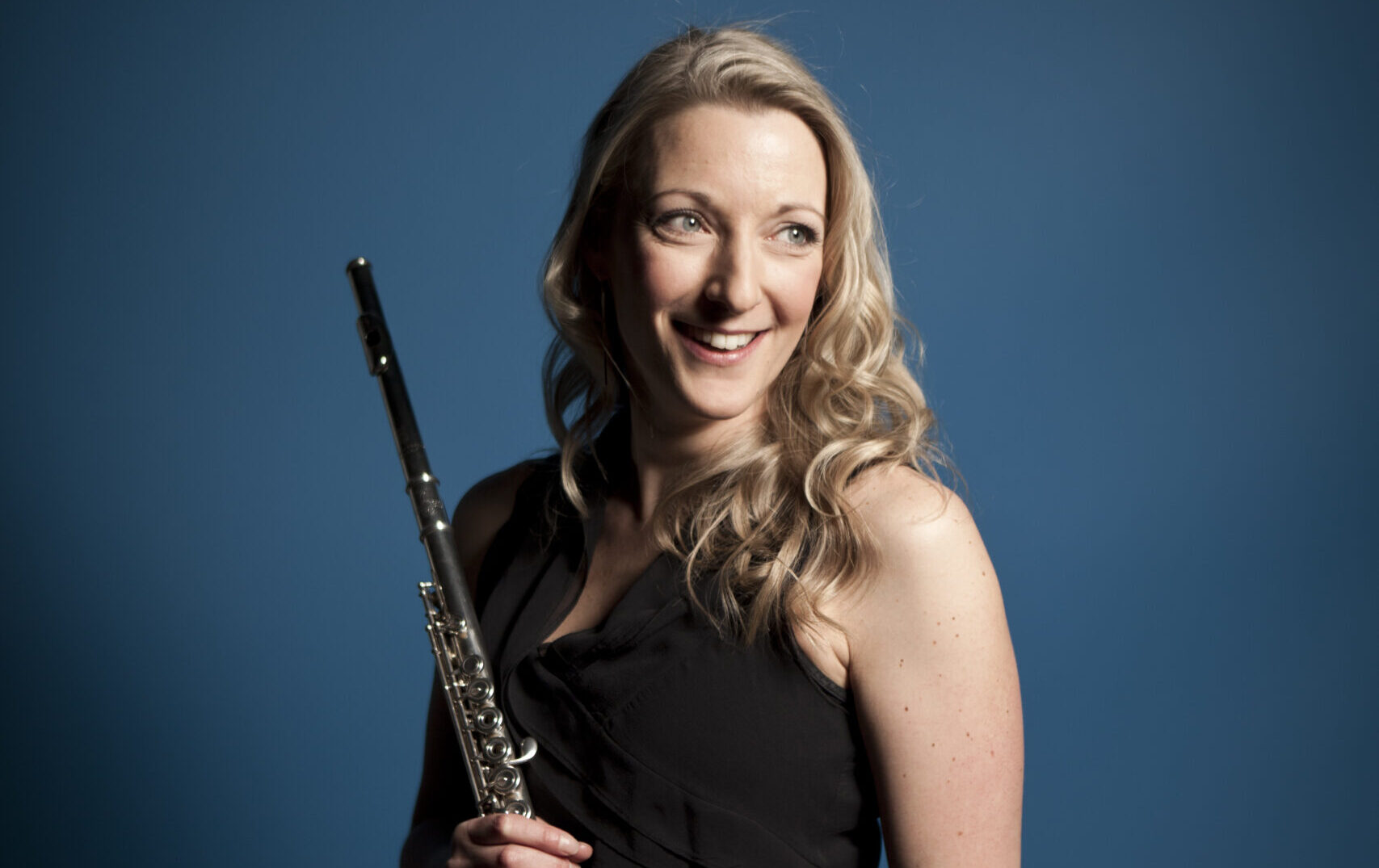
Juliette Bausor, Flautist for Ensemble 360. She has blonde hair and is laughing while wearing a sleeveless black dress and holding a flute. This is the image for our Relaxed concert.

SAINT-SAËNS Morceau de concert for horn and piano (9’)
SAINT-SAËNS Bassoon Sonata (12’)
SAINT-SAËNS The Carnival of the Animals (22’) 

No interval 

For this ‘Relaxed’ concert featuring ‘The Carnival of the Animals’, doors will be left open, lights raised, a break-out space provided, and there will be less emphasis on the audience being quiet during the performance. People with an Autism Spectrum, sensory or communication disorder or learning disability, those with age-related impairments and parents/carers with babies are all especially welcome. 

Part of Sheffield Chamber Music Festival 2024. 

View the brochure online here or download it below.

DOWNLOAD

Save £s when you book for 5 Music in the Round concerts or more at the same timeFind out more here.


Access information and what to expect

More info

SAINT-SAËNS Camille, Morceau de concert for horn and piano

Originally called Fantaisie, the Morceau de concert was composed in October 1887 and a version with orchestral accompaniment quickly followed. It was dedicated to Henri Chaussier, inventor of a new type of valve horn (known as the ‘Cor Chaussier’), the specific instrument for which Saint-Saëns wrote this piece. It is in one continuous movement, divided into three distinct sections: a vigorous Allegro moderato in F minor gives way to a lyrical Adagio in A flat major followed by the concluding Allegro non troppo, which quickly moves from F minor to F major and a brilliant conclusion.  

Nigel Simeone

SAINT-SAËNS Camille, Bassoon Sonata

In spite of embracing the latest technology with his pioneering film score, Saint-Saëns never came to terms with more progressive musical trends as he grew older. He could find ‘no style, logic or common sense’ in Debussy’s Prélude à l’après-midi d’un faune and was appalled by Stravinsky’s Rite of Spring (‘If that’s music, I’m a baboon’, he declared). Increasingly resistant to modernism, and viewed as something of a musical dinosaur, he turned instead to strict classical forms and traditional harmony, but always with beautifully-crafted results. In the last year of his life, Saint-Saëns wrote three sonatas scored for what he described to a friend as ‘rarely considered instruments’: oboe, clarinet and bassoon – and he had plans to write others for flute and cor anglais. The Bassoon Sonata, Op. 168, was the last of the three to be written, completed in June 1921 and dedicated to Léon Letellier, first bassoon of the Paris Opéra and the Société des concerts. Its three movements are a fluid and lyrical Allegro moderato, a delectable (and technically challenging) scherzo marked Allegro scherzando, and a final movement which begins with an expansive Molto adagio before a brief energetic section which brings the work to an energetic close. 


© Nigel Simeone 

SAINT-SAËNS Camille, Carnival of the Animals

As well as being a prolific and extremely successful composer, Camille Saint-Saëns (1835–1921) was a brilliant piano virtuoso and a hugely respected teacher whose pupils included Fauré and André Messager. Both of them recalled his gifts as a musical humourist: he would often lighten the serious mood of lessons with pastiches and caricatures. This tendency found its fullest expression in Le carnaval des animaux, now one of Saint-Saëns’s most famous pieces, but originally conceived as a private entertainment. A masterly parody (lampooning, among others, Offenbach’s Orpheus in the Underworld, Berlioz’s Damnation of Faust, Mendelssohn’s Midsummer Night’s Dream and Saint-Saëns’s own Danse macabre), it was written for a Shrove Tuesday concert on 9 March 1886 given at the home of the cellist Charles-Joseph Lebouc, with Saint-Saëns and Louis Diémer as the pianists and Paul Taffanel as the flautist. Often rather severe and earnest in public, Saint-Saëns wanted to be known as a composer of serious pieces, so he was uncertain how a wider audience might react to his ‘grand zoological fantasy’, and apart from The Swan he did not allow any of Carnaval to be published during his lifetime. Performances were usually given among friends: two weeks after the premiere, it was played by the chamber music society called ‘La Trompette’ (for which Saint-Saëns had written his Septet), and on 2 April 1886 it was given at the salon of Pauline Viardot, by special request of Franz Liszt, on what turned out to be his last visit to Paris. 

MOZART & SCHUBERT

Ella Taylor, Robin Ireland & Ensemble 360

Crucible Playhouse, Sheffield
Monday 20 May 2024, 2.30pm

Tickets
£21
£14 UC, DLA or PIP
£5 Under 35s & Students

Past Event

MOZART Ach, ich fühl’s! (from The Magic Flute) (5’)
MOZART String Quintet No.4 in G minor K516 (36′)
TRAD. Se solen sjunker (Swedish folksong) (3′)
SCHUBERT Piano Trio No.2 in E flat (44′) 

Music in the Round is delighted to welcome Robin Ireland back to the Crucible, a venue he knows so well from his years as violist with the Lindsay String Quartet.  

Robin will join Ensemble 360 for one of Mozart’s finest chamber works, his String Quintet in G minor. It’s a work that’s rich in drama, the hallmark of one of the greatest opera composers, and a delicate aria from Mozart’s The Magic Flute will lead straight into the Quintet. 

Schubert’s Second Piano Trio was one of the final pieces he completed before his death at the young age of 31. It’s a work of incredible emotional depth, with its most famous melody, frequently used in soundtracks for film and television, inspired by a traditional Swedish folksong. 

Note from Guest Curator, Steven Isserlis 

“I love connections between songs and chamber works. ‘Ach ich fuhl’s’ from The Magic Flute is not thematically related to Mozart’s great G minor Quintet; but somehow it seems to me to be the perfect prelude to what may be Mozart’s most personal chamber work, the heart-rending introduction to the last movement reportedly composed after he heard of the death of his father. The immortal slow movement of Schubert’s Second Piano Trio, on the other hand, is actually based on the Swedish folksong that we will hear just before the trio. Its mournful refrain of a descending octave – ‘farewell; farewell’ – evidently captured Schubert’s imagination.” 

Part of Sheffield Chamber Music Festival 2024. 

View the brochure online here or download it below.

DOWNLOAD

Save £s when you book for 5 Music in the Round concerts or more at the same timeFind out more here.

MOZART Amadeus, Ach, ich fühl’s!

In Act Two of Die Zauberflöte, The Magic Flute, Tamino’s flute has summoned Pamina, but he has taken a vow of silence so cannot talk to her. Fearing that he no longer loves her, Pamina sings this aria in which she wonders if her happiness has gone forever and that she will only find peace in death. Mozart sets these lamentations in a deceptively straightforward style, but also in a key – G minor – which he often reserved for expressing the deepest sadness and tragedy: in parts of the G minor String Quintet and the Symphony No. 40, and in this aria. 

© Nigel Simeone 

MOZART Amadeus, String Quintet in G minor K516

1. Allegro
2. Menuetto: Allegretto
3. Adagio ma non troppo
4. Adagio – Allegro


Mozart’s string quintets are all for the combination of two violins, two violas and cellos, with the two violas allowing for particularly rich inner parts. The Quintet in G minor K516 was completed on 16 May 1787, four weeks after his C major Quintet – and during the final illness of his father Leopold, who on 28 May. Though Mozart and his father had a strained relationship by this time, the composer was alarmed at Leopold’s illness and reacted with the now famous letter written on April 1787 in which he declared that ‘death, when we come to consider it closely, is the true goal of our existence, I have formed during the last few years such close relations with this best and truest friend of mankind that his image is not only no longer terrifying to me, but is indeed very soothing and consoling!’

The G minor Quintet – written by an estranged son who knew that his father was dying – is probably the most tragic of all Mozart’s chamber works. W.W. Cobbett described it as a ‘struggle with destiny’ and found it ‘filled with the resignation of despair’ – though this is rather to overlook the major-key ebullience of the finale. The first movement is full of restrained pathos, both themes melancholy and understated – and all the more wrenching for that. The minuet is sombre and reflective while the slow movement was, for the great Mozart scholar Alfred Einstein, the desolate core of the work. He likened it to ‘the prayer of a lonely one surrounded on all sides by the walls of a deep chasm.’ The element of tragedy is still very apparent in the slow introduction to the finale; but finally Mozart unleashes a more joyous spirit. The French poet Henri Ghéon found an eloquent description for this turning point: ‘Mozart has had enough. He knew how to cry but he did not like to cry or to suffer for too long.’


NIGEL SIMEONE 2010

TRAD. Se solen sjunker (Swedish folksong)

This folk song (‘The sun is setting’) was sung by the Swedish tenor Isak Albert Berg at the Viennese home of the Fröhlich sisters, which Schubert visited in 1826 and again in 1827–8. According to Anna Fröhlich, ‘Schubert was so captivated by Berg’s singing that whenever we invited him to spend the evening with us, he always asked: “Is Berg coming? If so, you can absolutely count on my coming.”’ An early biographer noted that Schubert was ‘enchanted with these Swedish songs’, and asked Berg for a copy. He subsequently incorporated one of them into the slow movement of the Piano Trio in E flat, giving it a setting that perhaps sounds more Hungarian than Swedish, but there’s no mistaking the re-use of the tune itself.  


© Nigel Simeone 

SCHUBERT Franz, Piano Trio No.2 in E flat

1. Allegro
2. Andante con moto
3. Scherzando. Allegro moderato
4. Allegro moderato


Schubert composed the second of his piano trios in November 1827, the same month as he completed the great song-cycle Winterreise and nine months after the death of Beethoven in March 1827. This epic chamber work was, in fact, given one of its earliest performances at a concert by the Gesellschaft der Musikfreunde in Vienna on 26 March on the anniversary of Beethoven’s death – one of the few occasions during Schubert’s lifetime when he enjoyed a major public success. Sadly this was not destined to last: the next known performance of the Trio was in January 1829, at a memorial concert for Schubert, who had died in November 1828. Just when Schubert’s music was at risk of slipping into neglect, it was Robert Schumann – an immensely perceptive critic as well as a composer of genius – who most regularly drew attention to the finest of Schubert’s chamber works. Schumann numbered this E flat Trio among the very greatest, describing it as his ‘last and most individual work of chamber music’ and comparing it with the more genial Trio in B flat major. Schumann wrote that the E flat Trio, which appeared in print just days before Schubert’s death, has travelled ‘across the ordinary musical life of the day like an angry thunderstorm … inspired by deep indignation and boundless longing … spirited, masculine and dramatic.’

In a letter to Heinrich Probst – the Leipzig publisher who had the foresight to publish the piece in 1828 – Schubert gave instructions for performances of the work: ‘Be sure to have it played for the first time by capable people, and particularly to maintain a continual uniformity of tempo at the changes of time signature in the last movement. The minuet at a moderate pace and piano throughout, the trio on the other hand vigorous except where p and pp are marked.’ The sheer scale of the work is extraordinary. Very few chamber works of the time unfold with such timeless nobility, but its length did attract some criticism at the time, and Schubert cut almost 100 bars from the finale before the first edition was issued.

NIGEL SIMEONE, 2010

PETER HILL PLAYS BACH

Peter Hill

Crucible Playhouse, Sheffield
Friday 17 May 2024, 9.15pm

Tickets
£16
£10 UC, DLA or PIP
£5 Under 35s & Students

Past Event

BACH
Selected highlights from
‘English’ Suites and ‘The Well-Tempered Clavier’ 

No interval 

Leading British pianist Peter Hill has been part of the Music in the Round ‘family’ from the very beginning, appearing in our first Festival in 1984.  

Although his distinguished career has taken him to concert halls all over the world, he has long called Sheffield his home and remains a treasured favourite with our audiences.  

Peter has been recording with Delphian Records for over a decade, picking up Gramophone and BBC Music Magazine Editor’s Choices for his finely-crafted interpretations of Messiaen, Bach and Russian Masters along the way. 

For the first time since his sell-out concert in 2018, he returns to the Playhouse to give a solo recital of a selection of Bach’s elegant ‘English’ Suites and ever-inventive ‘Well-Tempered Clavier’. 

“the closeness… the ability to hear the smallest nuance is absolutely terrific!” Peter Hill, on the magic of performing in the Crucible Playhouse. 

Welcome drinks
To celebrate the start of Sheffield Chamber Music Festival, all ticket-holders are invited to enjoy a free drink with us in the Crucible Foyer before this concert. 

Part of Sheffield Chamber Music Festival 2024. 

View the brochure online here or download it below.

DOWNLOAD

Save £s when you book for 5 Music in the Round concerts or more at the same timeFind out more here.


BACH Johann Sebastian, The Well-Tempered Clavier

The Well-Tempered Clavier follows the overall plan of a prelude and fugue in each of the 24 major and minor keys, starting in C major, then C minor, rising by semitones to finish in B major and B minor. It’s a structure that demonstrated the feasibility of the ‘well-tempered’ tuning method for the keyboard, which enabled music to change key without sounding out of tune, while showing the varying characteristics of the different keys. Nowadays we use ‘equal-temperament’, so the contrasting colours of the different keys are less apparent.  


It took Bach most of his creative life to write the two Books, with the first Book of 24 preludes and fugues completed in 1722 and the second Book in 1742, combining to make ‘The 48’. 


Despite its apparently formulaic structure, the expressive range of these pieces is astonishing, and was eloquently summarised by the harpsichordist Ralph Kirkpatrick:  


Much that is really idiomatic to the keyboard appears in many of the preludes and some of the fugues, but much is designed to stimulate the imagination to desert the confines of the keyboard for other media and for the larger dimensions of polyphonic orchestra and choir. Some pieces are sketches for jewelled miniatures; some for vast frescos. Some are intimate and lyrical; some quiver with the intensity of a passion that is just as intensely controlled; some fringe on the pedantic; and some are frankly sublime.  


The stylistic differences between the two Books of The Well-Tempered Clavier are subtle but significant: in general the Preludes in Book II are conceived on a larger scale, with about half of them in binary form. As for the Fugues in Book II, they are all in either three or four parts but their variety is extraordinary. In part this is determined by the way in which Bach works out his ideas, but the most important factor is the different character of the fugue subjects themselves. 


After Bach’s death, the two Books of ‘The 48’ circulated in manuscript copies and a few isolated pieces were published by Bach’s pupil Johann Kirnberger (who published the B minor Prelude from Book II in 1773 as a musical example in a harmony book), Johann Friedrich Reichardt (the F minor Fugue in 1782) and Augustus Friedric Christopher Kollmann, organist of the German Chapel in London, who published the C major Prelude and Fugue in his Essay on Practical Musical Composition (1799). 


Kollmann was one of the first to recognise Bach’s lasting significance: in a ‘Sun’ diagram of composers, published in the ‘Allgemeine musikalische Zeitung’ in October 1799, Bach is at the centre, surrounded by the likes of Haydn, Handel, Mozart and Gluck. It was only in about 1801 that The Well-Tempered Clavier was finally published complete, in three different editions: Hofmeister in Vienna, Simrock in Bonn and Nägeli in Zurich. Others soon followed, including Carl Czerny’s edition (1837) purported to demonstrate his memories of how Beethoven played the preludes and fugues. However far-fetched its claims might have been, Czerny’s edition – which sold extremely well – did much to establish the work in the standard repertoire. Countless editions followed, some with distinguished editors including Busoni, Bartók and Donald Francis Tovey (whose edition also includes his insightful analyses of each prelude and fugue and which was the first to use the autograph manuscript acquired by the British Library in 1897).  


Nigel Simeone

RACHMANINOV, PROKOFIEV & TCHAIKOVSKY

Ensemble 360

Crucible Playhouse, Sheffield
Wednesday 20 March 2024, 7.15pm

Tickets
£21 
£14 UC, DLA or PIP
£5 Under 35s & Students

Past Event
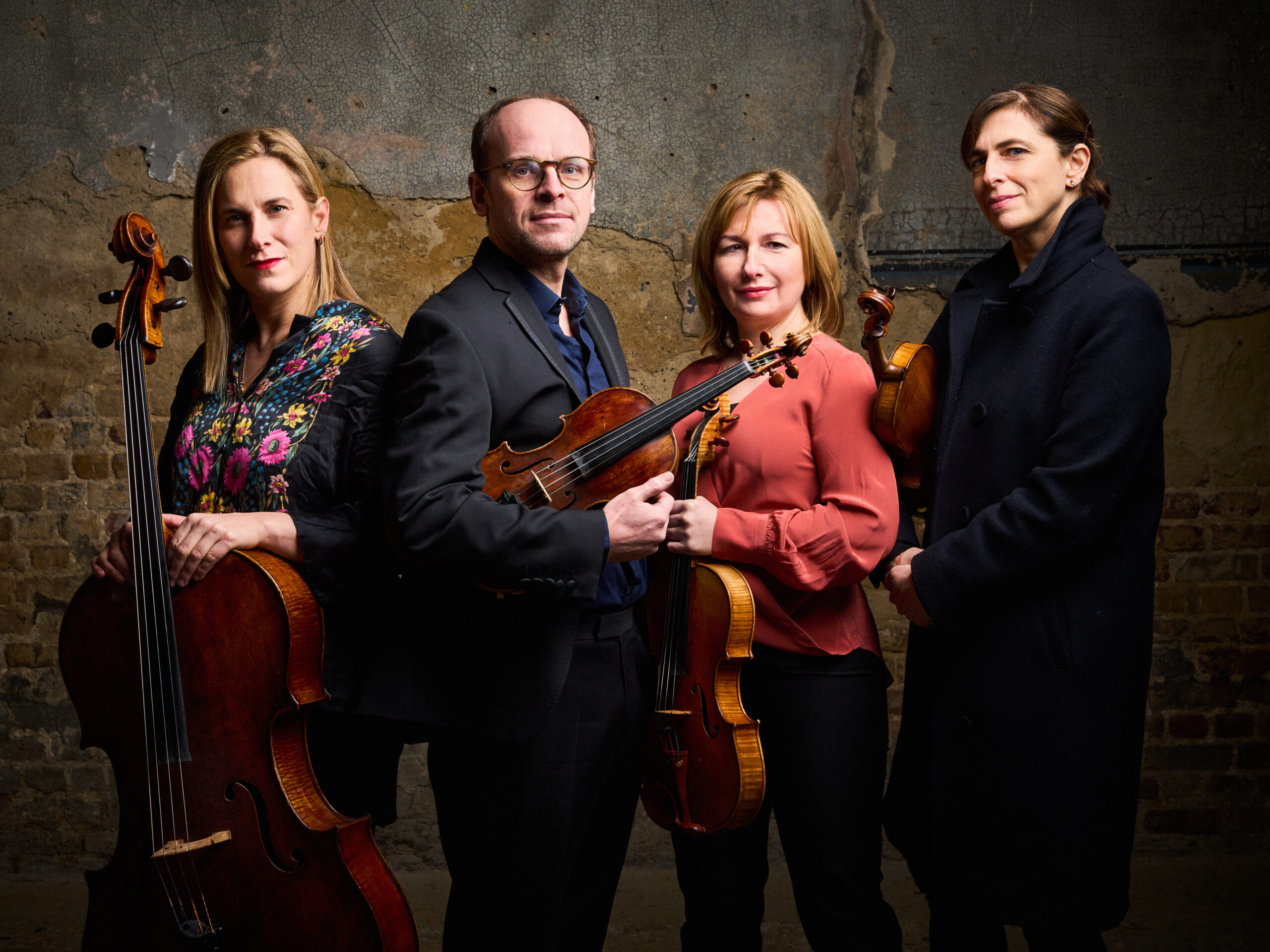
String players of Ensemble 360

RACHMANINOV Trio élégiaque No.1 in G minor (14’)
PROKOFIEV Sonata for Cello (23’)
TCHAIKOVSKY String Quartet No.2 in F Op.22 (36’)

A blistering celebration of Russian music. Best known for his sweeping symphonic music and monumental works for piano, this concert opens with a heart-wrenching trio by Rachmaninov. It concludes with Tchaikovsky’s profoundly moving Second Quartet.

Please note the change from the previously advertised programme. 

Save £s when you book for 5 Music in the Round concerts or more at the same timeFind out more here.

View the brochure for our Sheffield 2024 concerts online here or download it below.

Download

RACHMANINOV Sergei, Trio élégiaque No.1 in G minor

Lento lugubre
Risoluto
Tempo primo
Più vivo
Alla marcia funebre


Rachmaninov wrote two piano trios, both called “elegiac”. The second (D minor) trio was composed at the end of 1893 as a memorial to Tchaikovsky, but the present G minor Trio dates from January 1892, and was first performed on 30 January 1892 with Rachmaninov at the piano and his friend Anatoly Brandukov as the cellist – later to be the dedicatee of Rachmaninov’s Cello Sonata and best man at Rachmaninov’s wedding. The G minor Trio was written while Rachmaninov was still a student, and is a single-movement lamentation. The main theme (reminiscent of a melody in Tchaikovsky’s Manfred Symphony) is first presented by the piano over shimmering bare fifths. This idea dominates the movement, appearing in a variety of guises, and the contrasting falling melody that is no more consoling. The final presentation of the main idea is the most stark – a transformation into a funeral march.


Nigel Simeone © 2011

PROKOFIEV Sergei, Sonata for Cello

In 1947 Prokofiev heard a young Mstislav Rostropovich, aged twenty at the time, performing his First Cello Concerto. Prokofiev decided to compose a piece especially for him and the result was the Cello Sonata, written in 1949, to be performed by Rostropovich and pianist Sviatoslav Richter. After a tedious process of playing the work to the Soviet Composer’s Union to ensure that the new sonata was not ‘hostile to the spirit of the people’, they were finally allowed to give the premiere at the Moscow Conservatory on 1 March 1950. It was well received, with Prokofiev’s friend and colleague Nikolai Miaskovsky described the sonata as ‘a miraculous piece of music.’ 


The first movement opens with a brooding theme in the cello’s lowest register, gradually emerging from the depths before arriving at a slightly quicker section and a dramatic climax, then a return to the opening material and a coda which eventually subsides on to quiet C major chords. The second movement begins with a theme on the piano and its short rhythmic cells soon generate further ideas in a dialogue between cello and piano. A central section introduces a contrasting idea in triple time before the initial ideas return. The finale shifts effortlessly through a bewildering range of keys while maintaining an almost constant sense of momentum. A brief respite comes before the exciting close, which Prokofiev published in two versions (one less technically demanding than the other), bringing the work to a powerful conclusion in C major.  


© Nigel Simeone

TCHAIKOVSKY Pyotr, String Quartet No.2 in F Op.22

Adagio – Moderato assai 
Scherzo. Allegro giusto 
Andante ma non tanto 
Finale. Allegro con moto 


Tchaikovsky wrote his Second String Quartet in January 1874 and it remains a neglected work – a fate it shares with the Third Quartet of 1876 – certainly when compared with the better-known First Quartet. In his biography Tchaikovsky: the man and his music, David Brown has suggested that the F major shows Tchaikovsky trying to grapple with the economy and rigour of Beethoven’s quartets, particularly in the first movement where the thematic material is “more concise” than might be expected with Tchaikovsky, “thus facilitating far greater flexibility in what is built from it.” This is a very fair assessment of a movement that has clear debts to Beethoven in terms of structure and compositional process. The Scherzo is delightfully quirky, based on a lopsided bar of 2, 2 and 3 beats until the more stable, waltz-like Trio section. The emotional core of the work is anguished slow movement (David Brown describes this as music of pain-filled intensity). The Rondo finale that follows is effervescent and untroubled. 


© Nigel Simeone   

OLD & NEW WORLD MASTERPIECES

Steven Osborne

Crucible Playhouse, Sheffield
Thursday 15 February 2024, 7.15pm

Tickets
£21 
£14 UC, DLA or PIP
£5 Under 35s & Students 

Past Event

R SCHUMANN Arabesque in C major Op.18 (7’)
DEBUSSY Children’s Corner (17’)
DEBUSSY Two Arabesques (7’)
R SCHUMANN Kinderszenen Op.15 (19’)
BAUER From the New Hampshire Woods, Op.12 No.1 ‘White Birches’ (3’)
MONK Railroad (3’)
RZEWSKI Winnsboro Cotton Mill Blues (10’)
STEVEN OSBORNE Improvisations (10’)
JARRETT My Song (7’)
EVANS I Loves You Porgy (6’)
PETERSON Indiana (4’) 

One of the world’s most sought-after pianists on stage and in the recording studio, Steven Osborne OBE has received numerous prestigious awards, including The Royal Philharmonic Society Instrumentalist of the Year, two BBC Music Magazine Awards and two Gramophone Awards.

He makes his long-awaited return to the Crucible Playhouse, performing some of the most popular piano masterpieces by Robert Schumann and Debussy. These are followed by a thrilling journey through 20th century Americana, taking in the span of sophisticated jazz and folk cultures. By the end of this concert, you’ll fully understand why so many say that Steven Osborne is a pianist who really can play anything and everything! 

Includes free post-concert Q&A.


Please note, tickets from Steven’s postponed March 2023 concert have been reissued for this new date. 

Save £s when you book for 5 Music in the Round concerts or more at the same timeFind out more here.

View the brochure for our Sheffield 2024 concerts online here or download it below.

Download

SCHUMANN Robert, Arabesque in C major Op.18

Schumann composed his Arabeske in Vienna in 1839, having moved to the city from Leipzig the year before. It appears that he felt somewhat intimidated by Vienna’s immense musical history, and wrote in a letter that he wished to distance himself from any comparison with his predecessors, especially Beethoven. So this Arabeske is deliberately simple in style, even veering towards childish naivety: just a lightly decorated stream of notes, which has become a favourite addition to many great pianists’ programmes.


© Music in the Round

DEBUSSY Claude, Two Arabesques

Debussy was still in his twenties when he composed these two short pieces, and from a time before he created works that began to draw comparisons with the Impressionist artists, a comparison he never acknowledged himself. At the time he wrote his Arabesques in the 1890s, Art Nouveau was changing the face of Paris, and this seems to have been more an influence on Debussy than Impressionism. Art Nouveau’s simplicity of lines and shapes, rooted in the natural world, was of great appeal to Debussy, which reminded him of music from the French Baroque period, and he once wrote: “That was the age of the ‘wonderful arabesque’ when music was subject to the laws of beauty inscribed in the movements of Nature herself.”


© Music in the Round

BAUER Marion, From the New Hampshire Woods, Op.12 No.1 ‘White Birches’

Marion Bauer was born in Washington State, and in 1906 she became the first American to study in Paris with Nadia Boulanger, one of the last century’s greatest composition teachers. Boulanger struck a deal with Bauer: she’d teach her composition if Bauer would give her English lessons in return. Back in America, Bauer became one of the country’s most important musical figures, as both composer, teacher, and a mover-shaker behind the scenes.

Bauer often visited the Macdowell Colony, an artists’ residency in New Hampshire, which is where she composed this suite, inspired by the local landscape, in 1929.

© Music in the Round

MONK Meredith, Railroad

Meredith Monk was born in New York into a line of musicians on her maternal side: her mother was a well-known singer who performed under the stage name of Audrey Marsh. Even from a young age, Monk had always integrated music with dance, and in the 1960s she formed the avant-garde ensemble The House, dedicated to multi-disciplinary performance. Monk began to experiment with remarkable vocal techniques, and her recordings and live events have been of huge importance to successive generations of experimental musicians, performance artists and film makers.


Monk has also composed many miniatures for piano and has cited the jazz pianist Thelonius Monk as a major inspiration. Railroad (Travel Song) dates from 1981


© Music in the Round

RZEWSKI Frederic, Winnsboro Cotton Mill Blues

As a composer and pianist, Frederic Rzewski’s (pron. Shev-skee) career was marked by works that tackled social issues head on, with a style that was often deliberately confrontational, violent and called on immense physical demands from performers.

The Winnsboro Cotton Mill Blues was a song that workers would sing and whistle in the 1930s, whilst at work in a textile factory in South Carolina. The original song opens with the verse:


Ol’ man seargent sittin’ at the desk
The damn ol’ fool won’t give us no rest
He’d take the nickels off a dead man’s eyes
To buy a Coca-Cola an’ a eskimo pie.


In Rzewski’s version for solo piano, the gorgeous bluesy song emerges out of the mechanical noise of the factory, which the performer has to create using their forearms as well as their hands.


© Music in the Round

JARRETT Keith, My Song

Keith Jarrett is one of the giants of modern jazz, who began his career performing with Miles Davis, released the best-selling solo jazz album of all time, and has managed to successfully straddle multiple musical worlds for decades.

My Song is the second track from an album of the same name that Jarrett recorded in Oslo in 1977 with one of his regular collaborators, the Norwegian saxophonist Jan Garbarek. Tonight Steven Osborne will perform his own transcription of My Song.

© Music in the Round

EVANS Bill, I Loves You Porgy

Many of today’s greatest jazz musicians consider Bill Evans to be one of their most important influences, and his legacy as a composer and pianist is truly immense. Evans played in the sextet that recorded Miles Davis’s Kind of Blue, and later performed with many influential ensembles. His musical style was guided not only by his jazz predecessors, but also from his childhood piano lessons, where he loved music by Mozart, Beethoven, Schubert and especially Debussy.


I Loves You Porgy is a number from George Gershwin’s opera Porgy and Bess, and Evans made a handful of recordings of gentle, introverted improvisations based on the song, which Steven Osborne has transcribed for his own performances.


© Music in the Round

PETERSON Oscar, Indiana

Oscar Peterson was born in Montreal, Canada, and took piano lessons from the Hungarian Paul de Marky, who belonged to a direct line of pianists leading back to Franz Liszt. But it was jazz, especially boogie-woogie, that beguiled Peterson, and after quitting high school he soon became a go-to session player. He was invited to New York to perform in the prestigious series Jazz at the Philharmonic, and then throughout his life toured the world with his many groups, making landmark recordings of live and studio performances.

(Back Home Again in) Indiana is a jazz standard composed by James Hanley in 1917, that has been recorded by many great musicians. With Oscar Peterson, his performances of Indiana were often a way to demonstrate his incredible technique, with almost comical speeds that draw on the older boogie-woogie style he so loved.

© Music in the Round

“He combines relentless perfectionism with surprising wildness… artistry of a very rare order. 

The Telegraph 

DUO: TABLA & SITAR

Jasdeep Singh Degun & Harkiret Singh Bahra

Crucible Playhouse, Sheffield
Tuesday 30 January 2024, 7.15pm

Tickets 

£21 
£14 UC, DLA or PIP
£5 Under 35s & Students 

Past Event

Leading sitarist Jasdeep Singh Degun shares intimate duets with tabla player Harkiret Singh Bahra in masterful improvisations rooted in thousands of years of Indian tradition. 

Jasdeep is determined to push the versatility of his instrument and has collaborated with musicians from a wide range of musical backgrounds, including Cerys Matthews, Nitin Sawhney, Mel C and as artist-in-residence with Opera North.  

Save £s when you book for 5 Music in the Round concerts or more at the same timeFind out more here.

View the brochure for our Sheffield 2024 concerts online here or download it below.

Download