BACH FOR SOLO VIOLIN

Ensemble 360

Cast, Doncaster
Saturday 12 October 2024, 7.15pm

Tickets*

£17
£13 (Under 26s)

*Box office charges may apply

Past Event
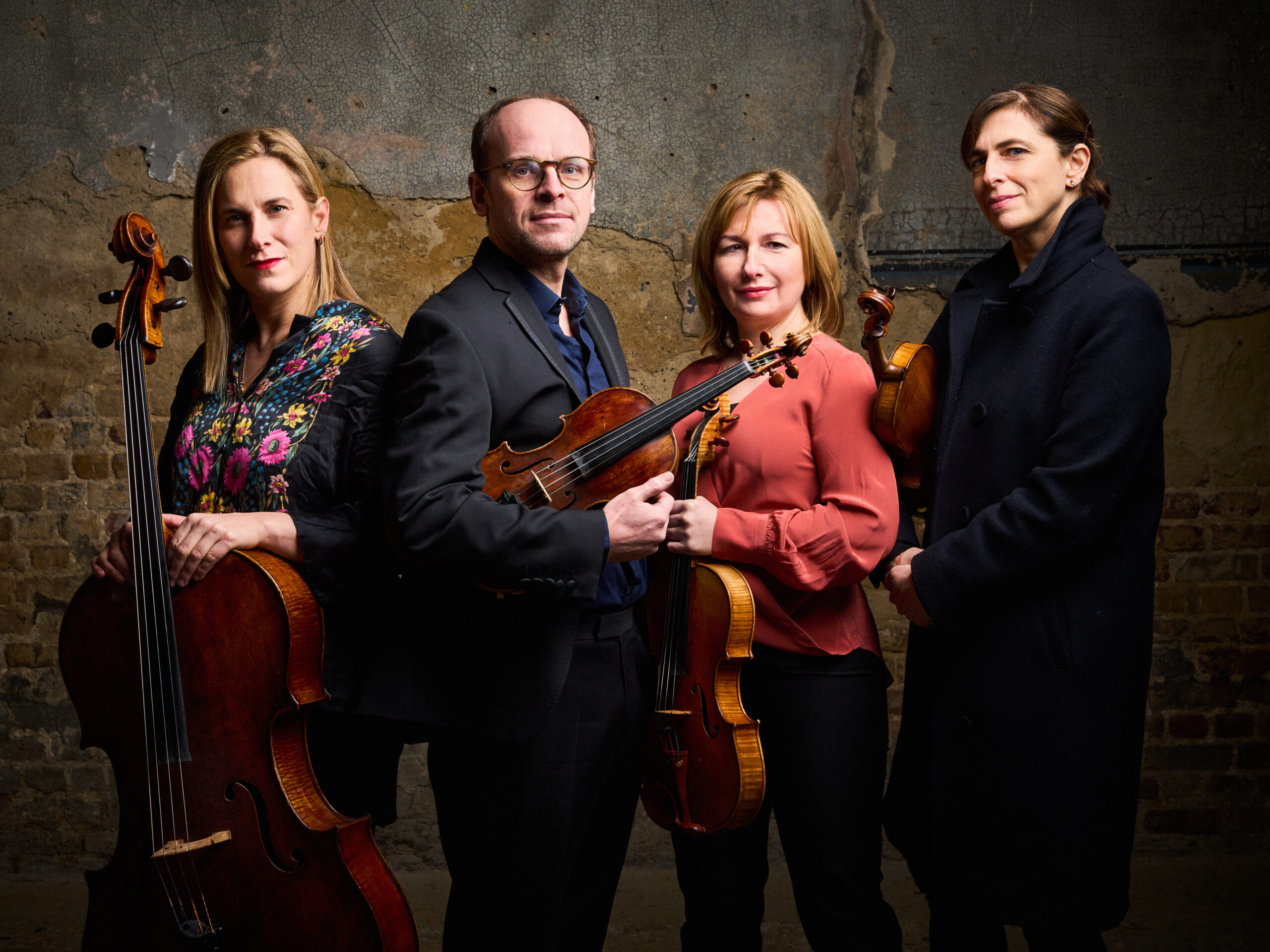
Classical violinist Benjamin Nabarro from Ensemble 360

A celebration of JS Bach’s much-loved music for solo violin and a chance to enjoy some of the most beautiful works ever written for the instrument.

BACH Sonata No.1 in G minor (18’)
BARTÓK Sonata for solo violin (25′)
BACH Partita No.1 in B minor (28’)

Join Music in the Round for a friendly and welcoming classical concert performed by Ensemble 360‘s brilliant violinist Benjamin Nabarro.

Book all four concerts in Music in the Round’s 2024/25 /Doncaster season in the same transaction and save 20% on your tickets!

BACH J.S., Sonata No.1 for solo violin, BWV 1001

On Bach’s autograph fair copy of the Sonatas and Partitas he calls them ‘Six Solos for violin without bass accompaniment’. They were completed in 1720, the date Bach added beneath his signature on the title page, though it is likely that he had been working on them before then. These magnificent pieces stand as one of the greatest monuments of Baroque instrumental music, but it is worth considering some of the precursors that might have inspired him – all works with which Bach was almost certainly familiar. First, a suite for solo violin without bass and a set of six partitas by Johann Paul von Westhoff (1656–1705), the movements based on dance forms, making extensive use of ‘multiple-stops’ (playing more than one string at the same time) to create the illusion of a solo instrument in dialogue with itself. Westhoff spent his last few years as a violinist at the court in Weimar where Bach met him in 1703, and this encounter may well have given Bach the idea of trying something similar. The unaccompanied Passacaglia which Heinrich Biber (1644–1704) composed as an epilogue to his Rosary Sonatas in about 1676 could well have provided a model (particularly for the Chaconne of the D minor Partita), and Biber’s pupil Johann Joseph Vilsmaÿr (1663–1722) published a set of Six Partitas for solo violin in 1715. In 1717, Vivaldi’s pupil Johann Georg Pisendel (1687–1755) showed Bach his Sonata for solo violin without bass – and later performed Bach’s sonatas and partitas.

The overall design of Bach’s Six Solos alternates Sonatas with Partitas. Each Sonata is in four movements, with a slow opening movement followed by a faster fugue. The finales are characterised by fast, continuous writing full of the kind of kinetic energy that fuels so much of Bach’s music. The third movements are more varied – and each is in a different key from the rest of the sonata. In the First Sonata (in G minor), Bach’s third movement is a gently lilting Siciliano in B flat major. But some of Bach’s most innovative writing in this work is to be found in the fugue (second movement), a marvel of ingenuity which demands from the player a combination of virtuosity and musical insight: Bach was writing here for extremely skilled musicians and may have played the Sonata and Partitas himself (he was a fine violinist as well as a superb keyboard player). There’s a brilliant kind of musical conjuring trick involved in the fugue: the violin is essentially a melodic instrument intended to play a single line, but here, through the use of double-stops and incredibly ingenious part-writing, Bach presents two or more musical lines at once. The result is a compositional sleight of hand with the violin functioning as more than one part, sometimes supported by bass lines that it also supplies itself. The G minor Sonata demonstrates Bach’s ability to create music of the greatest imagination within quite a strict, formal structure: at its most expressive in the first and third movements (Adagio and Siciliana), at its most technically brilliant (and demanding) in the fugue, and at its most energetic and direct in the Presto finale.

Nigel Simeone © 2024 

BARTÓK Béla, Sonata for solo violin

Written for the renowned violinist Yehudi Menuhin, Hungarian composer Béla Bartók’s (1881-1945) Sonata for Solo Violin is widely considered one of the most challenging and expressive works for the instrument. It sits well in this programme, inspired, as it was, by Menhuin’s performance of Bach’s solo violin sonatas. Indeed, Bartók blends elements of the Baroque – the striking triple- and quadruple ‘stops’ of the opening, for example, in which the violinist plays three or four notes simultaneously – with the composer’s signature folk-inspired melodies; angular, sometimes discordant tunes drawn from the folk traditions of Eastern Europe, for which he is perhaps best known. The Sonata is in four movements: the intense and lyrical Tempo di ciaccona, the haunting Fuga, the delicate Melodia, and the virtuosic Presto. Each movement explores the violin’s capabilities, demanding both technical mastery and profound musicality.

BACH J.S., Partita No.1 for solo violin, BWV 1002

The Partitas are very different in terms of their structures. While each is, broadly speaking, a suite of dances, Bach treats this idea with considerable freedom. The First Partita presents four dances – Allemanda, Corrente, Sarabande and Tempo di borea (i.e. Bourée) – but each of them is followed by a ‘Double’, a kind of variation which Bach uses either to create contrast (as in the Allemanda and Corrente) or to intensify a particular mood, something he does to memorable effect in the Sarabande and its ‘double’, or to create still greater musical momentum, as in the Tempo di borea and its double.  

After Bach’s death, a few expert performers continued to play the Sonatas and Partitas from manuscript copies, notably Haydn’s friend Johann Peter Salomon. The whole collection was published for the first time in 1802. In the nineteenth century, Mendelssohn and Schumann both felt the need to ‘enhance’ Bach’s original by adding piano accompaniments. Joseph Joachim was perhaps the first great virtuoso since Salomon to present Bach’s Sonatas and Partitas in concerts, and even in the recording studio (some extraordinarily evocative records from 1903). Thanks to Joachim’s efforts and those of his successors such as Georges Enescu, the Sonatas and Partitas finally came to be recognised as creative pinnacles of the violin repertoire. 

Nigel Simeone © 2024 

MUSIC FOR OBOE & STRINGS

Ensemble 360

Cast, Doncaster
Saturday 22 June 2024, 7.15pm

Tickets*
£16
£13 (Under 26s)

*Box office charges may apply

Past Event

BRITTEN Phantasy Quartet Op.2 (13′)
ELGAR Andante and Allegro (7′)
MOZART String Quartet in D K.499 (25′)
FINZI Interlude for strings and oboe (11′)
CLARKE Poem for string quartet (10′)
BAX Oboe Quintet (18′)

Ensemble 360 returns with a captivating programme of virtuosic music which combines the haunting world of the oboe with the richness of the strings. Featuring one of Benjamin Britten’s most assured early works, alongside Bax’s celebrated quintet and Rebecca Clarke’s haunting ‘poem’ for string quartet. This is a captivating programme centred on exquisite English music for oboe, beautiful miniatures and expansive chamber music.

BRITTEN Benjamin, Phantasy Quartet in F sharp minor

Andante con moto – Allegro vivace – Andante con moto

Bridge had already been successful in Walter Wilson Cobbett’s competition to write a ‘Phantasy’ – Cobbett’s reinvention of the Elizabeth Fantasy as new single-movement chamber works – and in 1910 he (along with Vaughan Williams and others) was commissioned by Cobbett to compose a Phantasy Piano Quartet. It’s a work in a satisfying arch form based on free-flowing musical ideas all of which derive from the powerful opening gesture. Bridge’s most famous pupil, Benjamin Britten, wrote in a programme note for the Aldeburgh Festival about this piece. He described the music as ‘Sonorous yet lucid, with clear, clean lines, grateful to listen to and to play. It is the music of a practical musician, brought up in German orthodoxy, but who loved French romanticism and conception of sound—Brahms happily tempered with Fauré.’

Nigel Simeone 2013

ELGAR Edward, Andante and Allegro for oboe and strings

This very early piece, composed in about 1878, was probably written to be played at the Worcester Glee Club. The manuscript in the British Library is, curiously, headed ‘Xmas music’ on the oboe part. The Andante is graceful, and the second movement is reminiscent of a Mendelssohn Scherzo.

Nigel Simeone 2013

MOZART Amadeus, String Quartet in D K499

1. Allegretto
2. Menuetto and Trio. Allegretto
3. Adagio
4. Allegro


Like Haydn before him, Mozart habitually published his string quartets in groups of six (the ‘Haydn’ Quartets) or three (the ‘Prussian’ Quartets). Between these two sets there is a single work, entered in Mozart’s manuscript catalogue of his own works on 19 August 1786 as ‘a quartet for 2 violins, viola and violoncello’. The autograph manuscript (in the British Library) is simply titled ‘Quartetto’. It was published in 1788 by the Viennese firm founded by Mozart’s friend Franz Anton Hoffmeister and it has come to be known as the ‘Hoffmeister’ Quartet as a result. The first movement opens with a theme in octaves that outlines a descending D major arpeggio – an idea that dominates much of the movement despite some startling harmonic excursions along the way. The development section is marked by almost continuous quaver movement that gives way magically to the opening theme at the start of the recapitulation. The Minuet has an easy-going charm that contrasts with the sterner mood (and minor key) of the Trio section. The great Mozart biographer Alfred Einstein thought the Adagio spoke ‘of past sorrow, with a heretofore unheard-of-depth’. It is not only a deeply touching movement but also an extremely ingenious one, not least when the initial idea heard on two violins returns on viola and cello, investing the same music with a darker, richer texture. The finale is fast and playful, but there’s also astonishing inventiveness in the flow of ideas, from the opening triplets with their chromatic twists to a contrasting theme which scampers up and down the scale. A few sudden and surprising dynamic contrasts keep the listener guessing right to the end.


Nigel Simeone

FINZI Gerald, Interlude for Strings and Oboe

Gerald Finzi began work on this piece in 1932 but only completed it four years later, in 1936. The first performance was given at the Wigmore Hall by Leon Goossens (to whom Finzi subsequently dedicated the work) and the Menges Quartet, on 24 March 1936. Finzi was particularly touched by Goossens’s enthusiasm for the piece, having been unsure if the great oboist would be interested in the work: a nervous composer wrote to his friend Howard Ferguson: “I see that Leon, the pride of oboeland, is playing with the Isolde Menges Quartet … Perhaps he’ll say that the Interlude isn’t big enough for him.”

He needn’t have worried, but this lovely work is just one of four published pieces of chamber music by Finzi.


Nigel Simeone © 2012

BAX Arnold, Oboe Quintet

Tempo molto moderato – Allegro moderato – Tempo primo
Lento espressivo
Allegro giocoso – Più lento – Vivace


Bax wrote his Oboe Quintet in 1922, just after completing the first of his seven symphonies. The inspiration for writing a work for oboe and strings was the playing of the great oboist Leon Goossens, to whom the work is dedicated. Bax’s biographer Lewis Foreman has drawn attention to the Irish elements in the music of this work: not only the jig-like final movement, but also in some of the atmospheric writing earlier in the work. The first movement begins with some richly harmonized string chords, and the oboe’s first entrance is rhapsodic, and rather melancholy. The main Allegro moderato has a strong, muscular drive and also demonstrates Bax’s brilliant instrumental technique, drawing a remarkable range of colours from the strings. A wistful recollection of the opening music brings the movement to a serene close. The slow movement opens with a beautiful first violin melody (again, suggestive of Irish folk music). The oboe enters with something rather different: a wistful, cadenza-like passage that is then developed with the strings. While there is plenty of veiled lyricism in this movement, Bax always remains a little questioning, and there’s a slightly uneasy calm at the close. The finale begins in overtly Irish high spirits, but this movement isn’t quite the romp that the opening might suggest. As Lewis Foreman put it, ‘all too soon clouds cover the sun and the spectres return’ in a passage that is slower and more reflective. The dance-like music returns but even at the close there is a brief moment of reflection before the final cadence.


Nigel Simeone © 2011

INTRODUCING THE BRIDGE ENSEMBLE

Bridge Ensemble

Cast, Doncaster
Saturday 20 April 2024, 7.15pm

Tickets*
£16
£13 Under 26s

*Box office charges may apply

Past Event

VALERIE COLEMAN  Umoja (3′)
OTTO MORTENSEN Quintette (18’)
PAUL HINDEMITH Quintet (15′)
ARTURO MÁRQUEZ Danza de Mediodia (10′)
FLORENCE PRICE Adoration (4′)
VALERIE COLEMAN  Red Clay (6′)
ỌLÁ AKINDIPE  Èkó Scenes (10′)

Introducing the Bridge Ensemble, a wind quintet supported by Music in the Round, who champion music by marginalised composers from backgrounds under-represented in chamber music. Opening with Valerie Coleman’s joyous Kwanzaa dance ‘Umoja’ and concluding with a brand new Afrobeat inspired work by the group’s clarinettist Ọlá Akindipe, this is an inviting tour through unjustly overlooked works.

Please note a change in programme as originally advertised.

DVOŘÁK FOR STRINGS

Ensemble 360

Cast, Doncaster
Saturday 16 March 2024, 7.15pm

Tickets*
£16
£13 Under 26s

*Box office charges may apply

Past Event

BRITTEN Three Divertimenti for String Quartet (12’)
DVOŘÁK Quartet No.11 in C Op.61 (39’)
DVOŘÁK String Quintet No.2 in G, Op.77 (35’) 

Dvořák’s exceptional and unusually scored String Quintet No.2 is operatic in scope and richly textured, earning the dedication ‘For my country’ from the Czech composer, who yearned to create a distinctly bohemian musical language in a time of turmoil across eastern Europe. His celebrated Quartet No.11 features the thrilling, turbulent writing that has placed him at the heart of the chamber music repertoire.  

BRITTEN Benjamin, Three Divertimenti for String Quartet

Britten planned these movements as part of a five-movement Quartetto serioso with a subtitle from Shakespeare’s Winter’s Tale: “Go play, boy, play!” An earlier version of the opening March was written for a suite inspired by the film Emil and the Detectives (the children’s novel by Erich Kästner was a great favourite of Britten’s), but this was never completed. Eventually he settled on a work in three movements, and the first performance was given by the Stratton Quartet at the Wigmore Hall on 25 February 1936. The audience response was chilly and a hurt Britten withdrew the Three Divertimenti, which were only published after his death. His brilliant gift for idiomatic quartet writing is already apparent in this early work – from the arresting rhythms and textures of the March to the beguiling central Waltz, and the driving energy of the closing Burlesque.


© Nigel Simeone

DVOŘÁK Antonin, Quartet No.11 in C Op.61

In 1881, the Viennese violinist Joseph Hellmesberger asked Dvořák to write a new work for his quartet. In October, while working on the opera Dimitrij, Dvořák was alarmed to read an announcement in the Viennese press that the first performance of this quartet would be given on 15 December. He wrote to a friend on 5 November: ‘It still doesn’t exist! … I now have three movements prepared and am working on the finale.’ In fact, Dvořák had no reason to panic: he worked quickly and the C major quartet was written between 25 October and 10 November 1881. 


It has fewer overtly Slavonic elements than its immediate predecessor (the E flat Quartet, Op.51), and, perhaps in a nod to Hellmesberger’s commission, the main influences are from Viennese masters: Beethoven and, especially, Schubert. The spacious first movement transforms its two main themes with great ingenuity and harmonic imagination. The Adagio opens with a fervent theme presented as an intimate dialogue between the two violins; its second idea has what Dvořák’s biographer Otakar Šourek described as a ‘veiled expression of melancholy’. The influence of Beethoven is most apparent in the rather terse Scherzo while the falling theme of the central Trio provides a delightful contrast. The finale (a sonata-rondo) brings the work to a joyous conclusion, with Dvořák at his most inimitably Czech. 


After all the rush, Hellmesberger’s advertised December premiere in Vienna had to be cancelled due to a catastrophic fire at the Ringtheater, and the earliest known performance was given by Joseph Joachim’s quartet on 2 November 1882 in Berlin. 


© Nigel Simeone

DVOŘÁK Antonin, String Quintet No.2 in G, Op.77

Scored for the unusual combination of string quartet and double bass, Dvořák’s String Quintet in G major was first performed on 18 March 1876 as the composer’s Op.18 – a number that was changed when the work was first published by Simrock twelve years later in 1888. Originally the work had five movements (with an ‘Intermezzo’ before the Scherzo, reworked as the Nocturne in B major for string orchestra), and despite the published opus number, it is one of the composer’s first chamber works to be fully characteristic of his mature style. The first movement opens with a motif played first by the viola (Dvořák’s own instrument) that dominates much of the musical argument – the triplet figure in it is to be heard in the second theme too. The Scherzo finds Dvořák writing in the style of a folk dance, the opening theme consists of a lively opening motif that contrasts with a gentler idea over which Dvořák later introduces a warmly expressive new tune. The third movement has been described by the great Dvořák scholar Otakar Šourek as ‘one of the most entrancing slow movements in the whole of Dvořák’s chamber music … a flowing stream of passionate warmth [and] depth of feeling’. The finale has the same kind of sunny mood as the first movement, but with an even greater sense of joyful energy. Though there are moments of repose (during which the thematic material is treated to some ingenious transformations), the work ends with what Dvořák’s biographer Otakar Šourek aptly described as ‘high-spirited verve’.  


© Nigel Simeone 

THE CHIMPANZEES OF HAPPY TOWN

Ensemble 360 & Caroline Hallam

Cast, Doncaster
Saturday 16 March 2024, 11.00am

Tickets*

£10 Adults
£6 Children (Under 16)

*Box office charges may apply

Past Event

Celebrating the importance of love and happiness in everyone’s lives, Paul Rissmann’s much-loved musical retelling of Giles Andreae and Guy Parker-Rees’s best-selling picture-book returns.  

Meet Chutney the Chimpanzee who, with one small act of planting a seed, transforms the lives of the entire town of Drabsville, and teaches its inhabitants to celebrate their differences and make life more colourful along the way!   

With narration, visuals from the book and lots of music to introduce the musicians of Ensemble 360, this is a brilliant first concert for 3 – 7 year-olds. 

CHOPIN FOR SOLO PIANO

Tim Horton

Cast, Doncaster
Saturday 14 October 2023, 7.00pm

Tickets: £15*

Under 26s: £13*

*Box office delivery charges may apply.


Past Event

CHOPIN Two Nocturnes Op.48 (14’)
RAVEL Gaspard de la Nuit (23’)
CHOPIN
Scherzo No.1 in B minor Op.20 (9’)
Scherzo No.2 in B flat minor Op.31 (10’)
Scherzo No.3 in C sharp minor Op.39 (7’)
Scherzo No.4 in E Op.54 (11’)

Tim returns to Doncaster to perform another in his compelling series of concerts exploring Chopin’s most beguiling music.
Again, he includes music inspired by the mastery of the composer. This time it’s the great Maurice Ravel. In ‘Gaspard de la Nuit’, Ravel’s piano-writing creates dazzling portraits of characters and landscapes, with moments of thrilling energy and serene beauty. With Tim on the piano stool, this is guaranteed to be a breathtaking evening of music.

CHOPIN Frédéric, Nocturne Op.48 No.1

Chopin’s Nocturne in C minor is among the finest of all his explorations of this form. More overtly dramatic than most of his other nocturnes, it begins with a solemn, halting melody in the right hand, supported by chords that have some of the characteristics of a funeral march. The result, though, is more lyrical and more plangent (reminding us of Chopin’s fondness for bel canto opera) than the austere tread of his most famous funeral march (in the B flat minor Sonata). The central section is a richly harmonized chorale in C major, that is – in due course –infiltrated and disturbed by a quicker, more chromatic figure in a triplet rhythm that eventually provokes an explosive climax – complete with Lisztian octaves – before the music turns back to the minor key, and the material from the opening. Here Chopin does something unexpected. The uneasy triplet rhythms that had disrupted the chorale are now transformed into a restless, agitated accompaniment for the melody, and it is only in the last two bars that the nervousness finally subsides.


This Nocturne was the first of a pair dedicated to a favourite Chopin pupil – Laure Duperré, the beautiful daughter of an admiral – and was first published in 1841 by Schlesinger in Paris. The following year, it was reviewed in the Revue et Gazette musicale by Maurice Bourges. Writing in the form of a letter to an unnamed Baroness, Bourges offers a description of the work’s design that was quite novel for the time outside the pages of composition treatises (Schumann was one of the few who had attempted something similar in the general musical press): ‘Here in a few words is an outline of the thirteenth nocturne. A first period, in C minor, is distinguished by the character of the melody that dominates it; the second, in C major, begins pianissimo; it belongs to the complex form that has been very aptly called melodic harmony; then it ends with a restatement of the first theme, accompanied this time by pulsating chords that give the general rhythm a new warmth.’

Nigel Simeone 2010

RAVEL Maurice, Gaspard de la Nuit.

Maurice Ravel completed Gaspard de la nuit on 8 September 1908, and the first performance took place on 9 January 1909, at the Salle Erard in Paris. The pianist was Ricardo Viñes, one of the most energetic advocates of new French and Spanish music, and a long-time friend of Ravel’s. Exact contemporaries, they were both members of Les Apaches, a group of like-minded artistic friends. While they were students, Viñes had introduced Ravel to the poetry of Aloysius Bertrand that was later to inspire Gaspard de la nuit. Gaspard refers to a Persian treasurer guarding the royal jewels at night. 


Betrand’s prose poems had been published in 1842 (a year after his death), and influenced later Symbolist poets, notably Baudelaire and Mallarmé. Ravel’s Gaspard, subtitled ‘three poems’, begins with Ondine, a dream-like depiction of a water sprite. Ravel’s music seems to mirror the strange beauty of the poem:  


Listen! … it is Ondine who brushes drops of water on the resonant panes of your windows, lit by the gloomy rays of the moon; and here in gown of watered silk, the mistress of the chateau gazes from her balcony on the beautiful starry night and sleeping lake. 


Le Gibet is a grim evocation of a corpse hanging from the gallows. A bell – incessant and obsessive – tolls throughout the piece, represented by repeated B flats, the first and last sounds we hear. 


Ravel once said his initial idea for Scarbo had been to ‘make a caricature of Romanticism’, but admitted that ‘perhaps it got the better of me.’ The result is music of dazzling originality. The poem depicts a goblin who darts in and out of the shadows, and Ravel’s piece mirrors this with quiet passages disturbed by sudden outbursts. The critic Vladimir Jankélévitch described Scarbo as ‘a fiendish encyclopedia of all the traps, obstacles and snares that a limitless imagination can devise for a pianist’s fingers.’ 

 (C) Nigel Simeone

CHOPIN Frédéric, Four Scherzos

Chopin’s Scherzos were composed between the mid-1830s and 1843. Scherzo means ‘jest’ or ‘joke’ and earlier composers such as Haydn and Beethoven often invested scherzo movements with playful elements. But Chopin took the form in a quite different direction prompting Robert Schumann to ask about the B minor Scherzo, Op.20: ‘How is “gravity” to clothe itself when “jest” goes about in such dark veils?’ Certainly, the mood of the B minor Scherzo (published in 1835) is sombre and sinister, the outer sections full of suspense and wildness. Only in the central section (in B major) is there any sense of repose.  


The B flat minor Scherzo, Op.31 (1837), was likened by Schumann to Byron’s poetry, ‘overflowing with tenderness, boldness, love and contempt.’ Chopin himself is said to have compared the hushed opening to a question, the explosive second phrase providing the answer, but the piece as a whole is remarkably intense and unified, its ideas seeming to grow from one to the next to create a remarkable inner coherence.  


His approach in the C sharp minor Scherzo, Op.39 (1838–9) is rather different, depending for its effectiveness on the sharp contrasts and surprising juxtapositions between the rapid octaves at the opening and the hymn-like second theme and the exquisite tumbling cascades with which it is decorated. The mood at the close is dazzling and defiant. 


The E major Scherzo, Op.54 (1843), is the one which perhaps most clearly matches the expectations of its title: there is a certain playfulness and elegance in a work that was composed tandem with the Fourth Ballade and the Polonaise in A flat, Op.53. But in spite of its apparent conformity with the title, this is late Chopin and the music is full of innovation, whether in the exploration of piano textures or Chopin’s increasingly rich harmonic palate. More introspective than its predecessors, it is also a work which seems tinged with sadness as well as mercurial brilliance.  


© Nigel Simeone 

CLOSE UP: MUSIC FOR CURIOUS YOUNG MINDS

Ensemble 360 & Aga Serugo-Lugo

Cast, Doncaster
Saturday 10 June 2023, 11.00am

Tickets:
£10
Under 26s £6


Past Event

A tour through the wondrous world of chamber music, specially created for young audiences.

Combining some of the most well-known music ever written, as well as some new works from surprising places. This brand-new concert includes thrilling adventures through music, cheeky characters and epic heroes, along with mind-blowing musical games and the chance to join in and make music together.

Introduced by Aga Serugo-Lugo, this is a friendly hour of fun and the finest string quartet music.

Ideal for 7-11 year olds.

The concert includes extracts from:

SCHUBERT String Quartet in D Minor ‘Death And The Maiden’
STRAVINSKY Three Pieces
HAYDN Op.33 No.3 ‘Russian Quartet’
MOZART String Quartet In E Flat
WEIR String Quartet
MEREDITH Short Tribute to Teenage Fanclub
Arr. BURLEIGH Oh Lord, What a Morning
SUK  Meditation on an Old Czech Chorale
BEETHOVEN String Quartet No. 16 Op.135
DVOŘÁK String Quartet No.12 ‘American Quartet’

SCHUBERT String Quartet in D Minor (excerpt for ‘Close Up’)

Hey Presto! We begin with a twitchy chase from Franz Schubert, which he told the string players should be played ‘presto’ meaning ‘very quick or very fast’. How does the sound change when each musician plays on their own? How do you feel when they all play the same tune together? This tense piece kicks off an exciting hour of music…

HAYDN Russian Quartet No.3 (excerpt for ‘Close Up’)

Haydn was the composer who did most to first create a form of music for two violins, a viola and a cello: a group we know as a string quartet. This piece has the nickname ‘The Bird’ — can you hear why?

MOZART String Quartet In E Flat K428 (excerpt for ‘Close Up’)

This beautiful tune is almost like a lullaby and shows how gentle the sound of the strings can be. Listen to the way the first violin plays a tune and the other three instruments rock gently back and forth underneath, creating a warm blanket of sound. This is music to wrap up warm within. How does it make you feel?

WEIR String Quartet (excerpt for ‘Close Up’)

This string quartet was written by a composer who is making music today, the wonderful Judith Weir. A piece full of mysteries, inspired by a medieval Spanish tune. This quartet sounds like a strange landscape where it’s easy to get lost among these lopsided rhythms where nothing is quite as it seems…

SUK Josef, Meditation on an Old Czech Chorale (excerpt for ‘Close Up’)

This piece was written at the start of the first world war and is full of the drama and sadness of a scary time. But it ends full of hope with long notes seeming to climb into the air. Look and listen out for all the times the musicians play across the strings to make two or more notes sound at once — a technique called double stopping.

MEREDITH Anna, Short Tribute to Teenage Fanclub (excerpt for ‘Close Up’)

Anna Meredith is another musician writing music today. She makes music for her band as well as for classical musicians, often mixing up instruments usually seen in an orchestra with rock and pop instruments. This piece combines the two and is a tribute to one of her favourite bands performed by string quartet who don’t use their bows at all but pluck their instruments in a technique called ‘pizzicato’.

BEETHOVEN ‘The Harp’ Quartet (excerpt for ‘Close Up’)

This beautiful quartet is known as ‘the harp’ because in the first part, all four musicians have sections where they pluck the strings their instruments rather than using the bow. Can you hear the difference?

BURLEIGH Henry Thacker, Oh Lord, What A Morning (excerpt for ‘Close Up’)

This is a traditional song created by enslaved Africans in America. The composer and singer Harry Burleigh was the grandchild of slaves who became a famous musician and helped share music by black people with the rest of the world. This simple song looks forward to a better time when injustices like slavery and racism will end. Perhaps you can hear both the sadness and the hope in this beautiful music.

STRAVINSKY Igor, Three Pieces for String Quartet (excerpt for ‘Close Up’)

This spiky, short piece of music was created in Russia at the same time Suk wrote the piece we heard earlier. Stravinsky uses the plucking technique we heard in the Meredith and Beethoven, as well clashing notes and unexpected changes in pulse and speed. Stravinsky keeps us guessing what he’ll do next!

DVOŘÁK ‘American’ String Quartet (excerpt for ‘Close Up’)

This piece brings our concert to a celebratory end, from Czech composer Anton Dvořák. Listen out for all the places it gets louder, or faster — or both! — or where the quartet hang back to build tension. This piece uses folk tunes from Czechoslovakia, where Dvořák was born and started writing, and includes a native American tune, and music from all the people like him who had travelled to live and work in the USA. Bringing these together, our concert ends with an explosion of joy!

SIR SCALLYWAG & THE GOLDEN UNDERPANTS

Ensemble 360 & Polly Ives

Cast, Doncaster
Saturday 22 April 2023, 11.00am
Past Event

When King Colin’s golden underpants go missing, it’s Sir Scallywag to the rescue! Brave and bold, courageous and true, he’s the perfect knight for the job… even if he is only six years old! 

Original music by our children’s Composer-in-Residence, Paul Rissmann, features instruments including strings, woodwind, and horn, presented together with story-telling and projected illustrations from the best-selling children’s book by Giles Andreae and Korky Paul.  

Performed by the wonderfully dynamic and hugely engaging Ensemble 360 and Polly Ives, this concert is a great introduction to live music for children. It’s full of wit, invention, songs and actions, and plenty of opportunities to join in. 

SHOSTAKOVICH & BEETHOVEN STRING QUARTETS

Ensemble 360

Cast, Doncaster
Saturday 10 June 2023, 7.00pm

£14.50

£10 Under 26s

Past Event
String players of Ensemble 360

STRAVINSKY Three Pieces for String Quartet (7′)
SHOSTAKOVICH String Quartet No.3 Op.73 (32′)
BEETHOVEN String Quartet Op.135 (26′) 

“Must it be? It must be!” Beethoven inscribed these words on the manuscript of his profoundly moving final string quartet. This Op.135 quartet was written towards the very end of his life, and is touched by the wisdom of his years yet as full of contrast, quick wit and struggle as any of earlier works.  

Two masterpieces of the 20th century are presented alongside Beethoven’s quartet: Stravinsky’s wonderfully inventive short pieces and Shostakovich’s masterful third quartet, which encompasses the scope of a symphony in an intimate chamber work. 

STRAVINSKY Igor, Three Pieces for String Quartet

Composed in 1914, Stravinsky revised these pieces in 1918 when he dedicated them to the Swiss conductor Ernest Ansermet. The first performance was given in Paris in May 1915 by a quartet which included the composer Darius Milhaud playing violin, while the 1918 version had its premiere in London on 13 February 1919. The work comprises three short movements without titles or tempo markings. Though the dimensions of the pieces are slight, Stravinsky managed to baffle (and infuriate) early critics with the unusual sound effects and performance markings in places, and the deliberate absence of any conventional forms or traditional thematic development. Instead, the mood is by turns stange and grotesque. The second piece was inspired by the comedian Little Tich (Harry Relph) whose jerky stage act had impressed Stravinsky during a visit to London in 1914. The result might almost be described as an anti-quartet, and as the critic Paul Griffiths later remarked, these little pieces are ‘determinedly not a “string quartet”. The notion of quartet dialogue has no place here, nor have subtleties of blend: the texture is completely fragmented, with each instrument sounding for itself.’  

 Nigel Simeone 

SHOSTAKOVICH Dmitri, String Quartet No.3 in F major Op.73

Shostakovich began his Third String Quartet in January 1946 but made no progress beyond the second movement until May when he went with his family to spend the summer at a dacha near the Finnish border. According to Beria (head of the Soviet secret police) in a letter to Shostakovich, this retreat was a personal gift from Stalin. It was a productive summer and the quartet was completed on 2 August 1946. The same day Shostakovich wrote to Vassily Shirinsky, second violinist of the Beethoven Quartet: ‘I have never been so pleased with a composition as with this Quartet. I am probably wrong, but that is exactly how I feel right now.’ The Beethoven Quartet gave the first performance at the Moscow Conservatory on 16 December 1946. Though there was an ominous silence from official critics, Shostakovich’s reputation was still high among the nation’s leaders: on 28 December he was given the Order of Lenin and each member of the Beethoven Quartet received the Order of the Red Banner of Labour. Just a year later the Third Quartet was denounced in the journal Sovetskaya musika as ‘modernist and false music.’

Although Shostakovich had no overt programme in mind, he invested a great deal of private emotion in the work – sufficient, as Fyodor Druzhinin (violist of the Beethoven Quartet) recalled, for the music to move the composer to tears when he attended a rehearsal in the 1960s, twenty years after he had written it. The start of the first movement, in F major, recalls the Haydn-like mood of the Ninth Symphony (completed in 1945) and this is followed by a contrasting idea, played pianissimo. The development includes some turbulent fugal writing, injecting a sense of unease that hovers over the rest of the movement. The Moderato con moto (in E minor) is based on a series of sinister ostinato figures and frequent repetitions while the third movement is a violent scherzo in G sharp minor. The Adagio is an extended passacaglia (ground bass) that gives way to a Moderato in which some kind of resolution is found in the closing bars, ending with three pizzicato F major chords.


Nigel Simeone

BEETHOVEN, BERWALD & MOZART

Ensemble 360

Cast, Doncaster
Saturday 22 April 2023, 7.00pm

£14.50

£10 Under 26s

Past Event

BERWALD Grand Septet in B-flat (25′)
MOZART Clarinet Quintet in A K581 (35′)
BEETHOVEN Septet in E-flat, Op.20 (40′)

An evening featuring three celebrated works of chamber music, all on a larger scale.

Beethoven’s Septet was his most popular work; an inventive, celebratory piece, full of youthful energy and generosity of spirit, punctuated by fanfares, solos, cadenzas and exuberant fireworks! The evening begins with a Romantic septet, inspired by Beethoven, and written by his Swedish younger contemporary, Berwald; Mozart’s sublime Clarinet Quintet follows.

BERWALD Franz, Grand Septet in B flat

Adagio
Allegro molto
Poco adagio
Prestissimo
Poco adagio
Finale: Allegro con spirito


The influence and popularity of Beethoven’s Septet spread across Europe and the work was regularly performed in Berwald’s native city of Stockholm. Now widely regarded as the most important Swedish composer of the nineteenth century, during his lifetime Berwald was seldom able to earn a living from his music, working instead as a successful physiotherapist and, later, manager of a glass works. None of this should lead us to underestimate either Berwald’s creative talent or his imaginative handling of musical form. Both are apparent in this Septet. Completed in 1828, it may have been a reworking of an earlier piece for the same forces. Even so, it is a relatively early work, composed two decades before his best-known pieces such as the Symphonie sérieuse and Symphonie singulière. The musical language is consistently appealing, owing something to contemporary opera and to composers such as Spohr, but the melodies and harmonies have an idiosyncratic character that is entirely Berwald’s own (as at the start of the Allegro molto in the first movement, or the opening of the finale). In terms of the Septet’s design, the most striking innovation comes in the second movement which has a very quick Scherzo embedded within a seemingly conventional slow movement.

MOZART Wolfgang Amadeus, Clarinet Quintet in A K581

Allegro 
Larghetto 
Menuetto 
Allegretto con variazioni  

The Clarinet Quintet was completed on 29 September 1789 and written for Mozart’s friend Anton Stadler (1753–1812). The first performance took place a few months later at a concert in Vienna’s Burgtheater on 22 December 1789, with Stadler as the soloist in a programme where the premiere of the Clarinet Quintet was a musical interlude, sandwiched between the two parts of Vincenzo Righini’s cantata The Birth of Apollo, performed by “more than 180 persons.” 

From the start, Mozart is at his most daringly beautiful: the luxuriant voicing of the opening string chords provides a sensuously atmospheric musical springboard for the clarinet’s opening flourish. The rich sonority of the Clarinet Quintet is quite unlike that of any other chamber music by Mozart, but it does have something in common with his opera Così fan tutte (premièred in January 1790), on which he was working at the same time. In particular, the slow movement of the quintet, with muted strings supporting the clarinet, has a quiet rapture that recalls the trio ‘Soave sia il vento’ (with muted strings, and prominent clarinet parts as well as voices) in Così. The finale of the Quintet is a Theme and Variations which begins with folk-like charm, then turns to more melancholy reflection before ending in a spirit of bucolic delight. 

Nigel Simeone © 2012 

THE LARK ASCENDING

Ensemble 360

Cast, Doncaster
Saturday 5 November 2022, 7.00pm

£14.50
£10 Under 26s

Past Event
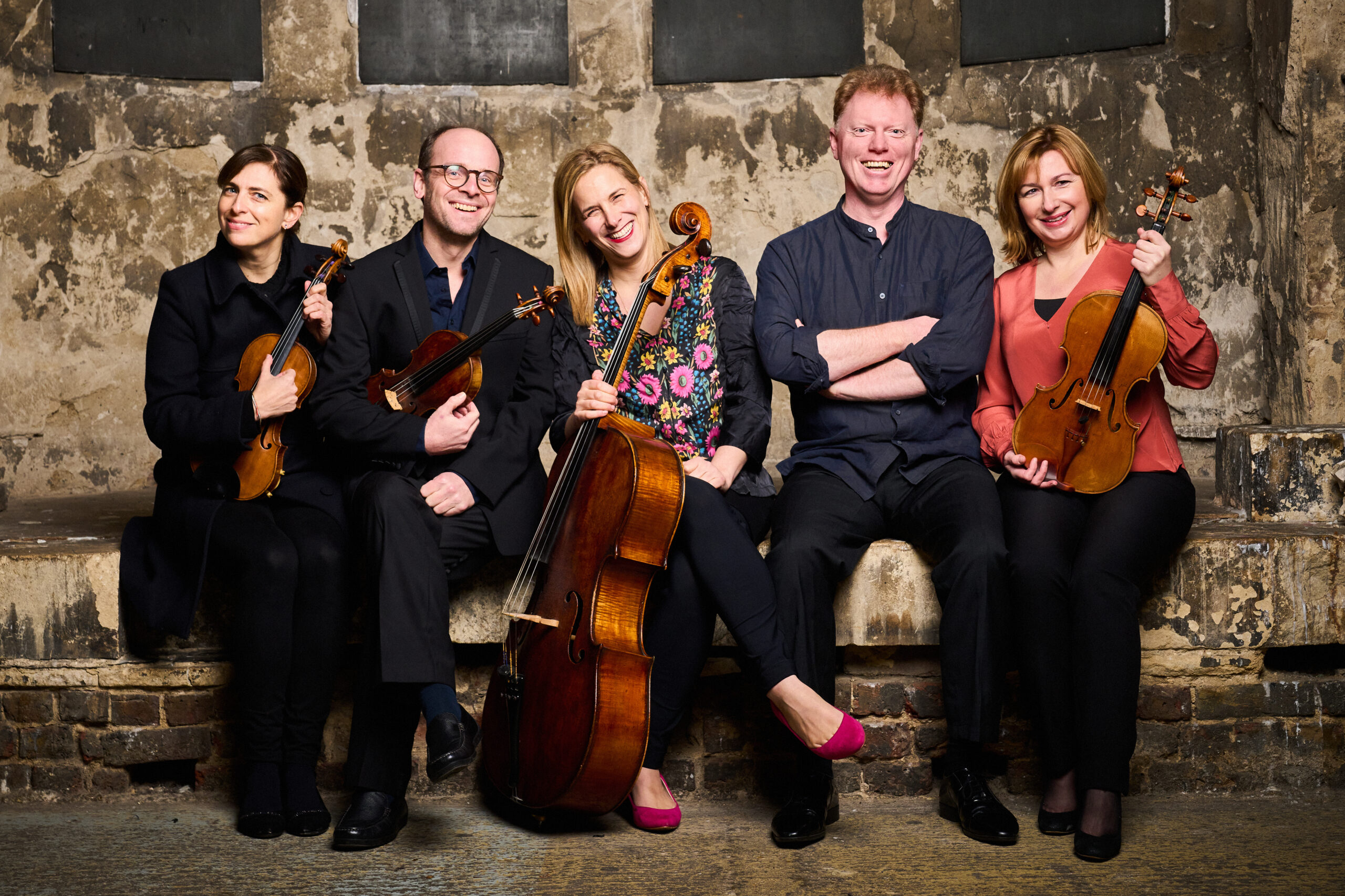
Five classical musicians from Ensemble 360 pose together, seated and smiling. They are our resident musicians in Sheffield and nationally.

Ensemble 360

VAUGHAN WILLIAMS The Lark Ascending (15’)
VAUGHAN WILLIAMS Concerto for Oboe and Strings (19’)
RAVEL Sonatine for piano (12’)
VAUGHAN WILLIAMS Piano Quintet in C minor (30’) 

Celebrating the 150th birthday of the celebrated composer who embodies the sound of English music. The evening opens with Vaughan Williams’ most famous work, The Lark Ascending, recently voted No.1 in the Classic FM Hall of Fame for a record 12th time, in its original version for piano and violin. This is followed by his Concerto for Oboe and Strings, the compact Sonatine by the composer’s friend and mentor Maurice Ravel, and the evening concludes with his expansive Quintet. 

VAUGHAN WILLIAMS Ralph, The Lark Ascending

Vaughan Williams began The Lark Ascending before the outbreak of the First World War, taking his inspiration from George Meredith’s 1881 poem of the same name. But he set this ‘Romance’ aside during the war and only finished it in 1920. The violinist Marie Hall gave the first performance of the original version for violin and piano in Shirehampton Public Hall (a district of Bristol) on 15 December 1920. Vaughan Williams dedicated the work to her, and she went on to give the premiere of the orchestral version six months later, when it was conducted by the young Adrian Boult at a concert in the Queen’s Hall in London. Free, serene and dream-like, this is idyllic music of rare and fragile beauty.

© Nigel Simeone

VAUGHAN WILLIAMS Ralph, Concerto for Oboe and Strings

Rondo pastorale
Minuet and Musette
Finale (Scherzo)

Vaughan Williams started to compose his oboe concerto in 1943, immediately after the Fifth Symphony, and it was completed in 1944. His friend and biographer Michael Kennedy wrote that ‘a discarded scherzo from the symphony was turned into part of the oboe concerto’, and he described it as a ‘satellite work’ to the symphony. It was written for the oboist Léon Goossens and the premiere was planned for the 1944 Proms. That concert was cancelled due to the risk of flying-bombs over London and Goossens gave the first performance in Liverpool on 30 September 1944.

The bucolic first movement – an unconventional rondo – is marked Allegro moderato and it uses both the oboe’s spiky agility and its lyrical capabilities, with short cadenzas near the start and finish. In his book on Vaughan Williams, Frank Howes noted that the Minuet and Musette was ‘wayward in its key scheme’ and described the whole movement as ‘pseudo-classical’ in character. The central ‘Musette’ section is based on drones, played by the oboe. Headed ‘Finale (Scherzo)’, the last movement is predominantly very fast, but perhaps the highlight of the whole Concerto is the slower central section, the soloist musing over richly-harmonised string chords, before a return of the fast material and a quiet, sustained close.

© Nigel Simeone

RAVEL Maurice, Sonatine

Modéré
Mouvement de menuet
Animé

Ravel composed his Sonatine in 1903–5, just after finishing the String Quartet and the song-cycle Shéhérazade. After several fruitless attempts to win the Prix de Rome, Ravel finally decided that he should pursue his own musical path, and the Sonatine was one of the first results – a work of great refinement, on a much smaller scale than the piano cycle Miroirs that he worked on at the same time.

Ravel’s title evokes something of the elegance of the Classical period, though from the very start it is obvious that Ravel is not attempting any kind of pastiche. Even so, the first movement is in a clearly defined sonata form. The opening presents a singing theme in octaves with a shimmering accompaniment in the inner parts. The second theme is gentler, supported by typically luminous harmonies. The Minuet is a graceful dance, and the finale is driven by the almost omnipresent rapid notes heard at the start of the movement. There are moments of repose, but the movement surges to a flamboyant conclusion.

Ravel dedicated the Sonatine to his friends Ida and Cipa Godebski. The premiere was given in Lyon on 10 March 1906 by Mme Paule de Lestaing, and first performed in Paris on 31 March 1906, by Gabriel Grovlez.

© Nigel Simeone

VAUGHAN WILLIAMS Ralph, Quintet in C minor for violin, viola, cello, double bass and piano

Allegro con fuoco
Andante
Fantasia, quasi variazioni

This Quintet in C minor, scored for the same instrumentation as Schubert’s Trout, was composed in 1903 and revised twice before the first performance at the Aeolian Hall on 14 December 1905, but after a performance in 1918 it was withdrawn by Vaughan Williams. It was finally published in an edition by Bernard Benoliel a century after its composition. Vaughan Williams’s friend and biographer Michael Kennedy speaks of ‘the shadow of Brahms looming over’ the work, and this seems especially true of the expansive first movement. The expressive, romantic melody of the Andante second movement is more characteristic of its composer at this stage in his career, and it has some similarity to the song Silent Noon, composed the same year. The finale is a set of five variations, ending with a beautiful bell-like coda.

As Michael Kennedy observes, what matters with an early work such as this is not whether it anticipates Vaughan Williams’s later masterpieces (for the most part, it doesn’t), but that it is impressive in its own right. He does, however, make an intriguing observation: ‘Vaughan Williams may have withdrawn the Quintet but he did not forget it, for in 1954 he used the theme of the finale, slightly expanded, for the variations in the finale of his Violin Sonata.’

© Nigel Simeone

CHOPIN WORKS FOR SOLO PIANO

Tim Horton

Cast, Doncaster
Saturday 3 December 2022, 7.00pm

£14.50
£10 Under 26s

Past Event

Tim Horton

R SCHUMANN Kreisleriana Op.16 (32′)
STOCKHAUSEN Klavierstück VII (7’)
CHOPIN Two Nocturnes Op.27 (12’)
CHOPIN Three Mazurkas Op.59 (11’)
CHOPIN Sonata No.3 in B minor Op.58 (26’) 

Tim Horton continues his exploration into the music of one of the greatest composers for piano, Frédéric Chopin. Few musicians have had an influence on other composers quite like Chopin, and Tim has selected a sequence of some of his most beautiful music to illustrate this. Robert Schumann’s music is of intense passion that leaps without warning from tender to wild melodies, while Karlheinz Stockhausen’s approach to the piano was to find an entirely new world of sound, creating fascinating spine-tingling sonorities. 

Please note the change to the previously advertised programme for this concert.
We apologise for any disappointment this may cause.

STOCKHAUSEN Karlheinz, Klavierstück VII

Karlheinz Stockhausen began his series of Klavierstücke in 1952 while he was studying with Olivier Messiaen at the Paris Conservatoire. Klavierstück VII was composed in 1954 (a year after he left Paris) and extensively revised in 1955. One of the most remarkable features of the piece is the use of silently depressed keys allowing sympathetic vibrations to be set up. The result is that different sonorities are created by the same pitch – a technique that can be heard throughout the work.

© Nigel Simeone

CHOPIN Frédéric, Two Nocturnes Op.27

Chopin completed the pair of Nocturnes Op.27 in 1836 and they were dedicated to Countess Thérèse d’Apponyi, wife of the Austrian ambassador in Paris. In the rather desolate first nocturne, in C sharp minor, the Chopin scholar Arthur Hedley detected hesitation and anxiety, and a mood of night-time and mystery. Its companion piece, in D flat major, serves as a complete contrast, bringing light where there had been darkness. The opening melody – described by Hugo Leichentritt as ‘achingly beautiful’ – unfolds over a gently undulating accompaniment. Listening to this magnificent pair of pieces, it is no surprise that Schumann welcomed Chopin’s nocturnes as heralds of a new age in piano composition.

© Nigel Simeone

CHOPIN Frédéric, Three Mazurkas Op.59

Chopin’s mazurkas, inspired by the folk dances of his homeland, are often where he was at his most experimental, particularly with harmonies. The three Mazurkas Op.59 were composed in 1845. The first, in A minor, contains daring modulations, the second (dedicated to Mendelssohn’s wife, Cécile) is richly melodic (the main theme subtly varied and decorated as the piece progresses), while the third presents a rather brittle angular melody, often supported by chromatic harmonies.

© Nigel Simeone

CHOPIN Frédéric, Sonata No.3 in B minor Op.58

Chopin developed many new forms of piano music, from the kind of audacious miniatures found among the mazurkas to extended single-movement works such as the ballades and scherzos. But he also wrote three piano sonatas, drawing on structures inherited from Mozart and Beethoven. The Piano Sonata No.3, Op. 58, was completed in 1844 and its first movement is in sonata form. Even so, the music seems closer to the world of Chopin’s ballades than to any classical models, particularly in the rhapsodic development section. The outer sections of the Scherzo are filled with rapid movement, the ideas delicate and airy, while the slow Trio is richly harmonised but never loses its hints of unease. After a declamatory opening, the slow movement – a Chopin nocturne in all but name – is dominated by the song-like melody heard near the start, the mood changing for a dream-like central section before returning to the opening idea. The finale has a seemingly unstoppable momentum and energy, and for Marceli Antoni Szulc, Chopin’s first Polish biographer, this movement evoked images of the Cossack Mazeppa on a galloping horse.

© Nigel Simeone

SCHUMANN Robert, Kreisleriana Op.16

Writing to a Belgian friend in 1839, Schumann wrote that of all his piano pieces, ‘I love Kreisleriana the most’, though he went on to admit that ‘only Germans will understand the title.’ In the same letter, he explained that ‘Kreisler was created by E.T.A. Hoffmann, an eccentric, wild and ingenious musician. There are many things about him you will like.’ The volatile mood-swings of Kreisleriana and the almost improvised feeling of some pieces are brilliantly imaginative musical evocations of the fictitious Kreisler’s personality. By turns passionate, intimate, capricious, dream-like and dramatic, Schumann wrote the pieces for Clara Wieck (whom he was to marry in 1840). Schumann told her that in Kreisleriana ‘you will play the main role, and I wish to dedicate it to you. You will smile so sweetly when you recognize yourself in them.’ Ultimately, the dedication was changed (Clara was afraid that accepting it would risk worsening the strained relations with her father), and the first edition, published in 1838, had an inscription from Schumann ‘to his friend F. Chopin’. Although Chopin’s reaction to the work was lukewarm, the following year he reciprocated by dedicating his Second Ballade to Schumann.

Nigel Simeone