MOZART Sonata in E minor K304 (12’) R SCHUMANN F-A-E sonata (mvt 2) (3’) MOZART Sonata in G K301 (15’) R SCHUMANN Sonata No.1 in A minor Op.105 (17’) MOZART Sonata in A K305 (15’)
Mozart’s glorious violin sonatas – among the composer’s most charming works – nestle between music by Robert Schumannin this hour-long recital for violin and piano. Violinist Claudia Ajmone-Marsan and pianist Tim Hortonpromise an hour of exuberant, lyrical, and joyful music from two of the greatest composers of the Classical and Romantic periods.
Save 20% when you book for 10 or more Music in the Round concerts in one transaction. Save 10% when you book for 5 or more Music in the Round concerts in one transaction. Find out more.
MOZART Wolfgang Amadeus, Sonata for Violin and Piano in E minor K304
Allegro
Tempo di Menuetto
Mozart’s visit to Paris in 1778 – fifteen years after his dazzling first appearance in the city as a child prodigy – was not a success, and the composer was irritated by the apparent indifference of both the musical public and the aristocracy. The highlight of his stay was probably the first performance of the ‘Paris’ Symphony K297 on 18 June. Among the works he composed in Paris was the Violin Sonata in E minor (a key seldom used by Mozart). It has been suggested that the desolate mood of this work – headed “Sonata IV à Paris” in Mozart’s hand on the manuscript – may reflect the tragic illness and death (on 3 July) of Mozart’s mother, who was with him in Paris. While this may be an unduly Romantic interpretation, it is certainly one of Mozart’s bleakest works from this period, and also one of remarkable concentration – in just two movements, the second of which is a melancholy, restrained Minuet in which both players are directed to play sotto voce at several points in the score.
The F-A-E Sonata wascreated in 1853, as a gift for violinist Joseph Joachim. Writtenfor violin and piano, and made up of four movements, the sonatawas actually composed by 3 individuals; Robert Schumann, Johannes Brahams, and Albert Dietrich, who was a pupil of Schumann’s. The three composers had recently befriended the violinist and challenged Joachim to work out who had composed which movement. Schumann was responsible for movements 2 and 4, the 2nd movement being a short Intermezzo. The Sonata’s movements are all based on the musical notes of F, A and E, and are taken from the first letters of Joachim’s adopted motto “Frei abereinsam”, meaning “free, but lonely”. Schumann would later add two more movements to the ones written for Joachim, to make his Violin Sonata No.3 in A minor. The F-A-E Sonata wasn’t published in its entirety until 1935, 82 years after it was first written.
MOZART Wolfgang Amadeus, Sonata for Violin and Piano in G, K301
Allegretto con spirito
Allegro The G Major Sonata for Violin and Piano is the first of a group of six for piano and violin composed in Mannheim and Paris during the course of the tour undertaken by Mozart and his mother during 1777 and 1778. Mozart seems to have been inspired to write these works after a chance discovery. On October 6, 1777, he wrote a letter to his father about a set of sonatas by the Dresden musician Joseph Schuster (1748–1812): “I send my sister herewith six duets for harpsichord and violin by Schuster, which I have often played here. They are not bad. If I stay on I shall write six myself in the same style, as they are very popular here.” What seems to have struck Mozart about Schuster’s sonatas is the independence of the two instrumental parts – with much more prominent writing for violin than in Mozart’s earlier sonatas for this combination. These six sonatas were published in Paris in as Mozart’s “Opus 1”, dedicated to Maria Elisabeth, Electress of the Palatinate. The first movement is a variant of sonata form (without a significant development of the ideas), and the second suggests a bucolic dance, with a minor-key episode at its centre providing a contrast to the sunnier outer sections.
Nigel Simeone 2013
SCHUMANN Robert, Sonata for Violin and Piano in A minor, Op.105
Mit leidenschaftlichem Ausdruck [With passionate expression]
Allegretto
Lebhaft [Lively]
Schumann often composed in bursts of creative speed, and his Violin Sonata No.1 Op.105 was written in less than a week in September 1851 – starting on his wedding anniversary (12 September) and finishing five days later. Originally he described the work as a ‘Duo for piano and violin’ and it was the first of what Linda Correll Roesner has described as ‘an exceptional group of three chamber works’ written within a couple of months – along with the Piano Trio in G minor Op.110 and the Violin Sonata No.2 Op.121. In his articles, Schumann often wrote about the challenges of musical form for any composer after Beethoven. In this sonata, Schumann uses great economy of means, evident right from the start: the themes of the first movement are based on a limited range of notes, characterised by a falling semitone figure that is heavy with melancholy. The central movement is less anguished – a kind of quirky intermezzo in F major –while the finale is urgent and uncompromising. Near the close, a recollection of the sonata’s opening theme is undermined by the restless, rapid semiquavers that dominate the movement.
The sonata was first played by Joseph von Wasilewski (leader of Schumann’s orchestra in Düsseldorf) and Clara Schumann, at a private run-through on 16 October 1851. The public premiere was given a few months later in Leipzig on 21 March 1852, performed by Ferdinand David with Clara Schumann. Both Clara and Wasilewski recalled playing the piece through for Schumann. According to Clara, ‘I was so restless, I had to try Robert’s new sonata this very day. We played it, and were particularly moved by the very elegiac first movement and the lovely second movement. Only the somewhat less charming third movement caused us some difficulty.’ Wasilewski recalled that ‘on the whole Schumann was satisfied with my performance. Only my playing of the finale failed to please him. We went through it three more times, but Schumann said that he had expected the violin part to have a different effect. I was unable to convey the unyielding, brusque tone of the piece to his satisfaction.’ The finale clearly proved troublesome for both pianist and violinist. Clara’s suggestion that it is ‘less charming’ is puzzling. While the music is indeed brusque (as Wasilewski says) – Schumann resists any hint of easy allure by interrupting its more tender moments with abrupt chords – it is strong and intense, bringing this highly original piece to an impassioned conclusion.
Sonata in A was inspired by Joseph Schuster’s piano and violin duets, which Mozart first played whilst looking for jobs in Mannheim, Germany. The sonatais made of 2 movements. The first is in sonata form, which follows the structure of introducing a musical idea or ideas, exploring it and then returning to the main themes at the end. It is one of Mozart’s most joyous melodies ofall his violin sonatas. The second movement is a theme–and–variation form and completely contrasts with the tone of the first. It has a slower tempo and a much more subdued melody and is followed by six variations on the main theme. Typical of theme-and-variation pieces of the time, the penultimate variation is very stark, and in a minor mode. The set ends with an up-tempo dance and is the only piece of the lot that is in triple metre instead of duple.
Music in the Round invites your class to take part in a brilliant music project, culminating in a live concert at The Civic, Barnsley.
Paul Rissmann (composer) has created a fantastic piece of music based around the children’s book Giddy Goat (Jamie Rix and Lynne Chapman) which includes songs for your class to learn and join in with in the concert.
Our EY and KS1 practitioners will support you to embed singing and music-making in classroom learning throughout the project, with training, resources, and in-school support newly developed around the Giddy Goat story. The project introduces young children to classical music in a fun and educational setting, including a concert featuring strings, woodwind and horn, presented together with story-telling and projected illustrations.
Being a mountain goat is no fun when you are scared of heights! Stand poor Giddy on a mountain ledge and his head starts spinning and his knees turn to jelly. But can he find the fearless goat inside himself in time to rescue little Edmund?
Performed by the wonderfully dynamic and hugely engaging musicians from Ensemble 360, this concert is a great introduction to live music for early years and KS1 children. It’s full of wit, invention, songs and actions, and plenty of opportunities to join in.
HOLST Phantasy String Quartet BRITTEN Three Divertimenti for String Quartet
HOWELLS Phantasy Sting Quartet PURCELL Three-part Fantasias
VAUGHAN WILLIAMS(arr. Gerigk) The Lark Ascending
The violin soars melodiously above the rest of the quartet in the gorgeous arrangement of Vaughan Williams’ most popular work The Lark Ascending, which concludes this concert of English music. Fantasies from the Baroque gems of Purcell’s Three-part Fantasias to Imogen Holst’s Phantasy String Quartet sit alongside this perennial favourite.
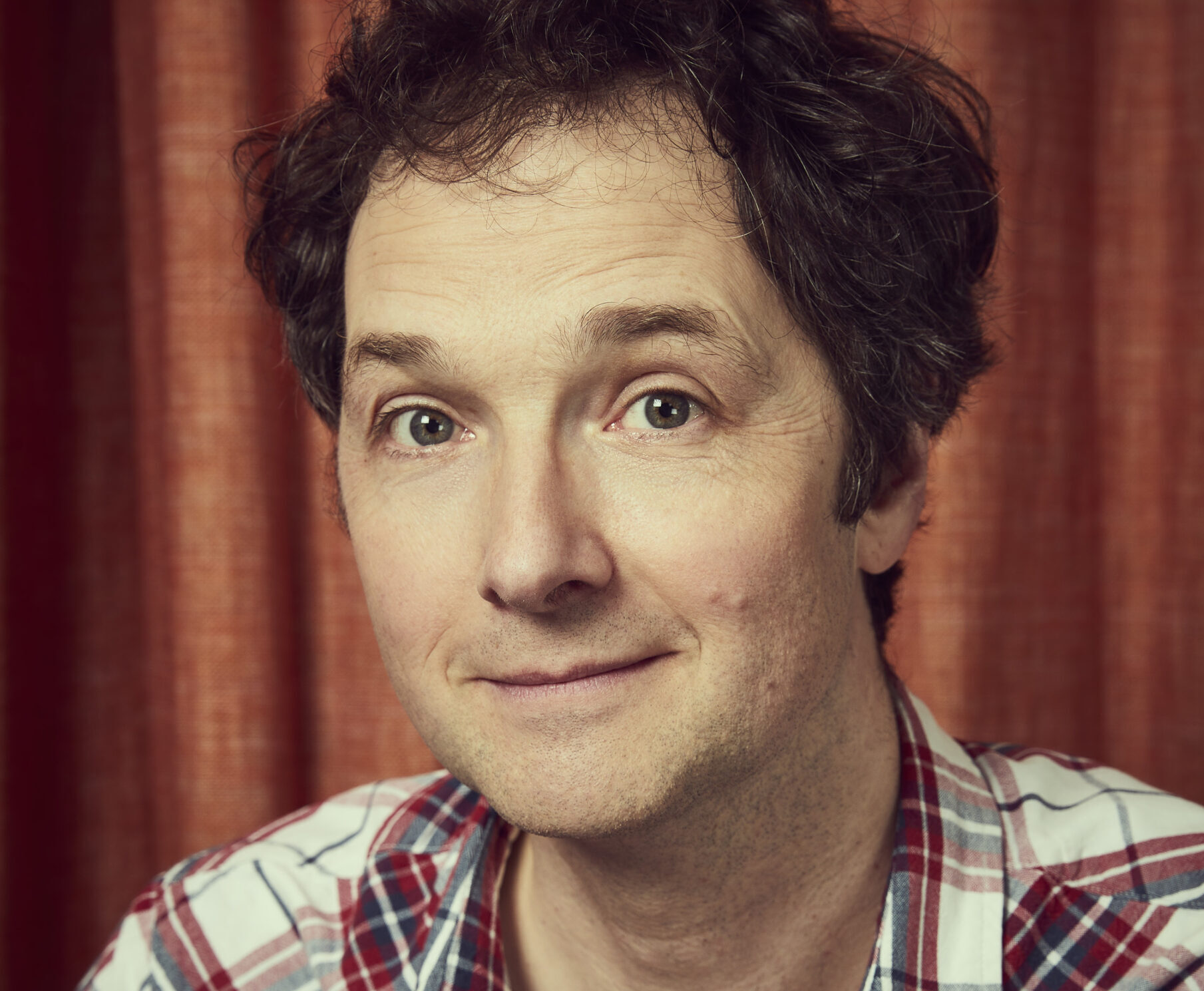
Chris Addison (The Thick of It, Mock the Week) joins Ensemble 360 to bring his infectious enthusiasm for classical music to the Crucible.
Telling the story of Europe from the courts of 17th century Italy, through the political and social revolutions of 18th and 19th century Europe, to the weird and wonderful sounds conjured by today’s contemporary composers, Chris takes us on a journey through the rich, vibrant – and sometimes bizarre – history of classical chamber music.
Discover how a bassoonist beat up Bach, Mozart’s passion for the newly-invented clarinet (and for crude poetry), Beethoven’s embattled relationship with his failing hearing and the Emperor of France, and how Schoenberg tore up the musical rule book in a continent ravaged by war. Featuring live performances from some of the UK’s finest musicians and the inimitable curiosity and wit of Chris Addison’s storytelling, this will be an evening of insight, laughter and spine-tingling music.
Programme includes excerpts from: CORELLI Trio Sonata da Camera Op.2 No.1 in D STROZZI(arr. Birchall) Che si può fare Op.8 JS BACH Prelude from Cello Suite No.1 in G CPE BACH Flute concerto in D minor HAYDN String Quartet Op.76 No. 3 ‘Emperor’ MOZART Trio for Piano, Clarinet and Viola K.498 ‘Kegelstatt’ BEETHOVEN Quintet for Piano and Wind Op.16 CHOPIN Nocturne No.20 in C sharp minor DEBUSSY Syrinx S. COLERIDGE-TAYLOR Nonet in F minor Op.2 SMYTH Piano Trio in D minor SHOSTAKOVICH String Quartet No.8 in C minor Op.110 LIGETI 10 Pieces for Wind Quintet REICH New York Counterpoint MEREDITH Tuggemo
Save 20% when you book for 10 or more Music in the Round concerts in one transaction. Save 10% when you book for 5 or more Music in the Round concerts in one transaction. Find out more.
BACH Allemanda, Sarabanda and Giga from Partita No.2 GRAPELLI Swing 39 HANDEL Passacaglia SAKAMOTO Merry Christmas Mr Lawrence
Nigel Kennedy, the best-selling classical violinist of all time, takes to the Crucible Theatre stage for this electrifying evening of music for violin and cello. Kennedy – playing violin, electric violin and piano – will be joined by leading cellist Beata Urbanek-Kalinowska (cello, electric cello), to perform music by Bach, Ryuichi Sakamoto and others, alongside Kennedy’s own compositions and violin favourites.
One of the great violin virtuosos, Kennedy’s singular career has included collaborations with Paul McCartney, Kate Bush, The Who and Led Zeppelin, as well as performances with the world’s leading orchestras.
Save 20% when you book for 10 or more Music in the Round concerts in one transaction. Save 10% when you book for 5 or more Music in the Round concerts in one transaction. Find out more.
CLOSE-UP FAMILY CONCERT: MUSIC FOR CURIOUS YOUNG MINDS
A lively family concert, featuring five wind musicians (flute, clarinet, oboe, bassoon and horn). Together they breathe life into the wondrous world of chamber music.
They’ll play well-known classical favourites from Britten and Debussy to Haydn and Holst, alongside more recent works such as Anna Meredith’s playful portrait of a moth and Valerie Coleman’s celebratory Kwanza dance.
Perfect for 7-11 year olds, this is a lively, interactive concert is a great introduction to music, or chance for those who’ve enjoyed our storybook concerts to delve a little deeper.
Save £s when you book for 5 Music in the Round concerts or more at the same time. Find out more here.
Programme: BRITTENI. Prologue from Serenade for Tenor, Horn and Strings (1’30) HAYDN arr.ParryIV. Rondo-Allegretto from Divertimento No.1 (2’) ONSLOWIV. Finale (extract) from Wind Quintet(3’30) ARNOLDI. Allegro con brio from ‘Three Shanties’(2’30) VAUGHAN WILLIAMS arr. Morton ‘The Vagabond’ from Songs of Travel (3’) LIGETI III. Allegro grazioso from ‘6 Bagatelles’ (2’30) DEBUSSY‘Syrinx’(3’) BACEWICZI. Allegro from Quintet for Wind Instruments (3’) STRAVINSKY II. from ‘Three Pieces for Solo Clarinet’(1’) HOLSTIV. Air and Variations from Wind Quintet (4’) DANZIIV. Allegretto from Wind Quintet No.2(3’) MEREDITH‘Moth’ from ‘Tripotage Miniatures’(2’30) COLEMANUmoja(2’45)
MOZART
Horn Quintet (15’)
String Quintet No.4 in G minor K516 (36’)
String Quartet in D K499 (25’)
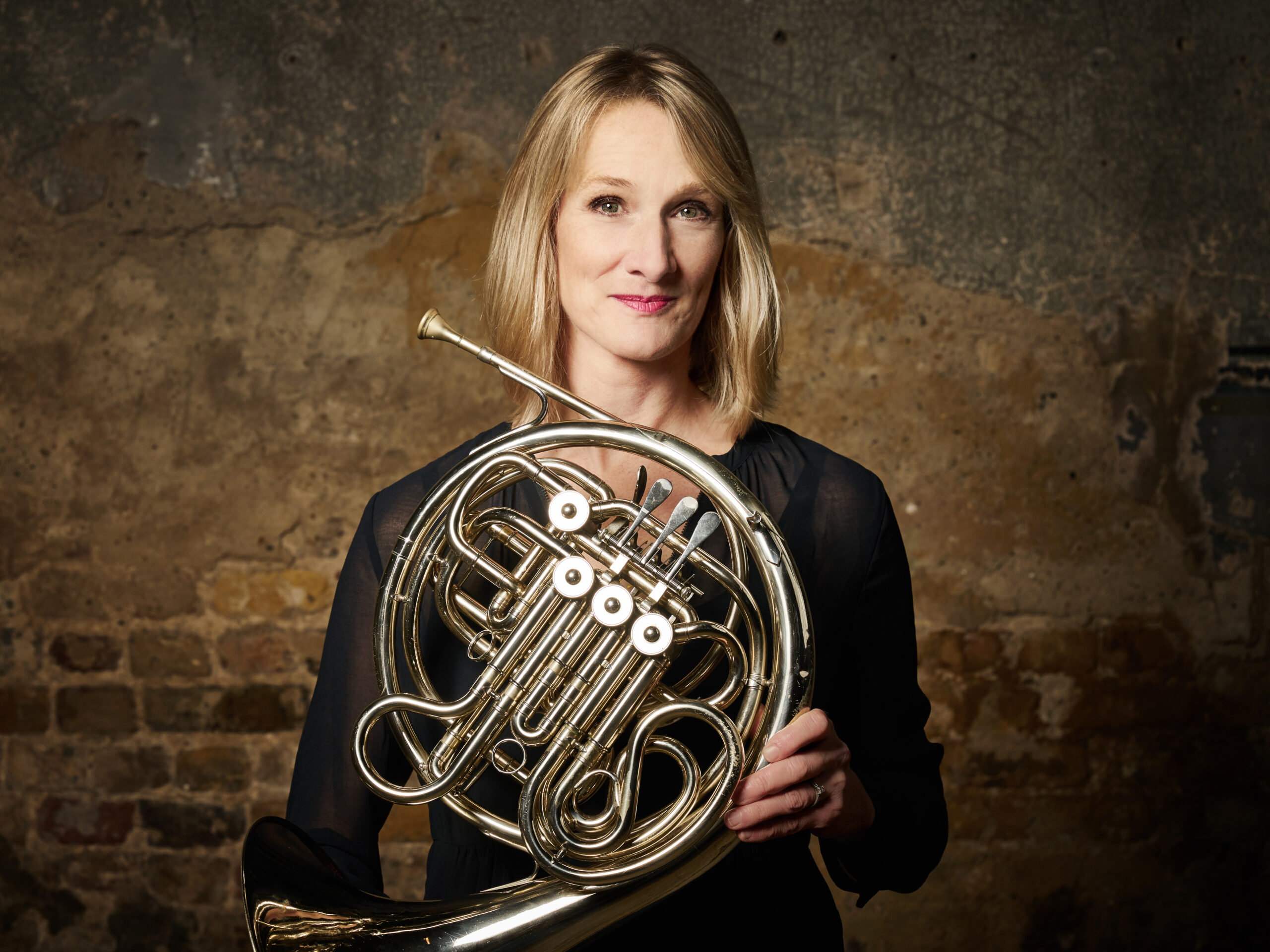
The string players of Ensemble 360 are joined by horn to present three of Mozart’s best loved works: his lyrical String Quartet in D, the expressive Horn Quintet and his haunting yet hopeful String Quintet in G.
Join Music in the Round for a friendly and welcoming classical concert performed by the brilliant Ensemble 360, a group of world-class artists who perform music written specially for small combinations of strings, wind and piano.
You’ll be sitting just metres away from these amazing musicians, performing spine-tingling music with their heart and soul in our intimate concert space.
MOZART Wolfgang Amadeus, Horn Quintet K407
1. Allegro
2. Andante
3. Rondo: Allegro
The inspiration for Mozart’s famous horn concertos and the Horn Quintet was the Austrian virtuoso Joseph Ignaz Leutgeb (1732–1811). Though sometimes remembered as the victim of some of Mozart’s cruder practical jokes, Leutgeb was by all accounts a magnificent player, and had known the Mozart family ever since joining the Salzburg court orchestra in the early 1760s. When he moved back to Vienna, Leutgeb supplemented his income as a musician by running a cheese and wine shop – but he never stopped performing, and Mozart produced several major works for him to play. The Quintet is in many ways like a horn concerto in miniature. The musicologist Sarah Adams has pointed out that – given Leutgeb’s involvement – it is ‘not surprising that the horn plays a soloistic role, especially in the first movement [which] heightens the impact of the horn’s lyrical entrance by preceding it with tutti fanfares in the strings, a gesture evocative of a concerto’s preparation for the soloist’s entrance.’ This solo role is rather less apparent in the central movement of the Quintet, though it did require Leutgeb’s use of hand-stopping to obtain particular notes on the natural horn of the time (with no valves) – a technique that had attracted praise from critics all over Europe. Scored for horn, violin, two violas and cello, the Quintet was written in Vienna in 1782 – the composer’s first year in the city after his move from Salzburg.
NIGEL SIMEONE 2010
MOZART Amadeus, String Quintet in G minor K516
1. Allegro
2. Menuetto: Allegretto
3. Adagio ma non troppo
4. Adagio – Allegro
Mozart’s string quintets are all for the combination of two violins, two violas and cellos, with the two violas allowing for particularly rich inner parts. The Quintet in G minor K516 was completed on 16 May 1787, four weeks after his C major Quintet – and during the final illness of his father Leopold, who on 28 May. Though Mozart and his father had a strained relationship by this time, the composer was alarmed at Leopold’s illness and reacted with the now famous letter written on April 1787 in which he declared that ‘death, when we come to consider it closely, is the true goal of our existence, I have formed during the last few years such close relations with this best and truest friend of mankind that his image is not only no longer terrifying to me, but is indeed very soothing and consoling!’
The G minor Quintet – written by an estranged son who knew that his father was dying – is probably the most tragic of all Mozart’s chamber works. W.W. Cobbett described it as a ‘struggle with destiny’ and found it ‘filled with the resignation of despair’ – though this is rather to overlook the major-key ebullience of the finale. The first movement is full of restrained pathos, both themes melancholy and understated – and all the more wrenching for that. The minuet is sombre and reflective while the slow movement was, for the great Mozart scholar Alfred Einstein, the desolate core of the work. He likened it to ‘the prayer of a lonely one surrounded on all sides by the walls of a deep chasm.’ The element of tragedy is still very apparent in the slow introduction to the finale; but finally Mozart unleashes a more joyous spirit. The French poet Henri Ghéon found an eloquent description for this turning point: ‘Mozart has had enough. He knew how to cry but he did not like to cry or to suffer for too long.’
Like Haydn before him, Mozart habitually published his string quartets in groups of six (the ‘Haydn’ Quartets) or three (the ‘Prussian’ Quartets). Between these two sets there is a single work, entered in Mozart’s manuscript catalogue of his own works on 19 August 1786 as ‘a quartet for 2 violins, viola and violoncello’. The autograph manuscript (in the British Library) is simply titled ‘Quartetto’. It was published in 1788 by the Viennese firm founded by Mozart’s friend Franz Anton Hoffmeister and it has come to be known as the ‘Hoffmeister’ Quartet as a result. The first movement opens with a theme in octaves that outlines a descending D major arpeggio – an idea that dominates much of the movement despite some startling harmonic excursions along the way. The development section is marked by almost continuous quaver movement that gives way magically to the opening theme at the start of the recapitulation. The Minuet has an easy-going charm that contrasts with the sterner mood (and minor key) of the Trio section. The great Mozart biographer Alfred Einstein thought the Adagio spoke ‘of past sorrow, with a heretofore unheard-of-depth’. It is not only a deeply touching movement but also an extremely ingenious one, not least when the initial idea heard on two violins returns on viola and cello, investing the same music with a darker, richer texture. The finale is fast and playful, but there’s also astonishing inventiveness in the flow of ideas, from the opening triplets with their chromatic twists to a contrasting theme which scampers up and down the scale. A few sudden and surprising dynamic contrasts keep the listener guessing right to the end.
Based on the colourful children’s book, this family concert tells the story of Giddy, a young mountain goat who is scared of heights. A tale of facing fears and making friends, it’s a brilliant way to introduce children to classical music, with visuals from the book and plenty of chances to join in!
Perfect for 3 – 7 year olds and their families!
CLOSE UP: MUSIC FOR CURIOUS YOUNG MINDS
Ensemble 360 & Elinor Moran
The Guildhall, Portsmouth
Monday 17 March 2025, 1.30pm
For tickets, please email hayley.reay@portsmouthguildhall.org.uk
A lively schools concert, presented by Elinor Moran and featuring five wind musicians (flute, clarinet, oboe, bassoon and horn). Together they breathe life into the wondrous world of chamber music.
They’ll play well-known classical favourites from Britten and Debussy to Haydn and Holst, alongside more recent works such as Anna Meredith’s playful portrait of a moth and Valerie Coleman’s celebratory Kwanzaa dance. Perfect for 7-11 year olds, this is a lively and interactive concert.
Music in the Round invites your class to take part in a brilliant music project, culminating in a live concert at Goole Junction.
Paul Rissmann (composer) has created a fantastic piece of music based around the children’s book Giddy Goat (Jamie Rix and Lynne Chapman) which includes songs for your class to learn and join in with in the concert.
Our EY and KS1 practitioners will support you to embed singing and music-making in classroom learning throughout the project, with training, resources, and in-school support newly developed around the Giddy Goat story. The project introduces young children to classical music in a fun and educational setting, including a concert featuring strings, woodwind and horn, presented together with story-telling and projected illustrations.
Being a mountain goat is no fun when you are scared of heights! Stand poor Giddy on a mountain ledge and his head starts spinning and his knees turn to jelly. But can he find the fearless goat inside himself in time to rescue little Edmund?
Performed by the wonderfully dynamic and hugely engaging musicians from Ensemble 360, this concert is a great introduction to live music for early years and KS1 children. It’s full of wit, invention, songs and actions, and plenty of opportunities to join in.
HAAS Oboe Suite Op.17 JANÁČEK In the Mists BRITTEN Wind Sextet JANÁČEK Mládí
Janáček’s beloved Mládí (‘Youth’) was written towards the end of his life as a nostalgic celebration of memories of his youth, drawing on his early writing. Receiving its premiere performances in Autumn 1924, we celebrate the 100th anniversary of this iconic piece for wind, featuring the bass clarinet alongside a regular wind quintet line-up of flute, oboe, clarinet, horn and bassoon.
HAAS Pavel, Suite for Oboe & Piano Op.17
Furioso Con fuoco. Con moto e poco largamente Moderato
Pavel Haas, born in Brno into a Jewish family, was a pupil of Leoš Janáček from 1920 to 1922. Though his music doesn’t imitate that of his great teacher, both composers sought inspiration from Moravian folk song and dance. Janáček once declared that ‘a modern composer has to write what he has truly experienced’, but Haas was to experience more and much worse than most. However, in 1939, when he wrote the Suite for Oboe, he had just been awarded the Smetana Prize for his opera, The Charlatan, first performed at Brno in 1938. The musical language of the Suite, occasionally folk-inspired, sometimes recalling the cadences of Synagogue songs, and notable for its energy and drive, marks out Haas as a composer of real individuality, rugged in the first two movements, and more consoling in the third, rising to a grand climax that has occasional echoes of his great teacher.
Haas was deported to the concentration camp and ghetto at Teresienstadt in 1941 where he met the conductor Karel Ančerl as well as several other Czech Jewish composers such as Gideon Klein (who coaxed Haas back to composition), Hans Krása and Viktor Ullmann. In later years, it was Ančerl who most movingly recalled the appalling circumstances of Haas’s murder after both were transferred to Auschwitz: Ančerl was next in line to be sent to the gas chamber when Haas coughed, thus attracting the attention of the SS Doctor Josef Mengele, who chose to send Haas to his death instead.
Nigel Simeone 2014
JANÁČEK Leoš, In the Mists
JANÁČEK Leoš, In the Mists
Janáček inspiration for In the mists probably came from a recital at the Brno Organ School on 28 January 1912 when Marie Dvořáková played Debussy’s Reflets dans l’eau. In the mists certainly shows the influence of Debussy’s Impressionism, though it is also a nostalgic reflection on childhood: Bohumír Štědroň wrote that ‘Here Janáček sees his youth in a mist and remembers the days spent at Hukvaldy’. Janáček made some revisions to the cycle before publication by the Club of the Friends of Art in Brno (to which Janáček belonged) near the end of 1913. According to the title page of this edition, In the mists was given to members of the club as a gift for the year 1913. The first performance took place on 7 December 1913 at Kroměříž, played by Marie Dvořáková. She played it again, on 24 January 1914, at a Brno Organ School concert in the Lužánky Hall when Janáček himself was present. The first known performance in Prague was not until 16 December 1922, given by the pianist Václav Štěpán and the following year Janáček asked Štěpán to help him prepare an edition incorporating his final versions. An inspired combination of Impressionism and musical ideas derived from Moravian folk music, In the mists is in four movements: the first haunting (and occasionally trouble), the second quite free, the third based on a memorable melody heard at the start, and the fourth hints at the flourishes of gypsy music as well as moments of high drama. All four movements are permeated by tenderness and nostalgia, without any hint of sentimentality.
Nigel Simeone
JANÁČEK Leoš, Mládí
Janáček composed Mládí in July 1924 (the month of his 70th birthday) at his rural retreat in the village of Hukvaldy. He described it to Kamila Stösslová as ‘a sort of memoir of youth’, and a newspaper article in December 1924 described the programme of the suite as follows: ‘In the first movement, [Janáček] remembers his childhood at school in Hukvaldy, in the second the sad scenes of parting with his mother at the station in Brno, in the third in 1866 as a chorister when the Prussians were in Brno; the concluding movement is a courageous leap into life.’ Intended as a nostalgic evocation of Janáček’s youth (his original title was Mladý život – Young Life) it is a typically quirky and ebullient product of his incredibly productive old age. It was first performed in Brno on 24 October 1924, followed a month later by a performance in Prague. Janáček also heard the work during his only visit to England, at a concert in the Wigmore Hall on 6 May 1926 when it was played by British musicians including Leon Goossens and Aubrey Brain.
BEETHOVEN
Cello Sonata in C Op.102 No.1 (15′)
Cello Sonata in A Op.69 (26′)
Cello Sonata in G minor Op.5 No.2 (24′)
Cello Sonata in D Op.102 No.2 (19′) FRANCES-HOAD Invocation (4′)
These works for piano and cello are the perfect introduction to the unique musical mind of Beethoven. Beethoven broke the mould by creating works in which the two instruments were true equals: in conversation and competition, wrestling and supporting one another to create dazzling musical journeys that remain thrillingly fresh and deeply moving.
Join Music in the Round for a friendly and welcoming classical concert performed by the brilliant Ensemble 360, a group of world-class artists who perform music written specially for small combinations of strings, wind and piano.
BEETHOVEN Ludwig Van, Cello Sonata Op.102 No.1
Beethoven’s two cello sonatas Op.102 (in C major and D major) were composed in 1815 and dedicated to Beethoven’s friend, Countess Anna Maria Erdödy. They were published in Vienna (by Artaria) and Bonn (by Simrock) in 1817. The first of the two sonatas is one of Beethoven’s most unusual structures, consisting of two fast movements, each of them preceded by an extended slow introduction.
The first movement opens gently, with a lyrical melody in the upper register of the cello, to which the piano responds with an answering phrase, establishing the instrumental dialogue that is so often a feature of this sonata. After subsiding on to a C, the lowest note of the cello, there is an abrupt change of mood and tempo with the arrival of a stern idea in A minor, marked by dotted rhythms. The movement remains in A minor for most of the movement, ending tersely. The second movement begins with an elaborate slow introduction which gives way to a radiant recollection of the first movement – an unusual procedure that Beethoven was to use again in the finale of his Ninth Symphony. The main theme of the Allegro begins strangely, with a four-note rising fragment and a held note, but this idea quickly develops dramatic momentum, interrupted on several occasions by passages where the cello plays sustained notes and the piano is silent. The movement ends by appearing to fizzle out (using the four-note idea), before a triumphant closing flourish.
BEETHOVEN Ludwig van, Sonata for Cello and Piano in D Op.102 No.2
Allegro con brio
Adagio con molto sentimento d’affetto
Allegro – Allegro fugato
Beethoven’s last two cello sonatas were composed in 1815 dedicated to the Countess Anna Maria Erdödy. The initial critical response was one of bewilderment, one critic declaring that “these two sonatas are definitely among the strangest and most unusual works … ever written for the pianoforte. Everything about them is completely different from anything else we have heard, even by this composer.” Indeed, the D major Cello Sonata Op.102 No.2 is a work that points forward to some of Beethoven’s final instrumental works – the late piano sonatas and quartets – in significant ways. The Beethoven scholar William Kinderman has suggested that the solemnity and austerity of the slow movement (in D minor) has pre-echoes of the ‘Heiliger Dankgesang’ from the Quartet Op.132, while fugal finale is the one of a series of such movements in Beethoven’s late instrumental pieces (followed by the ‘Hammerklavier’ Sonata and the Grosse Fuge among others). The whole sonata, from the brusque opening of its first movement, to the extraordinary culmination of the fugue, is characterized by wild emotional contrasts: the stern, profoundly serious Adagio is flanked by two faster movements that are dominated by a fiery, even angry, dialogue between the two instruments.
Invocation was originally the second movement of Melancholia, my first piano trio, written in 1999.
The piano trio is based on Melancholy, a painting by Edvard Munch that formed part of his Frieze of Life. Munch described the Frieze as a “poem of life, love and death”, and Melancholy, which depicts a man (sometimes thought to be the artist himself) looking out at the sea and oppressive sky, concludes the first of the three sections of paintings called Love blossoms and dies.
I had written a chamber opera, with all manner of instruments at my disposal, before starting my piano trio. In Melancholia I aimed at producing a much sparser music (at many points simply a melody with chordal accompaniment) in an attempt to prove to myself that I could still convey a great deal of emotion with only those notes that were absolutely necessary.
We use cookies on our website to give you the most relevant experience by remembering your preferences and repeat visits. By clicking “Accept All”, you consent to the use of ALL the cookies. However, you may visit "Cookie Settings" to provide a controlled consent. You can find out how we use and process your data by reading our Privacy Policy
This website uses cookies to improve your experience while you navigate through the website. Out of these, the cookies that are categorized as necessary are stored on your browser as they are essential for the working of basic functionalities of the website. We also use third-party cookies that help us analyze and understand how you use this website. These cookies will be stored in your browser only with your consent. You also have the option to opt-out of these cookies. But opting out of some of these cookies may affect your browsing experience.
Necessary cookies are absolutely essential for the website to function properly. These cookies ensure basic functionalities and security features of the website, anonymously.
Cookie
Duration
Description
cookielawinfo-checkbox-analytics
11 months
This cookie is set by GDPR Cookie Consent plugin. The cookie is used to store the user consent for the cookies in the category "Analytics".
cookielawinfo-checkbox-functional
11 months
The cookie is set by GDPR cookie consent to record the user consent for the cookies in the category "Functional".
cookielawinfo-checkbox-necessary
11 months
This cookie is set by GDPR Cookie Consent plugin. The cookies is used to store the user consent for the cookies in the category "Necessary".
cookielawinfo-checkbox-others
11 months
This cookie is set by GDPR Cookie Consent plugin. The cookie is used to store the user consent for the cookies in the category "Other.
cookielawinfo-checkbox-performance
11 months
This cookie is set by GDPR Cookie Consent plugin. The cookie is used to store the user consent for the cookies in the category "Performance".
viewed_cookie_policy
11 months
The cookie is set by the GDPR Cookie Consent plugin and is used to store whether or not user has consented to the use of cookies. It does not store any personal data.
Functional cookies help to perform certain functionalities like sharing the content of the website on social media platforms, collect feedbacks, and other third-party features.
Performance cookies are used to understand and analyze the key performance indexes of the website which helps in delivering a better user experience for the visitors.
Analytical cookies are used to understand how visitors interact with the website. These cookies help provide information on metrics the number of visitors, bounce rate, traffic source, etc.
Advertisement cookies are used to provide visitors with relevant ads and marketing campaigns. These cookies track visitors across websites and collect information to provide customized ads.





 DOWNLOAD