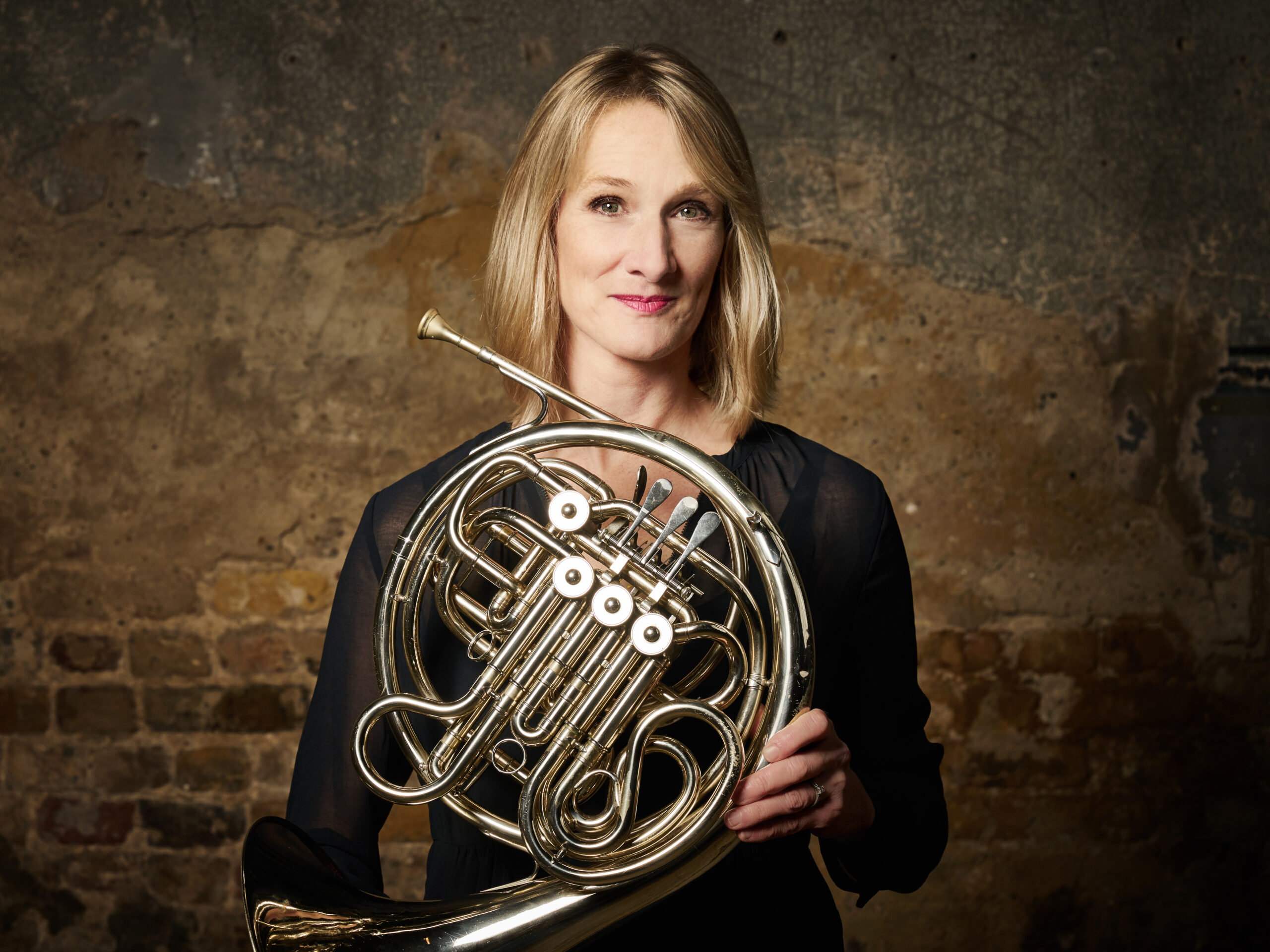
CLOSE UP: MUSIC FOR CURIOUS YOUNG MINDS

Aga Serugo-Lugo & Ensemble 360

Wigmore Hall, London
Sunday 23 March 2025, 3.00pm

Tickets:
Children £10
Adults £12

Past Event
Musicians from Ensemble 360

A lively family concert, presented by Aga Serugo-Lugo and featuring five wind musicians (flute, clarinet, oboe, bassoon and horn). Together they breathe life into the wondrous world of chamber music.

They’ll play well-known classical favourites from Britten and Debussy to Haydn and Holst, alongside more recent works such as Anna Meredith’s playful portrait of a moth and Valerie Coleman’s celebratory Kwanzaa dance. Perfect for 7-11 year olds, this is a lively and interactive concert.

SPELLBINDING STRINGS

Ensemble 360

Junction, Goole
Saturday 7 June 2025, 7.00pm

Tickets:
£13
£8 Under 25s

Past Event
Ensemble 360 string quartet musicians

BRITTEN Three Divertimenti for String Quartet (10’)
MOZART String Quartet No.20 in D K499 (26’)
BEETHOVEN String Quartet Op.59 No.2 Razumovsky (37’)

Ensemble 360 perform string quartets spanning three centuries of masterful music. A charming and playful early work from Britten is followed by one of Mozart’s best loved pieces for string quartet. The concert ends with one of Beethoven’s deeply passionate quartets.

Join Music in the Round for a friendly and welcoming classical concert performed by the brilliant Ensemble 360, a group of world-class artists who perform music written specially for small combinations of strings, wind and piano.

You’ll be sitting just metres away from these amazing musicians, performing spine-tingling music with their heart and soul in our intimate concert space where the audience surround the performers on all sides.

BRITTEN Benjamin, Three Divertimenti for String Quartet

Britten planned these movements as part of a five-movement Quartetto serioso with a subtitle from Shakespeare’s Winter’s Tale: “Go play, boy, play!” An earlier version of the opening March was written for a suite inspired by the film Emil and the Detectives (the children’s novel by Erich Kästner was a great favourite of Britten’s), but this was never completed. Eventually he settled on a work in three movements, and the first performance was given by the Stratton Quartet at the Wigmore Hall on 25 February 1936. The audience response was chilly and a hurt Britten withdrew the Three Divertimenti, which were only published after his death. His brilliant gift for idiomatic quartet writing is already apparent in this early work – from the arresting rhythms and textures of the March to the beguiling central Waltz, and the driving energy of the closing Burlesque.


© Nigel Simeone

MOZART Amadeus, String Quartet in D K499

1. Allegretto
2. Menuetto and Trio. Allegretto
3. Adagio
4. Allegro


Like Haydn before him, Mozart habitually published his string quartets in groups of six (the ‘Haydn’ Quartets) or three (the ‘Prussian’ Quartets). Between these two sets there is a single work, entered in Mozart’s manuscript catalogue of his own works on 19 August 1786 as ‘a quartet for 2 violins, viola and violoncello’. The autograph manuscript (in the British Library) is simply titled ‘Quartetto’. It was published in 1788 by the Viennese firm founded by Mozart’s friend Franz Anton Hoffmeister and it has come to be known as the ‘Hoffmeister’ Quartet as a result. The first movement opens with a theme in octaves that outlines a descending D major arpeggio – an idea that dominates much of the movement despite some startling harmonic excursions along the way. The development section is marked by almost continuous quaver movement that gives way magically to the opening theme at the start of the recapitulation. The Minuet has an easy-going charm that contrasts with the sterner mood (and minor key) of the Trio section. The great Mozart biographer Alfred Einstein thought the Adagio spoke ‘of past sorrow, with a heretofore unheard-of-depth’. It is not only a deeply touching movement but also an extremely ingenious one, not least when the initial idea heard on two violins returns on viola and cello, investing the same music with a darker, richer texture. The finale is fast and playful, but there’s also astonishing inventiveness in the flow of ideas, from the opening triplets with their chromatic twists to a contrasting theme which scampers up and down the scale. A few sudden and surprising dynamic contrasts keep the listener guessing right to the end.


Nigel Simeone

BEETHOVEN Ludwig Van, String Quartet in E minor Op.59 No.2 Razumovsky

Allegro 
Molto Adagio. Si tratta questo pezzo con molto di sentimento  
Allegretto. Maggiore (Thème russe)  
Finale. Presto 

“Demanding but dignified” was how the Allgemeine Musik-Zeitung described Beethoven’s new quartets dedicated to Count Rasumovsky when they were first heard in 1807. Composed in 1806, and including Russian melodies from a collection of folk tunes edited by Ivan Prach (published in 1790), these quartets were a major development in the quartet form. But though they were longer and more challenging than any earlier quartets, they were an immediate success. Before the Rasumovsky Quartets were played, Beethoven offered them to publisher Breitkopf & Härtel in Leipzig – in a job lot with the Fourth Piano Concerto, the Fourth Symphony and Fidelio, but the deal fell through and the quartets were first published in Vienna by the Bureau des Arts et d’Industrie and in London by Clementi. 

While the first of the Rasumovsky Quartets is unusually expansive, the second is more concentrated. From the opening two-chord gesture establishing E minor as the home key, the first movement is tense and full of rhythmic ambiguity. The hymn-like slow movement has a combination of richness and apparent simplicity that blossoms into a kind of ecstatic aria: Beethoven himself is reported to have likened it to “a meditative contemplation of the stars”. The uneasy rhythms of the Scherzo are contrasted by a major-key Trio section in which Beethoven quotes a Russian tune that famously reappeared in the Coronation Scene of Mussorgsky’s opera Boris Godunov. The finale begins with a surprise: a strong emphasis on the note C that is tantalising and unexpected in a movement that moves firmly towards E minor.  

© Nigel Simeone 

FAMILY CONCERT: GIDDY GOAT

Ensemble 360

Junction, Goole
Saturday 7 June 2025, 2.00pm

Tickets:
£7

Past Event
Giddy Goat family concert image

Being a mountain goat is no fun when you are scared of heights!

Stand poor Giddy on a mountain ledge and his head starts spinning and his knees turn to jelly… But can he find the fearless goat inside himself?

Based on the best-selling children’s book by Jamie Rix and Lynne Chapman with original music by Music in the Round’s children’s Composer-in-Residence, Paul Rissmann, this concert features instruments including strings, woodwind, and horn, presented together with storytelling and projected illustrations. Performed by the hugely engaging musicians of Ensemble 360, this concert is a great introduction to live music; full of wit, invention, songs and actions, and plenty of opportunities to join in.

MOZART MASTERPIECES

Ensemble 360

Junction, Goole
Thursday 3 April 2025, 7.00pm

Tickets:
£13
£8 Under 25s

Past Event

MOZART
Horn Quintet (15’)
String Quintet No.4 in G minor K516 (36’)
Clarinet Quintet (28’)

The string players of Ensemble 360 are joined by horn and clarinet to present three of Mozart’s best loved works: his lyrical Clarinet Quintet, the expressive Horn Quintet and his haunting yet hopeful String Quintet in G.

Join Music in the Round for a friendly and welcoming classical concert performed by the brilliant Ensemble 360, a group of world-class artists who perform music written specially for small combinations of strings, wind and piano.

You’ll be sitting just metres away from these amazing musicians, performing spine-tingling music with their heart and soul in our intimate concert space where the audience surround the performers on all sides.

MOZART Wolfgang Amadeus, Horn Quintet K407

1. Allegro
2. Andante
3. Rondo: Allegro


The inspiration for Mozart’s famous horn concertos and the Horn Quintet was the Austrian virtuoso Joseph Ignaz Leutgeb (1732–1811). Though sometimes remembered as the victim of some of Mozart’s cruder practical jokes, Leutgeb was by all accounts a magnificent player, and had known the Mozart family ever since joining the Salzburg court orchestra in the early 1760s. When he moved back to Vienna, Leutgeb supplemented his income as a musician by running a cheese and wine shop – but he never stopped performing, and Mozart produced several major works for him to play. The Quintet is in many ways like a horn concerto in miniature. The musicologist Sarah Adams has pointed out that – given Leutgeb’s involvement – it is ‘not surprising that the horn plays a soloistic role, especially in the first movement [which] heightens the impact of the horn’s lyrical entrance by preceding it with tutti fanfares in the strings, a gesture evocative of a concerto’s preparation for the soloist’s entrance.’ This solo role is rather less apparent in the central movement of the Quintet, though it did require Leutgeb’s use of hand-stopping to obtain particular notes on the natural horn of the time (with no valves) – a technique that had attracted praise from critics all over Europe. Scored for horn, violin, two violas and cello, the Quintet was written in Vienna in 1782 – the composer’s first year in the city after his move from Salzburg.


NIGEL SIMEONE 2010

MOZART Amadeus, String Quintet in G minor K516

1. Allegro
2. Menuetto: Allegretto
3. Adagio ma non troppo
4. Adagio – Allegro


Mozart’s string quintets are all for the combination of two violins, two violas and cellos, with the two violas allowing for particularly rich inner parts. The Quintet in G minor K516 was completed on 16 May 1787, four weeks after his C major Quintet – and during the final illness of his father Leopold, who on 28 May. Though Mozart and his father had a strained relationship by this time, the composer was alarmed at Leopold’s illness and reacted with the now famous letter written on April 1787 in which he declared that ‘death, when we come to consider it closely, is the true goal of our existence, I have formed during the last few years such close relations with this best and truest friend of mankind that his image is not only no longer terrifying to me, but is indeed very soothing and consoling!’

The G minor Quintet – written by an estranged son who knew that his father was dying – is probably the most tragic of all Mozart’s chamber works. W.W. Cobbett described it as a ‘struggle with destiny’ and found it ‘filled with the resignation of despair’ – though this is rather to overlook the major-key ebullience of the finale. The first movement is full of restrained pathos, both themes melancholy and understated – and all the more wrenching for that. The minuet is sombre and reflective while the slow movement was, for the great Mozart scholar Alfred Einstein, the desolate core of the work. He likened it to ‘the prayer of a lonely one surrounded on all sides by the walls of a deep chasm.’ The element of tragedy is still very apparent in the slow introduction to the finale; but finally Mozart unleashes a more joyous spirit. The French poet Henri Ghéon found an eloquent description for this turning point: ‘Mozart has had enough. He knew how to cry but he did not like to cry or to suffer for too long.’


NIGEL SIMEONE 2010

MOZART Wolfgang Amadeus, Clarinet Quintet in A K581

Allegro 
Larghetto 
Menuetto 
Allegretto con variazioni  

The Clarinet Quintet was completed on 29 September 1789 and written for Mozart’s friend Anton Stadler (1753–1812). The first performance took place a few months later at a concert in Vienna’s Burgtheater on 22 December 1789, with Stadler as the soloist in a programme where the premiere of the Clarinet Quintet was a musical interlude, sandwiched between the two parts of Vincenzo Righini’s cantata The Birth of Apollo, performed by “more than 180 persons.” 

From the start, Mozart is at his most daringly beautiful: the luxuriant voicing of the opening string chords provides a sensuously atmospheric musical springboard for the clarinet’s opening flourish. The rich sonority of the Clarinet Quintet is quite unlike that of any other chamber music by Mozart, but it does have something in common with his opera Così fan tutte (premièred in January 1790), on which he was working at the same time. In particular, the slow movement of the quintet, with muted strings supporting the clarinet, has a quiet rapture that recalls the trio ‘Soave sia il vento’ (with muted strings, and prominent clarinet parts as well as voices) in Così. The finale of the Quintet is a Theme and Variations which begins with folk-like charm, then turns to more melancholy reflection before ending in a spirit of bucolic delight. 

Nigel Simeone © 2012 

SCHOOLS’ CONCERT: GIDDY GOAT

Ensemble 360 & John Webb

The Guildhall, Portsmouth
Monday 2 December 2024, 1.30pm

To book email hayley.reay@guildhalltrust.org.uk

Giddy Goat family concert image

Music in the Round invites your class to take part in a brilliant music project, culminating in a live concert at the Portsmouth Guildhall. 

Paul Rissmann (composer) has created a fantastic piece of music based around the children’s book Giddy Goat (Jamie Rix and Lynne Chapman) which includes songs for your class to learn and join in with in the concert.

Our EY and KS1 practitioners will support you to embed singing and music-making in classroom learning throughout the project, with training, resources, and in-school support newly developed around the Giddy Goat story. The project introduces young children to classical music in a fun and educational setting, including a concert featuring strings, woodwind and horn, presented together with story-telling and projected illustrations.

Being a mountain goat is no fun when you are scared of heights! Stand poor Giddy on a mountain ledge and his head starts spinning and his knees turn to jelly. But can he find the fearless goat inside himself in time to rescue little Edmund?

Performed by the wonderfully dynamic and hugely engaging musicians from Ensemble 360, this concert is a great introduction to live music for early years and KS1 children. It’s full of wit, invention, songs and actions, and plenty of opportunities to join in. 

BEETHOVEN CELLO SONATAS

Ensemble 360

Junction, Goole
Saturday 18 January 2025, 3.00pm

Tickets:
£13
£8 Under 25s

Past Event

BEETHOVEN
Cello Sonata in C Op.102 No.1 (15′)
Cello Sonata in A Op.69 (26′)
Cello Sonata in G minor Op.5 No.2 (24′)
Cello Sonata in D Op.102 No.2 (19′)

FRANCES-HOAD Invocation (4′)

These works for piano and cello are the perfect introduction to the unique musical mind of Beethoven. Beethoven broke the mould by creating works in which the two instruments were true equals: in conversation and competition, wrestling and supporting one another to create dazzling musical journeys that remain thrillingly fresh and deeply moving.

Join Music in the Round for a friendly and welcoming classical concert performed by the brilliant Ensemble 360, a group of world-class artists who perform music written specially for small combinations of strings, wind and piano.

You’ll be sitting just metres away from these amazing musicians, performing spine-tingling music with their heart and soul in our intimate concert space where the audience surround the performers on all sides.

BEETHOVEN Ludwig Van, Cello Sonata Op.102 No.1

Beethoven’s two cello sonatas Op.102 (in C major and D major) were composed in 1815 and dedicated to Beethoven’s friend, Countess Anna Maria Erdödy. They were published in Vienna (by Artaria) and Bonn (by Simrock) in 1817. The first of the two sonatas is one of Beethoven’s most unusual structures, consisting of two fast movements, each of them preceded by an extended slow introduction.  


The first movement opens gently, with a lyrical melody in the upper register of the cello, to which the piano responds with an answering phrase, establishing the instrumental dialogue that is so often a feature of this sonata. After subsiding on to a C, the lowest note of the cello, there is an abrupt change of mood and tempo with the arrival of a stern idea in A minor, marked by dotted rhythms. The movement remains in A minor for most of the movement, ending tersely. The second movement begins with an elaborate slow introduction which gives way to a radiant recollection of the first movement – an unusual procedure that Beethoven was to use again in the finale of his Ninth Symphony. The main theme of the Allegro begins strangely, with a four-note rising fragment and a held note, but this idea quickly develops dramatic momentum, interrupted on several occasions by passages where the cello plays sustained notes and the piano is silent. The movement ends by appearing to fizzle out (using the four-note idea), before a triumphant closing flourish. 


© Nigel Simeone

BEETHOVEN Ludwig van, Sonata for Cello and Piano in D Op.102 No.2

Allegro con brio
Adagio con molto sentimento d’affetto
Allegro – Allegro fugato

Beethoven’s last two cello sonatas were composed in 1815 dedicated to the Countess Anna Maria Erdödy. The initial critical response was one of bewilderment, one critic declaring that “these two sonatas are definitely among the strangest and most unusual works … ever written for the pianoforte. Everything about them is completely different from anything else we have heard, even by this composer.” Indeed, the D major Cello Sonata Op.102 No.2 is a work that points forward to some of Beethoven’s final instrumental works – the late piano sonatas and quartets – in significant ways. The Beethoven scholar William Kinderman has suggested that the solemnity and austerity of the slow movement (in D minor) has pre-echoes of the ‘Heiliger Dankgesang’ from the Quartet Op.132, while fugal finale is the one of a series of such movements in Beethoven’s late instrumental pieces (followed by the ‘Hammerklavier’ Sonata and the Grosse Fuge among others). The whole sonata, from the brusque opening of its first movement, to the extraordinary culmination of the fugue, is characterized by wild emotional contrasts: the stern, profoundly serious Adagio is flanked by two faster movements that are dominated by a fiery, even angry, dialogue between the two instruments.

Nigel Simeone © 2012

FRANCES-HOAD Cheryl, Invocation

Invocation was originally the second movement of Melancholia, my first piano trio, written in 1999.

The piano trio is based on Melancholy, a painting by Edvard Munch that formed part of his Frieze of Life. Munch described the Frieze as a “poem of life, love and death”, and Melancholy, which depicts a man (sometimes thought to be the artist himself) looking out at the sea and oppressive sky, concludes the first of the three sections of paintings called Love blossoms and dies.

I had written a chamber opera, with all manner of instruments at my disposal, before starting my piano trio. In Melancholia I aimed at producing a much sparser music (at many points simply a melody with chordal accompaniment) in an attempt to prove to myself that I could still convey a great deal of emotion with only those notes that were absolutely necessary.

STRING TRIOS: BEETHOVEN, SCHUBERT & MORE

Ensemble 360

Junction, Goole
Thursday 14 November 2024, 7.00pm

Tickets:
£13
£8 Under 25s

Past Event
Ensemble 360 string trio musicians

SCHUBERT String Trio in B flat D471 (8’)
DOHNANYI Serenade for String Trio in C Op.10 (21’)
WATKINS String Trio (9’)
BEETHOVEN String Trio No.3 Op.9 (24’)

Ensemble 360 perform works by some of classical music’s most celebrated composers, showcasing this versatile and elegant combination of instruments: violin, viola and cello.

Join Music in the Round for a friendly and welcoming classical concert performed by the brilliant Ensemble 360, a group of world-class artists who perform music written specially for small combinations of strings, wind and piano.

You’ll be sitting just metres away from these amazing musicians, performing spine-tingling music with their heart and soul in our intimate concert space where the audience surround the performers on all sides.


SCHUBERT Franz, String Trio in B flat D471

Schubert’s String Trio in B flat major was composed in September 1816 and only its first movement survives complete (along with a fragment of a second). His only other venture into the medium of the string trio – a complete four-movement work this time – is in the same key and dates from exactly a year later. The earlier single-movement trio was written when the composer was nineteen years old, and this sunny and assured piece sounds almost like a tribute to Schubert’s great forebears Haydn and Mozart, and probably to Salieri too, with whom Schubert was studying at the time he wrote it. However, this substantial but charming sonata form movement is not an exercise in pastiche: there are several distinctive Schubertian harmonic touches, especially in the central development section.


Nigel Simeone © 2011

DOHNÁNYI Ernő, Serenade for String Trio in C Op10

Marcia. Allegro
Romanza. Adagio non troppo
Scherzo. Vivace
Tema con variazioni. Andante con moto
Rondo. Finale

Dohnányi was one of three important composers to emerge from Hungary at the turn of the twentieth century. The other two – Bartók and Kodály – both developed highly individual musical voices, partly through their exploration and study of folk music. Dohnányi, a brilliant pianist as well as a gifted composer, chose a different path. He became an enthusiastic disciple of Brahms (who reciprocated by arranging the Viennese première of Dohnányi’s Piano Quintet Op.1) and subsequently evolved a characteristic late-Romantic harmonic language. The Serenade for String Trio was written in 1902. The choice of instruments was surprising: since Mozart and Beethoven the string trio had been neglected but Dohnányi writes for this ensemble most convincingly. His revival of the form may well have encouraged its rediscovery by composers such as Max Reger and Schoenberg. Dohnányi’s Serenade is in five movements, the first of which is a March. The Romance is lyrical and beautifully crafted for the three instruments, and is followed by a quicksilver Scherzo. In the Theme and Variations, Dohnányi makes sure that each of the three instruments has a fair share of the thematic material and he composes some very resourceful variations. The Finale of this inventive and attractive work is an exuberant Rondo.


Nigel Simeone © 2011

WATKINS Huw, String Trio

Huw Watkins was born in Pontypool in South Wales in 1976 and is a pianist and composer. He studied at Chetham’s School of Music, King’s College, Cambridge and the Royal College of Music. This String Trio was commissioned in 2015 for the Nash Ensemble and first performed at Wigmore Hall in March of that year.

BEETHOVEN Ludwig Van, String Trio in C minor Op.9 No.3

1. Allegro von spirito
2. Adagio con espressione
3. Scherzo. Allegro molto e vivace
4. Finale. Presto


Beethoven’s three String Trios Op. 9 were finished by March 1798. The C minor trio is the most intense and closely argued of the three. The first movement opens with a hushed idea in octaves, soon followed by a more overtly melodic contrasting theme. Both are used in the terse development section and are heard again in the recapitulation before the movement ends with a stern affirmation of the home key of C minor. For the slow movement, Beethoven turns to C major, though the main theme soon takes a few unexpected harmonic turns, rather in the manner of Beethoven’s mentor Haydn. An early example of Beethoven’s ability to create seemingly endless melody with plenty of dramatic episodes, this movement ends with hushed chords. Back in C minor, the Scherzo is fast and angular, with only a charming major-key Trio section providing a moment of calm, though this uneasy movement ends quietly. The finale is notable for music that has a plain-speaking gruffness, and the whole work is notable for the imagination with which Beethoven writes for the three instruments at his disposal.


Nigel Simeone

BACH FOR SOLO VIOLIN

Ensemble 360

Junction, Goole
Thursday 10 October 2024, 7.00pm

Tickets:
£13
£8 Under 25s

Past Event
Classical violinist Benjamin Nabarro from Ensemble 360

BACH Sonata No.1 in G minor (18’)
BARTÓK Sonata for solo violin (25′)
BACH Partita No.1 in B minor (28’)

A celebration of JS Bach’s much-loved music for solo violin and a chance to enjoy some of the most beautiful works ever written for the instrument.

Join Music in the Round for a friendly and welcoming classical concert performed by the brilliant Ensemble 360, a group of world-class artists who perform music written specially for small combinations of strings, wind and piano.

You’ll be sitting just metres away from these amazing musicians, performing spine-tingling music with their heart and soul in our intimate concert space where the audience surround the performers on all sides.

BACH J.S., Sonata No.1 for solo violin, BWV 1001

On Bach’s autograph fair copy of the Sonatas and Partitas he calls them ‘Six Solos for violin without bass accompaniment’. They were completed in 1720, the date Bach added beneath his signature on the title page, though it is likely that he had been working on them before then. These magnificent pieces stand as one of the greatest monuments of Baroque instrumental music, but it is worth considering some of the precursors that might have inspired him – all works with which Bach was almost certainly familiar. First, a suite for solo violin without bass and a set of six partitas by Johann Paul von Westhoff (1656–1705), the movements based on dance forms, making extensive use of ‘multiple-stops’ (playing more than one string at the same time) to create the illusion of a solo instrument in dialogue with itself. Westhoff spent his last few years as a violinist at the court in Weimar where Bach met him in 1703, and this encounter may well have given Bach the idea of trying something similar. The unaccompanied Passacaglia which Heinrich Biber (1644–1704) composed as an epilogue to his Rosary Sonatas in about 1676 could well have provided a model (particularly for the Chaconne of the D minor Partita), and Biber’s pupil Johann Joseph Vilsmaÿr (1663–1722) published a set of Six Partitas for solo violin in 1715. In 1717, Vivaldi’s pupil Johann Georg Pisendel (1687–1755) showed Bach his Sonata for solo violin without bass – and later performed Bach’s sonatas and partitas.

The overall design of Bach’s Six Solos alternates Sonatas with Partitas. Each Sonata is in four movements, with a slow opening movement followed by a faster fugue. The finales are characterised by fast, continuous writing full of the kind of kinetic energy that fuels so much of Bach’s music. The third movements are more varied – and each is in a different key from the rest of the sonata. In the First Sonata (in G minor), Bach’s third movement is a gently lilting Siciliano in B flat major. But some of Bach’s most innovative writing in this work is to be found in the fugue (second movement), a marvel of ingenuity which demands from the player a combination of virtuosity and musical insight: Bach was writing here for extremely skilled musicians and may have played the Sonata and Partitas himself (he was a fine violinist as well as a superb keyboard player). There’s a brilliant kind of musical conjuring trick involved in the fugue: the violin is essentially a melodic instrument intended to play a single line, but here, through the use of double-stops and incredibly ingenious part-writing, Bach presents two or more musical lines at once. The result is a compositional sleight of hand with the violin functioning as more than one part, sometimes supported by bass lines that it also supplies itself. The G minor Sonata demonstrates Bach’s ability to create music of the greatest imagination within quite a strict, formal structure: at its most expressive in the first and third movements (Adagio and Siciliana), at its most technically brilliant (and demanding) in the fugue, and at its most energetic and direct in the Presto finale.

Nigel Simeone © 2024 

BARTÓK Béla, Sonata for solo violin

Written for the renowned violinist Yehudi Menuhin, Hungarian composer Béla Bartók’s (1881-1945) Sonata for Solo Violin is widely considered one of the most challenging and expressive works for the instrument. It sits well in this programme, inspired, as it was, by Menhuin’s performance of Bach’s solo violin sonatas. Indeed, Bartók blends elements of the Baroque – the striking triple- and quadruple ‘stops’ of the opening, for example, in which the violinist plays three or four notes simultaneously – with the composer’s signature folk-inspired melodies; angular, sometimes discordant tunes drawn from the folk traditions of Eastern Europe, for which he is perhaps best known. The Sonata is in four movements: the intense and lyrical Tempo di ciaccona, the haunting Fuga, the delicate Melodia, and the virtuosic Presto. Each movement explores the violin’s capabilities, demanding both technical mastery and profound musicality.

BACH J.S., Partita No.1 for solo violin, BWV 1002

The Partitas are very different in terms of their structures. While each is, broadly speaking, a suite of dances, Bach treats this idea with considerable freedom. The First Partita presents four dances – Allemanda, Corrente, Sarabande and Tempo di borea (i.e. Bourée) – but each of them is followed by a ‘Double’, a kind of variation which Bach uses either to create contrast (as in the Allemanda and Corrente) or to intensify a particular mood, something he does to memorable effect in the Sarabande and its ‘double’, or to create still greater musical momentum, as in the Tempo di borea and its double.  

After Bach’s death, a few expert performers continued to play the Sonatas and Partitas from manuscript copies, notably Haydn’s friend Johann Peter Salomon. The whole collection was published for the first time in 1802. In the nineteenth century, Mendelssohn and Schumann both felt the need to ‘enhance’ Bach’s original by adding piano accompaniments. Joseph Joachim was perhaps the first great virtuoso since Salomon to present Bach’s Sonatas and Partitas in concerts, and even in the recording studio (some extraordinarily evocative records from 1903). Thanks to Joachim’s efforts and those of his successors such as Georges Enescu, the Sonatas and Partitas finally came to be recognised as creative pinnacles of the violin repertoire. 

Nigel Simeone © 2024 

FINALE: MOZART, BEETHOVEN & ELGAR

Ensemble 360

Crucible Playhouse, Sheffield
Saturday 24 May 2025, 7.00pm

Tickets:
£22
£14 UC, PIP & DLA
£5 Students & Under 35s 

Past Event
Ensemble 360 musicians

MOZART Flute Quartet in D K285 (15′) 
BEETHOVEN Quintet for Piano and Wind Op.16 (30′) 
ELGAR Piano Quintet Op.84 (40′)  

 In a nostalgic nod to Ensemble 360’s beginnings, the group revisits the music from their very first concert in this 20th anniversary Festival Finale. The first of Mozart’s virtuosic flute quartets opens the evening, followed by a warm and witty work by Beethoven. The Finale culminates with a burst of energy in Elgar’s glorious Piano Quintet. 

Performed by the group in 2005, shortly after its establishment by Music in the Round, this concert was specifically curated to showcase the breadth and diversity of Sheffield’s stunning new resident ensemble. This ‘repeat’ performance of the same joyous music celebrates Ensemble 360 and highlights the group’s extraordinary musical strengths once more. 

Save 20% when you book for 10 or more Music in the Round concerts in one transaction.  
Save 10% when you book for 5 or more Music in the Round concerts in one transaction. Find out more. 

MOZART Wolfgang Amadeus, Flute Quartet in D K285

Allegro
Adagio
Rondo

Mozart’s Paris visit in 1778 was essentially a job-hunting exercise, and an opportunity to find new patrons and supporters. It wasn’t a success, partly because Paris was not especially enthusiastic about his music at the time. Immediately before that trip, he had been in Mannheim where he met a Dutch surgeon and amateur flautist, Ferdinand De Jean, who commissioned some new pieces from him. The Flute Quartet in D K285, completed on Christmas Day 1777, is a beautifully crafted and often sparkling work: whatever Mozart’s well-known reservations about the flute, they certainly aren’t reflected in the quality of the music he composed here.

Nigel Simeone © 2012

BEETHOVEN Ludwig Van, Quintet for Piano and Wind Op.16

Grave – Allegro ma non troppo
Andante cantabile
Rondo. Allegro ma non troppo

Beethoven completed his Quintet for Piano and Wind in 1797, five years after his arrival in Vienna, taking Mozart’s quintet for the same instrumental combination as his model, and it’s probably no coincidence that one of Beethoven’s closest friends – Nikolaus Zmeskall von Domanovecz – owned the autograph manuscript of Mozart’s work at the time. Yet despite some obvious parallels in terms of structure and even some of the thematic material, the Beethoven Quintet sounds very individual. As Cliff Eisen has written: ‘Beethoven [remained] true to his own voice, some obvious modellings of his quintet on Mozart’s notwithstanding: their keys and unusual scoring are identical, and both begin with elaborate slow introductions. At 416 bars, however, the first movement of Beethoven’s quintet far exceeds Mozart’s in scale: as in so many of his chamber and solo works, Beethoven aspires to the symphonic, something that is alien to Mozart’s greater intimacy and concision.’

Nigel Simeone © 2011

ELGAR Edward, Piano Quintet in A minor Op.84

Moderato – Allegro
Adagio
Andante – Allegro

Elgar’s Piano Quintet is one of his last large-scale works, dating from the same period as the Violin Sonata and the Cello Concerto. In October 1918, Elgar wrote to the critic Ernest Newman, telling him that the first movement of his Piano Quintet was ready: ‘I want you to hear it. It is strange music I think, and I like it – but it’s ghostly stuff.’ The work was to be dedicated to Newman. The first private performance of the complete work took place on 7 March 1919 at Severn House, Elgar’s London home. George Bernard Shaw was there, and his reaction was enthusiastic: ‘The Quintet knocked me over … This was the finest thing of its kind since [Beethoven’s] Coriolan.’ Shaw is presumably referring here to the dark, uneasy opening which certainly recalls the mood of Beethoven’s overture.

As the introduction gives way to the main Allegro another influence is apparent: the Piano Quintet by Brahms. It is presumably the sweeping, passionate drive of the musical argument in this movement – punctuated by some dramatic references back to the introductory music – that led the English musicologist and Elgar biographer Percy Young to describe it in the most glowing terms, declaring that it was ‘in some ways Elgar’s finest movement’. The work’s central Adagio begins with a tranquil viola solo, supported by the other strings. This expansive movement is crowned by a passionate climax of almost orchestral grandeur, before subsiding back to the gentler, calmer mood of the opening. After a brief introduction that becomes increasingly agitated, the main theme of the finale is a noble arching theme marked ‘with dignity, song-like’. Much of the movement is restrained and reflective, but at the close Elgar drives home his musical ideas to a powerful and thrilling conclusion.

Nigel Simeone © 2011

CLOSE-UP: MUSIC FOR CURIOUS YOUNG MINDS

Ensemble 360 & Aga Serugo-Lugo

Crucible Playhouse, Sheffield
Saturday 24 May 2025, 11.00am

Tickets:
£12 
£7 UC, DLA & PIP 
£5 Under 16s 

Past Event
Musicians from Ensemble 360

Become musical detectives in the wondrous world of chamber music!

This specially created concert for young audiences combines some of the most well-known music ever written, alongside playful storytelling in Berio’s entertaining Opus Number Zoo.

With thrilling musical adventures told through music, cheeky characters and epic heroes, this concert of marvellous musical games is perfect for children aged 7 11.  

Programme includes excerpts from:

ASTOR PIAZZOLLALibertango (2’30)
SCOTT JOPLIN – New Rag for Wind Quintet (3’30)
ALEXANDER VON ZEMLINSKYHumoresque (3’30)
LUDWIG VAN BEETHOVEN Bagatelle Op. 119 No. 3 (2’)
PER NØRGÅRDWhirl’s World (2’)
ANTON REICHAWind Quintet in D (3’30)
CARL NIELSENWind Quintet (3’)
EMILY DOOLITTLE‘Bobolink’ from Woodwings (4’)
AUGUST KLUGHARDTWind Quintet Op. 79 (2’30)
LUCIANO BERIOOpus Number Zoo (3’)

Save 20% when you book for 10 or more Music in the Round concerts in one transaction.  
Save 10% when you book for 5 or more Music in the Round concerts in one transaction. Find out more. 

PIAZZOLLA Astor, Libertango (extract for Close Up)

Let’s get our concert off to a dancing start! Libertango is a fun mix of tango and jazz, full of energy and rhythm. Close your eyes and imagine dancers moving quickly—sometimes fast, sometimes slow, but always exciting! It was written by Astor Piazzolla, a musical rule-breaker from Argentina in South America, who loved to take the traditional dance music of the tango and twist it into something new and thrilling

JOPLIN Scott, New Rag arr. for Wind Quintet (extract for Close Up)

A happy, bouncy ragtime tune that makes you want to tap your feet! It’s like a musical puzzle full of repeating patterns. American composer Scott Joplin, is sometimes called ‘the King of Ragtime’. He mostly wrote dancing piano music which you may have heard without knowing it: his music was used in Tom and Jerry cartoons and also in The Lego Movie.

ZEMLINSKY Alexander Von, Humoresque (extract for Close Up)

A musical joke full of skips and hops! Alexander Zemlinsky was an Austrian composer who loved drama and fairy tales, and this piece is like a mischievous character darting around, surprising us with funny twists.  Who might they be? How are they moving? What do they look like and what, most importantly, are they up to?

BEETHOVEN Ludwig Van, Bagatelle Op.119 No.3 (extract for Close Up)

Short but sweet and sounding like a musical smile: this cheerful piece was written by Ludwig van Beethoven, a German composer who changed music forever, writing huge symphonies for massive orchestras and tiny musical gems like this one.  Like the Scott Joplin piece, this was first written for a piano (which you can hear in the clip on this page) but takes on its own character when played by five wind musicians. How does changing the instruments but playing the same notes change this lovely piece?

NØRGÅRD Per, Whirl’s World (extract for Close Up)

Sometimes, like a thrilling story or film, what makes music exciting, also makes it strange and scary… This piece is like being inside a spinning top! Full of fast, twirling sounds, it’s magical whirlwind of strange, darkness. Like a real-life tornado is starts slowly, becomes furiously fast, and collapses back into silence. Per Nørgård is a Danish musical explorer, who loves creating music that feel like galaxies, storms, or even buzzing insects. This piece, he has described as “a water-world of ripples and bubbles”. Can you hear what he means?

REICHA Antón, Wind Quintet in D Op.91 (extract for Close Up)

This piece is like a musical chase! The flute, oboe, clarinet, horn, and bassoon take turns playing fast, playful tunes, as if they’re chatting like musical friends. The composer, Antón Reicha, loved puzzles and games—and you can hear it in how the instruments weave together in clever ways.

NIELSEN Carl, Wind Quintet (extract for Close Up)

A musical conversation where each instrument has its own personality! Sometimes they agree, sometimes they argue—but it’s always fun. This section is a type of composition called a ‘theme and variations’ in which the Danish composer Carl Nielsen took a beautiful hymn tune he knew from church and used his imagination to change it a bit more each time we hear it, making something new out of something he found. It’s like musical recycling!

DOOLITTLE Emily, Bobolink (extract for Close Up)

A bubbly, chirpy piece that sounds like a bird singing in a meadow! Emily Doolittle is a modern composer writing music today who loves nature, and her music often brings the outdoors to life.  Lots of composers have been inspired by birds: some have created musical pictures of them flying or getting up to adventues, others have tried to write down their beautiful song as if it were human music and get the instruments to do their best bird impressions. What sort of bird music do you think Emily Doolittle is writing here?

KLUGHARDT August, Wind Quintet Op.79 (extract for Close Up)

Bright and lively, this music is like a game of tag between the instruments! August Klughardt was a Romantic composer who turned music into storytelling—full of excitement and emotion.  Sometimes his work told stories using actors, singers and huge orchestras, sometimes it was inspired by myths and legends. This piece treats our wind players like five characters. What sort of story are they telling?

BERIO Luciano, Opus Number Zoo (extract for Close Up)

Luciano Berio was a musical inventor who loved turning everyday sounds into music. This is the last part of his ‘musical zoo’ where each section is a different animal! In this piece, our wind players have to use different sorts of musical voices: speaking as well as playing.  It’s like a musical cartoon of a pair of Tom Cats. How do they instruments bring the fighting cats to life?And what do you think happens in the end?

GOLDBERG: PIANO AT DAWN

Ensemble 360

Samuel Worth Chapel, Sheffield
Saturday 24 May 2025, 5.00am

Tickets: 
£17
£10 UC, PIP & DLA
£5 Students & Under 35s 

Past Event
Pianist Tim Horton

BACH Goldberg Variations (70′)  

Tim Horton performs his own spellbinding early morning concert, returning the Goldberg Variations to their original keyboard form. Once again ringing out among the dawn chorus, in the atmospheric hidden gem of Samuel Worth Chapel, the magnificent intricacy of these 32 variations will set the tone for the final day of the Festival. In the hands of Tim Horton, and in the intimacy of this very special venue, this promises to breathe new life into what is rightly one of the best-loved works of the solo piano repertoire. 

Save 20% when you book for 10 or more Music in the Round concerts in one transaction.  
Save 10% when you book for 5 or more Music in the Round concerts in one transaction. Find out more. 

BACH J.S., Goldberg Variations

The fourth part of Bach’s elaborate Clavierübung, better known as the Goldberg Variations (1741), is, as many of Bach’s larger works, well appreciated by both music lovers and academic music researchers. Bach had the special talent of being able to employ mathematical and structural means for an emotional plea, a skill he shares with very little composers in the history of music. The emotional plea is here however not filled with high-flown drama; rather, it is a game on the human perception of music. The Goldberg Variations form a collection of 32 pieces, founded on a 32-bar bass line which is used in all variations. The different parts vary in character: short and passionate, short and light-footed, long and melancholy etc, but the whole set does radiate a sense of light joy and playfulness. The piece ends in the way it began: with the aria.

The present popularity of the Goldberg Variations can possibly be explained by the fact that this piece does not make use of variations on a theme, which is common, but of variations on a bass line. This can be compared with the variation tradition in pop and jazz music. There is in fact question of a range of pieces based on a chord scheme. Bach himself found the variation form in general (and therefore the theme & variations too) unsatisfactory and unrewarding. For that reason, he never got beyond one variation piece – but a piece that three centuries later still proudly embodies the perfect example of variation technique. What should further be mentioned about the form, is that the middle of the piece is marked by an overture in the French style and that each segment of three variations ends in a canon (with a literal repetition of the melody, as in Brother John), of which the second voice starts one tone higher each time. In the first canon, this voice therefore starts on the same tone as the first voice; in the second canon it starts a tone higher, in the third canon two tones higher, et cetera. Where one expects the final canon (variation 30), Bach places, as if to stress the light-footedness of the whole, the famous Quodlibet, a potpourri of then well-known folksongs (comparable to our Itsy Bitsy Spider and Candle in the Wind), which must surely have curled the lips of the listeners into a smile.


There have been a lot of speculations on the lightness of the Goldberg Variations. Bach had (according to his sons Wilhelm Friedemann and Carl Philipp Emanuel Bach) written the piece for Count von

Kayserlinck’s personal harpsichordist, a young man named Johann Gottlieb Goldberg (1727-1756). For a short period of time, Bach was the teacher of this Mr Goldberg, who regularly stayed in Bach’s place of residence, Leipzig, together with Von Kayserlinck’s household. The count suffered from several diseases and was an insomniac. He sought relief during the nights by asking Goldberg to play the harpsichord in the adjoining room. The story goes that Von Kayserlinck assigned Bach to compose pain relieving and calming music for these specific, but very frequent occasions. Whether Bach’s Variations actually had the relieving effect on the pains of the grateful count (he later continuously referred to the variations as “my variations”) can only be guessed, but certainly not all of them are calming. On the contrary: the virtuosity of some of the variations is so far beyond the technical achievements of those days, that many have wondered whether a boy of no more than fourteen years of age could, even under the supervision of a mentor such as Bach, have been able to play even part of the variations. It is however possible that the more virtuoso parts still had a calming effect – due to Goldberg’s playing.


Raaf Hekkema 2011

SINFONIETTA: BRITTEN, VAUGHAN WILLIAMS & MORE

Ensemble 360

Crucible Playhouse, Sheffield
Friday 23 May 2025, 7.00pm

Tickets: 
£22
£14 UC, PIP & DLA
£5 Students & Under 35s 

Past Event
Ensemble 360 musicians

KNUSSEN Cantata for Oboe and String Trio (11′) 
RAVEL Piano Trio in A Minor (28′)  
VAUGHAN WILLIAMS Piano Quintet in C minor (40′)
BRITTEN Sinfonietta (15′) 

This sumptuous exploration of an intricate musical family tree unpacks the influence of some of the 20th century’s greatest composers upon one another. The shimmering colours of Ravel’s exquisite Piano Trio, which drew on eclectic sources including Basque folk dance and Malaysian verse-forms, was highly influential in helping that most English of composers, Ralph Vaughan Williams, to find his own musical voice. While Benjamin Britten, whose student Oliver Knussen opens this concert, wrestled with and resisted the legacy of Vaughan Williams throughout his life, his echoes can be heard, not least in this early taut and twitchy work that brings this programme to a swaggering conclusion. 


Save 20% when you book for 10 or more Music in the Round concerts in one transaction.  
Save 10% when you book for 5 or more Music in the Round concerts in one transaction. Find out more. 

KNUSSEN Oliver, Cantata for oboe and string trio Op.15

Oliver Kunssen started work on Cantata at Tanglewood in 1975 and finished it over two years later in London. Knussen described this period as one of ‘considerable frustration and little completed work’, but three pieces were finished: Autumnal for violin and piano, Sonya’s Lullaby for piano and Cantata. Together they form trilogy, of which Cantata is the third and final part. Knussen’s aim was to write something ‘consciously more relaxed and lyrical’ in Cantata than in its companion pieces, while also aiming for a compact structure. After a slow introduction, the music moves towards a frenetic section in which the solo oboe plays an extravagantly ornamented melodic line over string parts which Knussen himself described as ‘manic’. In the coda, a varied version of the oboe theme returns from the opening, now supported by gentle string figurations before evaporating into silence. Knussen wrote that ‘Although essentially abstract, the work is certainly subjective, which fact may encourage the listener to let the music evoke whatever personal imagery it may contain.’

Nigel Simeone 2025

RAVEL Maurice, Piano Trio

Modéré
Pantoum. Assez vif
Passacaille. Très large
Final. Animé

Ravel spent the summer of 1914 hard at work on the Piano Trio in the French Basque village of Saint-Jean-de-Luz. The outbreak of World War I in August spurred him on to finish, and by September he was able to tell Stravinsky that ‘my Trio is finished’. It is one of the great works of the early twentieth-century chamber music repertoire. In his study of the genre, Basil Smallman writes that Ravel’s Trio ‘combines the brilliant string techniques of his early string quartet – double octave spacing, harmonics, tremolandi, and extended pizzicato passages and trills – with the powerful and evocative piano writing developed in Miroirs (1904 and Gaspard de la nuit in order to achieve some entirely new effects of colour and expression in trio-writing.’

The opening movement is based on a gently lopsided rhythm (two groups of three beats alternating with one group of two beats) derived from Basque folk music. The main idea is a wistful, modal theme (originally composed for a Basque-inspired piano concerto that Ravel sketched in 1912) that is twice whipped up into an exciting climax. The second movement is called ‘Pantoum’, a poetic form that takes its name from Malaysia but was made famous by French poets of the nineteenth century: Victor Hugo, Leconte de Lisle, Paul Verlaine and Charles Baudelaire (whose ‘Harmonie du soir’ is probably the most famous example of a pantoum, though he doesn’t quite stick to the rules). Brian Newbould has demonstrated that Ravel did more than use the name: he followed the model of a poetic pantoum, finding a musical equivalent. Newbould quotes from a definition of a pantoum: ‘the poem treats two themes of which the one serves as accompaniment to the other’ before showing that Ravel pulled off a remarkable trick here: ‘If all or most features of the pantoum are to be translated into a musical equivalent, then the undertaking must by its very nature present a special challenge to the composer’s powers of integration. Two themes are to be developed alternately, in a coherent fashion, but in such a way that the two strands of development may be extricated and reassembled as separate, intelligible entities. Ravel does in fact attempt this, and succeeds well enough to have left most listeners and commentators oblivious of his feat. [The first idea] is staccato, brittle, percussive in its cross-rhythms: [the second idea] is legato, surging and falling in short breaths.’ This dazzling movement has at its centre a contrasting section in a quite different time signature (four slow beats in a bar as opposed to three quick ones), but at the point where the opening music returns, Ravel combines it with the slow melody in a way that sounds effortless but is both rhythmically complex and brilliantly conceived. The slow movement is a Baroque form: a Passacaglia in which the music is founded on a repeating sequence of notes in the bass. Brahms used this form for the finale of his Fourth Symphony, and Ravel adapts it as an eight-bar repeating phrase, developed with obsessive tenacity, reaching a climax and then fading away. The Finale follows without a break. Ravel’s fabulously inventive use of instrumental colour is immediately apparent with shimmering arpeggios and tremolos on harmonics in the violin and cello, as the piano introduces the asymmetrical main theme, in 5/4 time, later interspersing bars in 7/4 time that extend the same musical idea. The movement ends in a pyrotechnic display of trills and arpeggios.

Nigel Simeone © 2010

VAUGHAN WILLIAMS Ralph, Quintet in C minor for violin, viola, cello, double bass and piano

Allegro con fuoco
Andante
Fantasia, quasi variazioni

This Quintet in C minor, scored for the same instrumentation as Schubert’s Trout, was composed in 1903 and revised twice before the first performance at the Aeolian Hall on 14 December 1905, but after a performance in 1918 it was withdrawn by Vaughan Williams. It was finally published in an edition by Bernard Benoliel a century after its composition. Vaughan Williams’s friend and biographer Michael Kennedy speaks of ‘the shadow of Brahms looming over’ the work, and this seems especially true of the expansive first movement. The expressive, romantic melody of the Andante second movement is more characteristic of its composer at this stage in his career, and it has some similarity to the song Silent Noon, composed the same year. The finale is a set of five variations, ending with a beautiful bell-like coda.

As Michael Kennedy observes, what matters with an early work such as this is not whether it anticipates Vaughan Williams’s later masterpieces (for the most part, it doesn’t), but that it is impressive in its own right. He does, however, make an intriguing observation: ‘Vaughan Williams may have withdrawn the Quintet but he did not forget it, for in 1954 he used the theme of the finale, slightly expanded, for the variations in the finale of his Violin Sonata.’

© Nigel Simeone

BRITTEN Benjamin, Sinfonietta Op.1

1. Poco presto ed agitato
2. Variations: Andante lento
3. Tarantella: Presto vivace

Britten was already a very prolific composer by the time he gave this work its designation as his official Opus One. Dedicated to his teacher, Frank Bridge, it was written when Britten was 18 years old, and it already demonstrates his extraordinary imagination. The influence of Schoenberg’s First Chamber Symphony is apparent in places, and the instrumental writing in all three movements has a fluency and flamboyance that quickly became hallmarks of the young Britten’s music. The first public performance was given on 31 January 1933 at the Mercury Theatre, London, in one of the Macnaghten-Lemare concerts played by the English Wind Players and the Macnaghten String Quartet, conducted by Iris Lemare. Britten’s music has always been more enthusiastically received abroad, and on 7 August 1933, the Sinfonietta was broadcast on Radio Strasbourg, conducted by the great Hermann Scherchen. The first British broadcast was a month later, by members of the BBC Symphony Orchestra conducted by Edward Clark.

© Nigel Simeone 2013