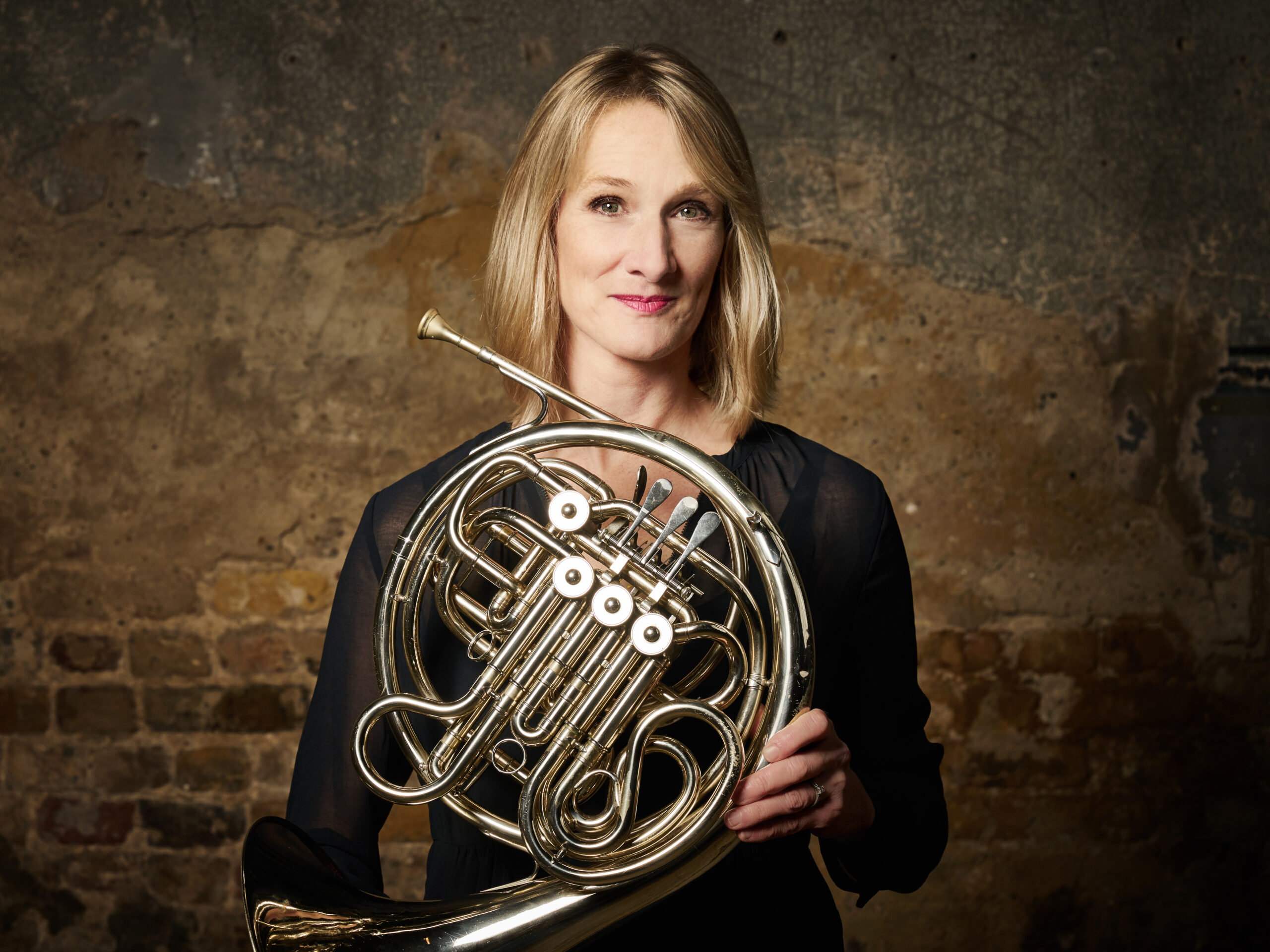
MOZART QUINTETS

Ensemble 360

Crucible Playhouse, Sheffield
Thursday 15 January 2026, 7.00pm

Tickets:
£23
£14 UC, PIP & DLA
£5 Students & Under 35s 

Past Event

MOZART
  Horn Quintet (16’)
  Clarinet Quintet (31’)
  String Quintet in G minor (35’) 

Three Mozart favourites are brought together in this celebration of one of the best-loved composers of all time. Each quintet showcases the exuberance, elegance and humanity that mark the enduring appeal of Mozart’s music. The virtuosic Horn Quintet sits alongside the lyrical Clarinet Quintet, in which Mozart explored his musical friendships and the capacity of an exciting, new instrument. The haunting yet hopeful string quintet in G minor is perhaps the crowning achievement in his writing for strings. 


Save 20% when you book for 10 or more Music in the Round Sheffield concerts in one transaction. 
Save 10% when you book for 5 or more Music in the Round Sheffield concerts in one transaction. Find out more. 

MOZART Wolfgang Amadeus, Horn Quintet K407

1. Allegro
2. Andante
3. Rondo: Allegro


The inspiration for Mozart’s famous horn concertos and the Horn Quintet was the Austrian virtuoso Joseph Ignaz Leutgeb (1732–1811). Though sometimes remembered as the victim of some of Mozart’s cruder practical jokes, Leutgeb was by all accounts a magnificent player, and had known the Mozart family ever since joining the Salzburg court orchestra in the early 1760s. When he moved back to Vienna, Leutgeb supplemented his income as a musician by running a cheese and wine shop – but he never stopped performing, and Mozart produced several major works for him to play. The Quintet is in many ways like a horn concerto in miniature. The musicologist Sarah Adams has pointed out that – given Leutgeb’s involvement – it is ‘not surprising that the horn plays a soloistic role, especially in the first movement [which] heightens the impact of the horn’s lyrical entrance by preceding it with tutti fanfares in the strings, a gesture evocative of a concerto’s preparation for the soloist’s entrance.’ This solo role is rather less apparent in the central movement of the Quintet, though it did require Leutgeb’s use of hand-stopping to obtain particular notes on the natural horn of the time (with no valves) – a technique that had attracted praise from critics all over Europe. Scored for horn, violin, two violas and cello, the Quintet was written in Vienna in 1782 – the composer’s first year in the city after his move from Salzburg.


NIGEL SIMEONE 2010

MOZART Wolfgang Amadeus, Clarinet Quintet in A K581

Allegro 
Larghetto 
Menuetto 
Allegretto con variazioni  

The Clarinet Quintet was completed on 29 September 1789 and written for Mozart’s friend Anton Stadler (1753–1812). The first performance took place a few months later at a concert in Vienna’s Burgtheater on 22 December 1789, with Stadler as the soloist in a programme where the premiere of the Clarinet Quintet was a musical interlude, sandwiched between the two parts of Vincenzo Righini’s cantata The Birth of Apollo, performed by “more than 180 persons.” 

From the start, Mozart is at his most daringly beautiful: the luxuriant voicing of the opening string chords provides a sensuously atmospheric musical springboard for the clarinet’s opening flourish. The rich sonority of the Clarinet Quintet is quite unlike that of any other chamber music by Mozart, but it does have something in common with his opera Così fan tutte (premièred in January 1790), on which he was working at the same time. In particular, the slow movement of the quintet, with muted strings supporting the clarinet, has a quiet rapture that recalls the trio ‘Soave sia il vento’ (with muted strings, and prominent clarinet parts as well as voices) in Così. The finale of the Quintet is a Theme and Variations which begins with folk-like charm, then turns to more melancholy reflection before ending in a spirit of bucolic delight. 

Nigel Simeone © 2012 

MOZART Amadeus, String Quintet in G minor K516

1. Allegro
2. Menuetto: Allegretto
3. Adagio ma non troppo
4. Adagio – Allegro


Mozart’s string quintets are all for the combination of two violins, two violas and cellos, with the two violas allowing for particularly rich inner parts. The Quintet in G minor K516 was completed on 16 May 1787, four weeks after his C major Quintet – and during the final illness of his father Leopold, who on 28 May. Though Mozart and his father had a strained relationship by this time, the composer was alarmed at Leopold’s illness and reacted with the now famous letter written on April 1787 in which he declared that ‘death, when we come to consider it closely, is the true goal of our existence, I have formed during the last few years such close relations with this best and truest friend of mankind that his image is not only no longer terrifying to me, but is indeed very soothing and consoling!’

The G minor Quintet – written by an estranged son who knew that his father was dying – is probably the most tragic of all Mozart’s chamber works. W.W. Cobbett described it as a ‘struggle with destiny’ and found it ‘filled with the resignation of despair’ – though this is rather to overlook the major-key ebullience of the finale. The first movement is full of restrained pathos, both themes melancholy and understated – and all the more wrenching for that. The minuet is sombre and reflective while the slow movement was, for the great Mozart scholar Alfred Einstein, the desolate core of the work. He likened it to ‘the prayer of a lonely one surrounded on all sides by the walls of a deep chasm.’ The element of tragedy is still very apparent in the slow introduction to the finale; but finally Mozart unleashes a more joyous spirit. The French poet Henri Ghéon found an eloquent description for this turning point: ‘Mozart has had enough. He knew how to cry but he did not like to cry or to suffer for too long.’


NIGEL SIMEONE 2010

RELAXED CONCERT: MOZART QUINTETS

Ensemble 360

Crucible Playhouse, Sheffield
Thursday 15 January 2026, 2.00pm

Tickets:
£5
Carers free

Past Event

MOZART
   Clarinet Quintet (31′)
   String Quintet in G minor (35’) 

For this ‘Relaxed’ concert featuring two of Mozart’s best loved quintets, doors will be left open, lights raised, a break-out space provided, and there will be less emphasis on the audience being quiet during the performance. People with an Autism Spectrum, sensory or communication disorder or learning disability, those with age-related impairments and parents/carers with babies are all especially welcome. 

MOZART Wolfgang Amadeus, Clarinet Quintet in A K581

Allegro 
Larghetto 
Menuetto 
Allegretto con variazioni  

The Clarinet Quintet was completed on 29 September 1789 and written for Mozart’s friend Anton Stadler (1753–1812). The first performance took place a few months later at a concert in Vienna’s Burgtheater on 22 December 1789, with Stadler as the soloist in a programme where the premiere of the Clarinet Quintet was a musical interlude, sandwiched between the two parts of Vincenzo Righini’s cantata The Birth of Apollo, performed by “more than 180 persons.” 

From the start, Mozart is at his most daringly beautiful: the luxuriant voicing of the opening string chords provides a sensuously atmospheric musical springboard for the clarinet’s opening flourish. The rich sonority of the Clarinet Quintet is quite unlike that of any other chamber music by Mozart, but it does have something in common with his opera Così fan tutte (premièred in January 1790), on which he was working at the same time. In particular, the slow movement of the quintet, with muted strings supporting the clarinet, has a quiet rapture that recalls the trio ‘Soave sia il vento’ (with muted strings, and prominent clarinet parts as well as voices) in Così. The finale of the Quintet is a Theme and Variations which begins with folk-like charm, then turns to more melancholy reflection before ending in a spirit of bucolic delight. 

Nigel Simeone © 2012 

MOZART Amadeus, String Quintet in G minor K516

1. Allegro
2. Menuetto: Allegretto
3. Adagio ma non troppo
4. Adagio – Allegro


Mozart’s string quintets are all for the combination of two violins, two violas and cellos, with the two violas allowing for particularly rich inner parts. The Quintet in G minor K516 was completed on 16 May 1787, four weeks after his C major Quintet – and during the final illness of his father Leopold, who on 28 May. Though Mozart and his father had a strained relationship by this time, the composer was alarmed at Leopold’s illness and reacted with the now famous letter written on April 1787 in which he declared that ‘death, when we come to consider it closely, is the true goal of our existence, I have formed during the last few years such close relations with this best and truest friend of mankind that his image is not only no longer terrifying to me, but is indeed very soothing and consoling!’

The G minor Quintet – written by an estranged son who knew that his father was dying – is probably the most tragic of all Mozart’s chamber works. W.W. Cobbett described it as a ‘struggle with destiny’ and found it ‘filled with the resignation of despair’ – though this is rather to overlook the major-key ebullience of the finale. The first movement is full of restrained pathos, both themes melancholy and understated – and all the more wrenching for that. The minuet is sombre and reflective while the slow movement was, for the great Mozart scholar Alfred Einstein, the desolate core of the work. He likened it to ‘the prayer of a lonely one surrounded on all sides by the walls of a deep chasm.’ The element of tragedy is still very apparent in the slow introduction to the finale; but finally Mozart unleashes a more joyous spirit. The French poet Henri Ghéon found an eloquent description for this turning point: ‘Mozart has had enough. He knew how to cry but he did not like to cry or to suffer for too long.’


NIGEL SIMEONE 2010

FESTIVAL LAUNCH

Claire Booth & Ensemble 360

Crucible Playhouse, Sheffield
Friday 15 May 2026, 7.00pm

Tickets:
£23
£14 UC, PIP & DLA
£5 Students & Under 35s

Book Tickets

WEIR King Harald’s Saga (15’)
BIRTWISTLE Cortege for 14 musicians (15’)
BRAHMS Serenade Op.11 (46’)  

Claire Booth kicks off the 2026 Sheffield Chamber Music Festival in style!  

Our Guest Curator, and RPS Singer of the Year 2025, opens with a one-woman opera retelling the story of ‘the last real Viking’, Harald Hardrada, by Judith Weir. The forces of Ensemble 360 follow, with Birtwistle’s highly theatrical procession of musicians and one of their favourites, Brahms’s brilliant and beloved Serenade, a swaggering, celebratory launch to nine days of chamber music, song and high theatre.  

Post-concert drinks 
To celebrate the start of the Festival, ticket-holders are invited to join us for a free glass of wine or soft drink in the Crucible bar after the concert.  

Save 20% when you book for 10 or more Music in the Round Sheffield concerts in one transaction. 
Save 10% when you book for 5 or more Music in the Round Sheffield concerts in one transaction. Find out more. 

WEIR Judith, King Harald’s Saga

King Harald’s Saga is a 3-act opera based, as is a good deal of 19th century opera, on an actual historical event; in this case, the Norwegian invasion of England in 1066 led by King Harald ‘Hardradi’, which ended in defeat at the battle of Stamford Bridge, 19 days before the successful Norman invasion at the Battle of Hastings.

As King Harald’s Saga is scored for solo soprano and lasts just under ten minutes, a certain amount of compression has been necessary. The soprano sings 8 solo roles, as well as the part of the Norwegian army; and none of the work’s musical items lasts over a minute. Furthermore, since it would be difficult to stage a work which progresses so quickly, the soprano gives a short spoken introduction to each act to establish the staging, as might happen in a radio broadcast of a staged opera.

The musical items are as follows: Act 1 – Harald (aria), Fanfare, Tostig (aria); Act 2 – St Olaf (aria), Harald (aria), Harald’s wives (duet); Act 3 – the Norwegian Army (chorus), Messenger (recit), Soldier (aria); Epilogue – the Icelandic sage (recit).

Much of the detail in the libretto has been taken from the account of the invasion in the 13th century Icelandic saga Heimskringla by Snorri Sturluson (1179-1241).

King Harold’s Saga was written in 1979 and commissioned by Jane Manning with funds provided by the Arts Council of Great Britain.

© Judith Weir

BIRTWISTLE Harrison, Cortege for 14 musicians

Fourteen virtuoso instrumentalists arrange themselves into a semicircle and a number of them hand round from one to another a continuous, but changing solo line, many of the players thus exploring the roles of both soloist and accompanist within this one piece. A central position on the stage is reserved for whoever is carrying the solo at any one time, creating a fascinating drawn-out dance as players move to the front of the stage and then peregrinate around the outer semicircle as others fill the physical and musical space they have just vacated. 

Such an original ritualised game in sound immediately suggests the pre-eminent hand of Sir Harrison Birtwistle, who has made such a specialisation of combining ritual, theatre and music through more than half a century of spectacular output. Cortege, written to celebrate the reopening of the Royal Festival Hall, is based on a previous piece, Ritual Fragment (1990) – will become a signature piece for the London Sinfonietta. This is only fitting: both pieces are dedicated to the memory of Michael Vyner, the tireless, visionary idealist who was the London Sinfonietta’s first Artistic Director and who died in 1989 at the age of 46. Those who knew Michael well will recognise much of him in Cortege: the restless and almost exotic intensity, the constant concern with talent, dedication and modernity; all these qualities will surely be present in conjuring his memory from the sounds of this world premiere. 


Marshall Marcus © 


BRAHMS Johannes, Serenade No. 1 in D Op. 11, nonet version reconstructed by David Walter

Allegro Molto
Scherzo: Allegro non troppo
Adagio non troppo
Minuet
Scherzo: Allegro
Rondo: Allegro

Brahms’s D major Serenade is well known as his first orchestral work – but, like the D minor Piano Concerto from the same period, it had a complicated genesis. It was first conceived in 1857 as a Serenade for eight instruments in three or four movements, and a year later it had become a work in six movements, now scored for nine instruments. By 1860, it had been rewritten for full orchestra – the version that survives today (though Brahms even considered developing that into his first symphony, but decided to leave well alone). The nonet version was performed in public on 28 March 1859 at a concert in Hamburg, and a year later the orchestral version was given its premiere in Hannover. Whether Brahms destroyed the chamber version, or whether the material simply vanished is not known, but a skilful reconstruction reveals something of Brahms’s original conception: a work much closer in spirit to the serenades and divertimentos of Mozart than the reworked orchestral version.

© Nigel Simeone 2013

THE GENIUS OF BEETHOVEN

Ensemble 360

Crucible Playhouse, Sheffield
Saturday 6 December 2025, 7.00pm

Tickets:
£23
£14 UC, PIP & DLA
£5 Students & Under 35s

Past Event
Ensemble 360 musicians

BEETHOVEN
Sonata for Cello and Piano No.3 Op.69 (26’) 

   Trio for Piano, Clarinet and Cello Op.11 (20’) 
   String Quartet in A minor Op.132 (45’) 

Ludwig van Beethoven – a true genius, and one of the greatest composers to have ever lived – is celebrated in this concert showcasing the ingenuity and inventiveness of his chamber works. The Cello Sonata was written when Beethoven was at the height of his musical powers, beloved by performers and audiences alike. Known as the ‘Gassenhauer Trio’, the unusual combination of cello, clarinet and piano shows brilliant writing for all the instruments and has always been well-received for its use of a popular operatic tune in the final movement. His late String Quartet – with its spellbinding, elegiac third movement, subtitled the ‘Holy Song of Thanksgiving’ – concludes an evening that will captivate, astonish and amaze.

Save 20% when you book for 10 or more Music in the Round concerts in one transaction.
Save 10% when you book for 5 or more Music in the Round concerts in one transaction. Find out more.

BEETHOVEN Ludwig van, Cello Sonata in A

i. Allegro ma non tanto
ii. Scherzo. Allegro molto
iii. Adagio cantabile – Allegro vivace
On 14 September 1808, the publisher Gottfried Christoph Härtel signed a remarkable contract with Beethoven for his most recent works: the document signed by the two of them that day shows that Breitkopf and Härtel had acquired the rights to the Fifth Symphony, the Pastoral Symphony, the two Piano Trios Op.70 and the Cello Sonata in A major. The Cello Sonata had been written in the winter of 1807–8 and by the time of its publication it bore a dedication to Baron Ignaz von Gleichenstein, a friend of the composer who helped him with financial matters as well as a being a talented amateur cellist. The first performance was given in Vienna on 5 March 1809, at a concert by the cellist Nikolaus Kraft with Baroness Dorothea von Ertmann (to whom Beethoven later dedicated his Piano Sonata Op.101). As in the Kreutzer Sonata for violin and piano, Beethoven begins this Cello Sonata with the string soloist unaccompanied, introducing the simple but utterly memorable opening idea, answered by the piano. The spacious melodic material of this movement shows Beethoven at his most flowing and song-like. The Scherzo, in A minor, is full of tense syncopation, followed by an Adagio that begins as if it is to be one of Beethoven’s most serene slow movements, but it turns out to be a mere eighteen bars long, leading straight into the finale – a brilliant combination of structural tension and sunny lyricism.


Nigel Simeone © 2011

BEETHOVEN Ludwig van, Clarinet Trio in B flat

The Trio in B flat Op.11 for clarinet, cello and piano is one of Beethoven’s least-serious works. By 1798 he had settled in Vienna and had become so successful as a composer that the majority of his works were being written in response to commissions. A couple of years later Beethoven admitted that he had been receiving more commissions than he could fulfil.

The scoring is very unusual and although Beethoven may not have divined the soul of the clarinet with the unerring instinct of Mozart, the alternative version that Beethoven made for violin – a shrewd piece of salesmanship – is less colourful.

The unison opening of the first movement is arresting and the approach to the second theme is also striking, recalling as it does a comparable passage in Haydn’s Symphony No.102, also in B flat. The Adagio highlights the cello in a reflective theme which is related to the minuet of Beethoven’s Piano Sonata in G, Op.49 No.2 and indeed to the Septet of 1800.

In Beethoven’s hands the decidedly trivial could become a catalyst for the most imaginative art of transformation – the Diabelli Variations is perhaps the most extreme example – and for the finale of his Trio, Op.11, Beethoven took one of the popular tunes from a recent opera for his inspiration. In fact it is the only one of Beethoven’s major instrumental works to contain a set of variations on a theme by another composer. Joseph Weigl’s comic opera L’amor marinaro (“Love at sea”) was first performed at the Burgtheater in Vienna in October 1797, and the aria “Pria ch’io l’impegno” was an instant success. In addition to Beethoven, this frequently-hummed tune was also used by Joseph Eybler, Hummel and Paganini, who wrote an elaborate concert piece for violin and orchestra based on it.

Beethoven’s Op.11 acquired the nickname of Gassenhauer or “Street song” Trio as the result of his use of this theme, and the idea of using Weigl’s melody seems to have come from the clarinettist for whom Beethoven wrote the trio, Joseph Bähr. Although Beethoven considered writing another finale he never did so, presumably because he thought this finale too lightweight, but the nine variations are among the young Beethoven’s most inspired, witty and amusing. After the surprise of the opening variation being for piano solo, it stays silent in the second one, a duet for clarinet and cello. The fourth and seventh variations are in B flat minor – the latter’s dotted rhythms and blocks of chords reminiscent of a funeral march. After the last variation there is an amusing diversion from the home key of B flat to G major and to six-eight, the situation being saved and the original tempo regained just in the nick of time.


Jeremy Hayes © 2010

BEETHOVEN Ludwig van, String Quartet in A minor

i. Assai sostenuto–Allegro
ii. Allegro ma non tanto
iii. Heiliger Dankgesang eines Genesenen an die Gottheit, in der lydischen Tonart. Molto adagio (‘A Holy Song of Thanksgiving offered by a convalescent to the Divinity, in the Lydian Mode’)
iv. Alla Marcia, assai vivace (attacca)
v. Allegro appassionato–Presto
‘I have the A minor Quartet on the gramophone, and I find it quite inexhaustible to study. There is a sort of heavenly, or at least more than human gaiety, about some of his later things which one imagines might come to oneself as the fruit of reconciliation and relief after immense suffering; I should like to get something of that into verse before I die.’ These were the words of T.S. Eliot, writing to his friend Stephen Spender in 1931. Whether any or all of the Four Quartets, started in 1935, were inspired by Beethoven’s Op.132 is open to speculation, but given the letter to Spender and the fact that each of Eliot’s Quartets is in five parts, the evidence is certainly intriguing. (Incidentally, in 1931 Eliot had a very limited choice of recordings to have on his gramophone; the Léner Quartet recorded Op.132 in 1924, and the Deman Quartet recorded it in 1927). In a lecture delivered in New Haven in 1933, Eliot spoke again of his quest ‘to get beyond poetry, as Beethoven, in his later works, strove to get beyond music’, a remark prompted by D.H. Lawrence’s comment that ‘the essence of poetry’ was its ‘stark, bare, rocky directness of statement’. This phrase could equally well be applied to Beethoven’s late works. Composed in 1825, Op.132 is an extraordinary work even by the standards his late music.

William Kinderman has described the whole work as ‘laden with pathos of a particularly painful, agonized quality’ and at its heart is long central movement, in which Beethoven gives thanks for recovery from a serious illness. This ‘Song of Thanksgiving’ is interrupted by a ray of hope and recovery, marked ‘with renewed strength’, and on either side of it there are short, dance-like movements to provide contrast – though until a very late stage in the work’s composition Beethoven planned to use what became the ‘Alla danza tedesca’ movement familiar from Op.130 as the fourth movement of Op.132, before deciding to move it (and transpose it down a tone). There was equally intriguing traffic the other way, importing an idea into Op.132 from another work: the main theme for the finale was originally intended as a possible instrumental finale for the Ninth Symphony, and was only once Beethoven decided to write a choral movement and subsequently used in this astonishing string quartet.


Nigel Simeone © 2010

RELAXED CONCERT: THE GENIUS OF BEETHOVEN

Ensemble 360

Crucible Playhouse, Sheffield
Saturday 6 December 2025, 2.00pm

Tickets:
£5 / carers free

Past Event
Ensemble 360 musicians

BEETHOVEN Sonata for Cello and Piano No.3 Op.69 (26’)
BEETHOVEN Trio for Piano, Clarinet and Cello Op.11 (20’) 

For this ‘Relaxed’ concert featuring Beethoven, doors will be left open, lights raised, a break-out space provided, and there will be less emphasis on the audience being quiet during the performance. People with an Autism Spectrum, sensory or communication disorder or learning disability, those with age-related impairments and parents/carers with babies are all especially welcome.

BEETHOVEN Ludwig van, Cello Sonata in A

i. Allegro ma non tanto
ii. Scherzo. Allegro molto
iii. Adagio cantabile – Allegro vivace
On 14 September 1808, the publisher Gottfried Christoph Härtel signed a remarkable contract with Beethoven for his most recent works: the document signed by the two of them that day shows that Breitkopf and Härtel had acquired the rights to the Fifth Symphony, the Pastoral Symphony, the two Piano Trios Op.70 and the Cello Sonata in A major. The Cello Sonata had been written in the winter of 1807–8 and by the time of its publication it bore a dedication to Baron Ignaz von Gleichenstein, a friend of the composer who helped him with financial matters as well as a being a talented amateur cellist. The first performance was given in Vienna on 5 March 1809, at a concert by the cellist Nikolaus Kraft with Baroness Dorothea von Ertmann (to whom Beethoven later dedicated his Piano Sonata Op.101). As in the Kreutzer Sonata for violin and piano, Beethoven begins this Cello Sonata with the string soloist unaccompanied, introducing the simple but utterly memorable opening idea, answered by the piano. The spacious melodic material of this movement shows Beethoven at his most flowing and song-like. The Scherzo, in A minor, is full of tense syncopation, followed by an Adagio that begins as if it is to be one of Beethoven’s most serene slow movements, but it turns out to be a mere eighteen bars long, leading straight into the finale – a brilliant combination of structural tension and sunny lyricism.


Nigel Simeone © 2011

BEETHOVEN Ludwig van, Clarinet Trio in B flat

The Trio in B flat Op.11 for clarinet, cello and piano is one of Beethoven’s least-serious works. By 1798 he had settled in Vienna and had become so successful as a composer that the majority of his works were being written in response to commissions. A couple of years later Beethoven admitted that he had been receiving more commissions than he could fulfil.

The scoring is very unusual and although Beethoven may not have divined the soul of the clarinet with the unerring instinct of Mozart, the alternative version that Beethoven made for violin – a shrewd piece of salesmanship – is less colourful.

The unison opening of the first movement is arresting and the approach to the second theme is also striking, recalling as it does a comparable passage in Haydn’s Symphony No.102, also in B flat. The Adagio highlights the cello in a reflective theme which is related to the minuet of Beethoven’s Piano Sonata in G, Op.49 No.2 and indeed to the Septet of 1800.

In Beethoven’s hands the decidedly trivial could become a catalyst for the most imaginative art of transformation – the Diabelli Variations is perhaps the most extreme example – and for the finale of his Trio, Op.11, Beethoven took one of the popular tunes from a recent opera for his inspiration. In fact it is the only one of Beethoven’s major instrumental works to contain a set of variations on a theme by another composer. Joseph Weigl’s comic opera L’amor marinaro (“Love at sea”) was first performed at the Burgtheater in Vienna in October 1797, and the aria “Pria ch’io l’impegno” was an instant success. In addition to Beethoven, this frequently-hummed tune was also used by Joseph Eybler, Hummel and Paganini, who wrote an elaborate concert piece for violin and orchestra based on it.

Beethoven’s Op.11 acquired the nickname of Gassenhauer or “Street song” Trio as the result of his use of this theme, and the idea of using Weigl’s melody seems to have come from the clarinettist for whom Beethoven wrote the trio, Joseph Bähr. Although Beethoven considered writing another finale he never did so, presumably because he thought this finale too lightweight, but the nine variations are among the young Beethoven’s most inspired, witty and amusing. After the surprise of the opening variation being for piano solo, it stays silent in the second one, a duet for clarinet and cello. The fourth and seventh variations are in B flat minor – the latter’s dotted rhythms and blocks of chords reminiscent of a funeral march. After the last variation there is an amusing diversion from the home key of B flat to G major and to six-eight, the situation being saved and the original tempo regained just in the nick of time.


Jeremy Hayes © 2010

VIENNESE MASTERWORKS: BRAHMS & MORE FOR SOLO PIANO

Tim Horton

Crucible Playhouse, Sheffield
Thursday 4 December 2025, 7.00pm

Tickets:
£23
£14 UC, PIP & DLA
£5 Students & Under 35s

Past Event

HAYDN Piano Sonata in E flat major Hob.XVI:52 (17’)
BRAHMS Four Ballades Op.10 (25’)
SCHOENBERG Suite Op.25 (15’)
BEETHOVEN Piano Sonata No.15 Op.28, ‘Pastoral’ (25’) 

Tim Horton returns to Sheffield for the latest in his popular series celebrating the long musical history of Vienna. Beethoven’s well-known Piano Sonata No.15, nicknamed the ‘Pastoral’, is showcased alongside Brahms’s emotional and romantic Four Ballades, which relate stories through poetic references. Written by one of the 20th century’s most important composers based in Vienna, Arnold Schoenberg, the Suite is a landmark collection of Baroque dances with a difference.

IN CONVERSATION with Tim Horton
Crucible Playhouse, 5.30pm – 6.15pm
Tickets: £5 / Free to all ticket holders for the evening concert, but please book in advance

Save 20% when you book for 10 or more Music in the Round concerts in one transaction.
Save 10% when you book for 5 or more Music in the Round concerts in one transaction. Find out more.

HAYDN Joseph, Piano Sonata in E flat

i. Allegro
ii. Adagio
iii. Finale. Presto
Composed in 1794, this is the last and most imposing of Haydn’s piano sonatas. Donald Francis Tovey (who devoted the first five pages of his essay on the work to an analysis of the first twelve bars) wrote that ‘neither Haydn nor Mozart succeeded in writing many mature pianoforte solo of such importance as this sonata’. Haydn wrote it in London for one of the capital’s finest pianists, Therese Jansen. He conceived on a grand scale, but was also daringly original – even by his own standards. from the thick, almost orchestral sound of the opening chords of the large sonata for first movement. The slow movement is in the remotest possible key – E major – and it is a rich, hymn-like piece which is derived almost entirely from the figure heard in its first bar. The finale begins with a series of repeated Gs from which the main theme stutters into life, and the harmonies return to the work’s home key of E flat – a brilliant shock tactic from Haydn who proceeds to transform the start of the main theme into the movement’s main accompaniment figure, and to drive towards an exciting close.

BRAHMS Johannes, Ballades

i. Andante, after the Scottish ballad ‘Edward’
ii. Andante, espressivo e dolce – Allegro non troppo
iii. Intermezzo. Allegro
iv. Andante con moto
Brahms composed this set of four Ballades in Düsseldorf in 1854 (when he was 20), at a time when Robert and Clara Schumann were promoting the young Brahms’s career. The poetic ballad on which the musical form was based involved a verse narrative with refrains. Chopin’s famous group of Ballades had been written between 1831 and 1842 and treated this idea very freely. As Charles Rosen has pointed out, Brahms was more faithful to the medieval origins of the poetic form, describing his approach as ‘more thoroughly neo-Gothic’. The four Ballades are in two pairs, linked by related keys. The first two are in D minor and D major, while the third and fourth are in B minor and B major. The first Ballade was directly inspired by an ancient Scottish ballad that had been published in German by the poet Johann Gottfried Herder. It is a gruesome tale of Edward’s sword dripping with the blood of his father and ending with him cursing his mother, though Brahms’s piece – although stormy and passionate in the middle section – does not really evoke the mood of the poem. Instead, there’s a sense of its formal qualities and its symmetry. The second Ballade begins slowly, but the main Allegro non troppo section is dramatic, dominated by an obsessive rhythm of four quavers that returns later to provide a kind of ghostly knocking. The third Ballade is headed ‘Intermezzo’ and it is a Scherzo-like piece in B minor, with a central Trio section that introduces an ethereal idea in F sharp major. The final Ballade begins as sweeping triple-time movement, but Brahms introduces a remarkable contrasting idea, with a marking worthy of late Beethoven: Più lento. Col intimissimo sentimento, ma senza troppo marcare la melodia (Slower. With most intimate feeling, but without heavily marking the melody)

SCHOENBERG Arnold, Suite for Piano

Composed between 1921 and 1923, Arnold Schoenberg’s Suite for Piano Op. 25 is the earliest work in which the composer deployed his 12-tone technique in every movement. Earlier compositions – the Five Pieces for Piano, Op. 23 (1920–23) and the Serenade, Op. 24 (1920-1923) – make use of tone rows only in a single movement. Rather than deploying traditional tonal relationships, the Suite is constructed of permutations of a sequence of all 12 chromatic pitches. The basic ‘tone row’ (order of the pitches) is: E–F–G–D♭–G♭–E♭–A♭–D–B–C–A–B♭. For the first time, Schoenberg employs transpositions and inversions of this tone row; beginning the row on a different pitch but following the same contour, and presenting the row as a mirror image (a step up of a tone becomes a step down of a tone, and so on). 

In other regards, however, the Suite is quite traditional. In form and style, it echos the Baroque Suite; an popular form for instrumental music in the 17th Century consisting of a series of dances. Schoenberg’s suite has six movements or dances: 

i. Präludium (or prelude) 
ii. Gavotte (characterized by a moderately quick quadruple meter, a distinctive upbeat, and often involving hopping or skipping steps) 
iii. Musette (a lively dance) 
iv. Intermezzo  
v. Menuett. Trio (a dance in triple time) 
vi. Gigue (a lively concluding movement) 

The suite was first performed by Schoenberg’s pupil Eduard Steuermann in Vienna on 25 February 1924.   

BEETHOVEN Ludwig van, Piano Sonata in D ‘Pastoral’

i. Allegro
ii. Andante
iii. Scherzo. Allegro vivace
iv. Rondo. Allegro ma non troppo
The so-called ‘Pastoral’ Sonata was composed in 1801, and the nickname is justified by the generally sunny mood of parts of the work, especially its finale. In fact it could hardly have been written at a more traumatic time in Beethoven’s life: this was the year in which he confessed to a few of his closest friends that he was losing his hearing. Published by the Bureau des Arts et d’Industrie in Vienna, it was described as a ‘Grande Sonate’ and dedicated to Joseph Freiherr von Sonnenfels (1732–1817), a friend of Mozart and a liberal thinker whose chief claim to fame was bringing about the abolition of torture in Austria in 1776. After a first movement that shows signs of real stress and tension in the turbulent development, the slow movement, in D minor, is restrained and rather despondent. The Scherzo is a startling contrast to this – playful in parts and also dramatic in the central Trio section. The last movement is a gentle and bucolic Rondo.


Nigel Simeone ©2014

SOUNDS OF NOW: KONNAKOL, DRUM KIT & CODE

BC Manjunath, Alex McLean & Matt Davies

Crucible Playhouse, Sheffield
Saturday 8 November 2025, 8.00pm

Tickets:
£17
£10 UC, PIP & DLA
£5 Students & Under 35s

Past Event

A newly-composed work for Konnakol (vocal percussive music from the South Indian Carnatic tradition), live-coded electronic music and percussion. Common to these disparate traditions is an interest in pattern, texture and complex rhythm, which mridangam and konnakol artist BC Manjunath, live-coder Alex McLean and drummer Matt Davies will explore through a unique and virtuosic live performance.

Save 20% when you book for 10 or more Music in the Round concerts in one transaction.
Save 10% when you book for 5 or more Music in the Round concerts in one transaction. Find out more.

PIANO CLASSICS

Libby Burgess

Crucible Playhouse, Sheffield
Saturday 8 November 2025, 2.00pm

Tickets:
£23
£14 UC, PIP & DLA
£5 Students & Under 35s

Past Event

SCHUBERT (arr. Liszt) Standchen (6’)
JS BACH (arr. Bauer) Die Seele ruht in Jesu Handen (6’)
LISZT Liebeslied (after Schumann’s ‘Widmung’) (4’)
SCHUBERT Four Impromptus (28′)
RACHMANINOV Prelude in D Op.23 (5’)
RACHMANINOV Moments Musicaux in B minor Op.16 No.3 (4’)
RACHMANINOV Prelude in G sharp minor Op.32 No.12 (3’)
RACHMANINOV Elegie (from ‘Morceaux de Fantaisie’) Op.3 No.1 (5’)
RACHMANINOV Prelude in G Op.32 No.5 (3’)
BINGEN (arr. Marie-Luise Hinrichs) O frondens virga (2’)
C SCHUMANN Notturno Op.6 No.2 (5’)
PUCCINI Piccolo valzer (3’)
S COLERIDGE-TAYLOR Deep River (6’)
BONDS Troubled Water (5’) 

Praised for her “warm, sensitive pianism” (The Observer), and for performances that are “a masterclass in the art of holding an audience’s attention” (Cherwell), Libby Burgess returns to Sheffield for a recital of some of the best-loved music for solo piano. From the dazzling inventiveness of Schubert’s Four Impromptus to the lush romanticism of Rachmaninov’s Morceaux de Fantaisie, this concert showcases some of the finest writing for the instrument.

This concert is dedicated to Julia Wilton, a Friend and generous supporter of Music in the Round for many years

Save 20% when you book for 10 or more Music in the Round concerts in one transaction.
Save 10% when you book for 5 or more Music in the Round concerts in one transaction. Find out more.

Piano Classics

Franz Schubert’s ‘Ständchen’ (‘A serenade’) was originally a lied for solo voice and piano. Composed in 1826, it is a setting of the ‘song’ in Act 2, Scene 3 of Shakespeare’s Cymbeline. Evoking the coming of morning, the song begins: “Hark, hark, the lark at heaven’s gate sings, / and Phoebus ‘gins arise, / His steeds to water at those springs / on chalic’d flowers that lies”. Franz Liszt arranged Schubert’s ‘Ständchen’ for solo piano in 1838, including it as “Ständchen von Shakespeare” in his 12 Lieder von Franz Schubert. 

Another arrangement of vocal music, J. S. Bach’s ‘Die Seele ruht in Jesu Händen’ (‘The soul rests in Jesus’ hands’) was originally composed as an aria for his Cantata BWV 127. Written for a service on Estomihi (the Sunday before Lent), it is performed here in a transcription by the distinguished English-born American pianist and teacher, Harold Bauer.   

Liszt’s arrangement of Robert Schuman’s ‘Widmung’ (‘dedication’) for his ‘Liebeslied’ (or ‘Love Song’) preserves the lyrical emotion of the original while adding his own pianistic virtuosity. Gifted to his fiancé Clara as a wedding present, Schuman’s song is expanded and transformed; whereas Schuman’s ‘Widmung’ ends quietly, Liszt’s ‘Liebeslied’ finishes with a final pianistic flurry.  

Schubert wrote eight Impromptus, published in two sets of four – the first set (op. 90) was published during the composer’s lifetime, the second was published posthumously as Op. 142. Composed in 1827, the Four Impromptus Op. 90 D. 899 are a cornerstone of the piano repertoire. The first, in C minor, blends elements of sonata, variation, and through-composed structures. The second Impromptu in E♭ major is a swift ‘moto perpetuo’ with a ternary (or ABA) form. The third is a flowing and meditative piece in G♭ major, characterized by long melodic lines, while the fourth and final Impromptu, in A♭ major, is characterized by cascading arpeggios and a chordal response. 

Like Liszt, Sergei Vasilyevich Rachmaninov was a virtuoso pianist as well as a composer. Widely considered one of the finest pianists of his day, Rachmaninov’s pianistic talents can be heard in his writing for the instrument. The Ten Preludes, Op. 23, composed in 1901 and 1903, is part of a full suite of 24 preludes in all the major and minor keys. The Prelude in D Major is No. 4 in the collection. Marked andante cantabile (moderate and flowing with a lyrical quality), the short composition is in ternary form with an opening theme, developed in a middle section, returning at the end. Also performed is the Prelude in G Sharp minor Op.32 No.12. Among the composer’s most atmospheric pieces for piano, opening right-hand arpeggios fall across a distinctly Russian melody. The Prelude in G Major Op.32 No.5 is the most famous of the set, with its march-like outer sections contrasted by a more lyrical middle section. Rachmaninov himself had huge hands – stretching a 13th (an octave plus a 6th, or from middle C to a high A) – so would have had no difficulty bringing out the melody in the inner voice of the middle section.  

Rachmaninov’s set of Six moments musicaux were composed when he was just 23 years old. Keen to demonstrate his mastery of musical forms, as well as his virtuosity as a pianist, the third movement (in B minor) is the emotional heart of the set with a brooding melody played low on the piano, under wide, open chords. The 5 Morceaux de fantaisie (or ‘fantasy pieces’) were composed when Rachmaninov was younger still (aged 19) in 1892 and are dedicated to Anton Arensky, Rachmaninov’s harmony teacher at the Moscow Conservatory. The opening Elegy consists of gentle arpeggios and a deeply melancholic melody. 

Hildegard von Bingen was a 12th-century abbess and polymath, active as a composer, writer, and mystic. Her piece ‘O frondens virga’ (‘O blossoming branch’) was composed as a psalm antiphon for the Virgin Mary. It is performed here in an arrangement by the pianist, Marie-Luise Hinrichs.  

Giacomo Puccini’s ‘Piccolo Valzer’ (‘Little Waltz’) was published in 1894. The inspiration for the work was said to be the rocking of a boat on Lake Massaciuccoli, where Puccini loved to go fishing. It was subsequently re-elaborated by the composer and became one of the best-known opera arias, Musetta’s solo ‘Quando me n’vo’ in La Bohème. 

Samuel Coleridge-Taylor’s ‘Deep River’ was written in 1904 as part of the composer’s 24 Negro Spirituals. Coleridge-Taylor is reported to have said of the collection: “what Brahms has done for the Hungarian folk music, Dvorak for the Bohemian, and Grieg for the Norwegian, I have tried to do for these Negro Melodies”. 

Margaret Bonds arranged over fifty African-American spirituals for various instruments. The piano work ‘Troubled Water’ is based on the spiritual ‘Wade in the Water’ which was associated with Songs of the Underground Railroad, work songs used by slaves in the nineteenth century to share coded information for escape. Beginning with energetic, syncopated rhythms in the left hand, leading into the recognizable theme in the spiritual, the piece then thickens, with Bonds weaving in jazz-inspired sonorities. 

SONGS OF LOVE

Claire Booth & Ensemble 360

Crucible Playhouse, Sheffield
Friday 7 November 2025, 7.00pm

Tickets:
£23
£14 UC, PIP & DLA
£5 Students & Under 35s

Past Event
Photo of singer Claire Booth, soprano

Programme includes
DVOŘÁK (arr. Matthews)
Love Songs (18’)

DEBUSSY Trois poèmes de Stéphane Malllarmé (13’)
MUSSORGSKY The Nursery (selection) (10’)
DEBUSSY String Quartet (25’) 

Claire Booth is a singer celebrated around the world for her distinctive and characterful voice and the relentless curiosity in the range of work she presents. In recent years she has become a frequent collaborator with Ensemble 360, including a much-lauded CD release Pierrot Portraits. As they prepare for Sheffield Chamber Music Festival 2026, of which Claire is Guest Curator, they present a dazzling evening of French chamber music.

In 1913 Debussy and Ravel began a somewhat friendly rivalry to set three poems by Stéphane Mallarmé, whose words, like the music of these great French composers, explored the same shimmering textures beloved of their contemporary impressionist painters. Ravel’s Chansons madécasses – one of the most popular works in SCMF 2024 – opens this sensuous celebration of light and love which concludes with Debussy’s glittering string quartet.

Save 20% when you book for 10 or more Music in the Round concerts in one transaction.
Save 10% when you book for 5 or more Music in the Round concerts in one transaction. Find out more.

DVORAK Antonín, (arr. Matthews) Love Songs

i. Oh, that longed-for happiness does not bloom for our love (Ó naší lásce nekvete to vytoužené štěstí)
ii. So many a heart is as though dead (V tak mnohém srdci mrtvo jest)
iii. Around the house now I stagger (Kol domu se teď potácím) 
iv. I know that in sweet hope (Já vím, že v sladké naději) 
v. Over the countryside reigns a light sleep (Nad krajem vévodí lehký spánek) 
vi. Here in the forest by a brook (Zde v lese u potoka) 
vii. In that sweet power of your eyes (V té sladké moci očí tvých) 
viii. Oh dear soul, the only one (Ó duše drahá jedinká) 


Dvorak’s Love Songs are a reworking of his earlier collection Cypresses. The Cypresses were first written in 1865, but Dvorak revisited them again in 1889 to create 8 new songs out of the original 18.  Inspired by the traditional music of his native country, the works are settings of romantic poems by Gustav Pfleger-Moravsky, a fellow Czech who’s work Dvorak admired. The songs were rewritten in many forms by the composer, including a reworking for string quartet, and he pulled many of the main themes out of the song cycle for other works. Although originally written for piano and voice, this arrangement has the vocal line accompanied by violin, viola, cello and double bass. Love Songs are distinctive and known for their elaborate accompaniments and are argued to be the best example of his writing for solo voice. 

DEBUSSY Claude, Trois Poemes de Mallarmé

i. Soupir  
ii. Placet futile 
iii. Eventail 
 

Paris in the late-19th century was a hub of creative innovation. The poet Stéphane Mallarmé (1842-1898) was a central figure in this experimental scene. At his weekly meetings on Tuesdays at his apartment on the Rue de Rome, Mallarmé held court, speaking for hours about art and politics. Regular attendees included W.B. Yeats, Oscar Wilde, Édouard Manet, Pierre-Auguste Renoir, Emile Zola, Paul Gauguin, Edgar Degas, Paul Verlaine, Rainer Maria Rilke… and Claude Debussy.  

Debussy adored poetry, particularly the works of Mallarmé. Indeed, his most-famous composition, the orchestral tone poem Prélude à l’après-midi d’un faune, is closely based on Mallarmé’s poem (‘The Afternoon of the Faune’). Debussy’s music evokes the languid feeling of the poem, while the work’s structure closely mirrors that of the text: Debussy’s composition has the same number of bars (110) as the poem has lines. 

This reverence for poetry can be seen in Debussy’s setting of three poems by Mallarmé, composed late in the composer’s life in 1913. In her analysis of the first of the three songs – ‘Soupir’ (Sigh) – musicologist Marianne Wheeldon notes that “Debussy’s setting tries to imitate the permutability of Mallarmé’s syntax”. Debussy closely mirrors the poem’s sophisticated form, adapting his music to the text (rather than attempting to make the poem fit a traditional musical structure) so that the poem’s ambiguity is preserved. Just as Mallarmé’s poem is written as a single breathless sentence – “Faithful, a white jet of water sighs toward the Azure / – Toward the tender Azure of pale and pure October” – Debussy imitates the freely flowing and associative form of Mallarmé’s poem in which the poet’s ‘soul’ reaches toward ‘autumn’, ‘freckles’, ‘the sky’, and so on.  

Debussy was not the only composer to set poems by Mallarmé. Famously, Maurice Ravel also composed his own Trois poèmes de Mallarmé. Indeed, it was Ravel who first secured the rights to set Mallarmé’s poetry to music. Both Debussy and Ravel set ‘Soupir’ and ‘Placet futile’, however whereas Ravel chose to end his collection with ‘Surgi de la croupe et du bond’ (‘ Risen from the crupper and leap’), Debussy finishes with ‘Eventail’ (‘Fan’), a setting of Mallarmé’s poem ‘Autre Éventail de Mademoiselle Mallarmé’.  Subtly erotic, the poem begins: 

O dreamer, so that I
May plunge in that pathless thing,
Pure delight, by a subtle lie
Learn to hold in your hand my wing. 

MUSSORGSKY Modest, The Nursery (selection)

Originally published in two series, The Nursey song cycle was written between 1868 and 1872. Made up of seven songs, Mussorgsky wrote both the music and the words. The text is written musically exactly as it would be spoken, which leads to some unexpected melodies, and a fluid rhythm in an irregular time signature. Mussorgsky was one of the first composers to make music from speech patterns in this way. The style of each song is varied, but Mussorgsky’s appreciation for humour is clear. Although written to express the feelings and ideas of a child, the music is not for children, as it is as advanced as any other work from that era, and offers a fresh but haunting insight into domestic life. 

DEBUSSY Claude, String Quartet in G minor Op. 10

Debussy’s String Quartet was first performed at the Société Nationale de Musique on 29 December 1893 – almost exactly a year before he shocked Paris with the Prélude à l’après-midi d’un faune, the most laconic manifestation of his revolutionary creative spirit. The Quartet, composed just after the Prélude, is one of his earliest mature works – a piece that still has some roots in the musical language of César Franck but in which a fresh and brilliant imagination can be heard, not just in the free handling of forms, but also in the spectacularly inventive writing for string instruments – something absorbed by Ravel in the Quartet he wrote a decade later. The first movement is robust and confident, while the second, with its extensive use of pizzicato, hints at the Javanese music that Debussy heard at the 1889 Exposition. The slow movement begins with fragments of the theme split between the lower instruments before being introduced in full by the first violin, over rich chromatic harmonies. The finale has clear thematic links with the first. It starts hesitantly, gradually building up both tension and speed, on a melodic idea that is presented in different guises before reaching the dazzling conclusion in G major. 

Nigel Simeone © 2011 

RAVEL & GLASS: CINEMATIC QUARTETS

Piatti Quartet

Crucible Playhouse, Sheffield
Thursday 6 November 2025, 7.00pm

Tickets:
£23
£14 UC, PIP & DLA
£5 Students & Under 35s

Past Event

HERMAN (arr. Birchall) Suite from ‘Psycho’ (10’) 
GREENWOOD Prospector’s Quartet from ‘There Will Be Blood’ (3’)
GLASS String Quartet No.3 (18’)
RAVEL String Quartet in F (30’)

Ravel’s glorious, rhapsodic Quartet is the joyous conclusion of this concert of string music composed for, and used in, cinema. From Radiohead’s Jonny Greenwood’s spare and spectral score for Paul Thomas Anderson’s Oscar-winning ‘There Will Be Blood’, to Bernard Herman’s iconic music composed for Alfred Hitchcock’s ‘Psycho’, and Philip Glass’s String Quartet No.3 (composed for the 1985 film ‘Mishima: A Life in Four Chapters’), the Piatti Quartet showcases the captivating range of chamber music composed for the big screen.

The Piatti Quartet have been described by composer Julian Anderson as “living treasures of chamber music… meticulous attention to detail is combined with strong expressive impulse and a wonderful sense of musical drama”, and return to the Playhouse after several rapturously received concerts across their stellar career.

FILM SCREENINGS
A specially curated series of film screenings inspired by the Piatti’s ‘Cinematic Quartets’ takes place at The Showroom to coincide with their concert.

Wednesday 5 November, The Showroom
5.15pm Music in Films panel discussion
6.00pm ‘Mishima’

A panel discussion, including violinist Emily Holland from the Piatti Quartet, will delve into the ways music brings film to life.
Find more details about the panel discussion here: showroomcinema.org.uk

Sunday 9 November, The Showroom
2.30pm ‘There Will Be Blood’


HERRMANN Bernard, (arr. Birchall), Suite from ‘Psycho’

‘Psycho’ can easily be said to have one of the most iconic scores in film history– even if you haven’t seen the film, you will have heard the screeching strings from the shower-murder scene. Herrmann scored 7 films for director Alfred Hitchcock in total, with Psycho being the 6th in their collaboration, and wrote the music for other epics such as Citizen Kane, The Twilight Zone and The War of the Worlds. The score for Psycho was written only for the string section of an orchestra, with the strings being muted throughout the film (apart from in the iconic scene) which was to aid in the film’s stark, dissonant, claustrophobic feeling. The music contains influences from composers like Bartok, Debussy and Stravinski, and is extremely effective in conveying the thing Herrmann most wanted it to: “terror”. 

GREENWOOD Jonny, Prospector’s Quartet from ‘There Will Be Blood’

As well as being lead guitarist of the rock band Radiohead, Jonny Greenwood has forged a hugely successful career as a composer of film scores. Credits include soundtracks for the films The Power of the Dog (2021, directed by Jane Campion) and We Need to Talk about Kevin (2011) as well as numerous films in collaboration with the director Paul Thomas Anderson – 2018’s Phantom Thread (for which Greenwood was nominated for an Academy Award) and 2007’s There Will Be Blood, from which this quartet is taken. 

As a child, Greenwood played both the recorder (an instrument he would continue to play into adulthood) and viola. It is his affinity for string writing, and his knowledge of both rock and classical traditions, that sets him aside a film composer. The score for There Will Be Blood, for example, features quotations from the works of Arvo Pärt and Johannes Brahms (as well as some of Greenwood’s own previous compositions) and is characterised by Greenwood’s signature lush string-textures. IndieWire called the soundtrack “One of the most memorable scores this side of the year 2000”, while Variety noted the evocative nature of the music: “Jonny Greenwood’s musical compositions almost become another character in the film. Think Bernard Herrmann and Taxi Driver, another portrait of a twisted soul, with sound effects and music to match”.  

Indeed, this is music that conjures the darkly unsettling world of Upton Sinclair’s novel Oil!, on which the film is based. In ‘The Prospector’s Quartet’, repeated notes played on the cello seem to evoke the machinery of oil extraction, while churning melodies in the strings grow in their foreboding intensity. Daniel Day-Lewis won an Oscar for his performance in the film. As IndieWire noted, “Greenwood’s work, which is string-heavy and beautifully unsettling, is as memorable as Day-Lewis’ performance … Close your eyes and you can almost feel the oil pulsing beneath the ground”.  


GLASS Philip, String Quartet No.3 ‘Mishima’

Philip Glass has a musical language that is instantly palatable, with its flowing arpeggios and lush instrumentation. It’s also confined to a very narrow strip in the spectrum of musical expression, yet the potential for infinite subtlety reveals itself quickly. The idea is reminiscent of Pablo Picasso’s blue period, during which he only uses shades of blue and green to convey incredibly nuanced ideas and emotions. In Glass’ third string quartet, the harmony revolves closely around D minor in the first four movements, and E flat major in the last two. The development of the piece is constructed through subtle changes in the layering of material, rather than through traditional thematic development. Originally, these six movements were written as a soundtrack to the film “Mishima”, directed by Paul Schrader. It tells the story of the Japanese writer Yukio Mishima, who was an active nationalist who ended up taking his own life through the act of Seppuku, a ritual suicide, after having led a failed coup d’état.


Johannes Marmen 2016

RAVEL Maurice, String Quartet in F

i. Allegro moderato. très doux

ii. Assez vif. très rythmé

iii. Très lent Vif et agité


The first two movements of Ravel’s Quartet were finished in December 1902 and the next month he submitted the first movement for a prize at the Paris Conservatoire, where he was still a student. The jury was unimpressed and the Director Théodore Dubois was typically acidic, claiming that it “lacked simplicity”. The failure to win a prize meant that Ravel’s studies with Fauré were over but Ravel persisted with the Quartet, and by April 1903 he had finished all four movements. He put it aside for yet another doomed attempt at the Prix de Rome, but it’s likely that he made further revisions later in the year. The pianist and composer Alfredo Casella recalled running into Ravel in the street in January 1904: “I found [Ravel] seated on a bench, attentively reading a manuscript. I asked him what it was. He said: It is a quartet I have just finished. I am rather pleased with it.” The first performance was given at the Schola Cantorum by the Heymann Quartet, on 5 March 1904. It is dedicated “à mon cher maître Gabriel Fauré”.


In a parallel with Debussy’s Quartet, Ravel makes use of cyclic themes – material heard in the first movement returns in various guises throughout. The second movement is notable for Ravel’s brilliant use of cross-rhythms as all four string players become a kind of gigantic guitar. The rhapsodic slow movement includes a dream-like recollection of the cyclic theme. In the finale, Ravel’s use of irregular time signatures generates a momentum that is not only impossible to predict but impossible to resist. Recollections of the cyclic theme are woven into the texture with great subtlety and the kaleidoscopic string writing produces a conclusion that glitters and surges.


Nigel Simeone © 2012

MESSIAEN ROUNDTABLE

Ensemble 360 & Christopher Dingle

Crucible Playhouse, Sheffield
Saturday 1 November 2025, 4.00pm

Tickets:
£5
Free to ticket-holders for the evening concert, but please book in advance

Past Event
Ensemble 360 string musicians in performance

Leading Messiaen scholar Christopher Dingle (Professor of Music at Royal Birmingham Conservatoire) joins musicians from Ensemble 360 for this roundtable discussion exploring one of the great masterpieces of the twentieth century: Messiaen’s Quartet for the End of Time.

QUARTET FOR THE END OF TIME

Ensemble 360

Crucible Playhouse, Sheffield
Saturday 1 November 2025, 7.00pm

Tickets:
£23
£14 UC, PIP & DLA
£5 Students & Under 35s

Past Event
Ensemble 360 string musicians in performance

KLEIN String Trio (12)
SMIT Trio for Clarinet, Viola and Piano (12)
MESSIAEN Quartet for the End of Time (50)  

Olivier Messiaen’s Quartet for the End of Time is the centrepiece of this concert showcasing music to mark the 80th anniversary of the end of the Second World War and the liberation of the internment, concentration and death camps of Europe. Considered one of the 20th century’s greatest works, Messiaen composed the Quartet while a prisoner of war in the Stalag VIII-A camp. As Steven Osborne writes, “the music seems to touch the far edges of human experience”. Also featured in the programme is Gideon Klien’s folk-infused String Trio, composed just ten days before Klien was transported from Terezín to Auschwitz, and Leo Smit’s lyrical and profoundly expressive Trio for Clarinet, Viola and Piano. 

Messiaen Roundtable
Crucible Playhouse, 4.00pm
Tickets £5 / Free to all ticket holders for the evening concert,
but please book here in advance

Save 20% when you book for 10 or more Music in the Round concerts in one transaction. 
Save 10% when you book for 5 or more Music in the Round concerts in one transaction. Find out more. 

KLEIN Gideon, String Trio

i. Allegro
ii. Lento
iii. Molto vivace
Gideon Klein was born in Moravia in 1919, and, like Zykmud Schul, he studied with Alois Hába at the Prague Conservatoire. In December 1941, along with thousands of other Prague Jews, he was deported to Terezín. It was thus in the environment of a prison camp that Klein reached maturity as a composer in his early twenties. In 1940 he had been awarded a scholarship to study at the Royal Academy of Music in London, but was prevented from taking this up by the Nazis. He was also an extremely gifted pianist, and gave performances in Terezín of works such as Beethoven’s Sonata Op.111, Schoenberg’s Three Piano Pieces Op.11, and Janáček’s I.X.1905. The String Trio, finished in October 1944, was to be his last work. It’s a piece of great energy and assurance, and stylistically it’s a fascinating mixture of music inspired by Czech dance rhythms, but also by the more expressionist works of the Second Viennese School. Even by the traumatic standards of music written in Terezín, the circumstances in which Gideon Klein composed his String Trio are shocking: by October 1944, when he completed this piece, Klein had witnessed the death of Schul, and nine days after finishing the Trio, he, too, was transported to Auschwitz, along with Pavel Haas, and two other composers – Viktor Ullmann and Hans Krasa. Klein was subsequently moved to a coal-mining labour camp near Katowice. He died on 27 January 1945, but the precise circumstances of his death are uncertain: he either perished in the mining camp, or as one of many fellow-Jews who lost their lives on a brutal forced march made to accompany the fleeing SS.


Nigel Simeone © 2011

SMIT Leopold, Trio for Clarinet, Viola and Piano

i. Allegretto 
ii. Lento 
iii. Allegro vivace 

Leopold Smit (1900-1943), known as ‘Leo’, was a Dutch composer. Born in Amsterdam, Smit studied at the Conservatorium van Amsterdam before moving to Paris in 1927 where he was in close contact with the group of composers known as ‘Les Six’ – musicians including Arthur Honegger, Darius Milhaud, and Francis Poulenc who pioneered the ‘neoclassical’ style.  

Smit moved back to Amsterdam in late 1937. In November 1942, he and his wife, Lientje, (both Jewish) were forced to move to the ‘Transvaal’ neighbourhood, a deportation district in the east of Amsterdam. In March 1943, they were summoned to the Jewish Theatre (today again known as Hollandsche Schouwburg and National Holocaust Memorial), then transported to Westerbork. By the end of April, the couple were transported to the Sobibor extermination camp where they were murdered upon arrival. 

Smit’s musical output is small but compelling. He was clearly influenced by the composers in his milieux – his use of polytonality (writing in two or more keys simultaneously) was inspired by the music of Darius Milhaud, for example, while the Trio for flute, viola and harp borrows Debussy’s instrumentation. There are obvious influences of jazz and light music (foxtrot, Charleston and rumba), also; Smit was particularly fond of George Gershwin. 

Smit’s most neoclassical piece is the Symphony in C. Jurjen Vis describes the work: “Mozartian themes are put through a bitonal wringer”. The Divertimento for piano four hands, although jazzier in character, likewise draws on Mozart – the piece was composed as a response to Smit’s continuous playing (with students) piano excerpts of Mozart Symphonies. 

In the Trio for clarinet, viola and piano, broadly developed and sensuous melodies tend to prevail. Composed in 1938, it is written for the instrumentation famously deployed in Mozart’s ‘Kegelstatt’ trio (K. 498). The work is in three movements: an opening Allegretto begins with a stately melody in octaves, then in dialogue with mysterious and chromatically rich, often fragmentary tunes that capriciously change in mood from one moment to the next. The central movement – ‘Lento’ – begins slow and solemn. Piano chords undergird long, winding melodies on the violin and clarinet, before the music develops in harmonic and textural complexity. The final ‘Allegro vivace’ sees pizzicato violin matched by staccato clarinet notes as the interplay between the instruments of the trio grows in intensity, each vying for the foreground before the piece reaches its dramatic conclusion.  

MESSIAEN Olivier, Quartet for the End of Time

Liturgie de Crystal

Vocalise pour l’Ange qui annonce la fin du Temps

Abîme des oiseaux

Intermède

Louange à l’Éternité de Jésus

Danse de la fureur, pour les sept trompettes

Fouillis d’arc-en-ciel, pour l’Ange qui annonce la fin du Temps

Louange à l’Immortalité de Jésus


Messiaen composed his Quartet for the End of Time during his captivity as a Prisoner of War at Stalag VIII-A in the autumn of 1940. With three fellow-prisoners to write for – a violinist, cellist and clarinetist – he began by composing a short movement for them to play without piano – the ‘Intermède’. Once the camp authorities had found Messiaen a piano, he set to work on a piece that explores the possibilities of the unusual ensemble in typically inventive ways, using the four instruments together on only a few occasions. The clarinet plays a long solo (‘Abîme des oiseaux’) while the cello and violin each have a slow movement with piano – the two ‘Louanges’, both of which Messiaen recycled from works he’d composed in the 1930s: the Fête des Belles Eaux for the 1937 Paris Exposition and the Diptypque for organ. The first performance of the Quartet took place on 15 January 1941 in one of the camp huts, to an audience of a few hundred prisoners. The audience was either entranced or baffled by what they heard on that extraordinary night. A review in the camp newspaper likened the occasion to the premiere of The Rite of Spring, noting that “it’s often a mark of a work’s greatness that it has provoked conflict on the occasion of its birth.”


Nigel Simeone © 2012