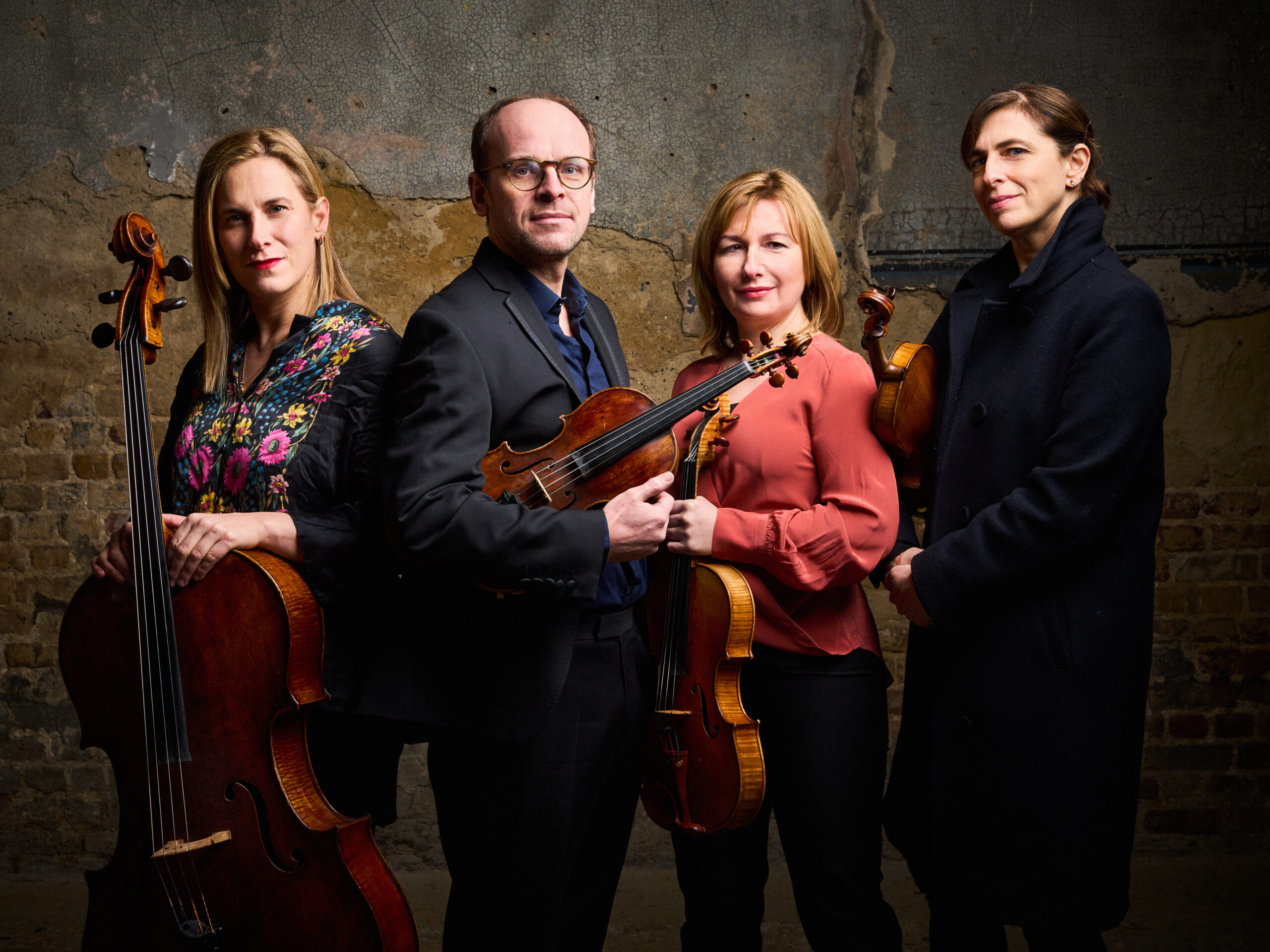
BACH CELLO SUITES

Ensemble 360

Emmanuel Church, Barnsley
Friday 23 February 2024, 7.30pm

Tickets 
£14.50
£10 UC, PIP & DLA
£5 Students & Under 35s

Past Event

Programme includes:

BACH Cello Suites No.1, No.3 & No.6

Ensemble 360’s cellist, Gemma Rosefield presents three of Bach’s well-loved and intimate works for unaccompanied cello. These Suites are some of the most frequently performed and recognisable solo compositions ever written for cello, and regularly feature in film and television soundtracks.

BACH Johann Sebastian, Cello Suites

Bach’s Cello Suites were probably composed in about 1720 during Bach’s time in Cöthen. It isn’t known for whom Bach wrote them, though there are at least two likely candidates working in Cöthen at the time: Christian Ferdinand Abel (1682–1761), a great friend of the composer for whom Bach wrote the three sonatas for viola da gamba and harpsichord (BWV 1027–9) and Carl Berhard Lienicke (d. 1751), the leading cellist of the Cöthen orchestra. Whether either of them was the player Bach had in mind is a matter of pure speculation since no documentary evidence has come to light. Equally uncertain is why Bach wrote them. The likeliest explanation is that they were intended – like much of his keyboard music – for private performance. Bach sets the tone of the First Suite with a Prelude made of undulating arpeggios. The Allemande meanders purposefully until it arrives at a strong final cadence in the home key. Downward leaps and rather playful decorations characterize the Courante. Using multiple stopping, the Sarabande is noble and understated. It is in two sections; the first ends on D (the dominant) and the second moves to E minor before returning to the tonic, G. The pair of graceful Minuets contrast major and minor and both are marked by flowing movement. The Gigue brings the suite to a joyful conclusion.


Nigel Simeone 2018

INTRODUCING THE BRIDGE ENSEMBLE

Bridge Ensemble

Emmanuel Church, Barnsley
Friday 19 April 2024, 7.30pm

Tickets 
£14.50
£10 UC, PIP & DLA
£5 Students and Under 35s

Past Event

VALERIE COLEMAN  Umoja (3′)
OTTO MORTENSEN Quintette (18’)
PAUL HINDEMITH Quintet (15′)
ARTURO MÁRQUEZ Danza de Mediodia (10′)
FLORENCE PRICE Adoration (4′)
VALERIE COLEMAN  Red Clay (6′)
ỌLÁ AKINDIPE  Èkó Scenes (10′)

Introducing the Bridge Ensemble, a wind quintet supported by Music in the Round, who champion music by marginalised composers from backgrounds under-represented in chamber music. Opening with Valerie Coleman’s joyous Kwanzaa dance ‘Umoja’ and concluding with a brand new Afrobeat inspired work by the group’s clarinettist Ọlá Akindipe, this is an inviting tour through unjustly overlooked works.

Please note a change in programme as originally advertised.

SOUNDS OF NOW: VOICE(LESS)

Rosie Middleton & Angharad Davies

Woolwich Works, London
Thursday 26 October 2023, 8.00pm

Tickets:

£12.50 Standard
£10.75 Student/ Under 18/ UC

Past Event

Exploring the sonic force of the human voice and how easily it can be silenced.

Please note, this concert includes themes of trauma and war.

Programme includes:

ESIN GUNDUZ – En-he-du-an-na-me-en (3′)
MIRA CALIX – code poem: any chance of war? (c.9′)
LAURA BOWLER – Cover Squirrel (c.15′)
Includes improvisations by Angharad Davies

(A woman sits alone in the room. She tries to speak. Her voice is gone.)

Mezzo-soprano Rosie Middleton and violinist Angharad Davies perform a sequence of works that explore the sonic force of the human voice and how easily it can be silenced.

Esin Gunduz examines power and resistance in music that transforms Rosie’s voice through electronic manipulation. Semaphore, morse code and other non-verbal communication inform Mira Calix’s anti-war musical poem. In Cover Squirrel by Laura Bowler, the human voice switches from operatic power to broken and unintelligible fragments. This provocative performance blends music and physical gesture by two captivating, exceptional performers.

Watch and listen to short clips of work from the performers and find out more about the Voice(less) project here:

This performance has no interval. There will be a post-show Q&A with the artists.

Thanks to the Hinrichsen Foundation for supporting Sounds of Now.

Time advertised is the start time, please check your ticket for door time.

SOUNDS OF NOW: LULLABY

Manasamitra

Woolwich Works, Woolwich
Thursday 5 October 2023, 8.00pm

Tickets:

£12.50 Standard
£10.75 Student/ Under 18/ UC

Past Event

DUE TO CIRCUMSTANCES BEYOND OUR CONTROL THIS CONCERT HAS BEEN POSTPONED. We are working with Woolwich Works to provide a new date as soon as possible and apologise for any inconvience.

SUPRIYA NAGARAJAN vocals
DUNCAN CHAPMAN field recordings & electronics
LUCY NOLAN harp

Lullaby is an entrancing evening of music in which the hypnotic purity of Indian music meets contemporary electronica and live instrumental improvisation.

Inspired by traditional Indian lullabies, this is an entrancing evening of music in which the hypnotic purity of Indian music meets contemporary electronica and live instrumental improvisation.

Timeless night-time sounds from around the world – chirping cicadas, the call of the night jar, the soft fall of rain – have been captured and located within the rhythmic pattern and soothing cadence of a lullaby to create an immersive experience that both soothes and stimulates. The space is yours to do as you please – sit, stand, lie down, slump into cushions and drift off, or remain alert and engaged throughout.

Devised by Supriya Nagarajan, a composer and southern Indian singer of the Carnatic tradition, who formed Manasamitra with musicians based in the north of England, including the electro-acoustic composer Duncan Chapman, the project also features a collection of sounds gathered in order to create a bespoke soundscape unique to Woolwich for this performance.

Please note: There won’t be a break during the performance, but there will be a discussion with the artists afterwards.

Find out more and join the conversation here.

Thanks to the Hinrichsen Foundation for supporting Sounds of Now.

Time advertised is the start time, please check your ticket for door time.

BEETHOVEN STRINGS & MORE

Ensemble 360

Junction, Goole
Saturday 23 March 2024, 7.00pm

Tickets:

£13

Past Event
String players of Ensemble 360

DUE TO CIRCUMSTANCES BEYOND OUR CONTROL, THERE HAS BEEN A CHANGE IN PROGRAMME

DVOŘÁK Miniatures (15′)
MOZART String duo No.1 in G, K423 (16′)
BEETHOVEN Trio in C Op. 87 (arr. string trio) (21′)
DVOŘÁK Terzetto for string trio (19′)
A concert full of surprising delights! Dvorak, Mozart and Beethoven are master composers, renowned for their profoundly powerful music. Tonight is a chance to experience their passionate music along with a different side to their characters, with lively music full of joyful melodies. A perfect way to welcome in the spring season.


DEBUSSY & MORE

Ensemble 360

Junction, Goole
Saturday 20 January 2024, 3.00pm

Tickets:

£13

Past Event

DEBUSSY Premiere Rhapsodie
YORK BOWEN Clarinet Sonata
HARRISON Drifting Away
WEBER Grand Duo Concertant Op.48


Praised by International Record Review as “an eloquent and impassioned clarinettist [whose] playing is full-blooded and committed”Robert Plane, one of the newer members of Ensemble 360, has been a remarkable addition to this highly regarded group.

Debussy’s impressionistic Premiere Rhapsodie, performed by Rob and pianist Tim Horton, moves from a dreamy opening to a virtuosic conclusion. The pair will also perform Drifting Away, the work of Pamela Harrison, an often overlooked English composer who Rob has done much to champion.

The concert concludes with Weber’s celebrated duo marked by soaring melodies and dazzling cadenzas.

DEBUSSY Claude, Première Rapsodie for Clarinet and Piano

The test pieces specially composed for the final exams at the Paris Conservatoire have something of a bad reputation. Many of them are routine competition showpieces but sometimes a work of much more lasting importance was written for these occasions. Such is the case with Debussy’s Première Rapsodie, completed in January 1910 for the clarinet concours at the Conservatoire that summer (Debussy also dashed off a sight-reading test for the same competition, published as his Petite pièce for clarinet and piano). Debussy himself was a member of the jury and he found most of the players unsatisfactory in the Rapsodie. However, the eventual winner, Vandercruyssen, impressed him. Debussy wrote to his friend and publisher Jacques Durand that Vandercruyssen ‘played by heart, and like a great musician’. A year later, Debussy prepared the better-known version of the piece for clarinet and orchestra, but the original with piano is superbly written for both instruments. The clarinettist David Pino has claimed, with justification, that the Première rapsodie was ‘the first major work for solo clarinet written in the twentieth century’.

It opens in a mood of stillness (marked ‘Rêveusement lent’ – ‘dreamily slow’), with the piano adding gentle momentum in the accompaniment after a few bars, and the clarinet – instructed to play pianissimo but also ‘sweetly’ and ‘penetrating’ – introducing a languorous theme that gradually becomes more animated. A sudden speeding up introduces a more capricious idea that is briefly stopped in its tracks by a series of trills and a return to earlier music. But the faster speed soon returns, starting with rumbling low notes on the piano and a series of upward flourishes on the clarinet. This gives way to a new section marked ‘Modérément animé (‘Moderately animated) and ‘playful’, a passage that quite brilliantly exploits the possibilities of the clarinet, especially its ability to play rapid figurations and lyrical lines. A return to the slower music gives way, finally, to a thrilling conclusion.

What makes this such an outstanding work is that Debussy combines extremely idiomatic writing – appropriate for a piece that was intended to demonstrate a player’s technical command – with musical ideas that have memorable substance. On 16 January 1911 the clarinettist Paul Mimart (to whom the work was dedicated) gave the first performance in a concert, at the Salle Gaveau in Paris, in one of the concerts promoted by the Société musicale indépendante. According to Debussy’s biographer Léon Valas, another performance took place at the end of 1911 in Russia, and it was greeted by the audience with confusion. A baffled Debussy wrote to a friend: ‘Surely this piece is one of the most immediately pleasing I have ever written!’

© Nigel Simeone

YORK BOWEN Edwin, Clarinet Sonata in F minor, Op.109

Allegro moderato 
Allegretto poco scherzando 
Finale. Allegro molto 
 

York Bowen was a virtuoso pianist (in 1925 he made the first ever recording of Beethoven’s Fourth Piano Concerto) and had a parallel career as a prolific composer whose output included instrumental works written for many distinguished soloists, among them violinist Fritz Kreisler, oboist Léon Goossens, violist Lionel Tertis and horn player Denis Brain. When York Bowen heard the clarinettist Pauline Juler give the first performance of Gerald Finzi’s Five Bagatelles at one of the National Gallery Concerts in January 1943, he was immediately inspired to compose a work for her. The result was the Clarinet Sonata in F minor, given its premiere by Juler and the composer later that year. 


Starting with a wide-ranging theme for the clarinet (extending over two and a half octaves), this vibrant, lyrical work explores the technical possibilities of the clarinet with consummate skill. The second theme is closely related to the first, and the movement ends with a coda based on the work’s opening. The Scherzetto is a capricious counterpart to the first movement and elements of it are also heard at the start of the finale, marked Allegro molto. This is a rondo in which music from the opening movement is also recalled before an imposing coda brings this remarkable post-romantic sonata to a powerful close.  


© Nigel Simeone 

HARRISON Pamela, Drifting Away (for clarinet and piano)

Pamela Harrison studied at the Royal College of Music with Gordon Jacob (composition) and Arthur Benjamin (piano), and she composed several important works during the Second World War, including a String Quartet first performed in 1941 at the National Gallery Concerts. She wrote several important works for clarinet, inspired in part by a warm friendship with Jack Brymer for whom she composed a rugged and dramatic Clarinet Sonata in 1953, following this with a Clarinet Quintet in 1956. Drifting Away dates from two decades later: it was first performed by Brymer in 1975 at Sherbourne School. The title was derived from lines by W.B. Yeats: 

 
I heard the old, old men say 
All that’s beautiful drifts away 
Like the waters. 


Appropriately enough, this tender and evocative work, exquisitely crafted, was played by Brymer at the memorial service for Pamela Harrison in 1990.  


© Nigel Simeone 

WEBER Carl Maria Von, Grand Duo Concertant in E flat Op.48

Allegro con fuoco 
Andante con moto 
Rondo. Allegro 
 

Weber’s own diaries contain a wealth of information about when he composed this work. The first movement to be written was the Rondo finale, completed in Munich on 5 July 1815 and a note from a few days later mentions sketches “for the sonata with clarinet and piano”. By 19 July Weber had also written the slow movement, describing it as an “Adagio”. It wasn’t for another year that he turned his attention to the first movement – noting in Berlin on 5 November that the “First movement of the Duo in E flat was written down”, and finally on 8 November “Allegro in E flat for the Clarinet and Piano Duo finished.” The work was published by Schlesinger in Berlin six months later, Weber noting that he received printed copies on 19 June 1817.  


What is remarkable about this work, given its rather fragmented composition history, is that the finished piece has such concentration and coherence. An early review in the Allgemeine Musik-Zeitung was full of praise: “The whole piece has an original and fiery spirit as well as tender heartfelt feelings; a thorough development of ideas comes without any pedantry … The harmonic and melodic aspects of each movement are beautifully balanced against each other and both instruments are treated with a perfect knowledge of what each can do.” 


The ebullient and virtuoso writing for the two instruments in is one of the glories of the Grand Duo. It was conceived as a real partnership for clarinet and piano, with neither part dominating the proceedings. The results are very rich melodically but also extremely successful in terms of Weber’s handling of large-scale forms. Though the work was called Grand Duo concertant when it was published, it’s interesting to note from Weber’s diaries that he referred to this substantial three-movement work at least once as a “Sonata”. 


© Nigel Simeone  

MOZART, SCHUMANN & MORE

Ensemble 360

Junction, Goole
Thursday 16 November 2023, 7.00pm

Tickets:

£13

Past Event

BRUCH Selection from 8 Pieces (c.20′)
SCHUMANN Fantasy Pieces Op.73 (11′)
CLARKE Prelude, Allegro and Pastorale (14′)
MOZART Kegelstatt Trio (20′)

Pianist Tim Horton is joined by two more recent additions to Ensemble 360, the world-class Rachel Roberts on viola and Robert Plane on clarinet.

A selection of Bruch’s elegiac, lush fragments open the concert and a selection of playful and romantic ‘fantasy pieces’ follow.

Schumann’s three short pieces pair cello and piano in perfect balance, as they range across wildly contrasting fantastical melodies, moving from a dreamy opening plunging into a fiery finale. Mozart’s innovative Kegelstatt Trio concludes this perfect introduction to these fabulous musicians.

BRUCH Max, Eight Pieces Op.83 for clarinet, viola and piano (extracts)

Bruch composed these pieces in 1908 for his son, Max Felix, who was a clarinettist. Three of the pieces were originally written with an additional harp part, but by the time the work was published in 1910, Bruch had settled on a trio of clarinet, viola and piano. Discussing publication with Simrock in February 1910, Bruch wrote that the pieces had been ‘met with great approval where they were played from the manuscript’ and it’s easy to see why. Bruch always intended separate performances of individual pieces (indeed, he advised against playing all of them together), and selections can be used to make an effective suite.

© Nigel Simeone

SCHUMANN Robert, Fantasy Pieces Op.73

Zart und mit Ausdruck [Tender, with expression] 
Lebhaft, leicht [Lively, light] 
Rasch und mit Feuer [Quick and passionate] 


Schumann’s three Fantasy Pieces Op.73 were sketched very quickly – in just two days on 11 and 12 February 1849 – and he wrote them to enchant: on the original manuscript, Schumann calls them “Soirée Pieces” (Soiréestücke). He was eager to hear them tried out: on 18 February, less than a week after finishing the work, a rehearsal was held chez Schumann in Dresden. Clara played the piano and was joined by the clarinetist Kroth from the Court Orchestra. Though intended for clarinet, the pieces were published six months later in alternative versions for violin and cello, and later in arrangements for other instruments – including flute, oboe, viola and double bass. Schumann was fascinated at the time by the possibilities of combining different solo instruments with piano, and worked with extraordinary speed during February 1849: the day after finishing the Fantasy Pieces he started the Adagio and Allegro for horn. As Clara herself put it, “all the instruments are having a turn” – and the very same day that the Fantasy Pieces had their first run-through, Schumann began one of his most astonishing instrumental experiments: the Konzertstück for four horns and orchestra.  


The three Fantasy Pieces were intended to appeal to professional players and to talented amateurs. Far from composing showpieces for the clarinet, Schumann uses a musical language that has a feeling of intimacy and tenderness, recalling the style and sound world of some of his most expressive solo piano pieces. One later performance deserves a special mention: a private concert in Rüdesheim in which Brahms and the great clarinetist Richard Mühlfeld played both of Brahms’s late Clarinet Sonatas, ending their recital with Schumann’s Fantasy Pieces. Heinz von Beckerath later recalled that though it took a little while for him to appreciate Brahms’s masterpieces, “the Schumann pieces were delightful”. 


Nigel Simeone © 2012 

CLARKE Rebecca, Prelude, Allegro and Pastorale

After studies at the Royal College of Music (where her teachers included Stanford for composition and Lionel Tertis for the viola), Rebecca Clarke began her career as a viola player in Sir Henry Wood’s Queen’s Hall Orchestra, one of London’s first female professional orchestral players. After moving to the United States, Clarke completed her best-known work, the Sonata for Viola and Piano, in 1919. It tied for first place (with a piece by Ernest Bloch) in a composition prize offered by Elizabeth Sprague Coolidge and Clarke followed this with a Piano Trio in 1921. Coolidge commissioned Clarke’s Rhapsody for Cello and Piano in 1923. After returning to London in 1924, Clarke became a busy chamber music performer with less time to devote to composition. When war broke out in 1939, Clarke was in the United States visiting her brothers, one of whom was Hans Clarke, a distinguished biochemist. With the war at its height, she could not return to Britain and in the end she settled in New York. There, by chance, she met James Friskin, a pianist and composer she had known in their student days. They married in 1944 and Clarke stopped composing.

The Prelude, Allegro and Pastorale is one of her last works, written in 1941. It was dedicated to Clarke’s brother Hans and his wife Fietzchen. In an interview in 1978, Rebecca Clarke described the Prelude, Allegro and Pastorale as ‘very simple’ and admitted that she didn’t offer it to any publishers: it ‘came at a time when I was just not bothering about showing things to publishers.’ This was partly due to modesty, but it also reveals something of the obstacles Clarke had to overcome in order to achieve the recognition she deserved (it was eventually published in 2000). Writing for clarinet and viola without piano accompaniment was clearly a challenge Clarke relished and the ingenuity of the dialogue between the two instruments is testimony to her inventiveness and skill. The work is in three sections: the quiet sobriety of Prelude (marked Andante semplice) leads to an angular Allegro vigoroso followed by a rather melancholy Pastorale, marked Poco lento. The quality of the musical ideas here reveals a composer of real character whose career had been blighted by discouragement and depressive illness.

© Nigel Simone 2018

MOZART Amadeus, Trio in E flat K498 Kegelstatt

Andante
Menuetto
Rondo. Allegretto

This is Mozart’s only trio for his three favourite instruments: clarinet, viola and piano. The nickname ‘Kegelstatt’ means ‘skittle alley’, and legend has it that Mozart wrote the work during a game of skittles. This may be far-fetched, especially given the rather noble character of the music, but what is certain is that he wrote the trio in Vienna, and entered it in his own thematic catalogue on 5 August 1786. The first movement is a marvellous example of Mozart’s invention at its most concentrated and unforced: every element in this sonata-form movement derives from the ornamental turn that is such a distinctive feature of the opening. The Minuet surprises by its almost grand character – no mere courtly dance, but something more imposing – and this is followed by an unhurried Rondo that brings this radiant work to a lyrical conclusion.

© Nigel Simeone

BACH CELLO SUITES

Ensemble 360

Junction, Goole
Saturday 28 October 2023, 3.00pm

Tickets:
£13

Past Event

JS BACH Cello Suite No.1
JS BACH Cello Suite No.3
JS BACH Cello Suite No.6 

Ensemble 360’s celebrated cellist Gemma Rosefield brings a selection of Bach’s beloved Cello Suites to Goole.  

Well-loved and intimate, these Suites are some of the most frequently performed and recognisable solo compositions ever written for unaccompanied cello, and regularly feature in film and television soundtracks.

BACH Johann Sebastian, Cello Suites 5 & 6

Cello Suite No.5 in C minor, BWV 1011 

Prelude 
Allemande 
Courante 
Sarabande 
Gavotte I / II 
Gigue 


Cello Suite No.6 in D, BWV 1012 

Prelude 
Allemande 
Courante 
Sarabande 
Gavotte I / II 
Gigue 


Bach’s Cello Suites were probably composed in about 1720 during Bach’s time in Cöthen. It isn’t known for whom Bach wrote them, though there are at least two likely candidates working in Cöthen at the time: Christian Ferdinand Abel (1682–1761), a great friend of the composer for whom Bach wrote the three sonatas for viola da gamba and harpsichord (BWV 1027–9), and Carl Berhard Lienicke (d. 1751), the leading cellist of the Cöthen orchestra. Whether either of them was the player Bach had in mind is a matter of pure speculation since no documentary evidence has come to light. Equally uncertain is why Bach wrote them. The likeliest explanation is that they were intended – like much of his keyboard music – for private performance. 

© Nigel Simeone  

CLOSE UP: MUSIC FOR CURIOUS YOUNG MINDS

Ensemble 360

The Guildhall, Portsmouth
Monday 22 April 2024, 1.30pm

For tickets, please email hayley.reay@portsmouthguildhall.org.uk


A tour through the wondrous world of chamber music, specially created for young audiences, combining well-known classical favourites with new works from surprising places. This concert for 7-11 year-olds includes thrilling musical adventures told through music, cheeky characters and epic heroes, mind-blowing musical games, and the chance to join in and make music together.   

Ideal for 7-11 year olds.

SCHUBERT String Quartet in D Minor (excerpt for ‘Close Up’)

Hey Presto! We begin with a twitchy chase from Franz Schubert, which he told the string players should be played ‘presto’ meaning ‘very quick or very fast’. How does the sound change when each musician plays on their own? How do you feel when they all play the same tune together? This tense piece kicks off an exciting hour of music…

HAYDN Russian Quartet No.3 (excerpt for ‘Close Up’)

Haydn was the composer who did most to first create a form of music for two violins, a viola and a cello: a group we know as a string quartet. This piece has the nickname ‘The Bird’ — can you hear why?

MOZART String Quartet In E Flat K428 (excerpt for ‘Close Up’)

This beautiful tune is almost like a lullaby and shows how gentle the sound of the strings can be. Listen to the way the first violin plays a tune and the other three instruments rock gently back and forth underneath, creating a warm blanket of sound. This is music to wrap up warm within. How does it make you feel?

WEIR String Quartet (excerpt for ‘Close Up’)

This string quartet was written by a composer who is making music today, the wonderful Judith Weir. A piece full of mysteries, inspired by a medieval Spanish tune. This quartet sounds like a strange landscape where it’s easy to get lost among these lopsided rhythms where nothing is quite as it seems…

SUK Josef, Meditation on an Old Czech Chorale (excerpt for ‘Close Up’)

This piece was written at the start of the first world war and is full of the drama and sadness of a scary time. But it ends full of hope with long notes seeming to climb into the air. Look and listen out for all the times the musicians play across the strings to make two or more notes sound at once — a technique called double stopping.

MEREDITH Anna, Short Tribute to Teenage Fanclub (excerpt for ‘Close Up’)

Anna Meredith is another musician writing music today. She makes music for her band as well as for classical musicians, often mixing up instruments usually seen in an orchestra with rock and pop instruments. This piece combines the two and is a tribute to one of her favourite bands performed by string quartet who don’t use their bows at all but pluck their instruments in a technique called ‘pizzicato’.

BEETHOVEN ‘The Harp’ Quartet (excerpt for ‘Close Up’)

This beautiful quartet is known as ‘the harp’ because in the first part, all four musicians have sections where they pluck the strings their instruments rather than using the bow. Can you hear the difference?

BURLEIGH Henry Thacker, Oh Lord, What A Morning (excerpt for ‘Close Up’)

This is a traditional song created by enslaved Africans in America. The composer and singer Harry Burleigh was the grandchild of slaves who became a famous musician and helped share music by black people with the rest of the world. This simple song looks forward to a better time when injustices like slavery and racism will end. Perhaps you can hear both the sadness and the hope in this beautiful music.

STRAVINSKY Igor, Three Pieces for String Quartet (excerpt for ‘Close Up’)

This spiky, short piece of music was created in Russia at the same time Suk wrote the piece we heard earlier. Stravinsky uses the plucking technique we heard in the Meredith and Beethoven, as well clashing notes and unexpected changes in pulse and speed. Stravinsky keeps us guessing what he’ll do next!

DVOŘÁK ‘American’ String Quartet (excerpt for ‘Close Up’)

This piece brings our concert to a celebratory end, from Czech composer Anton Dvořák. Listen out for all the places it gets louder, or faster — or both! — or where the quartet hang back to build tension. This piece uses folk tunes from Czechoslovakia, where Dvořák was born and started writing, and includes a native American tune, and music from all the people like him who had travelled to live and work in the USA. Bringing these together, our concert ends with an explosion of joy!

SOUNDS OF NOW: LULLABY

Manasamitra

The Guildhall Lens Studio, Portsmouth
Wednesday 1 May 2024, 7.30pm

Tickets:
£8 – £10

Past Event

SUPRIYA NAGARAJAN vocals
DUNCAN CHAPMAN field recordings & electronics
LUCY NOLAN harp

Lullaby is an entrancing evening of music in which the hypnotic purity of Indian music meets contemporary electronica and live instrumental improvisation.

Inspired by traditional Indian lullabies, this is an entrancing evening of music in which the hypnotic purity of Indian music meets contemporary electronica and live instrumental improvisation.

Timeless night-time sounds from around the world – chirping cicadas, the call of the night jar, the soft fall of rain – have been captured and located within the rhythmic pattern and soothing cadence of a lullaby to create an immersive experience that both soothes and stimulates. The space is yours to do as you please – sit, stand, lie down, slump into cushions and drift off, or remain alert and engaged throughout.

Devised by Supriya Nagarajan, a composer and southern Indian singer of the Carnatic tradition, who formed Manasamitra with musicians based in the north of England, including the electro-acoustic composer Duncan Chapman, the project also features a collection of sounds gathered in order to create a bespoke soundscape unique to Portsmouth for this performance.

Find out more and join the conversation here.

Thanks to funding from the Hinrichsen Foundation.

ROMANTIC PIANO TRIOS

Leonore Piano Trio

Emmanuel Church, Barnsley
Friday 17 November 2023, 7.30pm

Tickets:
£14.50
£10 UC, PIP & DLA
£5 Students & Under 35s

Past Event

HAYDN Piano Trio in B flat Hob. XV:20 (16’)
DVOŘÁK Piano Trio in G minor Op.26 (35’)
SMETANA Piano Trio in G minor (30’) 

The Leonore Piano Trio brings their series of Romantic trios to Barnsley – featuring music full of high drama and intense passion and contrasting with the intimate simplicity of work by Haydn.  

Dvořák and Smetana are two of Bohemia’s greatest composers, and their trios in this concert explore an incredible range of emotions, with both ending in a blazing glory of light and optimism. 

HAYDN Joseph, Piano Trio in B flat Hob. XV:20

Allegro 
Andante cantabile 
Finale. Allegro 
 

Haydn wrote piano trios throughout his career, but many of them dated from later in his life. The B flat Piano Trio was completed in 1794 during Haydn’s second stay in London, one of a set of three first published in the same year by the London firm of Longman and Broderip with a dedication to Princess Maria Therese of Esterhazy. The first movement (Allegro) is full of typically Haydnesque verve, some unusual sonorities and numerous delightful touches. In the slow movement (Andante cantabile), the theme is presented in the piano left hand before Haydn embarks on a series of delicate and subtle variations, each instrument contributing the colours and contrasts of each iteration of the theme before coming to rather an abrupt end. The finale (Allegro) is an amiable delight, recalling the style and the expressive range of the finales of Haydn’s mature string quartets, moving from quiet charm to moments of pathos and back again, to bring the work to an affirmative close.  


© Nigel Simeone 

DVOŘÁK Antonín, Piano Trio in G minor Op.26

Allegro moderato
Largo
Scherzo. Presto – Trio. Poco meno mosso – Presto da capo
Allegro non tanto

Dvořák composed this Piano Trio in January 1876 at a time of great personal sadness: his daughter Josefa had died in infancy a few months earlier and the composer embarked on three works: this trio, the String Quartet in E major, and the Stabat mater, each of which can be considered a kind of memorial to Josefa. It was first performed on 29 June 1879 with Dvořák himself at the piano at a concert in the Bohemian town of Turnov. The mood of the trio is predominantly melancholic and tender, with a strong aura of nostalgia, but there is a clear national identity too.

A review in the Athenaeum following the first London performance in May 1880 expressed some reservations about Dvořák’s handling of form in the first movement, but praised ‘a succession of charmingly fresh and piquant ideas, more or less suggestive of the nationality of the composer. Some of the themes are so unmistakably Slavonic in character that Dvořák may possibly have culled them from the stores of folksongs ready to be utilized with effect in instrumental composition. Whether this be so or not, the entire trio, and especially the two middle movements, pleases on account of its thematic beauty and easy, unstudied expression.’

© Nigel Simeone

SMETANA Bedrich, Piano Trio in G minor

Moderato assai
Allegro, ma non agitato
Finale. Presto

Smetana noted down the tragic circumstances in which he composed the Piano Trio in his catalogue of works. He described it as ‘written in memory of my first child, Bedřiška, who enchanted us with her extraordinary musical talent, and yet was snatched away from us by death, aged four-and-a-half years.’ The grieving Smetana wrote this work – his only piano trio – between September and November 1855, and it was first performed in Prague on 3 December with the composer at the piano. Given that the work was written as a memorial, the surprise is that this trio contains no slow movement – and it’s certainly possible (as musicologist Basil Smallman suggested) that Smetana had to modify an earlier scheme that included one owing to pressure of time.

Two features of this trio are noteworthy: one is the powerful motto theme first heard at the very start – an idea that unifies much of what follows – and the other is Smetana’s use of popular Czech dance forms: the second movement is a Polka and the finale is based on the Skočná, a rapid jig-like dance. The reviews of the first performance included some negative comments about the work’s rhapsodic structure, and its use of folk elements that deviated from the abstract ‘purity’ expected in chamber music at the time. Smetana was understandably upset by this, but he was greatly heartened by the positive reaction to the work by a revered colleague: Franz Liszt.

© Nigel Simeone

SIR SCALLYWAG & THE GOLDEN UNDERPANTS

Ensemble 360 & Alice Beckwith

Stoller Hall, Manchester
Saturday 23 September 2023, 11.00am / 1.00pm

Tickets from £7.50

Past Event

Part of Manchester Medieval Quarter Festival 2023.

When King Colin’s golden underpants go missing, it’s Sir Scallywag to the rescue! Brave and bold, courageous and true, he’s the perfect knight for the job… even if he is only six years old!  

Original music by our children’s Composer-in-Residence, Paul Rissmann, features instruments including strings, woodwind, and horn, presented together with story-telling and projected illustrations from the best-selling children’s book by Giles Andreae and Korky Paul.   

Performed by the wonderfully dynamic and hugely engaging Ensemble 360 and Alice Beckwith, this concert is a great introduction to live music for children. It’s full of wit, invention, songs and actions, and plenty of opportunities to join in.  

For 3 – 7 year-olds and their families.