PLAYING PATTERNS: PERCUSSION & STRINGS

Colin Currie & Ensemble 360

Upper Chapel, Sheffield
Saturday 14 February 2026, 7.00pm

Tickets:
£23
£14 UC, PIP & DLA
£5 Students & Under 35s 
Past Event
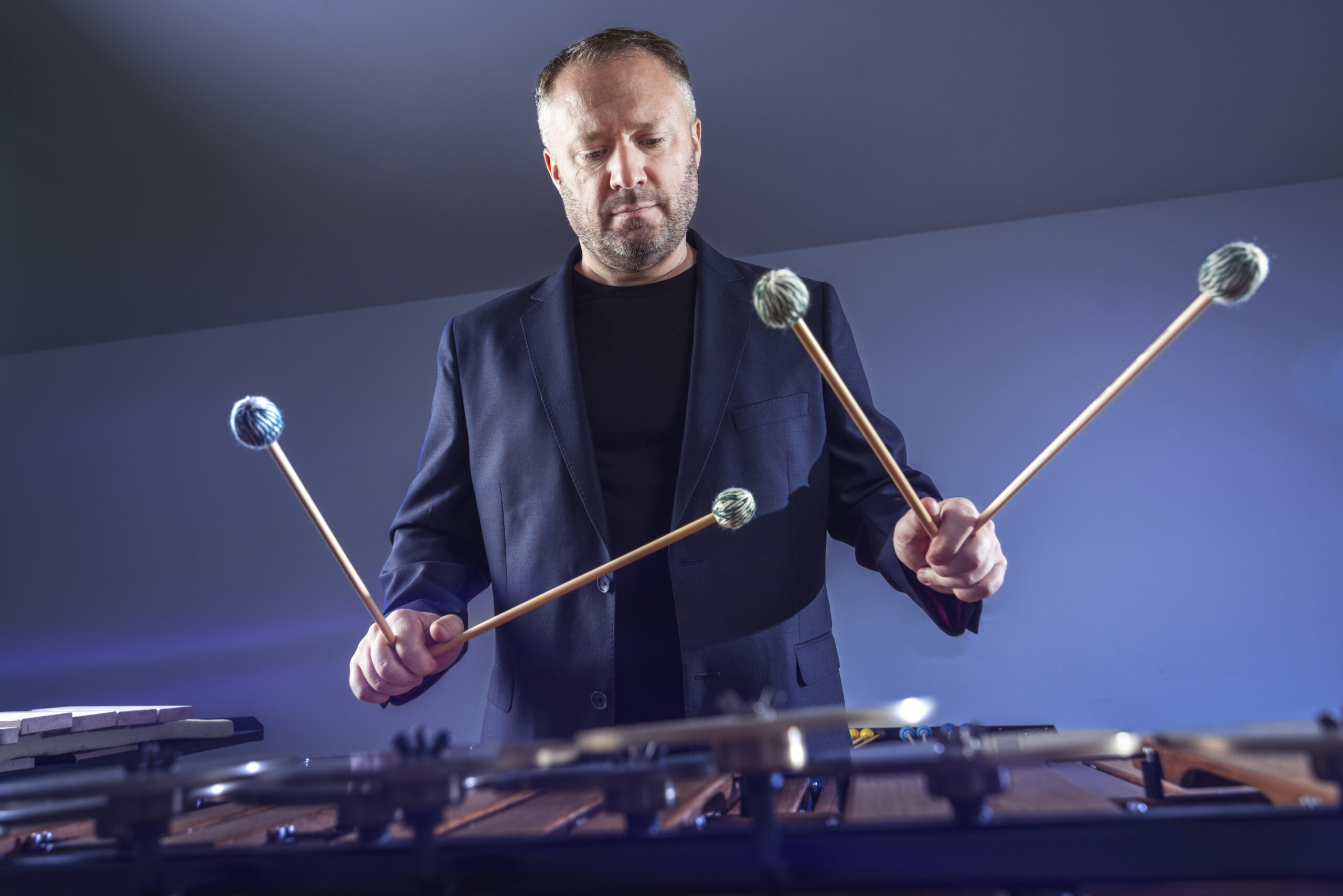
Colin Currie playing percussion

KEVIN VOLANS Asanga (7’)
DAVID HORNE Pulse (12’)
ANDY AKIHO Spiel (7’)
BRYCE DESSNER Tromp Miniature (7’)
ROLF WALLIN Realismos Magicos (10’)
ANDY AKIHO Aluminous (8’)
ROBERT HONSTEIN Continuous Interior (18’)
SAM ADAMS Sundial (16’) 

Virtuoso percussionist Colin Currie, described by Steve Reich as “one of the greatest musicians in the world today” and by Gramophone as “at the summit of percussion performance”, is joined by members of Ensemble 360 for this concert of life-affirming music for percussion and string quartet. Highlights include ‘Tromp Miniature’, a hypnotic, meditative marimba solo by GRAMMY-winning composer Bryce Dessner (also guitarist with rock band, The National), and Andy Akiho’s ‘Aluminous’, in which minimalist percussion loops are underscored by ravishingly expressive strings.  

Part of our Percussion, Pattern & Primes weekend. 

Save 20% when you book for 10 or more Music in the Round Sheffield concerts in one transaction. 
Save 10% when you book for 5 or more Music in the Round Sheffield concerts in one transaction. Find out more. 

VOLANS Kevin, Asanga

The Sanskrit title Asanga means ‘freedom from attachment’ I wrote the piece as a gift for Robyn Schulkowsky on the death of her father. It was written with no conscious techniques or concept. The first performance was in Stockholm in 1998.

© Kevin Volans

HONSTEIN Robert, Continuous Interior

Imagine walking through a shopping mall, a large warehouse, an airport terminal, Ikea. These are spaces with seemingly no end or beginning. They unfold in one unbroken path, creating a sense of limitless interior within a bounded, enclosed space. As you walk details change, but the feeling of being within the same, vast, open space remains. This is a very modern feeling. In thinking about this, I felt resonance with the idea of moving through a musical space. I often experience music similarly: contained by the form, yet also a sense of being within one stretch of a long, continuous stream of musical thought. For my piece, Continuous Interior, I imagined a stroll through this kind of limitless space, with each movement being a stop along the way. On this walk we experience three distinct places. The first movement draws out waves of rocking strings against a ringing vibraphone texture. Long lines emerge as echoes of accented  ibraphone tones float plaintively above the undulating string texture. The second movement is slow and lyrical, somewhat wistful yet also mysterious and dreamy. The final movement pushes forward with a churning, dance-like energy, reveling in the vibraphone sound against the clock-like, mechanical pulsation of the string quartet. The piece ends, certainly, but perhaps it could also go on and on.

© Robert Honstein

ADAMS Samuel, Sundial

Sundial, scored for string quartet and percussion, engages with the tradition of works for string quartet ‘plus one’—works like W.A. Mozart’s Clarinet Quintet, Franz Schubert’s Cello Quintet D956, not to mention the numerous piano quintets.

Like much of my recent music, this work explores ideas of resonance and brightness. I treat the five voices a little bit like a sustain pedal on a piano. In many passages, the strings elongate the percussion sounds and vice versa, so much so that the instruments on stage might sound like one polyphonic organism arranged not in a hierarchy but in a symbiotic web in which the roles of the instruments are balanced and consistently in flux.

The form possesses a shape similar to its namesake: the five musicians project a series of musical shadows that, unbroken, reveal the passage of time in the shape of an inverted arc. The work is made of two distinct types of music: rocking music—fast, pulsing dual harmonies that sway back and forth—and cyclic music—slightly off-kilter contrapuntal figurations that blossom over long stretches of time. Only in the final minutes of the work does the music break out of these two types of material, ascending to a ringing, intensely bright conclusion.

Although the piece is not explicitly autobiographical, I wrote it during a period that saw a number of immense personal changes, not the least of which was the birth of my first child. The almost blinding joy of having him around has been a counterbalance to the bizarre, shadowy last two years. To me, this duality is the essence of the piece: it is at once a rippling shadow and a meridian sun.

© Samuel Adams

“A five-star percussive performance… Almost as much drama and tension came from seeing what was happening on stage as from the sounds. ”

The Times

FRACTALS AND FUGUES: MATHEMATICS IN MUSIC

Prof Sarah Hart

Channing Hall, Sheffield
Saturday 14 February 2026, 2.00pm

Tickets:
£5 / free for ticket-holders for any of the Percussion, Pattern & Primes concerts, though booking is required

Past Event

What role do magic squares, fractals and probability theory play in music composition? How does pattern underpin a Bach fugue? And why is the mathematics of Pythagoras key to understanding music’s emotional power? Professor Sarah Hart, Professor Emerita of Mathematics at Birkbeck, University of London, and Gresham Professor of Geometry, answers these questions and more as she explores the connections between music and mathematics. Author of ‘Once Upon a Prime’, she is sure to shine an entertaining light onto the intriguing links between numbers and notes. 

Part of our Percussion, Pattern & Primes weekend. 

RELAXED CONCERT: PETER AND THE WOLF

Claire Booth, Ensemble 360 & Nicholas Jubber

Crucible Playhouse, Sheffield
Wednesday 20 May 2026, 2.00pm

Tickets:
£5 / carers free

Past Event
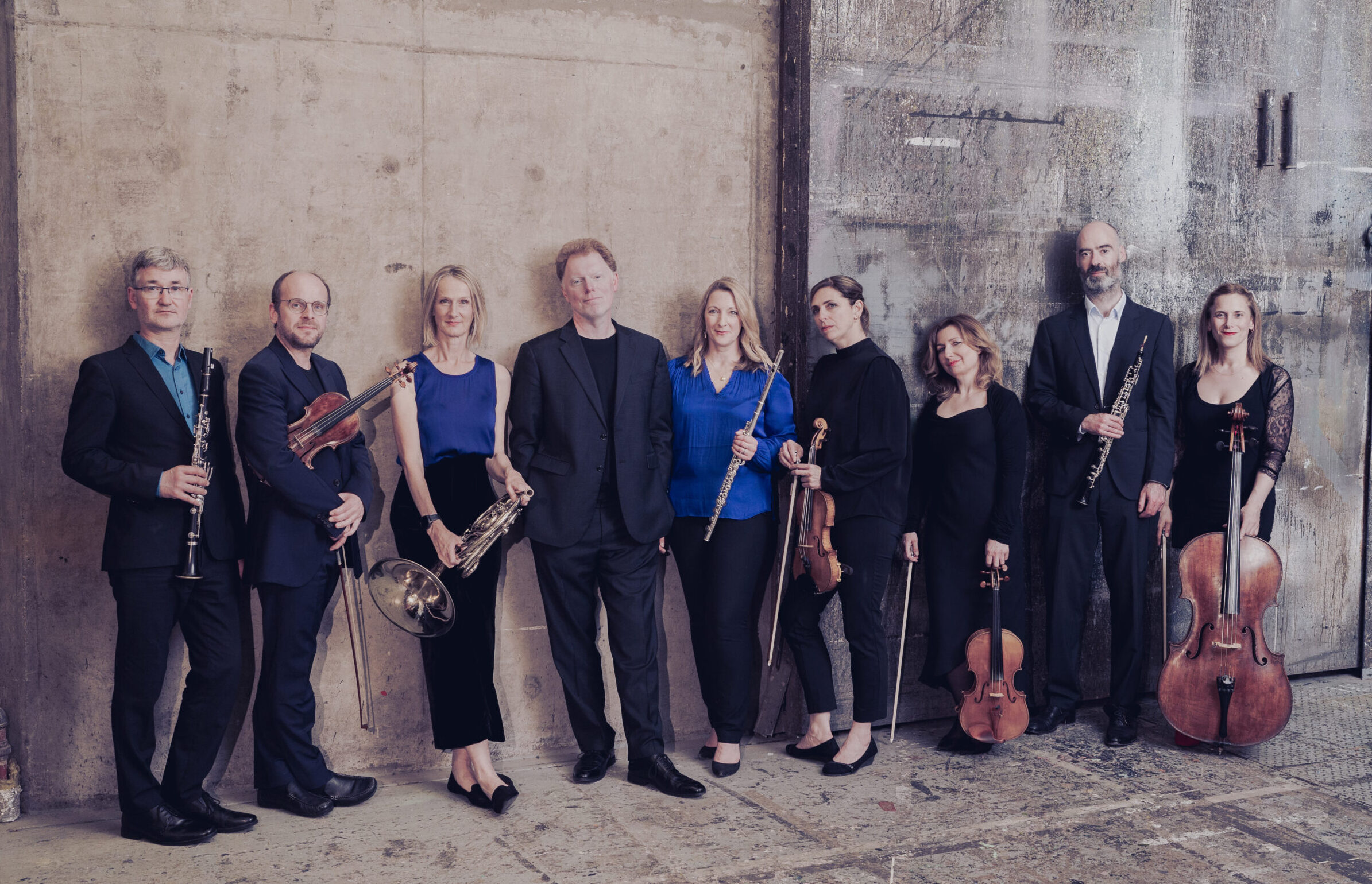
Ensemble 360 musicians

RAVEL (arr. Strivens) Shéhérazade (20’)  
PROKOFIEV Peter and the Wolf (30)  
 
For this ‘Relaxed’ concert of storytelling music featuring Prokofiev’s beloved musical folk story, doors will be left open, lights raised, a break-out space provided, and there will be less emphasis on the audience being quiet during the performance.  
 
People with an Autism Spectrum, sensory or communication disorder or learning disability, those with age-related impairments and parents/carers with babies are all especially welcome.

Find out more about what to expect with our Relaxed Performance information pack.

Download

RAVEL Maurice, Shéhérazade

Asie (Asia)
La flûte enchantée (The enchanted flute)
L’indifférent (The indifferent one)

In 1903 Ravel suffered two major traumas: his String Quartet was rejected for the composition prize at the Paris Conservatoire (leading to his expulsion) and he failed in his fourth attempt to win the Prix de Rome. Both experiences must have reinforced his sense of rebellion against academic discipline and inspired him to write a work that he later described as the one that best captured “the freshness of youth”.

Tristan Klingsor was the pseudonym of the poet, musician and artist Arthur Justin Léon Leclère (1874–1966), whom Ravel met in the company of a group of self-styled artistic outcasts, the ‘Apaches’ (Parisian slang for underworld hooligans). Klingsor had just published a collection of 100 ‘orientalist’ poems under the title Shéhérazade. Imagined visions of ‘the East’ was a topic that had fascinated the French ever since Napoleon’s incursion into Egypt, inspiring (among other things) paintings by Delacroix as well as exhibits in the Paris Exposition of 1889. Like much orientalist work of previous centuries, these poems reflect the tendency of a European ‘lens’ to construct and represent Eastern societies as static, exotic, and fundamentally different, thereby justifying colonial domination and the cultural superiority of Europe.

Ravel was attracted to the supposed exoticism as well as the free-verse structure of Klingsor’s poems, and chose to set three of them. The lines are set syllable by syllable, almost in recitative style; the influence of Debussy’s opera Pelléas et Mélisande, first heard the previous year, is evident.

The poems that make up Shéhérazade can make for uncomfortable reading today. Asie (Asia) attempts to be a sweeping tour of the continent, supported by flowing themes on the oboe and clarinets; the result is a vivid and kaleidoscopic tone-painting. La flûte enchantée (The enchanted flute) imagines the passionate thoughts of an enslaved girl, waiting by her sleeping master while she hears her lover playing the flute outside the window. L’indifférent (The indifferent one) is a sensuous song about an unattainable object of physical attraction, and dedicated to Emma Bardac (who had recently begun an affair with Debussy).  They are nonetheless beautiful and thrilling songs, which reflect the social mores of the world in which they were written.

Originally written for soprano and orchestra, this arrangement for piano and wind quintet was written by horn player George Strivens and premiered at the Wigmore Hall in 2023. 

Programme note Thomas Radice with Music in the Round.

PROKOFIEV Sergei, Peter and the Wolf

In 1936 Prokofiev was asked by Natalya Sats, Director of the Moscow Children’s Theatre, to write a piece that would introduce children to the instruments of the orchestra. The Prokofiev scholar Simon Morrison describes the creative process in detail: a poetic text was rejected by the composer who devised his own, in consultation with Sats, calling it How Pioneer Peter Caught the Wolf – a tale of a brave Soviet boy scout defying the orders of his grandfather to rescue the bird from the cat, and to see the wolf brought to justice.  

He wrote the music very quickly, in less than a week, and tried it out on the piano with a group of schoolchildren, who were delighted – as they were by the full instrumental version when it was subsequently performed at the Moscow Children’s Theatre. However, the official premiere for adults on 2 May 1936 was, according to Morrison, ‘lacklustre’. Prokofiev’s detailed instructions, written while he was working on the piece, explain what he set out to achieve:  

Each character of this tale is represented by a corresponding instrument in the orchestra: the bird by a flute, the duck by an oboe, the cat by a clarinet playing staccato in a low register, the grandfather by a bassoon, the wolf by three horns, Peter by the string quartet, the shooting of the hunters by the timpani and bass drum. Before an orchestral performance it is desirable to show these instruments to the children and to play on them the corresponding leitmotivs. Thereby, the children learn to distinguish the sonorities of the instruments during the performance of this tale. 

And so they have ever since. Peter soon reached a vast international audience thanks to the private performance Prokofiev gave to Walt Disney in 1938. This chamber version was written by David Matthews in 1936. 

© Nigel Simeone 2015 

PETER AND THE WOLF & OTHER STORIES

Claire Booth, Ensemble 360 & Nicholas Jubber

Crucible Playhouse, Sheffield
Wednesday 20 May 2026, 5.00pm

Tickets:
£23
£14 UC, PIP & DLA
£5 Students & Under 35s

Past Event
Ensemble 360 musicians

DEBUSSY Danse Sacrée et Profane (10’) 
RAVEL (arr. Strivens) Shéhérazade (20’)
DEBUSSY Trio for Flute, Viola and Harp (16’) 
PROKOFIEV ‘Peter and the Wolf’ (30’)

Timeless tales of far-off adventure and daring triumphs have long inspired composers to bring stories to life through music.  

Prokofiev’s beloved symphonic tale, ‘Peter and the Wolf’, delights audiences of all ages, with its story of the fearless Peter and his encounter with a ferocious wolf, narrated here by storyteller and author Nicholas Jubber.  

Ravel’s ‘Shéhérazade’ (in an intimate chamber arrangement) evocatively conjures an ancient wonderland of fairytales and lovers through captivating melodies.  

Music for harp and strings by Debussy completes this charming programme. 

“Scheherazade, the legendary storyteller of One Thousand and One Nights, spins tale after tale to delay her execution, captivating the sultan night after night and ultimately transforming his heart. Her gift for storytelling anchors this programme. I was lucky to meet George Strivens, a wonderful horn player, at Aldeburgh, and it’s a pleasure to include his music here. Nick and I were students together at Oxford, where his own flair for storytelling filled college stages with plays he wrote, produced, and performed in. Now, sharing the stage for Prokofiev’s Peter and the Wolf—where a young boy outwits a wolf, each character brought to life by different instruments—feels like a true full-circle moment.” Claire Booth, 2026

Save 20% when you book for 10 or more Music in the Round Sheffield concerts in one transaction. 
Save 10% when you book for 5 or more Music in the Round Sheffield concerts in one transaction. Find out more. 

DEBUSSY Claude, Danse sacrée et danse profane for harp and strings

This work was first performed in Paris in 1904 with Mme Wurmser-Delcourt as soloist playing on a chromatic harp developed by Pleyel, Wolff & Co. This new harp design incorporated certain facets of piano design, enabling the performer to play in all major and minor keys without the use of pedals. A tuition course in this instrument was being set up at the Brussels Conservatoire, and Pleyel, Wolff & Co., in association with the Conservatoire, commissioned the Danses as a test piece for it.

The Danse sacrée is based on a piano piece by Debussy’s friend, the Portuguese composer Francisco de Lacerda. It opens with a short theme on the strings, which is followed by a majestic chordal theme on the harp. After some development, with marvellous harmonic effects, a brief reappearance of the chordal theme leads into the Danse profane, a brilliant waltz movement with plenty of rhythmic tension and luscious scoring. Ancient musical modes are employed in both of the dances.
 

Programme notes John McLeod 

RAVEL Maurice, Shéhérazade

Asie (Asia)
La flûte enchantée (The enchanted flute)
L’indifférent (The indifferent one)

In 1903 Ravel suffered two major traumas: his String Quartet was rejected for the composition prize at the Paris Conservatoire (leading to his expulsion) and he failed in his fourth attempt to win the Prix de Rome. Both experiences must have reinforced his sense of rebellion against academic discipline and inspired him to write a work that he later described as the one that best captured “the freshness of youth”.

Tristan Klingsor was the pseudonym of the poet, musician and artist Arthur Justin Léon Leclère (1874–1966), whom Ravel met in the company of a group of self-styled artistic outcasts, the ‘Apaches’ (Parisian slang for underworld hooligans). Klingsor had just published a collection of 100 ‘orientalist’ poems under the title Shéhérazade. Imagined visions of ‘the East’ was a topic that had fascinated the French ever since Napoleon’s incursion into Egypt, inspiring (among other things) paintings by Delacroix as well as exhibits in the Paris Exposition of 1889. Like much orientalist work of previous centuries, these poems reflect the tendency of a European ‘lens’ to construct and represent Eastern societies as static, exotic, and fundamentally different, thereby justifying colonial domination and the cultural superiority of Europe.

Ravel was attracted to the supposed exoticism as well as the free-verse structure of Klingsor’s poems, and chose to set three of them. The lines are set syllable by syllable, almost in recitative style; the influence of Debussy’s opera Pelléas et Mélisande, first heard the previous year, is evident.

The poems that make up Shéhérazade can make for uncomfortable reading today. Asie (Asia) attempts to be a sweeping tour of the continent, supported by flowing themes on the oboe and clarinets; the result is a vivid and kaleidoscopic tone-painting. La flûte enchantée (The enchanted flute) imagines the passionate thoughts of an enslaved girl, waiting by her sleeping master while she hears her lover playing the flute outside the window. L’indifférent (The indifferent one) is a sensuous song about an unattainable object of physical attraction, and dedicated to Emma Bardac (who had recently begun an affair with Debussy).  They are nonetheless beautiful and thrilling songs, which reflect the social mores of the world in which they were written.

Originally written for soprano and orchestra, this arrangement for piano and wind quintet was written by horn player George Strivens and premiered at the Wigmore Hall in 2023. 

Programme note Thomas Radice with Music in the Round.

DEBUSSY Claude, Sonata for Flute, Viola and Harp

Pastorale 
Interlude 
Finale 
 

Debussy originally planned a set of six instrumental sonatas but only lived to complete three of them. The first was for cello and piano (August 1915), the third for violin and piano (finished in April 1917), but in terms of instrumentation the most unusual of the three was the second sonata, scored for flute, viola and harp. Debussy completed it in October 1915 at the end of a productive summer spent on the Normandy coast, and the first performance took place on 7 November in Boston, Massachusetts. Debussy heard the work for the first time a month later, on 10 December, when it was given in Paris at one of the concerts put on by his publisher Durand. The viola part was played on that occasion by Darius Milhaud. 


The work was inspired by the clarity and elegant proportions of French Baroque music, but the musical language is very much of its own time. The ethereal Pastorale is based on fragmentary but distinctive musical ideas, while the central Interlude, delicately coloured in places by whole-tone harmonies, is marked ‘Tempo di minuetto’ – the most obvious nod to the Baroque. The finale is directed to be played ‘Allegro moderato ma risoluto’ and the muscular quality of the ideas presented at the start dominate the movement. There’s a brief recollection of the ‘Pastorale’ before a short, exultant coda. 


© Nigel Simeone 

PROKOFIEV Sergei, Peter and the Wolf

In 1936 Prokofiev was asked by Natalya Sats, Director of the Moscow Children’s Theatre, to write a piece that would introduce children to the instruments of the orchestra. The Prokofiev scholar Simon Morrison describes the creative process in detail: a poetic text was rejected by the composer who devised his own, in consultation with Sats, calling it How Pioneer Peter Caught the Wolf – a tale of a brave Soviet boy scout defying the orders of his grandfather to rescue the bird from the cat, and to see the wolf brought to justice.  

He wrote the music very quickly, in less than a week, and tried it out on the piano with a group of schoolchildren, who were delighted – as they were by the full instrumental version when it was subsequently performed at the Moscow Children’s Theatre. However, the official premiere for adults on 2 May 1936 was, according to Morrison, ‘lacklustre’. Prokofiev’s detailed instructions, written while he was working on the piece, explain what he set out to achieve:  

Each character of this tale is represented by a corresponding instrument in the orchestra: the bird by a flute, the duck by an oboe, the cat by a clarinet playing staccato in a low register, the grandfather by a bassoon, the wolf by three horns, Peter by the string quartet, the shooting of the hunters by the timpani and bass drum. Before an orchestral performance it is desirable to show these instruments to the children and to play on them the corresponding leitmotivs. Thereby, the children learn to distinguish the sonorities of the instruments during the performance of this tale. 

And so they have ever since. Peter soon reached a vast international audience thanks to the private performance Prokofiev gave to Walt Disney in 1938. This chamber version was written by David Matthews in 1936. 

© Nigel Simeone 2015 

BIRD TUNES: MIRANDA RUTTER, SAM SWEENEY & ROB HARBRON

Miranda Rutter, Sam Sweeney & Rob Harbron

Crucible Playhouse, Sheffield
Wednesday 20 May 2026, 8.00pm

Tickets:
£23
£14 UC, PIP & DLA
£5 Students & Under 35s

Past Event

Three of the finest folk musicians working today perform a new suite of tunes, crafted from fragments of birdsong recorded on woodland walks by the brilliant fiddle player and composer Miranda Rutter.  

Performed with “concertina wizard” (The Guardian) Rob Harbron and “the fiddler with the golden ear” (BBC Radio 3) Sam Sweeney, as well as field recordings of this most elemental form of music, it is a love-song to avian beauty and a timely reminder of the struggles faced by migrating birds. 

“I follow in a long line of musicians from prehistory who’ve been inspired by birdsong – it being such an enchanting wonder of the world!  For me, listening deeper, discovering intricacies and learning to recognise birds by their song has made me care even more about birds and their habitat. As so many species are struggling in this rapidly changing, human-dominated world, I hope that my contribution can help spark intrigue, spread awareness and in turn, generate action to turn the tide of fortune for these awe-inspiring creatures.”
Miranda Rutter 

“Bird Tunes is, very simply, utterly beautiful. A glorious bringing together of field recordings, birdsong and three incredible musicians. Nature and music in perfect harmony.”

Tradfolk

SPEAK OF THE NORTH: A day of music and walking

Claire Booth, Tamsin Waley-Cohen, Tim Horton, Katrina Porteous & Julian Wright

St Anne's Church & St Peter's Church, Beeley & Edensor
Thursday 21 May 2026, 10.00am

Tickets:
£40 for 2 concerts plus guided walk and talk
£20 UC, PIP & DLA
£10 Students & Under 35s

Past Event

10.00am St Peter’s Church, Edensor
GRIEG
   Violin Sonata No.2 in G (20’) 
   Haugtussa (26′)

11.00 am
Guided walk (choice of routes of approx 1.8 or 3 miles)

1.00pm St Anne’s Church, Beeley

Poetry, Song and Landscape talk

2.15pm
Guided walk (approx 1.8 miles)

3.30pm St Peter’s Church, Edensor

GRAINGER Folk Music (selection) (20’) 
HIGGINS Speak of the North (35’)   

There will be an opportunity to have lunch before the concert in Beeley. Please bring your own food and drink.

In two beautiful churches on the Chatsworth Estate, violinist Tamsin Waley-Cohen, praised for her “undeniably fabulous playing” (Classical Source), joins soprano Claire Booth and Ensemble 360 pianist Tim Horton to perform music by Grieg and Grainger, and a Music in the Round co-commission, ‘Speak of the North’.  

Described as a vast and sprawling journey across the moors, mountains, cities and coasts of the north of England” (The Guardian), this new work by Gavin Higgins features poems by northern writers, such as Tony Williams and the Brontë sisters, interwoven with folk violin in a collection of musical pictures brought to life through song, including the work ‘Sycamore Gap’.

This is music that sings of the Northern landscape in all its breathtaking glory. 

“Thinking of the north gives me a feeling of rootedness. It grounds me and reminds me of who I am and, in returning to the north for this song cycle, I feel like I’ve come home.” Gavin Higgins

Save 20% when you book for 10 or more Music in the Round Sheffield concerts in one transaction. 
Save 10% when you book for 5 or more Music in the Round Sheffield concerts in one transaction.  Find out more. 

Additional info for ticket-holders (final arrangements will be communicated to bookers by email, approx. 72 hours ahead of the event):

Directions

– regardless of your approach, the Chatsworth estate is well signposted from Baslow, Bakewell and Rowsley.

Parking

– Please head to St Peter’s Church, Edensor, stewards will be present to guide you to parking spaces

– For satnav users, the postcode is DE45 1PH

9.30am: St Peter’s Church, Edensor, doors open
10.00am: St Peter’s Church, Edensor. Concert 1

11.00am: staff from Music in the Round will guide you along the route.

The first stage of the walk is 3 miles on good paths and tracks (and only a very short section by the roadside), but it includes a moderate and sustained climb for the first mile. A shorter 1.8 mile version of the route is also available and will also be guided for those who would prefer an easier walk.

Please be aware that due to further events later in the day, concert performance times will be strictly as advertised. We strongly recommend that you make your route selection based on a slightly slower walking pace than you may be accustomed to.

Please bring appropriate footwear, waterproofs and water.

There will be an opportunity to have lunch before the event in Beeley. Please bring your own food and drink.

1.00pm: St Anne’s Church, Beeley. Event 2

2.15pm: Guided walk. Everyone will walk the shorter 1.8 mile route back to Edensor. It is an easy walk along the riverside by Chatsworth House.

3.30pm: St Peter’s Church, Edensor. Concert 3 (doors open from 3.00pm)

4.30pm: Concert ends


Speak of the North, Julian Wright

Song cycle for Soprano, Violin and Piano by Gavin Higgins.

Speak of the North is as vast a song-cycle as the skies beneath which it strides. In it, Gavin Higgins asks how we relate not just to northern landscape, but to the feeling of being at the border, near the limits of human community. At first, the land sweeps us off our feet. The whole range of the piano and the violin’s virtuosity drives the singer on into the wind. But the cycle is not just about gulping great breaths of weather like the exhilarated romantic poets. Folk in the North work in industry; they go for a night out in Manchester; they grow old; they wonder who they really are. Higgins leads us to a border between organic growth and cold, fixed reality. He shows us how the heart of the North lies beyond the border, beyond prosperity, where people live precariously, on the edge of exploitation.

In Higgins’ music, the ‘folk’ is instantly alive in leaping fifths and sevenths. These musical gestures, like the open strings of the violin, frame the narrative, and set up harmonic resonances that build to soundscapes of Pennine-like breadth and airiness. Higgins requires the violin to play with extensive use of overtones, and arpeggios that drive a melody and echo its harmony; in his two arresting arrangements of Northumbrian folksongs, the violin takes on folk techniques explicitly. The violin in Speak of the North is wild and haunted like Emily Brontë rushing into the hills, or Katie Hale, whose heart, if we listen to it, is full of ‘water, the raucous gathering of clouds’.

The first three songs establish a central musical idea: spacious rising vocal lines that leap down through a fifth then up on a seventh, later extended to a ninth, with widely spaced chords in the piano. In another characteristic feature, the piano’s sustain pedal draws out acoustic shadows from the voice, haunting us with it as the music unfolds. The sustain pedal sets up whispered reminders of the emotional journey that lies behind and ahead of us.

In the second song, we hear the wind ‘speaking’ to the singer, in overlapping arabesques between piano and violin. Then, as Emily Brontë channels the delighted singing of moorland birds, the third song expands into a huge chord sequence in piano and violin, a massive statement of these romantic, rushing explorations of the Pennines, before her melancholic introspection takes over. Already, we are not simply triumphing in the landscape; like Emily, the spirit of the North foresees its own sorrow.

There is an interlude in ‘Mancunia’. Setting the urban pastoral of Michael Symmons Roberts, Higgins makes us hear distant techno beats, as the singer views the city’s vibrant life from above. Then the vision comes to earth, because ‘what keeps this city alive is you’.

Now we are in the North Pennines. The piano gives to Katrina Porteous’ ‘Sedimentary’ a lurching, deep-toned voice, ‘like a brass band’. The violin enters late in the song, to draw our ears to the trembling fragments of ancient life in this geology. This music is punctuated with a wistful three-chord phrase which comes back, in a gentler mode, in the next song, when Zoe Mitchell imagines a conversation between Hadrian’s Wall and the famous sycamore tree. Mitchell, writing before the tree was tragically felled in 2023, imagines it invading the earth with its roots and personality; the wall answers coldly, challenged by the tree’s assertion of liberty and life. To our ears, hearing the words after 2023, the dialogue is something like the conversation in Housman’s ‘Is my team ploughing’, where an icy message comes to us from beyond death, because it is the wall that has the last word: ‘ “I endure… You cannot know” replied the wall.’

In a second setting of Katrina Porteous, ‘Two countries’, we are at a border. Rhythms in violin and piano echo Scottish folk music. Where are we now, what side of the line? Are we looking North and longing for it? Or are we oblivious to the border, a hiker walking along the wall? Accompanied only by the violin, the meaning of the oak tree in Porteous’ poem, and the sycamore in Mitchell’s, is deepened: ‘Sair Fyel’d Hinny’ is a Northumbrian song about a man talking to an oak tree as he reflects on his old age. The violin follows the simple folk melody, emphasizing his growing frailty, drawing the bow high over the finger board, ‘like a distant folk fiddle’.

In the expansive setting of Katie Hale’s ‘Offcomer’, a host of northern visions and landscapes are hurled together, in fast-moving dramatic recitativo. As Hale’s poem turns once more to the distinctive hues of the moor, the grand chord sequence which announced the triumphant landscape of the Brontës’ Pennines returns. The singer considers her uncertain roots, her confused heritage. When we listen to her heart, the clouds come to life, thundering with sound.

Finally, we are taught, in a beautiful setting of Tony Williams’ ‘How good it sounded’, that this is all a dream. The piano gently remembers the arresting chords of the opening of the cycle. This is the limit of the romantic North: the dream melts, though it sounded so good.

Or, perhaps, more real and more difficult, the journey ends with social exploitation. Far from those impassioned Brontë sisters, we meet a different female figure, and with her the real-life anxiety of the North. In ‘Here’s the tender coming’, a Northumbrian woman worries about the press-gang that will snatch her husband away to war. The song foreshadows later fears: the miner’s wife waiting for news after a pit disaster; the mother in a post-industrial town waiting for a son who’s not come home from the pub. All this exploited, precarious North is suggested in this song, set with violin music which is at once gentle, angular and introspective. This is the North, after all: human hardship; fear for the future. The lingering melody leaves us beyond the border, in this fragile northern home, clinging on.

Julian Wright, 2025 ©

Speak of the North, Gavin Higgins

Speak of the North is a song cycle about place, landscape, borderlands, and belonging. Set to poems by a range of Northern poets such as the Brontë sisters, Michael Symmons Roberts, Zoe Mitchell, Tony Williams, Katrina Porteous, and Katie Hale, the cycle looks at what it means to be Northern. With songs about the Peak District, Manchester as seen from above, coal mining landscapes, an argument between Hadrian’s wall and the sycamore gap tree, and some Northumbrian folk songs, Speak of the North is a sprawling journey through both the physical and imagined landscape of Northern England.

Gavin Higgins, 2025 ©

Speak of the North, Charlotte Brontë

Speak of the North! A lonely moor
Silent and dark and tractless swells,
The waves of some wild streamlet pour
Hurriedly through its ferny dells.

Profoundly still the twilight air,
Lifeless the landscape; so we deem
Till like a phantom gliding near
A stag bends down to drink the stream.

And far away a mountain zone,
A cold, white waste of snow-drifts lies,
And one star, large and soft and lone,
Silently lights the unclouded skies.

The North Wind (except), Anne Brontë

That wind is from the North, I know it well;
No other breeze could have so wild a swell.
Now deep and loud it thunders round my cell,
Then faintly dies,
And softly sighs,
And moans and murmurs mournfully.
I know its language; thus it speaks to me –

Awaken On All My Dear Moorlands (from Loud without the wind was roaring) , Emily Brontë

– – –
Awaken on all my dear moorlands
The wind in its glory and pride!
O call me from valleys and highlands
To walk by the hill-river’s side!
– – –
For the moors, for the moors, where the short grass
Like velvet beneath us should lie!
For the moors, for the moors where each high pass
Rose sunny against the clear sky!

For the moors, where the linnet was trilling
Its song on the old granite stone –
Where the lark – the wild skylark was filling
Every breast with delight like its own.

What language can utter the feeling
That rose when, in exile afar,
On the brow of a lonely hill kneeling
I saw the brown heath growing there.

It was scattered and stunted, and told me
That soon even that would be gone
It whispered, ‘The cold walls enfold me
I have bloomed in my last summer’s sun’.

Great Northern Diver, Michael Symmons Roberts

Mancunia at night looks like embers from above,
but hold the dive and it reassembles, cools,
coalesces into districts, flyovers, a motherboard,

now stadiums like unblinking eyes,
car lots set out as piano keys, parks with lake wounds,
counter-flow of arteries in red and white,

the bass clef curves of cul de sacs
in outlying estates, then factories with starting guns
of smoke that sting and make you squint,

now you can pick out individual cars, nags’ heads
down in dark fields, glow of dressed shop windows,
drunks on their tightrope walk home,

black poplars’ ragged tops, roof tiles, kerbstones,
air that drops from ice to cloud to everything a city
cooks at once until the road meets you

face‑to‑face, down and under, slower, denser
and the clay arrests you, holds you as a pulse for good,
so what keeps this city alive is you.

Sedimentary, Katrina Porteous

This is a layered landscape,
Scarred
And heaved wide open to reveal
Its inmost part,
The cumulative quick of its
Recording heart.

Tumultuous and barren,
It lies hacked
Or hollowed; age on age,
Its history stacked
In horizontal bands of grey and ochre,
Cracked

By deep descending fissures
Reaching down
Into the lightless crunch of dense
Compacted stone,
The graveyard of lost continents
Remade as one.

Here, ferns and forests, and inhabitants of oceans,
Dumb and blind,
Have found themselves unstrung, and slowly
Redefined
As grit beneath the fingertips.
Through time,

the dust of distant planets
Knits in scars
With all the creeping, quivering things
That seed and spark
And tremble on the edge of life like the
Remotest stars.

Sycamore Gap, Zoe Mitchell

You’re history, said the tree to the wall;
the last crumbling remains of empire.

You are the invader, replied the wall.

I am the conqueror, said the tree to the wall;
sending platoons of seeds across my territory.

I stand alone, replied the wall.

I chose this valley, said the tree to the wall;
stretching my roots under your scored foundations.

I belong here, replied the wall.

I am growing taller, said the tree to the wall;
you’re a lonely stone sentry outstripped by a sapling.

I remain, replied the wall.

I am a survivor, said the tree to the wall;
I host the resurrection of each turning season.

I endure, replied the wall.

You’re the one they blame, said the tree to the wall;
insensate barrier, stone-deaf to the rough bark of liberty.

You cannot know, replied the wall.

Two Countries, Katrina Porteous

This is the oak tree that should not be here.
It stretched its blind shoot from the ungrazed fell last year.
In the spring of no lambs, it fixed its grip on Bradley’s,

Snaking pale roots through the soil, a volunteer
To fortune on the bare hill. When it grows tall
And crazed with age, the hiker on the Wall

Above the farm will pass, oblivious
As now to what it means – this doubtful peace,
This border drawn between two warring countries.

Sair Fyel’d Hinny – trad.

Sair fyel’d, hinny, Sair fyel’d now;
Sair fyel’d, hinny, Sin’ I ken’d thou.

Aw was young and lusty,
Aw was fair and clear;
Aw was young and lusty,
Mony a lang year.

Sair fyel’d, hinny, Sair fyel’d now;
Sair fyel’d, hinny, Sin’ I ken’d thou.

When aw was five and twenty,
aw was brave and bold;
But noo aw’m five and sixty, a
w’m byeth stiff and cuald.

Sair fyel’d, hinny, Sair fyel’d now;
Sair fyel’d, hinny, Sin’ I ken’d thou.

Thus spoke the awd man
to the oak tree:
Sair fyel’d is aw
sin’ aw kenned thee.

Offcomer, Katie Hale

I come from a land that was nobody’s land
and anybody’s. I come from a war
of accents and blood, from heather
taking root in the bones of clans,
while the wind whispers
the old names. I come from a land
where villages are crumbled and sunk, where stories
disturb the bottoms of lakes.
I come from a land of drownings.
I come from a land where water
is ammunition hurled from the sky. My childhood
was a scrap yard of animals,
of death and disinfectant, of 4x4s and smoke.
I come from a land where rivers
unburden themselves
into farms and villages, where they carpet the city
in a rainbow of diesel and mud.
I come from the fire and the flood.
I come from a land of scythed vowels, of consonants
let tumble like ghylls down the backs of throats. I come
from a land of poems trudged across the fells
like coffins. I come from a naked land, a land
veined in stone, baring itself to the wind. My land
is bracken and gorse and the slow
gorging of ticks. My land
is height and electric skies, is water
locked behind dams.
I cannot hold my land; it is a voice thrown
back across the valley. It speaks
with the deep-throated roar of fighter planes.

No, I am not of this land. My skin is a prairie,
my hair and eyes an Irish peat and sky,
my bones a midlands town.

But put your ear to my chest.
Between my stereo heartbeats, you will hear
water, the raucous gathering of clouds.

How Good it Sounded, Tony Williams

Once I had a country of my own.
The trees there grew to a huge size.
The smell of the woods sounded like laughter.
The air tasted of the earth.

It was a dream, a long and wonderful dream.
For years it kissed me in English and sang
‘I love you’, and stroked my head,
And though I know it wasn’t true,
How good it sounded.

Here’s the Tender Coming – trad.

Here’s the tender coming, pressing all the men;
Oh dear hinny, what shall we do then?
Here’s the tender coming, off at Shields Bar,
Here’s the tender coming, full of men-o’-war.

Hide thee, canny Geordie, hide thyself away;
Hide thee till the tender makes for Druridge Bay.
If they take thee, Geordie, who’s to win our bread?
Me and little Jackie better off be dead.

Here’s the tender coming, stealing off my dear;
Oh dear hinny, they’ll ship you out of here.
They will ship you foreign, that is what it means;
Here’s the tender coming, full of red marines.

SPEAK OF THE NORTH: final concert only

Claire Booth, Tamsin Waley-Cohen & Tim Horton

St Anne's Church & St Peter's Church, Beeley & Edensor
Thursday 21 May 2026, 3.30pm

Tickets:
£17 for the final concert in ‘a day of music and walking’
£10 UC, PIP & DLA
£5 Students & Under 35s

Past Event

GRAINGER Folk Music (selection) (20’) 
HIGGINS Speak of the North (35’)   

In a beautiful church on the Chatsworth Estate, violinist Tamsin Waley Cohen, praised for her “undeniably fabulous playing” (Classical Source), joins soprano Claire Booth and Ensemble 360 pianist Tim Horton to perform music by Grainger, and a Music in the Round co-commission, ‘Speak of the North’.  

Described as a vast and sprawling journey across the moors, mountains, cities and coasts of the north of England” (The Guardian), this new work by Gavin Higgins features poems by northern writers, such as Tony Williams and the Brontë sisters, interwoven with folk violin in a collection of musical pictures brought to life through song, including the work ‘Sycamore Gap’.  

This is music that sings of the Northern landscape in all its breathtaking glory. 

“Thinking of the north gives me a feeling of rootedness. It grounds me and reminds me of who I am and, in returning to the north for this song cycle, I feel like I’ve come home.” Gavin Higgins

Save 20% when you book for 10 or more Music in the Round Sheffield concerts in one transaction. 
Save 10% when you book for 5 or more Music in the Round Sheffield concerts in one transaction.  Find out more. 

BEETHOVEN & FRIENDS

Consone Quartet

Crucible Playhouse, Sheffield
Thursday 21 May 2026, 7.00pm

Tickets:
£17
£10 UC, PIP & DLA
£5 Students & Under 35s

Past Event
Musicians from the Consone Quartet with their instruments

Beethoven’s creative world is brought vividly to life through music and storytelling.

Pieces by Beethoven and his friends, personally chosen by the Consone Quartet, are interspersed with historical detail as told by Katy Hamilton, one of the most sought-after speakers and writers on music. She provides a human insight into the lives of these exceptional composers and their music.

This promises to be a captivating concert by one of the most rigorous and approachable quartets playing today, who have already been taken to heart by Sheffield audiences through their regular appearances with Music in the Round.

Excerpts from:
FANNY MENDELSSOHN String Quartet in E flat (4’)
CZERNY String Quartet in A minor (7’30)
BEETHOVEN String Quartet in F minor ‘Serioso’ (7’)
ZMESKALL String Quartet No.15 in G minor (5’15)
ONSLOW String Quartet in C minor Op. 8 No.3 (8’)
HAYDN String Quartet in G Op.77 No.1 (5’30)
HUMMEL String Quartet in C Op.30 No.1 (3’)
CHERUBINI String Quartet No.6 in A minor (4’30)

Supported by the Continuo Foundation

Save 20% when you book for 10 or more Music in the Round Sheffield concerts in one transaction. 
Save 10% when you book for 5 or more Music in the Round Sheffield concerts in one transaction. Find out more. 

BEETHOVEN MIXTAPE – part one

Welcome to the Beethoven Mixtape! Aggy, Oli, Eli, George and I are here to open your ears to the music of a whole range of composers who taught Beethoven, inspired him, learned from him, worked as his rivals, and counted him as one of their closest friends – the composers, in other words, who are very often unknown and unheard because they were in the orbit of the man we now position as The Composer of his age.

But of course, it’s never quite that simple. The writers of early biographies and music histories (many of them Austro-Germans with a vested interest in promoting their own countrymen), building on Beethoven’s own considerable PR skills, pushed many of these other composers into the background, and ironically made our understanding of Beethoven himself all the poorer for it. After all, he didn’t write in a vacuum: he hugely admired and esteemed composers from other countries, looked to contemporaries for new ideas to pursue (and things to avoid!), and was not always universally admired. And whilst he may have been a fantastically skilled and imaginative writer of music, he was also pretty terrible at certain general life skills, which he relied on others to help him with, as we’ll see. So let’s meet our Mixtape Musicians…

‘Don’t come to me any more! You are a false dog, and may the hangman do away with all false dogs.’

— Beethoven to Hummel, 1799

Johann Nepomuk Hummel (1778-1837) was one of Beethoven’s most famous rivals. A brilliant child prodigy, he was taught by Mozart (with whom he also played billiards) before building an impressive career as a keyboard virtuoso and conductor. Haydn got him a job as his successor at the Esterházy Court in Eisenstadt, about 30 miles south of Vienna; but Hummel was happiest in later years when he was freed from this kind of aristocratic set-up and able to run the musical activities of cities further afield. He spent the last few decades years of his career in Weimar as a friend and colleague of the great German writer Johann Wolfgang von Goethe.

As a Mozart pupil – between the ages of eight and ten! – Hummel got to sit in on the private string quartet play-throughs Mozart held with friends like Haydn, Johann Baptist Vanhal and Carl Ditters von Dittersdorf. That meant hearing composer-string players together, performing at the highest level. So it’s no wonder that Hummel went on to write several string quartets himself, including the one we start with, in around 1804.

Oh, and that quotation above? Beethoven and Hummel had a bit of a love-hate relationship, not least because they kept being pitted against each other by aristocrats and promoters who enjoyed live competitions. But the day after calling him a ‘false dog’, Beethoven wrote to apologise, invite Hummel over, and apparently promised to cook for him, since he fancied himself as a very good chef. Based on reports of the people who had to eat his meals, alas, he was actually terrible.

‘I shall always love and admire you, and you will always remain the one person among my contemporaries whom I esteem the most.’

— Beethoven to Cherubini, 1823

Luigi Carlo Zanobi Salvadore Maria Cherubini (1760-1842) was, as the tone in this letter excerpt makes clear, one of Beethoven’s all-time musical heroes. The son of a professional musician (like Hummel and indeed Beethoven himself), Cherubini was born in Italy but moved to Paris in 1786 and spent the rest of his life there. He was a wildly successful opera composer and Beethoven freely acknowledged that he looked to Cherubini’s music as a direct model for his own opera, Fidelio. He later became the Director of the Paris Conservatoire, and wielded considerable power and influence in the French musical scene – but he found himself repeatedly at odds with Napoleon, since he refused to speak well of composers the French emperor admired just to be seen to be agreeable.

Cherubini didn’t start writing string quartets until he was in his mid-fifties and composed his Sixth Quartet (which was also his last) when he was seventy-seven. He later told Felix Mendelssohn that quartet writing ‘keeps me busy and amuses me, because I don’t attach the slightest pretension to it’.

‘Through uninterrupted industry you will receive: Mozart’s spirit from Haydn’s hands.’

— Count Waldstein to Beethoven, 1792

Joseph Haydn (1732-1809) needs little introduction here. But it’s worth pointing out that as well as having taught Beethoven – and that wasn’t an altogether easy task for either of them – he was also instrumental in introducing Beethoven to the various Viennese aristocrats who went on to support, promote, and even have lessons with Beethoven as his career bloomed in the first years of the nineteenth century. Haydn’s Two Quartets Op. 77 were initially planned as a set of six for Prince Lobkowitz, whose name we most often hear in association with Beethoven. (As it happens, Lobkowitz was also the dedicatee of the Hummel quartet on this programme.) But by 1799, when he started the project, Haydn was sixty-seven years old and finding it harder and slower to write. He may not have finished all six pieces, but there’s still plenty of bounce and vigour in the finale we hear tonight.

‘Please have the chocolate prepared. We have taken the supreme decision to have breakfast with you; and important matters are going to be dealt with…’

— Beethoven to Zmeskáll, 1818

We can reasonably describe Beethoven’s dear friend Nikolaus Zmeskáll von Domanovecz und Lestine (1759-1833) as his most important helper in managing day-to-day existence. Zmeskall was a senior civil servant for the Hungarian Chancellery in Vienna, meticulous in his record-keeping and handling of all kinds of administrative tasks. Beethoven, who had been given a pretty meagre basic education, looked to Zmeskall for help with everything from cutting quill pens and hiring servants to checking the spelling of his would-be patrons’ surnames.

Zmeskall might have had hereditary noble titles – which Beethoven of course enjoyed making fun of – but he was not at all a rich man. He lived on his decent but relatively modest salary and found his way into high social circles not through cash, but through music. He was a very capable amateur cellist and a composer, with at least fifteen string quartets to his name. Which is why Beethoven himself chose to dedicate his Quartetto Serioso to Zmeskall in 1814.

‘We are accustomed to the quartet genre as it was developed by Haydn, Mozart, and Beethoven. In recent years, we have recognized Onslow and [Felix] Mendelssohn as worthy successors to this tradition.

— Robert Schumann, 1838

This note by Katy Hamilton continues below.

BEETHOVEN MIXTAPE – part two

Born in Clermont-Ferrand (west of Lyon) to a French mother and an English father, George Onslow (1784-1853) was a composer and performer with a considerable reputation in both Germany and France during his lifetime. Onslow was a ‘gentleman composer’ – which is to say that he was from a famous noble British family and had an independent income. That gave him the freedom to write whatever he wanted; and as a capable cellist, Onslow was particularly interested in chamber music. In total he wrote 36 string quartets, 34 string quintets, four symphonies, four operas, a number of songs, piano pieces, and a variety of other chamber works including sonatas, piano trios and wind ensembles. Much of this music was published during his lifetime, and three of the four operas were staged in Paris at the Opéra Comique.

Onlow’s early string quartets – the piece we hear was written when he was about thirty – sound much more like Haydn than Beethoven. And in fact, we know that Onslow was absolutely unmoved by Beethoven’s late quartets, which he called ‘mistakes, absurdities, the reveries of a sick genius … I would burn everything I have composed if I someday wrote anything resembling such chaos’!


‘I think it comes from the fact that both of us were young exactly during Beethoven’s last years, and his manner and way was thus easily taken up in us.’

  • Fanny Mendelssohn-Hensel to Felix Mendelssohn, 1835

You’ll notice that Schumann puts Onslow’s name next to that of Felix Mendelssohn in the review quoted above. But Felix’s elder sister Fanny Mendelssohn-Hensel (1805-47) was also a formidable composer. She was strongly discouraged by her father and other male relatives (including Felix) from publishing her music, since publishing counted as ‘trade’ and she was a well-to-do lady from a rich and highly regarded family. But her husband, the artist Wilhelm Hensel, was wholly supportive of her wish to both compose and share her works with the world; and so in the very last years of her life, Mendelssohn-Hensel did have the opportunity to see at least some of her many excellent works in print.

As she says in this letter to her brother, the Mendelssohn siblings were in their teens and early twenties during the last years of Beethoven’s life and had the chance to study his latest compositions as soon as they became available. Mendelssohn-Hensel’s one and only String Quartet is modelled in part on Beethoven’s ‘Harp’ Quartet; but it was originally written as a piano sonata and only transformed into a chamber work in 1834. Felix was sceptical of this piece when Fanny sent it to him for his comments, because he felt that the influence of Beethoven was too obvious. But his sister refused to change a note, despite his feedback. And even Felix admired this pointy-edged Allegretto unreservedly, writing to her that it was his favourite movement.


‘Rest assured that as an artist I cherish the greatest goodwill for you and that I shall always endeavour to prove this to you.’

  • Beethoven to Czerny, 1816

Last but not least comes one of the most important musicians to carry forward Beethoven’s legacy into the later nineteenth century. Carl Czerny (1791-1857) started piano lessons with Beethoven when he was about ten and seemed destined for a career as a virtuoso performer. But his health was not robust enough for a life on the road, and he instead dedicated himself to teaching (from the age of fifteen) and composing. Over a long and busy career, Czerny published over 800 opuses, including symphonies, sacred music, chamber works… and a lot of music for solo piano, including treatises and teaching volumes. He also became a leading authority on performing Beethoven’s own music, particularly after the older man’s death.

But if you’re picturing a fusty old professor with a sense that things should be ‘just so’, nothing could be further from the truth. Czerny was well aware that tastes changed, and performance styles might too. He was pragmatic, hard-working and clearly a kind and much-admired teacher, numbering Franz Liszt among his pupils and Fryderyk Chopin among his friends. He apparently wrote as many as thirty string quartets, but they were never published and probably weren’t performed during Czerny’s lifetime – so this is a precious, rare opportunity to hear his music. In the movement that ends our concert, Czerny’s theme sounds suspiciously like it’s been lifted from Beethoven’s ‘Pathétique’ Sonata for solo piano, Op. 13: a direct and very touching act of homage from a grateful pupil to a beloved teacher and friend.

© Katy Hamilton

KAFKA FRAGMENTS

Claire Booth & Tamsin Waley-Cohen

Crucible Playhouse, Sheffield
Thursday 21 May 2026, 9.00pm

Tickets:
£17
£10 UC, PIP & DLA
£5 Students & Under 35s

Past Event

KURTÁG Kafka Fragments (60’)  

Comprising 40 short excerpts from Kafka’s writings, diaries, and letters – often heartfelt and confessional – Kurtág’s Kafka Fragments is a work of sparse, lyrical beauty. Scored for violin and soprano, this wide-ranging work encapsulates the scale of the human experience, from dreamlike surrealism to moments of sardonic humour and lyrical beauty.  

“Grieg’s music seems to breathe the fjords and valleys of Norway, capturing something elemental in its landscape and spirit. Veslemøy, the visionary heroine of Haugtussa, stands on the threshold between reality and myth, embodying a tension that runs deep in Nordic culture. Seeking an English parallel, I commissioned Gavin Higgins to create a paean to our own hills and dales. The resulting chamber cycle exceeds anything I imagined: weaving together texts from the Brontës to Symmons Roberts, it blends earth, industry, folklore, and modern life via press gangs, the Sycamore Gap, mining landscapes and urban soundscapes—into a vividly wonderful and distinctly northern tapestry.” Claire Booth, 2026

Save 20% when you book for 10 or more Music in the Round Sheffield concerts in one transaction. 
Save 10% when you book for 5 or more Music in the Round Sheffield concerts in one transaction. Find out more. 

“[Booth’s] voice blazes with energy and subsides in exhausted despair. It’s a real tour de force. She has done nothing finer.”

The Guardian

THIS SCEPTERED ISLE: BRITISH SONG

Claire Booth & Ensemble 360

Crucible Playhouse, Sheffield
Friday 22 May 2026, 2.00pm

Tickets:
£23
£14 UC, PIP & DLA
£5 Students & Under 35s

Past Event

BRITTEN Phantasy Quartet (15’) 
BRITTEN / PURCELL She Loves and She Confesses Too (2’)
BRITTEN / PURCELL O Solitude (6’)
BRITTEN / PURCELL Mad Bess (4’)
MATTHEWS Seascapes (13’)
KNUSSEN
Whitman Settings – When I heard the learn’d Astronomer (3’)
Whitman Settings – A Noiseless patient Spider (3’)
Whitman Settings – The Dalliance of the Eagles (2’)
Whitman Settings – The Voice of the Rain (3’)
WALTON Piano Quartet (30’) 

A celebration of British song from one of its finest exponents. Praised for her “radiant, rapturous, wonderfully nuanced performances” (The Scotsman), Claire Booth performs a selection of her best-loved music, from Britten’s stirring reimagining of Purcell songs to Colin Matthews’ evocative seascapes in celebration of the prolific composer’s 80th birthday.  

“Britten’s Purcell arrangements link strongly to Gwilym’s transcriptions earlier in the week. That ability to reinterpret is at the heart of all creativity, and so it’s great to remember this has forever been the case. Both Oliver Knussen and Colin Matthews have been dear friends and colleagues, and in Colin’s 80th year it feels very right to present one of his chamber pieces, written especially for me. The first time I met Ollie in my early 20’s I harangued him continually till he’d listen to my performance of these Whitman Settings. He managed to dodge the issue for a week, but I finally cornered him. Luckily for me, he loved what he heard, leading to a 25yr working friendship and many performances of these beautiful Whitman poems, till his untimely death in 2018. This concert demonstrates some of the breadth and vitality of the very best of English composers.” Claire Booth, 2026

Save 20% when you book for 10 or more Music in the Round Sheffield concerts in one transaction. 
Save 10% when you book for 5 or more Music in the Round Sheffield concerts in one transaction. Find out more. 

BRITTEN Benjamin, Phantasy Quartet Op.2

Britten’s Phantasy Op.2 is subtitled ‘Quartet in one movement for oboe, violin, viola and violoncello’. It was composed in September and October 1932 and first performed in a BBC broadcast on 6 August 1933. The oboe was played by the work’s dedicatee, Léon Goossens, with the International String Quartet. Britten was still a student at the Royal College of Music, but the individuality and ingenuity of his music is already strongly apparent. In 1934 the Phantasy was performed at the Festival of the International Society for Contemporary Music in Florence. Unlike a number of other British composers, Britten was quickly recognised as an outstanding talent abroad as well as at home, and this 1934 performance marked the arrival of an important new voice in European music. It did so in trying circumstances: the concert was half an hour late starting, and when Goossens and the Griller Quartet were about to begin, there was, according to the Musical Times, ‘a further delay – to silence an orchestra that was rehearsing in an adjoining room’.

The Phantasy is a single movement designed in an arch form: a central section framed by a spiky and ghostly march in which the cello introduces the dotted rhythms that were such an individual feature of Britten’s music. The central section is marked Allegro giusto, intercut with interludes, one of which is for strings alone. This gives the oboist a rest before a slower cadenza-like passage in which the oboe plays florid, wide-ranging phrases over long, sustained notes. At the close, the dotted march returns, at first triumphant, with multiple-stopped string chords, before reverting to the tense, mysterious mood of the opening.

© Nigel Simeone 2015

PURCELL Henry / BRITTEN Benjamin, She Loves and She Confesses Too, O Solitude, Mad Bess

She Loves and She Confesses Too
O Solitude
Mad Bess 

Benjamin Britten was a great admirer of his fellow British composer Henry Purcell and created ‘realizations’ of Purcell’s songs for voice and piano. These are not just accompaniments, but rather a re-imagining of the baroque continuo part, adding modern harmonic sensibilities while respecting the original vocal line. 

Britten’s setting of She Loves and She Confesses Too is a notable example of his efforts to realize and revive the music of the 17th-century composer. The song sets a poem by Abraham Cowley (1618–1667), and describes the direct, almost military, triumph of love after a lady finally confesses her affection. 

O solitude is set using a ‘ground bass’, a short theme in the bass line that constantly repeats – in this case 28 times. The Purcell original is thought to date from the mid-1680s, and sets a translation of Antoine Girard de Saint’s La solitude. Britten paints its words through plaintive falling intervals, meandering passages and a wonderful use of the lowest register of the voice for ‘as only death can cure’. 

One of Purcell’s ‘mad-songs’, Mad Bess was published in 1683. In Britten’s hands, it becomes a complex piece that has a deliberate craziness with many different sections and constant twists and turns in a short space of time. The singer and piano parts are often independent of each other, and Britten uses the opportunity to bring the words, such as ‘flaming eyes’, to life. 

MATTHEWS Colin, Seascapes

Sidney Keyes died in Tunisia in April 1943 at the age of 20. Although usually spoken of as a war poet, none of the poems he is believed to have written during his short period of active service survive. However, of the poems I have chosen to set, all but one (The Island City) were written after he had enlisted in April 1942. Their mood is darker than his earlier work, but it is significant that his major ‘war’ poem The Foreign Gate was written while he was still at Oxford in February 1942. He is probably best known for Tippett’s 1950 settings of The Heart’s Assurance and Remember Your Lovers, but his Collected Poems (a volume of little more than 100 pages) reveal a remarkably sophisticated perspective, heavily influenced by Rilke and Yeats but demonstrating an exceptional, individual voice, brutally cut short. Victoria Sackville-West wrote of ‘the astonishing maturity of his mind, the intense seriousness of his outlook, and his innate pre-occupation with major things’. 


Colin Matthews 2026 © 


  1. The Island City

Walking among this island
People inhabiting this island city,
Whose coast recedes, whose facile sand
Bears cold cathedrals, restively:
I see a black time coming, history
Tending in footnotes our forgotten land. 

Hearing the once virginal
But ageing choirs of intellect
Sing a psalm that would appal
Our certain fathers, I expect
No gentle decadence, no right effect
Of falling, but itself the barren fall:
And Yeats’ gold song-bird shouting over all. 


  1. From: North Sea

The evening thickens.
Figures, figures like a frieze
Cross the sea’s face, their cold heads
Disdainful of the wind that pulls their hair
The brown light lies across the harbour wall. 


  1. Night Estuary

And yet the spiked moon menacing
The great humped dykes, scaring the plaintive seafowl,
Makes no right image, wakes no assertive echo.
Though one may stride the dykes with face upturned
To the yellow inflammation in the sky
And nostrils full of the living samphire scent,
There is no kindness in man’s heart for these.
In this place and at this unmeaning hour,
There is no hope for a man’s hope or his sorrow. 


O you lionhearted poet’s griefs, or griefs
Wild as the curlew’s cry of passage;
O hope uneasy as the rising ebb
Among the sedges, cold and questing guest;
Leave me alone this hour with the restive night.
Allow me to accept the witless landscape. 


  1. Interlude


  1. Seascape

Our country was a country drowned long since,
By shark-toothed currents drowned:
And in that country walk the generations,
The dancing generations with grey eyes 
Whose touch would be like rain, the generations
Who never thought to justify their beauty.
There once the flowering cherry grasped the wall
With childish fingers, once the gull swung crying 
Across the morning or the evening mist;
Once high heels rattled on the terrace
Over the water’s talk, and the wind lifted
The hard leaves of the bay; the white sand drifted
Under the worm-bored rampart, under the white eyelid. 


Our country was a country washed with colour.
Its light was good to us, sharp limning
The lover’s secret smile, the fine-drawn fingers;
It drew long stripes between the pointed jaws
Of sea-bleached wreckage grinning through the wrack
And turned cornelian the flashing eyeball.
For here the tide sang like a riding hero
Across the rock-waste, and the early sun 
Was shattered in the teeth of shuttered windows. 


But now we are the gowned lamenters
Who stand among the junipers and ruins.
We are the lovers who defied the sea. 


Text from Sidney Keyes: Collected Poems (1945) 


KNUSSEN Oliver, Whitman Settings

Whitman Settings (1991) 

Although these versions of characteristically powerful but unusually short poems by Walt Whitman constituted my eighth concert work for a soprano voice, they were my first in many years for voice and piano. Earlier attempts having been impossibly dependent on models rather too close to home, I was very conscious, while composing, of trying to re-imagine a very familiar genre with fresh ears – specifically of setting the voice in different contexts within the all-encompassing range of the piano. All four poems muse on things in space or the sky, and all four songs grow from the short idea heard at the outset. Whitman Settings was commissioned by the Amphion Foundation and is dedicated to Lucy Shelton, who gave the first performances at the 1991 Aldeburgh Festival (with Ian Brown) and at BBC Pebble Mill (with John Constable). In 1992 I made a parallel version for soprano and orchestra. 

© Oliver Knussen 

WALTON William, Quartet for Piano and Strings

1. Allegramente

2. Allegro scherzando

3. Andante tranquillo

4. Allegro molto

Walton started work on his Piano Quartet in 1918 – when he was sixteen years old – and he finished it in 1921. Herbert Howells’s work for the same forces was an influence and its success encouraged him to try his own hand at one. In 1924, it was published in the Carnegie Collection of British Music (as Howells’s Piano Quartet had been), though not before getting lost in the post for a couple of years. It’s a brilliant display of a young composer’s gifts, with a haunting slow movement and a ruggedly exciting finale.


Nigel Simeone 2013

SONGS WITHOUT WORDS: MENDELSSOHN, BRAHMS & RACHMANINOV

Ensemble 360

Crucible Playhouse, Sheffield
Friday 22 May 2026, 7.00pm

Tickets:
£23
£14 UC, PIP & DLA
£5 Students & Under 35s

Past Event
Musicians from Ensemble 360

MENDELSSOHN
Song without Words Op.109 (4′)
Songs without Words Op.62 No.6 ‘Spring Song’ (3′)
Songs without Words Op.19b No.6 ‘Venetian Gondola Song’ (3′)
RACHMANINOV Vocalise from 14 Romances Op.34 No.14 (5′)
BRAHMS Horn Trio in E flat Op.40 (30′)
KNUSSEN Songs without Voices (11′)
DOHNÁNYI Sextet Op.37 (30′)

Mendelssohn’s exquisite ‘Songs Without Words’ – richly lyrical and profoundly heartfelt miniatures – are performed alongside glittering masterpieces of the Romantic era that showcase the vocal influence on instrumental music.  

Brahms’s uniquely expressive Horn Trio is at times muted and intimate, at others soaring and declamatory; Rachmaninov’s ‘Vocalise’ brings poignancy; and Dohnányi’s magnificent Sextet is a passionate, rhapsodic piece full of ardent fervour and lyrical intensity.  

“This programme draws inspiration from Oliver Knussen’s Songs without Voices, itself a subtle homage to Felix Mendelssohn’s Songs without Words, exploring the idea that melody lies at the core of storytelling, whether or not it is paired with text. This concept resonates strongly with the Romantic era, a period in which composers sought to push beyond formal constraints to create music that told stories, evoked landscapes, and expressed inner psychological states. Romantic composers placed particular importance on orchestral colour and thematic transformation, as heard in the richly programmatic symphonies of Berlioz and the evocative tone poems of Sibelius, both of whom frequently used literature as sources of inspiration rather than for literal word setting. I’m especially pleased to include Brahms’s deeply expressive horn trio, a work that never loses its impact no matter how often I hear it.” Claire Booth, 2026

This concert is dedicated to Maurice Millward, who loved music and was a generous supporter of Music in the Round for many years.

Save 20% when you book for 10 or more Music in the Round Sheffield concerts in one transaction. 
Save 10% when you book for 5 or more Music in the Round Sheffield concerts in one transaction. Find out more. 

MENDELSSOHN Felix, Song without Words Op.109

Mendelssohn’s sets of Songs without Words for solo piano include some of the most original of his piano pieces – lyrical miniatures that he started to compose in 1830. The Song without Words Op. 109 was composed in 1845, with a dedication to Lisa Cristiani and this short but warmly expressive piece turned out to be Mendelssohn’s last work for cello and piano. Cristiani was a French cellist who had played with Mendelssohn at a chamber music concert in Leipzig in October 1845 and he was instantly charmed by her. One of the first women to have a successful career as a solo cellist, Cristiani was 18 years old when she met Mendelssohn, and the travelled Europe over the next few years. During a particularly arduous tour to Russia in 1853, Cristiani succumbed to cholera, and she died at the age of 26.

MENDELSSOHN Felix, Songs without Words op.62 no 6

Only five of Mendelssohn’s 36 Songs Without Words received titles from the composer. Mendelssohn hesitated to attach a title to these piano miniatures because he found words ” … so ambiguous, so vague, so easily misunderstood in comparison to genuine music, which fills the soul with a thousand things better than words.” However, the title of Op.62, No.6, ‘Spring Song’, is directly attributable to Mendelssohn. 


This piece comes from the fifth set of Songs Without Words and was published in 1844 in Bonn. The six pieces were composed over about a two-year period and there are a variety of song types. The melody of No.6, features a rising and falling line peppered with occasional chromatic passages. Constant arpeggios provide an accompaniment with a delicate, harp-like sound that continues from beginning to end.  


MENDELSSOHN Felix, Songs without Words Op.19b

Andante con moto
Andante espressivo
Molto allegro e vivace
Moderato
Poco agitato
Andante sostenuto (Venetian Gondola Song)


Mendelssohn’s Songs without Words were highly original character pieces for solo piano. He composed eight sets (of six pieces each) between 1829 and 1845, starting with the present group from 1829–30. Mendelssohn seems to have coined the term: his sister Fanny wrote in 1828 that Felix had written ‘a Song without Words’ for her album, and that he was at work on several others – presumably some of them made their way into the Op. 19b set. (Incidentally, the pieces were originally issued Op. 19, but so were a set of six quite different songs for voice and piano; for the sake of clarity these became known as Op. 19a, and the piano pieces as Op. 19b). Mendelssohn’s careful grouping of the pieces in Op. 19b provide an extremely satisfying sequence, beginning with two Andante movements that are contrasted by key (E major and A minor), a brilliant and rhythmic piece in A major (sometimes known as ‘Hunting Song’), a slower piece in the same key, and an uneasy Poco agitato in F sharp minor, before the final rather melancholy ‘Venetian Gondola Song’ in G minor.

© Nigel Simone 2015

RACHMANINOV Sergei, Vocalise Op.34 No.14

The last of a group of songs published in 1912, the Vocalise is, as its title suggests, a wordless piece for voice and piano. Dedicated to the Russian soprano Antonina Nezhdanova, Rachmaninov quickly set about arranging it himself for soprano and orchestra, then produced a version for orchestra alone. Subsequently it has been transcribed for many different instruments, but the saxophone is an apt choice, not only because of its closeness to the sound of a human voice, but also because Rachmaninov himself used the alto saxophone as a solo instrument on one memorable occasion, in the first of his Symphonic Dances.

Nigel Simeone 2013

BRAHMS Johannes, Trio in E flat Op.40

Andante
Scherzo (Allegro)
Adagio mesto
Allegro con brio 


Composed in May 1865 at Baden-Baden, Brahms’s Trio was written for piano, violin and natural horn. It was first performed on 28 November 1865 at a concert in Zurich, with Brahms at the piano, the violinist Friedrich Hegar and a horn-player called Mr. Gläss. It was – and remains – an extremely unusual instrumental combination, and Brahms adapts the sonata form of the first movement to the exigencies of the natural horn (without too many excursions into remote keys), evoking a mood that seems to capture something of the shadowy romantic forests that surrounded Brahms in Baden-Baden when he wrote the piece. The second movement exploits the ‘hunting’ characteristic of the horn to memorable effect, with a darker contrasting section in the unusual key of A flat minor. The Trio is at its most personal in the slow movement, with its rare marking of mesto (sad, or melancholy). Brahms’s mother had died three months before he composed this piece, and it is easy to hear this heartfelt movement as a lament for her. Just before the end, the horn, then the violin, play a melody that is a premonition of the main theme of the finale. The finale itself is a bucolic delight, galloping to a joyful conclusion.  


Nigel Simeone © 2014 

KNUSSEN Oliver, Songs Without Voices

Songs Without Voices is a collection of short, self-contained compositions for flute, cor anglais, clarinet, horn, violin, viola, cello and piano. In the early 1990s I recovered an old enthusiasm for writing songs, and it occurred to me to try to apply this to the instrumental sphere. Three of the pieces are, literally, songs without voice – that is, a complete poem is ‘set’ syllable for instruments in the course of a movement; and one is from a more private lyrical impulse – a cor anglais melody written upon hearing of the death of Andrzej Panufnik in 1991, a person I much admired. I hope it won’t be thought coy if I allow the music to speak on its own terms apart from those few indications of stimulus. I began composition in Aldeburgh in October 1991 and completed it in New York in April 1992, when it was first performed by the Chamber Music Society of Lincoln Center, which had commissioned Songs Without Voices as part of the Elise L. Stoeger Composer’s Chair Award. It is doubly dedicated to Fred Sherry (cellist and then Artistic Director of the Society) and to Virgil Blackwell for his 50th birthday. 

© Oliver Knussen 

DOHNÁNYI Ernst von, Sextet in C Op.37

Allegro appassionato
Intermezzo
Allegro con sentimento
Presto, quasi l’istesso tempo

Born in Hungary, Dohnányi’s early compositions had been praised by Brahms, and he always had a strong sense of being part of the Austro-German Romantic tradition. In this respect he was very different from his classmate at the Budapest Academy, Béla Bartók, but his music is always beautifully crafted and has very individual harmonic touches. The Sextet for piano, violin, viola, cello, clarinet and horn was completed on 3 April 1935 and it is the most unusually scored of his chamber works. It was first performed in Budapest on 17 June 1935, with the composer at the piano, and received warm reviews. One critic specifically praised the unusual choice of instruments, commenting that ‘the combination … is neither coincidental nor arbitrary.’

The musical structure is unified by Dohnányi’s use of a dramatic rising motif – often on the horn – that is first heard right at the start. The first movement is brooding and tense, but ends with hope (the rising motif returning in triumph). The Intermezzo includes a rather sinister march, while the third movement is a set of variations that includes one that is scherzo-like. This leads directly into the finale – an almost dizzyingly ebullient movement which suggests a kind of jazzed-up Brahms.

Nigel Simeone © 2011

HENNY PENNY: A CHILDREN’S OPERA

Claire Booth, Ensemble 360 & Children of Sheffield

Crucible Playhouse, Sheffield
Saturday 23 May 2026, 11.00am

Tickets:
£13
£7 UC, PIP & DLA
£5 Under 16s


Past Event

PHILIPS Henny Penny – world premiere (20’)
MUNDELLA SCHOOL, MEYNELL SCHOOL & ELLEN SARGEN Rumours – world premiere (20’)

A world-first live staging of new opera and song made for – and by – curious young minds.  

‘Henny Penny’ is a charming operatic adaptation of the folk tale about a young chicken who believes the sky is falling when an acorn lands on its head.  

This children’s opera by the acclaimed composer Julian Philips (Glyndebourne Opera’s first ever Composer-in-Residence) will be performed live for the very first time, featuring a cast including a choir of Sheffield primary children.  

‘Rumours’ a song cycle created as part of a new Music in the Round composition project with children in Sheffield schools will also be given its public premiere.  

“Music can serve not only as a powerful vehicle for storytelling but also as a tool for learning, as demonstrated in Henny Penny. By reworking this familiar tale, Julian Philips creates an engaging framework through which children can encounter and absorb phrases in multiple languages. Because the narrative is already widely understood, young listeners are free to focus on the sounds and patterns of language, allowing meaning to emerge naturally through repetition and musical phrasing. Informed by extensive research into language acquisition, the work highlights how music can reinforce learning while remaining playful and accessible. I first encountered this piece when I was asked to step in and sight read the music for a recording. It’s wonderful to revisit this, with a slightly longer lead time!” Claire Booth, 2026

Save 20% when you book for 10 or more Music in the Round Sheffield concerts in one transaction. 
Save 10% when you book for 5 or more Music in the Round Sheffield concerts in one transaction. Find out more. 

Image: © Positive Note Productions

“It was incredible to see professionals and children perform together… To experience opera in such an accessible way [was] really amazing, innovative and inspiring. I found it incredibly moving.”

Audience feedback from ‘The Monster in the Maze’