FOUR LAST SONGS

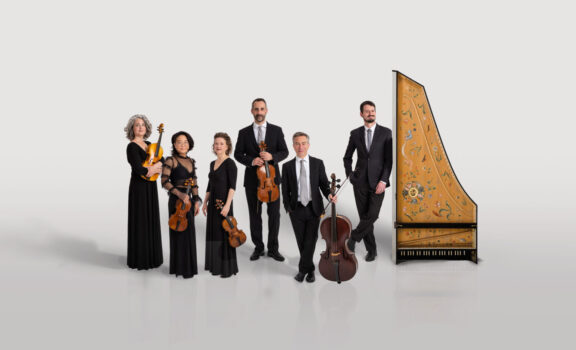
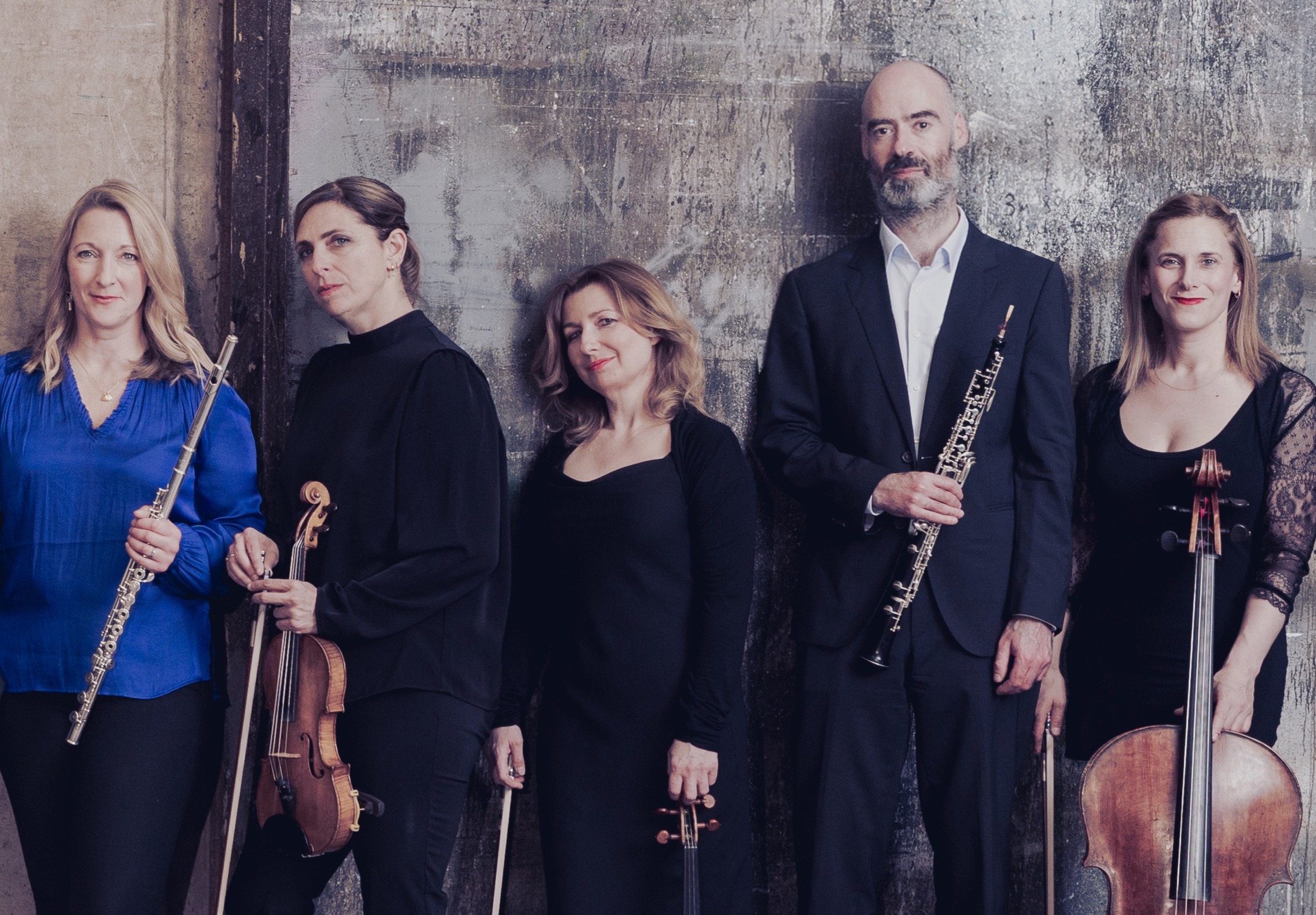
Ensemble 360 & Claire Booth

Crucible Playhouse, Sheffield
Saturday 23 May 2026, 7.00pm

Tickets:
£23
£14 UC, PIP & DLA
£5 Students & Under 35s
Book Tickets

R STRAUSS Sextet from Capriccio (12’) 
SARGEN Fallen, felled (world premiere commissioned by Music in the Round) (5’) 
SIBELIUS En Saga (20’) 
WAGNER Siegfried Idyll (20’)
R STRAUSS (arr. Ledger) Four Last Songs (25’)  

“A swansong of sublime beauty” (Classic FM), Strauss’s ‘Four Last Songs’ are among the most touchingly beautiful and richly expressive pieces in the classical repertoire.  

These exquisite works are performed alongside Sibelius’s charmingly evocative tone poem fairytale, presented in its original septet version. This closing concert promises warm melodies and lyrical beauty. 

Post-concert drinks 
Friends of Music in the Round are invited to join us for drinks after the Final concert. Find out more about how you can become a Friend and join the post-Festival party at: www.musicintheround.co.uk/friends


This concert is generously sponsored by Kim Staniforth, in memory of Margaret Staniforth.


Save 20% when you book for 10 or more Music in the Round Sheffield concerts in one transaction. 
Save 10% when you book for 5 or more Music in the Round Sheffield concerts in one transaction. Find out more. 

SIBELIUS Jean, En Saga Op.9

Sibelius arrived in Vienna in the autumn of 1890 to begin his studies with Robert Fuchs and with Karl Goldmark, who encouraged him to study Mozart’s clarinet writing. In 1891 he was working on an Octet including clarinet, which had turned into a Septet for flute, clarinet and strings by September 1892. At the end of 1892 he had produced the first version of his orchestral tone poem En Saga, and Sibelius told one of his biographers that En Saga ‘had as its basis for flute, clarinet, and strings begun in Vienna.’ Sibelius was careful to cover his tracks, and no sketches have been discovered for either this or the equally mysterious Ballet Scene No. 2 (written just before En Saga). Even so, there’s plenty of evidence that En Saga did have an earlier incarnation as a chamber work – first as an octet, then as a septet – and the 1892 version of the orchestral score has been used to reverse engineer a fascinating reconstruction of Sibelius’s original conception for seven instruments.

© Nigel Simeone 2015

WAGNER Richard, Siegfried Idyll

Wagner composed the Siegfried Idyll at Tribschen, on Lake Lucerne. In 1869, his wife Cosima had a son – Siegfried – and a few months later, the piece Wagner had written in honour of mother and son had its first performance. On Christmas Day 1869, thirteen musicians gathered on the stairs outside Cosima’s bedroom and she awoke to the new piece (originally called Tribschen Idyll, with Fidi’s [i.e. Siegfried’s] Birdsong and Orange Sunrise, as a Symphonic Birthday Greeting from Richard to Cosima). Among the musicians in the first performance, the trumpeter was Hans Richter. Seven years later he conducted the first complete performance of Wagner’s Ring Cycle at the inaugural Bayreuth Festival. There’s a direct musical link: Brünnhilde’s music in the final scene of Siegfried – as she is woken by Siegfried on a rock ringed by fire – is drawn directly from the Siegfried Idyll.

Nigel Simeone 2014

SARGEN Ellen, Fallen, felled

This piece is conceptualised as the Finale to RUMOURS, a song cycle for children’s voices and ensemble co-written by Ellen Sargen and children at Mundella Primary School, Sheffield, in Spring 2026. RUMOURS reimagines the tale of Hansel & Gretel as a group of children navigating the fabricated rumours they have heard about a woman who lives in the local woods nearby, and finding the courage to stand against the prejudice this woman encounters from the local town. Across three songs (Curious, Into the Woods and Stand up for her), the characters tackle learning how to trust someone and stand up against prejudice and discrimination.

Fallen, felled looks back on these themes and leans into the darkness that characterises Grimm’s Fairytales. At the centre of this piece ‘the witch’ sings about the Ash tree, which in Scandinavian mythology is the tree that links and shelters all worlds. Here it becomes a central symbol that intertwines the setting from our reimagined story with those who bring politics into protecting others. The piece includes themes written by the children and transformed through this lens.

BEETHOVEN SEPTET

Ensemble 360

Crucible Playhouse, Sheffield
Tuesday 19 May 2026, 2.00pm

Tickets:
£23
£14 UC, PIP & DLA
£5 Students & Under 35s

Book Tickets

BEETHOVEN
  Violin Sonata in F ‘Spring’ (26’)
  String Quartet in C minor Op.18 No.4 (24’)
  Septet Op.20 (40’) 

The hopeful, energetic and lyrical ‘Spring’ Sonata is one of the most famous of all Beethoven’s works for violin, paired here with an intense and stormy early quartet.

Perhaps Beethoven’s most-performed work during his lifetime, the Septet features wind and strings in a marvel of instrumental writing. Captivating from the stately elegance of its opening to the rousing flourishes of its grand finale, this is music to lose yourself in.

Save 20% when you book for 10 or more Music in the Round Sheffield concerts in one transaction. 
Save 10% when you book for 5 or more Music in the Round Sheffield concerts in one transaction. Find out more. 

BEETHOVEN, Ludwig van Violin Sonata in F, Op.24 ‘Spring’

i. Allegro
ii. Adagio molto espressivo
iii. Scherzo. Allegro molto
iv. Rondo. Allegro ma non troppo

The ‘Spring’ Sonata was written in 1800 and first published the following year, originally as the second of a pair of sonatas. Both are dedicated to Moritz von Fries, a banker with an expensive lifestyle (leading to his eventual bankruptcy) and excellent taste in music and art. Beethoven was a regular guest at Fries’s home and as well as the Op. 23 and Op. 24 Violin Sonatas, Fries was also the dedicatee of the Seventh Symphony. The origins of the nickname are obscure, but ‘Spring’ is a very apt choice for this genial work. After the lyrical first movement, the Adagio molto espressivo is a deeply felt song without words, including some elaborate decorations. The Scherzo lives up to its name: a clever and tricky rhythmic joke that plays with the audience’s expectations – and it is also one of Beethoven’s shortest sonata movements. The Rondo is one of Beethoven’s most gentle and unhurried finales, bringing this most radiant of his violin sonatas to an amiable close. The ‘Spring’ Sonata is the first of Beethoven’s violin sonatas to be in four movements (its four predecessors are all in three movements) and it is a work of effortless ingenuity as well as boundless charm.

© Nigel Simeone

BEETHOVEN Ludwig van, String Quartet in C minor Op.18 No.4

Allegro ma non tanto
Andante scherzoso quasi allegretto
Menuetto. Allegretto
Allegro – Prestissimo


C minor was a key that Beethoven used for some of his most dramatic music – works like the Fifth Symphony, the Pathétique Sonata, and the Coriolan Overture – and Sir George Grove wrote that “the pieces for which he has employed it are, with very few exceptions, remarkable for their beauty and importance.” The fourth of the Op.18 quartets has something of the turbulent mood of other pieces in C minor. The first movement is uneasy, though surprisingly, perhaps, this is especially apparent in the so-called Minuet third movement that has a particularly dark, brooding kind of energy. But there’s something paradoxical about this work: Beethoven has no real slow movement, and instead he has written a playful Andante in C major. The rondo finale is reminiscent of Haydn, written in the ‘Hungarian’ style he often used (but a rarity in Beethoven). An exciting minor-key main theme is interspersed with gentler episodes, culminating in a wild dash to the finish.

Nigel Simeone 2013

BEETHOVEN Ludwig Van, Septet in E flat Op.20

Adagio – Allegro con brio 
Adagio cantabile 
Tempo di menuetto 
Tema con variazioni. Andante 
Scherzo. Allegro molto e vivace 
Andante con moto alla marcia – Presto 
 

Beethoven’s Septet was written in 1799. It was first performed at a concert given by Beethoven at the Burgtheater in Vienna on 2 April 1800 and was published – after a typically querulous exchange between Beethoven and his publisher – in 1802. Aiming for the top in terms of potential supporters, Beethoven dedicated it to Maria Theresa – the last Holy Roman Empress and the first Empress of Austria. The Septet’s success was enduring, something Beethoven came to resent since he felt the public should take more interest in his later music. 


The first movement is a genial sonata form Allegro with a slow introduction. The Adagio cantabile opens with a clarinet melody that is taken over by the violin, while clarinet and bassoon play a counter-melody, all supported by a gentle accompaniment on the lower strings. The bucolic Minuet demonstrates Beethoven the recycler, using the same theme as the Piano Sonata Op.49 No.2. The relaxed mood is maintained in the charming theme and variations. The Scherzo is launched by a horn call from which much of what follows is derived. Even the start of the Trio has thematic links with this tune, but a cello theme provides an effective contrast. The finale begins with one of the few significant uses of a minor key in the Septet: a stern march that quickly gives way to a rollicking Presto, its mood unclouded and its themes deliciously memorable. 


© Nigel Simeone 2014 

FELDMAN & BECKETT: WORDS & MUSIC

Vicky Featherstone, George Morton & Ensemble 360

Crucible Playhouse, Sheffield
Monday 18 May 2026, 7.00pm

Tickets:
£23
£14 UC, PIP & DLA
£5 Students & Under 35s

Book Tickets

BECKETT Rockaby (20’)
FELDMAN Why Patterns? (30’)
BECKETT / FELDMAN Words & Music (42’)

Visionary titans in their respective artforms, the warm friendship of composer Morton Feldman and playwright Samuel Beckett resulted in some of the most extraordinary artworks of the 20th century.

This evening of music, theatre and a dramatic meeting of the two includes Beckett’s monologue of memory and loss Rockaby and the pair’s most extraordinary collaboration Words & Music, in which a small group of musicians playing a distinctively taut Feldman score becomes a character in the drama.

Directed by Vicky Featherstone (Artistic Director, Royal Court Theatre 2013-2023 and Founding Artistic Director, National Theatre of Scotland).

Save 20% when you book for 10 or more Music in the Round Sheffield concerts in one transaction. 
Save 10% when you book for 5 or more Music in the Round Sheffield concerts in one transaction. Find out more. 

There isn’t a hint of sentimentality in Vicky Featherstone’s delicately calibrated production of Samuel Beckett’s monologue about mortality.

The Guardian

EXPLORING COCTEAU’S ‘THE HUMAN VOICE’

Claire Booth, James Jackson & Dr Caroline Potter

Showroom, Sheffield
Monday 18 May 2026, 2.00pm

Tickets:
£17
£10 UC, PIP & DLA
£5 Students & Under 35s

Book Tickets

featuring film performances from INGRID BERGMAN, SOPHIA LOREN & TILDA SWINTON.

Ahead of our performance on Tuesday evening, a panel of music and film experts explore the Jean Cocteau masterpiece that gave rise to Poulenc’s adaptation, La Voix Humaine.

Claire Booth and guests discuss the impact and influence of various cinematic versions of the work by luminous actors and some of the greatest directors, before a screening of Pedro Almodóvar’s 30 minute version starring Tilda Swinton from 2021.

Save 20% when you book for 10 or more Music in the Round Sheffield concerts in one transaction. 

Save 10% when you book for 5 or more Music in the Round Sheffield concerts in one transaction. Find out more. 

SUNSET

Ensemble 360

Samuel Worth Chapel, Sheffield
Sunday 17 May 2026, 8.00pm

Tickets:
£23
£14 UC, PIP & DLA
£5 Students & Under 35s

Book Tickets

WEBER Clarinet Quintet (29’)
MOZART Oboe Quartet, K370 (14’)
KORNGOLD Piano Quintet (32’) 

Join Ensemble 360 for an intimate concert of quartets and quintets as darkness descends on a special musical day in Sheffield General Cemetery. Among the highlights are Mozart’s lilting and languid Oboe Quartet and Korngold’s magical Piano Quintet. Full of wit and wonder, with a lushly romantic, haunting second movement, it features the beautifully apt and expressive theme “Moon, you rise again”. 

Save 20% when you book for 10 or more Music in the Round Sheffield concerts in one transaction. 
Save 10% when you book for 5 or more Music in the Round Sheffield concerts in one transaction. Find out more. 

WEBER Carl Maria von, Clarinet Quintet Op.34

Allegro
Fantasia. Adagio ma non troppo
Menuetto. Capriccio presto
Rondo. Allegro giocoso

Just as Mozart’s Clarinet Quintet and Concerto had been written with a particular player in mind, so were the concertos and Quintet of Carl Maria von Weber. Heinrich Bärmann and Weber immediately struck up a rapport after their first meeting in Munich, and his virtuosity greatly impressed the composer. This was partly, too, because of Bärmann’s choice of instrument. As John Warrack has explained, ‘two years before their Munich meeting, Bärmann had acquired a ten-key clarinet that allower greater flexibility and smoothness; an in Bärmann’s clarinet Weber found an instrument that with its French incisiveness and its German fullness seemed to express a new world of feeling, and to match both the dark romantic melancholy and the extrovert brilliance of his own temperament.’ As well as concertos for Bärmann, Weber worked sporadically on a Quintet. Having started this in 1811, he finally finished it on 25 August 1815, the day before the first performance. Given the rather haphazard composing process, it’s not surprising that the work is not one of Weber’s most profound, but it is a brilliant and charming vehicle for the soloist – described by John Warrack as ‘a pocket concerto, written purely for delight in virtuoso effect.’

Nigel Simeone © 2010

MOZART Wolfgang Amadeus, Oboe Quartet K370

Allegro
Adagio
Rondeau: Allegro

Mozart’s Oboe Quartet was written in Munich in 1781 with a particular player in mind: the oboist Friedrich Ramm (c.1744–1813). Ramm had been a member of the famous orchestra in Mannheim, where Mozart had first met him in 1777 and wrote very enthusiastically at the time about his playing and his ‘beautiful fine tone.’ Mozart arrived in Munich in late 1780 to prepare his new opera Idomeneo and Ramm was in the orchestra. Their admiration seems to have been mutual, since Ramm said of Idomeneo after an early rehearsal that no music had ever impressed him more deeply. According to at least one early catalogue of Mozart’s works (by Johann André), the Quartet was written during January 1781, while final preparations were being made for the première of Idomeneo on 29 January 1781.

The Oboe Quartet has been described by the oboist and musicologist Bruce Haynes as a ‘sparkling, ethereal work’. In three movements, and score for oboe, violin, viola and cello, it’s especially innovative in its exploitation of the oboe’s upper register – using notes that were only to be found on the latest models of oboe, and something of a Ramm speciality. Haynes has also noted that none of Mozart’s other works for oboe use the instrument’s highest notes in this way. The writing for the oboe is superbly idiomatic – and it’s intriguing to speculate (as Haynes has) that if Mozart had not met the brilliant clarinettist Anton Stadler after his move to Vienna (coincidentally, in the same year he composed the Oboe Quartet) – he might have written late masterpieces for solo oboe rather than for clarinet. The first movement is a breezy Allegro, while the slow movement suggests a slow, lyrical opera aria (making the most of Ramm’s singing tone). The finale is more unusual: a rondo that has passages where oboe and strings are playing in different time signatures (the oboe playing in 6/8 time while the strings are in 4/4) and makes the most of the virtuoso possibilities of the soloist.

NIGEL SIMEONE, 2010

KORNGOLD Erich Wolfgang, Piano Quintet in E major Op.15

Mäßiges Zeitmaß, mit schwungvoll blühendem Ausdruck [Moderate speed, with blossoming expression]
Adagio (Freie Variationen über die Lieder des Abschieds) [free variations on the Songs of Farewell, Op. 14]
3. Finale. Gemessen beinahe pathetisch – Allegro giocoso [Measured but emotional]

Before Korngold reached his twelfth birthday, his cantata Gold was acclaimed by Mahler as the work of a ‘musical genius’ and his ballet The Snowman was performed at the Vienna Opera. Korngold continued to develop thorough his teens, and in his early twenties he enjoyed phenomenal success with the opera Die tote Stadt, given a simultaneous premiere in Hamburg and Cologne in 1920. The Quintet was completed in 1921 and the first performance was in Hamburg on 16 February 1923, with Korngold at the piano. It was published in 1924 with a dedication to Gustinus Ambrosi, a sculptor who had made a bust of the 14-year-old Korngold which was destroyed in the war. There are three substantial movements. The first begins with a heroic idea that gives way to a more reflective cello solo and a delicate new theme, decked with trills (and a hint of Mahler). After extensive development, the movement ends with an impassioned recollection of the opening. The Adagio is a set of variations based on Mond, so gehst du wieder auf (Moon, thus you rise once more’ from Korngold’s Four Songs of Farewell. With its distinctive drooping intervals, the theme is treated with great ingenuity. The finale begins with a dramatic idea in octaves and a short violin cadenza that leads to the main Allegro giocoso in which Korngold is at his most uninhibited.

Nigel Simeone

GWILYM SIMCOCK TRIO

Gwilym Simcock, James Maddren & Conor Chaplin

Tickets:
£23
£14 UC, PIP & DLA
£5 Students & Under 35s

Book Tickets

One of the most gifted pianists and imaginative composers on the European scene, this is a chance to experience the masterful jazz artist Gwilym Simcock up close as he returns to his improvisational jazz roots.  

“[Gwilym Simcock is] a stupendous improviser and a remarkable musician all round.”

The Observer

BIRDSONG AT DAWN

Ensemble 360

Samuel Worth Chapel, Sheffield
Sunday 17 May 2026, 5.00am

Tickets:
£23
£14 UC, PIP & DLA
£5 Students & Under 35s

Book Tickets
Flautist Juliette Bausor and pianist Tim Horton

MESSIAEN Le Rouge-gorge from ‘Petites esquisses d’oiseaux’ (2’)
COUPERIN Le rossignol en amour (3’)
TELEMANN Fantasia No.2 in A minor (5’)
MESSIAEN L’alouette Calandrelle from ‘Catalogue d’oiseaux’, 5eme Livre (5’)
RAMEAU La Rappel des Oiseau (3’)
TELEMANN Fantasia No.7 in D (5’)
MESSIAEN Le Merle Noir (6’)
SAINT-SAËNS (arr. Richter) Volière from Le carnaval des animaux (2’)
VIVALDI Cantabile from ‘Il Gardilino’ (3’)
MESSIAEN Le Loriot from ‘Catalogue d’oiseaux’, 1iere Livre (9’)
MARTINŮ Allegro poco moderato from Flute Sonata No.1 (5’)  

Among the sheltering trees of Sheffield General Cemetery, the dawn chorus continues an ancient wordless cycle of song. Inspired by and performed in the midst of this natural wonder, discover music for flute and piano spanning three centuries, from Baroque evocations of nightingales to Messiaen’s dazzling transcriptions of wild birds.  

Pause, listen and be transported, as we revive a beloved Sheffield Chamber Music Festival tradition with this dawn celebration of the music of the birds. 

Post-concert Bird Walk
BBC Radio 3’s Tom McKinney – classical music’s favourite birder, and veteran of Sheffield Chamber Music Festival – leads a walk from Samuel Worth Chapel to spot and celebrate the avian musicians of the General Cemetery.
Strictly limited to ticket-holders for the Bird Song concerts. 

Save 20% when you book for 10 or more Music in the Round Sheffield concerts in one transaction. 
Save 10% when you book for 5 or more Music in the Round Sheffield concerts in one transaction. Find out more. 

TELEMANN Georg Philipp, Fantasia No. 2 in A Minor

Telemann and his godson C.P.E. Bach had a lot in common: both studied law before pursuing music, both became key links between late-Baroque and early-Classical styles, and both composed prolifically—Telemann’s output is measured in the thousands. Alongside the reams of sacred music, instrumental suites, operas, and concerti, Telemann also wrote sets of unaccompanied instrumental fantasias, for violin, viola da gamba, harpsichord and flute. 


The second Fantasia of this set of twelve has four sections (Grave, Vivace, Adagio, and Allegro), with tempo changes aligning with changes of mood or character. This Fantasia in particular is a fantastic example of Telemann’s mastery of counterpoint, managing to keep multiple lines of melody spinning concurrently through regular changes of register. 


Hugh Morris 2024

RAMEAU Jean-Philippe, Le Rappel des oiseaux, Rigaudons I, II & Double, Les tendres plaintes

Jean-Philippe Rameau (1683–1764) published his first collection of harpsichord pieces in 1706 and further collections appeared in the 1720s. Though widely admired at the time, these works lapsed into obscurity and it took their rediscovery at the end of the nineteenth century, when a handsome edition, prepared by Camille Saint-Saëns, was published by Durand in 1895. Rameau’s collections mostly comprise dance movements, such as the two Rigaudons and ‘Double’ from the 1724 volume of Pièces de clavecin. This was also the source of one of his most celebrated imitative pieces, Le rappel des oiseaux with its evocations of chirruping birdsong, and of Les tendres plaintes, a more subtle evocation of melancholy.  


Nigel Simeone

MESSIAEN Olivier, Le Merle Noir

Le Merle Noir – The Blackbird – was composed in March 1952 as the test piece for the flute class at the Paris Conservatoire. Messiaen took the opportunity to make an important stylistic departure in this work: it was the first of his pieces to attempt a detailed depiction of a specific named bird. The first performances – in June 1952 – were given at the flute concours by the most promising members of Gaston Crunelle’s flute class that year. One of them was the British flautist Alexander Murray, who shared his memories of the piece in with the present writer:

“We saw it for the first time four weeks before the concours and then dissected it four times a week with Gaston Crunelle … Noël Lee, a pupil of Nadia Boulanger, was our accompanist, and was present daily for the last week. He had analysed the last section and demonstrated the rhythmic permutations – which did not make life easier. However, his utter reliability made memorising less of a problem. We all played from memory. … I was awarded a premier prix (I think the first British student to be so lucky). Messiaen was present in class at least once, as I remember, and of course at the concours.”

Nigel Simeone © 2012

MARTINŮ Bohuslav, Sonata for flute, violin and piano H254

Allegretto poco moderato
Adagio
Allegretto  

Martinů composed this sonata in less than two weeks, between 4 and 16 May 1937 while he was living in Paris. The work is dedicated to Blanche Honegger, a violinist who studied with Adolf Busch and who later married the pianist Louis Moyse. With his father, the flautist Marcel Moyse, they gave the first performance  of Martinů’s sonata on French Radio on 1 July 1937. (Blanche Honegger Moyse later moved to the United States and became a much-admired conductor. She died in 2011 at the age of 101). Martinů had moved to Paris in the 1920s and he completed his studies there with Albert Roussel. With his homeland under threat from Nazi invasion, this sonata has musical characteristics that reflect a love of his homeland including stylised polka rhythms and turns of phrase typical of Moravian folk music. When German forces occupied Paris, Martinů fled to the United States where he lived until 1953. Shortly after emigrating, he was asked by the New York Herald Tribune about his most important musical influences and he listed Bohemian and Moravian folk music, the English madrigal and the music of Debussy. Elements of all these can be heard in this three-movement work

BIRDSONG AT BREAKFAST

Ensemble 360

Samuel Worth Chapel, Sheffield
Sunday 17 May 2026, 7.30am

Tickets:
£23
£14 UC, PIP & DLA
£5 Students & Under 35s

Book Tickets
Flautist Juliette Bausor and pianist Tim Horton

MESSIAEN Le Rouge-gorge from ‘Petites esquisses d’oiseaux’ (2’)
COUPERIN Le rossignol en amour (3’)
TELEMANN Fantasia No.2 in A minor (5’)
MESSIAEN L’alouette Calandrelle from ‘Catalogue d’oiseaux’, 5eme Livre (5’)
RAMEAU La Rappel des Oiseau (3’)
TELEMANN Fantasia No.7 in D (5’)
MESSIAEN Le Merle Noir (6’)
SAINT-SAËNS (arr. Richter) Volière from Le carnaval des animaux (2’)
VIVALDI Cantabile from ‘Il Gardilino’ (3’)
MESSIAEN Le Loriot from ‘Catalogue d’oiseaux’, 1iere Livre (9’)
MARTINŮ Allegro poco moderato from Flute Sonata No.1 (5’)  

Among the sheltering trees of Sheffield General Cemetery, the dawn chorus continues an ancient wordless cycle of song. Inspired by and performed in the midst of this natural wonder, discover music for flute and piano spanning three centuries, from Baroque evocations of nightingales to Messiaen’s dazzling transcriptions of wild birds.  

Pause, listen and be transported, as we revive a beloved Sheffield Chamber Music Festival tradition with this dawn celebration of the music of the birds. 

Post-concert Bird Walk
BBC Radio 3’s Tom McKinney – classical music’s favourite birder, and veteran of Sheffield Chamber Music Festival – leads a walk from Samuel Worth Chapel to spot and celebrate the avian musicians of the General Cemetery.
Strictly limited to ticket-holders for the Bird Song concerts. 

Save 20% when you book for 10 or more Music in the Round Sheffield concerts in one transaction. 
Save 10% when you book for 5 or more Music in the Round Sheffield concerts in one transaction. Find out more. 

TELEMANN Georg Philipp, Fantasia No. 2 in A Minor

Telemann and his godson C.P.E. Bach had a lot in common: both studied law before pursuing music, both became key links between late-Baroque and early-Classical styles, and both composed prolifically—Telemann’s output is measured in the thousands. Alongside the reams of sacred music, instrumental suites, operas, and concerti, Telemann also wrote sets of unaccompanied instrumental fantasias, for violin, viola da gamba, harpsichord and flute. 


The second Fantasia of this set of twelve has four sections (Grave, Vivace, Adagio, and Allegro), with tempo changes aligning with changes of mood or character. This Fantasia in particular is a fantastic example of Telemann’s mastery of counterpoint, managing to keep multiple lines of melody spinning concurrently through regular changes of register. 


Hugh Morris 2024

RAMEAU Jean-Philippe, Le Rappel des oiseaux, Rigaudons I, II & Double, Les tendres plaintes

Jean-Philippe Rameau (1683–1764) published his first collection of harpsichord pieces in 1706 and further collections appeared in the 1720s. Though widely admired at the time, these works lapsed into obscurity and it took their rediscovery at the end of the nineteenth century, when a handsome edition, prepared by Camille Saint-Saëns, was published by Durand in 1895. Rameau’s collections mostly comprise dance movements, such as the two Rigaudons and ‘Double’ from the 1724 volume of Pièces de clavecin. This was also the source of one of his most celebrated imitative pieces, Le rappel des oiseaux with its evocations of chirruping birdsong, and of Les tendres plaintes, a more subtle evocation of melancholy.  


Nigel Simeone

MESSIAEN Olivier, Le Merle Noir

Le Merle Noir – The Blackbird – was composed in March 1952 as the test piece for the flute class at the Paris Conservatoire. Messiaen took the opportunity to make an important stylistic departure in this work: it was the first of his pieces to attempt a detailed depiction of a specific named bird. The first performances – in June 1952 – were given at the flute concours by the most promising members of Gaston Crunelle’s flute class that year. One of them was the British flautist Alexander Murray, who shared his memories of the piece in with the present writer:

“We saw it for the first time four weeks before the concours and then dissected it four times a week with Gaston Crunelle … Noël Lee, a pupil of Nadia Boulanger, was our accompanist, and was present daily for the last week. He had analysed the last section and demonstrated the rhythmic permutations – which did not make life easier. However, his utter reliability made memorising less of a problem. We all played from memory. … I was awarded a premier prix (I think the first British student to be so lucky). Messiaen was present in class at least once, as I remember, and of course at the concours.”

Nigel Simeone © 2012

MARTINŮ Bohuslav, Sonata for flute, violin and piano H254

Allegretto poco moderato
Adagio
Allegretto  

Martinů composed this sonata in less than two weeks, between 4 and 16 May 1937 while he was living in Paris. The work is dedicated to Blanche Honegger, a violinist who studied with Adolf Busch and who later married the pianist Louis Moyse. With his father, the flautist Marcel Moyse, they gave the first performance  of Martinů’s sonata on French Radio on 1 July 1937. (Blanche Honegger Moyse later moved to the United States and became a much-admired conductor. She died in 2011 at the age of 101). Martinů had moved to Paris in the 1920s and he completed his studies there with Albert Roussel. With his homeland under threat from Nazi invasion, this sonata has musical characteristics that reflect a love of his homeland including stylised polka rhythms and turns of phrase typical of Moravian folk music. When German forces occupied Paris, Martinů fled to the United States where he lived until 1953. Shortly after emigrating, he was asked by the New York Herald Tribune about his most important musical influences and he listed Bohemian and Moravian folk music, the English madrigal and the music of Debussy. Elements of all these can be heard in this three-movement work

CROSSCURRENTS: GWILYM SIMCOCK & FRIENDS

Gwilym Simcock, Claire Booth & Ensemble 360

Crucible Theatre, Sheffield
Saturday 16 May 2026, 7.15pm

Tickets:
£23
£14 UC, PIP & DLA
£5 Students & Under 35s

Book Tickets

DEBUSSY (arr. Simcock) ‘Children’s Corner’ (30’)
GRAINGER (arr. Simcock)
Bold William Taylor (4′)
Twa Corbies (3′)
Hard Hearted Barb’ra Ellen (6′)
VAUGHAN WILLIAMS (arr. Simcock) Infinite Shining Heavens (2′)
GRIEG (arr. Simcock) Haugtussa Op.67 III. Blåbaer-Li (2′)
FAURÉ (arr. Simcock)
Après un Rêve (3′)
Au bord L’eau (2′)
DEBUSSY (arr. Simcock) Nuits d’étoiles (2′)
SCHOENBERG (arr. Simcock) Nun sag ich dir zum ersten Mal (4′)
LEVENT/HEYMAN (arr. Simcock) Blame It On My Youth (4′)
WEILL (arr. Simcock) My Ship (4′)

Gilym Simcock, the “jaw-droppingly exciting” pianist (The Guardian) and jazz superstar is celebrated for his ability to move effortlessly between jazz and classical music.  

For one night only, Gwilym and his band of incredible jazz musicians are joined by world-class classical artists for what promises to be a hugely entertaining evening. His phenomenal talent breathes new jazz-inspired life into award-winning makeovers of classical music. This thrilling evening gives a fresh take on Debussy’s ‘Children’s Corner’ and other classics. 

Gwilym has toured extensively with the cream of international jazz artists including Kenny Wheeler, Dave Holland and Pat Metheny. His high-profile collaborations with the classical world include a rapturously-received late-night BBC Prom with the classical virtuoso Nigel Kennedy, performing a jazz-infused version of Vivaldi’s Four Seasons.

In partnership with Sheffield Jazz

Save 20% when you book for 10 or more Music in the Round Sheffield concerts in one transaction.
 
Save 10% when you book for 5 or more Music in the Round Sheffield concerts in one transaction. Find out more. 


DEBUSSY Claude, Children’s Corner

IV. The Snow is Dancing
II. Jimbo’s Lullaby
V. The Little Shepherd
III. Serenade for the Doll


Dedicated to ‘my dear little Chou-Chou, with her father’s tender excuses for what follows’, Children’s Corner was written in 1908 and dedicated to his daughter Claude-Emma. However, it was never intended as a piece for children to play, and the suite was introduced to the Parisian musical public by the virtuoso pianist Harold Bauer on 18 December 1908. Aside from its technical demands, another reason why this is not really ‘children’s’ music is its sophisticated use of parody and quotation. There’s a rather tragic postscript to the story of the dedication: Chou-Chou died aged only fourteen, a year after Debussy himself.


© Nigel Simeone

“Gwilym Simcock’s prodigious creations on the piano straddle the border between classical and jazz to mesmerising effect… a stupendous improviser and a remarkable musician all round.”

The Observer

FAMILY CONCERT: IZZY GIZMO

Lucy Drever & Ensemble 360

Crucible Theatre, Sheffield
Saturday 16 May 2026, 11.00am

Tickets:
£13
£7 UC, PIP & DLA
£5 Under 16s

Book Tickets

RISSMANN Izzy Gizmo (60’)  

By popular request, Izzy Gizmo is back! Perfect for 3–7 year-olds, this delightful family concert is based on the best-selling children’s book ‘Izzy Gizmo’ by Pip Jones, illustrated by Sara Ogilvie. 

The book tells the enchanting story of an intrepid young inventor who puts her talents to work to rescue a crow that can’t fly. This family concert brings Izzy’s mechanical marvels and infectious creative spirit to life. 

Original music by Paul Rissmann features instruments including strings, woodwind, horn and piano, and you might even spot the musicians playing pots, pans, whistles and household items!  

Together with story-telling and visuals from the book, this concert is a great introduction to live music for children. It’s full of wit, invention, songs and actions, and plenty of opportunities to join in. 

Save 20% when you book for 10 or more Music in the Round Sheffield concerts in one transaction. 
Save 10% when you book for 5 or more Music in the Round Sheffield concerts in one transaction. Find out more. 

DVOŘÁK PIANO QUINTET

Ensemble 360

Upper Chapel, Sheffield
Saturday 14 March 2026, 7.00pm

Tickets:
£23
£14 UC, PIP & DLA
£5 Students & Under 35s 

Past Event
Ensemble 360 piano quintet

SUK Piano Trio (15’)
L BOULANGER D’un matin de printemps (4’)
GORDON Piano Quintet ‘Kintsugi’ (18’) Co-commission with Presteigne Festival
DVOŘÁK Piano Quintet No.2 (40’) 

Lyrically expressive Czech-folk-inspired music opens and closes this concert of works for piano and strings, with Dvořák’s much-loved Piano Quintet No.2 providing a joyful conclusion. Michael Zev Gordon’s delicate and enchanting Piano Quintet ‘Kintsugi’ (a Music in the Round co-commission with Presteigne Festival), is named after the Japanese technique of repairing broken pottery with gold to make it stronger than the original, and follows Lili Boulanger’s ravishing piano trio, ‘On a Spring Morning’.  

Pre-concert Q&A, 5.30pm – 6.15pm
Join us for a pre-concert discussion with the musicians of Ensemble 360. Tickets: £5 / free to all ticket-holders, though booking is required.

Save 20% when you book for 10 or more Music in the Round Sheffield concerts in one transaction. 
Save 10% when you book for 5 or more Music in the Round Sheffield concerts in one transaction. Find out more. 

SUK JOSEF, Piano Trio in C Minor, Op.2

  1. Allegro
  2. Andante
  3. Vivace 

Suk composed the earliest version of his Piano Trio in 1889 during his first year as a composition pupil at the Prague Conservatory, originally in four movements. A year later, he revised while in the class of Karel Stecker (to whom the trio is dedicated), and the first 

performance was given at an evening of music by student composers on 15 January 1891. Suk completed the revision process once he had joined Dvořák’s composition class (he later married Dvořák’s daughter), completing the definitive version in spring 1891. The opening of the Allegro is muscular and impassioned; its bold opening theme gives way to a more tender contrasting theme and these two characterful ideas form the basis of what follows. Even though Suk was still a student, his handling of form is impressively confident and closely-argued. He brings this admirably compact movement to an affirmative close in C major. The second movement is marked Andante and it resembles a gentle folk dance, reaching a dramatic climax before moving into a tranquil coda, still dominated by the dotted rhythms that have permeated the whole movement. The third movement, marked Vivace, is a vigorous finale, with some enchanting moments of repose. A change from C minor to C major sets up the coda which brings the work to an impressive conclusion. 

© Nigel Simeone 2026 


BOULANGER Lili, D’un matin de printemps

Lili Boulanger – younger sister of the great teacher Nadia Boulanger – was an astonishingly gifted child: Fauré (who later taught her composition) discovered that she had perfect pitch when she was two years old, and at the age of 19, Lili became the first woman to win the Prix de Rome for musical composition, but throughout her life she was dogged by ill health – the consequence of pneumonia when she was a child – and had to return early from Rome. 

D’un matin de printemps exists in three versions: for violin or flute and piano, for orchestra, and for piano trio. The autograph manuscript of the trio version is headed ‘Pièces en trio’ alongside D’un soir triste, which was composed at the same time. Apart from a poignant and beautiful setting of the Pie Jesu (possibly intended as part of a projected Requiem) these are the last two compositions of Boulanger’s tragically short creative life. She died at the age of 24 leaving a remarkable legacy including some memorable Psalm settings, the marvellous song cycle Clairières dans le ciel and a handful of instrumental works such as this trio. 

© Nigel Simeone 2026 

GORDON Michael Zev, Piano Quintet ‘Kintsugi’

Kintsugi is a Japanese art form which involves repairing broken pottery. Lacquer, most often of gold, is used to join the pieces together, to emphasize the cracks, not to hide them. The exquisite results show us that beauty in art – and, by extension, composure in our lives – can be found precisely by embracing imperfection and fragmentation.  

For a long time, I have been making musical forms out of fragments, and in my new piano quintet, there are thirteen short movements, which run into each other. There are a number of external musical references, including a Yiddish song, baroque textures and a distant waltz, which jostle with a range of other moods, from gentle to pained. 

But there is also one unchanging harmony that recurs repeatedly, at once separating and joining the fragments, my musical equivalent of the kintsugi lacquer. I hope this harmony not only helps to create beauty and repose, but is also a kind of response to the the ancient rabbinical saying that threads its way through the titles of movements 1, 4, 8, 10 and 13. 

Movements: 

  1. If I am not for myself… 
  2. Burning through 
  3. Fluttering
  4. …who will be for me? 
  5. Tender, submerged 
  6. Once Again… 
  7. Crying out 
  8. If I am only for myself, what am I? 
  9. Fleeting 
  10. And if not now… 
  11. Floating 
  12. In Pieces 
  13. …when? 

 Michael Zev Gordon ©   

DVOŘÁK Antonín, Piano Quintet No.2 in A Op.81

Allegro, ma non tanto
Dumka. Andante con moto – Vivace – Andante con moto
Scherzo. Furiant – Molto vivace
Finale. Allegro 

Dvořák composed his great A major Piano Quintet in 1887 (a much earlier quintet from 1872 is in the same key) and it was described by Otakar Šourek as one of ‘the most delightful and successful works’ in the whole chamber music repertoire. From the spacious cello theme that opens the quintet, Dvořák shows the seemingly effortless spontaneity of a composer at the height of his powers. The second theme turns the mood more wistful, and the music oscillates between melancholy and warmth, culminating in a jubilant climax. The second movement is a Dumka, with slow outer sections based on a melancholy tune, and a quick central section derived from the same musical idea. The Scherzo – described by Dvořák as a Furiant – begins with one of his most enchanting quick melodies and this is followed by two more: an undulating tune and another of folk-like simplicity, before the opening idea returns. The central Trio provides an oasis – a tune in long notes over which Dvořák introduces fragments of the main theme. The opening melody of the Finale dominates much of what follows. Near the close, a brief fugal section leads to a moment of tranquillity before the final dash to the end.  

Nigel Simeone © 2014 

SOUNDS OF NOW: ANNEA LOCKWOOD – PREPARED PIANO

Xenia Pestova Bennett

Tickets:
£17
£10 UC, PIP & DLA
£5 Students & Under 35s 

Book Tickets

ANNEA LOCKWOOD Ear-Walking Woman (14′)
XENIA PESTOVA BENNETT Iridescence (7’)
XENIA PESTOVA BENNETT Tapetum lucidum (8’)
ANNEA LOCKWOOD
   Red Mesa (15’)
   Ceci n’est pas un piano (12’)
   electroacoustic interlude – Buoyant (6’)
   RCSC (4’)
   Gone (variable) 

This concert is a rare opportunity to hear Xenia Pestova Bennett “a powerhouse of contemporary keyboard repertoire” (TEMPO) play the intricate and spellbinding piano works of Annea Lockwood. Long-time collaborators, Xenia brings insight and sensitivity to Lockwood’s music.  

The concert features two of Pestova Bennett’s own compositions alongside a selection of Lockwood’s works for prepared piano in which ribbons, objects and a transducer speaker are placed inside the instrument; an example of Lockwood’s pioneering electroacoustic work; and ‘Gone’, a playful performance piece in which a music box is floated through the concert hall using helium balloons. 

Pre-concert Q&A, 6.45pm – 7.15pm
Join us for a pre-concert discussion with Annea Lockwood (joining online from her home in the US) and pianist Xenia Pestova Bennett. Tickets: £5 / free to all ticket-holders, though booking is required.

In partnership with University of Sheffield Concerts

Save 20% when you book for 10 or more Music in the Round Sheffield concerts in one transaction. 
Save 10% when you book for 5 or more Music in the Round Sheffield concerts in one transaction. Find out more. 

LOCKWOOD Annea, Ear-Walking Woman

Ear-Walking Woman (1996) was commissioned by pianist Lois Svard, to whom it is dedicated. It is a collaboration in which the player is using various tools such as bubble wrap, a pestle, stones, small wooden balls etc. I ask her to listen closely to the sounds created by each action, exploring the new sounds which always arise when she uses a little more pressure, a slightly different wrist position or timing, a different make of piano. I call this “ear-walking”.
Annea Lockwood

PESTOVA BENNET Xenia, Iridescence and Tapetum lucidum

Iridescence and Tapetum lucidum (2023) are part of a cycle of ten pieces for piano, with Iridescence using the same piano preparations as Annea Lockwood’s Ear-Walking Woman. The sea permeates the movements of this piece – it is there and not there at the same time. Over the course of about four years, I lived in a very special house overlooking the Belfast Lough. According to some, it used to belong to a sea captain. On clear days, Scotland was visible just across the water with hills and wind turbines. The sound and smell of the sea was constant. Storms threw down tree branches and fling salt onto the windows. There were many birds: plump eiders, redshanks, oyster catchers, shags, guillemots, corvids and gulls dropping mollusk shells onto the rocks to get at the tender flesh inside. There were rock pools, crabs, limpets, snails; sea vegetables: dulce, sea radish, scurvy grass. Seals sunbathed and curved their tails into the air; sometimes, you saw little sea otters. Container ships huddled in the bay to wait out storms, their lights gleaming in the night. There was a little cove with the submerged cave, waves churning, cold-water swimmers in all seasons and weathers, starfish gleaming from the depths below, a whole unknown forest beneath the surface. Then, the beach: sadly, full of plastic, glass, golf balls, lighters, toys, bottles, and depending on rainfall, toilet paper. I am grateful to Bill Thompson’s cameo as captain of the CSS Alabama in 1864 on Tapetum lucidum.


Xenia Pestova Bennet

LOCKWOOD Annea, Red Mesa

Red Mesa (1989) was written at the request of the composer and pianist Max Litschitz, and is dedicated to Ruth Anderson. It was written after a solo journey I made in the starkly beautiful Four Corners desert country of the American Southwest in 1988. A mesa is a flat-topped tableland with steep flanks. Some, such as Mesa Verde, shelter cliff dwellings, pueblos with origins dating back to the 500s A.D., elegant houses and ceremonial structures arising by the early 1100s, and largely deserted by the early 14th century, due, it is thought, to a long drought.


Annea Lockwood

LOCKWOOD Annea, Ceci n’est pas un piano

Ceci n’est pas un piano (2002) was commissioned by pianist Jennifer Hymer to whom it is dedicated. It has long been my feeling that musical performance is a deeply generous gift, drawing as it does on the performer’s whole body, history and spirit. With Ceci… I want to acknowledge that, asking Xenia to talk about her hands and about pianos she owns and loves, then weaving her recorded thoughts and memories into the sonic flow, eventually directly through the piano’s resonance, merging her voice with her instrument.


Annea Lockwood

LOCKWOOD Annea, Buoyant

Buoyant (2013) 


I spend my summers on a large lake in N.W.Montana, Flathead Lake; one afternoon, reading  down by the lake, I began to notice the deliciously pitched plops and gurgles with which the  piece opens and was able to set my microphone down in amongst the rocks, very close to the water. Later that year, visiting a friend’s installation at the Hoboken Ferry Terminal in New Jersey, I was struck by the sounds the metal gangplanks generated, and returned on a windy day. Each time a boat passed on the Hudson or a ferry docked nearby, the gangplanks’ overlapping sections produced intricate textures, resonating strongly in the hangar-like terminal. Buoyant is the interplay of these sources, together with a recording I made in 1999 of a boat basin on Lake Como, Italy. 


Annea Lockwood 

LOCKWOOD Annea, RCSC

RCSC (2001) was commissioned by pianist Sarah Cahill as one of a set of seven short pieces by women composers honoring Ruth Crawford Seeger, whose music I deeply admire. The title is a near-palindrome of their names, and for its pitch content I drew on the ten-note row from the final movement of Crawford’s String Quartet 1931. RCSC is dedicated to Sarah Cahill.


Annea Lockwood

“superb precision and sensitivity”

The Telegraph