BIRD TUNES: MIRANDA RUTTER, SAM SWEENEY & ROB HARBRON

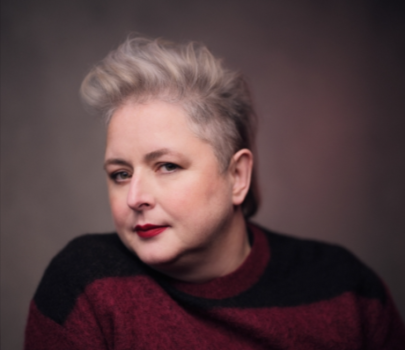
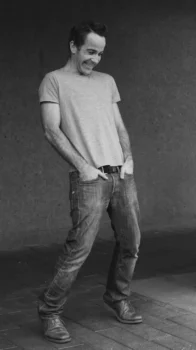
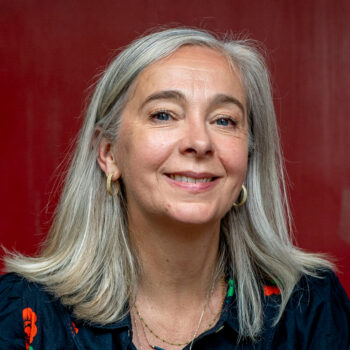
Miranda Rutter, Sam Sweeney & Rob Harbron

Crucible Playhouse, Sheffield
Wednesday 20 May 2026, 8.00pm

Tickets:
£23
£14 UC, PIP & DLA
£5 Students & Under 35s

Book Tickets

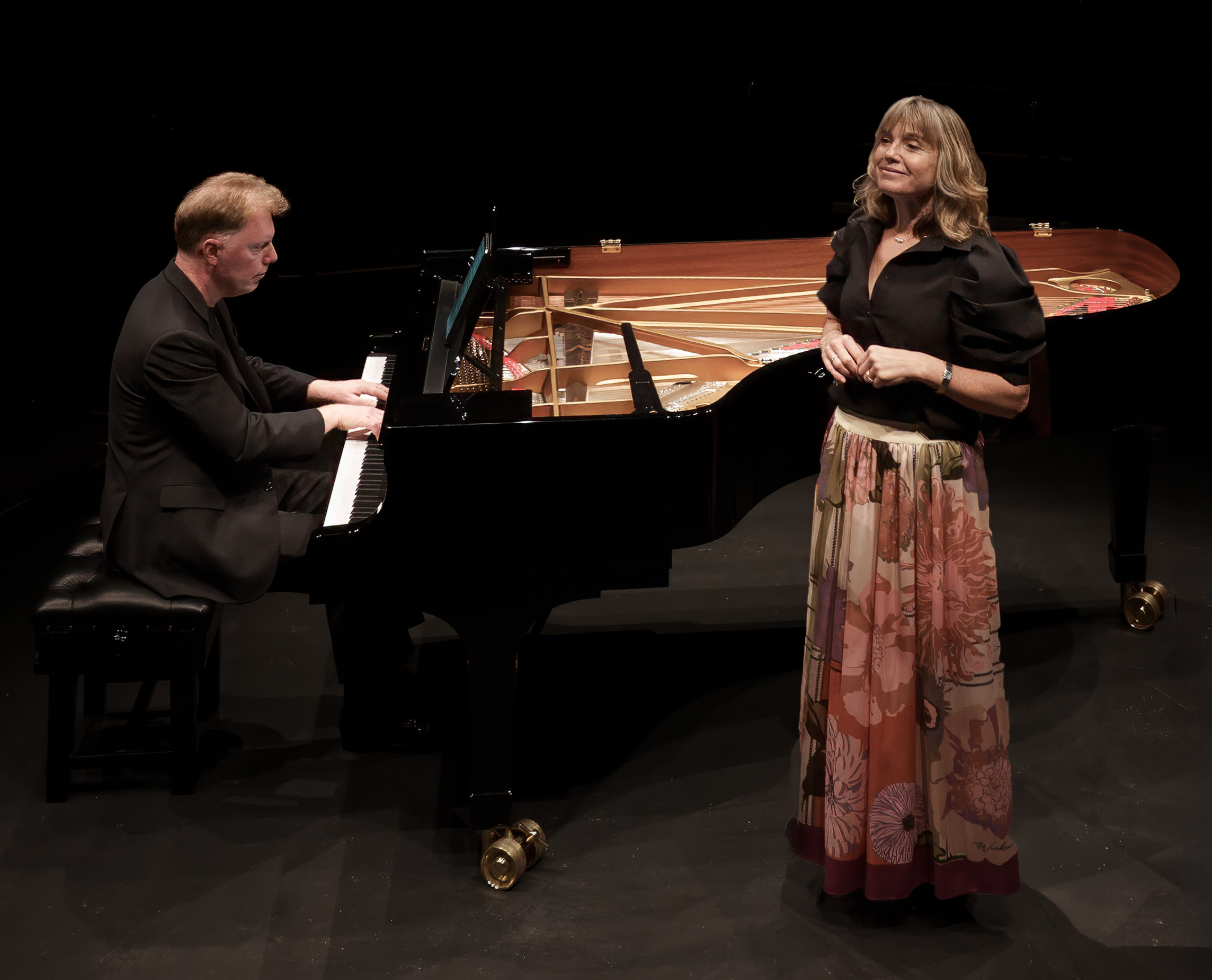
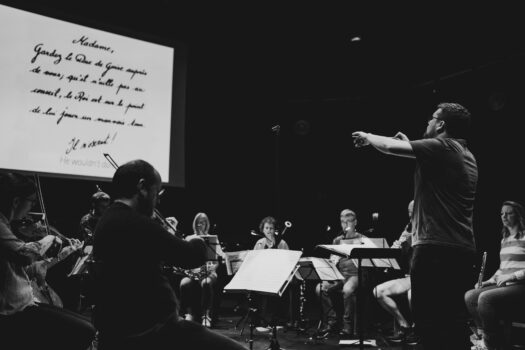
Three of the finest folk musicians working today perform a new suite of tunes, crafted from fragments of birdsong recorded on woodland walks by the brilliant fiddle player and composer Miranda Rutter.  

Performed with “concertina wizard” (The Guardian) Rob Harbron and “the fiddler with the golden ear” (BBC Radio 3) Sam Sweeney, as well as field recordings of this most elemental form of music, it is a love-song to avian beauty and a timely reminder of the struggles faced by migrating birds. 

“I follow in a long line of musicians from prehistory who’ve been inspired by birdsong – it being such an enchanting wonder of the world!  For me, listening deeper, discovering intricacies and learning to recognise birds by their song has made me care even more about birds and their habitat. As so many species are struggling in this rapidly changing, human-dominated world, I hope that my contribution can help spark intrigue, spread awareness and in turn, generate action to turn the tide of fortune for these awe-inspiring creatures.”
Miranda Rutter 

“Bird Tunes is, very simply, utterly beautiful. A glorious bringing together of field recordings, birdsong and three incredible musicians. Nature and music in perfect harmony.”

Tradfolk

SPEAK OF THE NORTH: A day of music and walking

Claire Booth, Tamsin Waley-Cohen & Tim Horton

St Anne's Church & St Peter's Church, Beeley & Edensor
Thursday 21 May 2026, 10.00am

Tickets:
£40 for 2 concerts plus guided walk and talk
£20 UC, PIP & DLA
£10 Students & Under 35s

Book Tickets

10.00am St Peter’s Church, Edensor
GRIEG
   Violin Sonata No.2 in G (20’) 
   Haugtussa (26′)

11.00 am
Guided walk (choice of routes of approx 1.8 or 3 miles)

1.00pm St Anne’s Church, Beeley

Poetry, Song and Landscape talk

2.15pm
Guided walk (approx 1.8 miles)

3.30pm St Peter’s Church, Edensor

GRAINGER Folk Music (selection) (20’) 
HIGGINS Speak of the North (35’)   

There will be an opportunity to have lunch before the concert in Beeley. Please bring your own food and drink.

In two beautiful churches on the Chatsworth Estate, violinist Tamsin Waley-Cohen, praised for her “undeniably fabulous playing” (Classical Source), joins soprano Claire Booth and Ensemble 360 pianist Tim Horton to perform music by Grieg and Grainger, and a Music in the Round co-commission, ‘Speak of the North’.  

Described as a vast and sprawling journey across the moors, mountains, cities and coasts of the north of England” (The Guardian), this new work by Gavin Higgins features poems by northern writers, such as Tony Williams and the Brontë sisters, interwoven with folk violin in a collection of musical pictures brought to life through song, including the work ‘Sycamore Gap’.

This is music that sings of the Northern landscape in all its breathtaking glory. 

“Thinking of the north gives me a feeling of rootedness. It grounds me and reminds me of who I am and, in returning to the north for this song cycle, I feel like I’ve come home.” Gavin Higgins

Save 20% when you book for 10 or more Music in the Round Sheffield concerts in one transaction. 
Save 10% when you book for 5 or more Music in the Round Sheffield concerts in one transaction.  Find out more. 

Additional info for ticket-holders:

Directions

– regardless of your approach, the Chatsworth estate is well signposted from Baslow, Bakewell and Rowsley.

Parking

– Please head to St Peter’s Church, Edensor, stewards will be present to guide you to parking spaces

– For satnav users, the postcode is DE45 1PH

9.30am: St Peter’s Church, Edensor, doors open
10.00am: St Peter’s Church, Edensor. Concert 1

11.00am: staff from Music in the Round will guide you along the route. The first stage of the walk is 3 miles on good paths and tracks (and only a very short section by the roadside), but it includes a gentle climb for the first mile. Please bring appropriate footwear, waterproofs and water.  A shorter 1.8 mile version of the route is also available and will also be guided for those who would prefer an easier walk.

There will be an opportunity to have lunch before the event in Beeley. Please bring your own food and drink.

1.00pm: St Anne’s Church, Beeley. Event 2

2.15pm: Guided walk. Everyone will walk the shorter 1.8 mile route back to Edensor. It is an easy walk along the riverside by Chatsworth House.

3.30pm: St Peter’s Church, Edensor. Concert 3 (doors open from 3.00pm)

4.30pm: Concert ends


SPEAK OF THE NORTH: final concert only

Claire Booth, Tamsin Waley-Cohen & Tim Horton

St Anne's Church & St Peter's Church, Beeley & Edensor
Thursday 21 May 2026, 3.30pm

Tickets:
£17 for the final concert in ‘a day of music and walking’
£10 UC, PIP & DLA
£5 Students & Under 35s

Book Tickets

GRAINGER Folk Music (selection) (20’) 
HIGGINS Speak of the North (35’)   

In a beautiful church on the Chatsworth Estate, violinist Tamsin Waley Cohen, praised for her “undeniably fabulous playing” (Classical Source), joins soprano Claire Booth and Ensemble 360 pianist Tim Horton to perform music by Grainger, and a Music in the Round co-commission, ‘Speak of the North’.  

Described as a vast and sprawling journey across the moors, mountains, cities and coasts of the north of England” (The Guardian), this new work by Gavin Higgins features poems by northern writers, such as Tony Williams and the Brontë sisters, interwoven with folk violin in a collection of musical pictures brought to life through song, including the work ‘Sycamore Gap’.  

This is music that sings of the Northern landscape in all its breathtaking glory. 

“Thinking of the north gives me a feeling of rootedness. It grounds me and reminds me of who I am and, in returning to the north for this song cycle, I feel like I’ve come home.” Gavin Higgins

Save 20% when you book for 10 or more Music in the Round Sheffield concerts in one transaction. 
Save 10% when you book for 5 or more Music in the Round Sheffield concerts in one transaction.  Find out more. 

BEETHOVEN & FRIENDS

Consone Quartet

Crucible Playhouse, Sheffield
Thursday 21 May 2026, 7.00pm

Tickets:
£17
£10 UC, PIP & DLA
£5 Students & Under 35s

Book Tickets
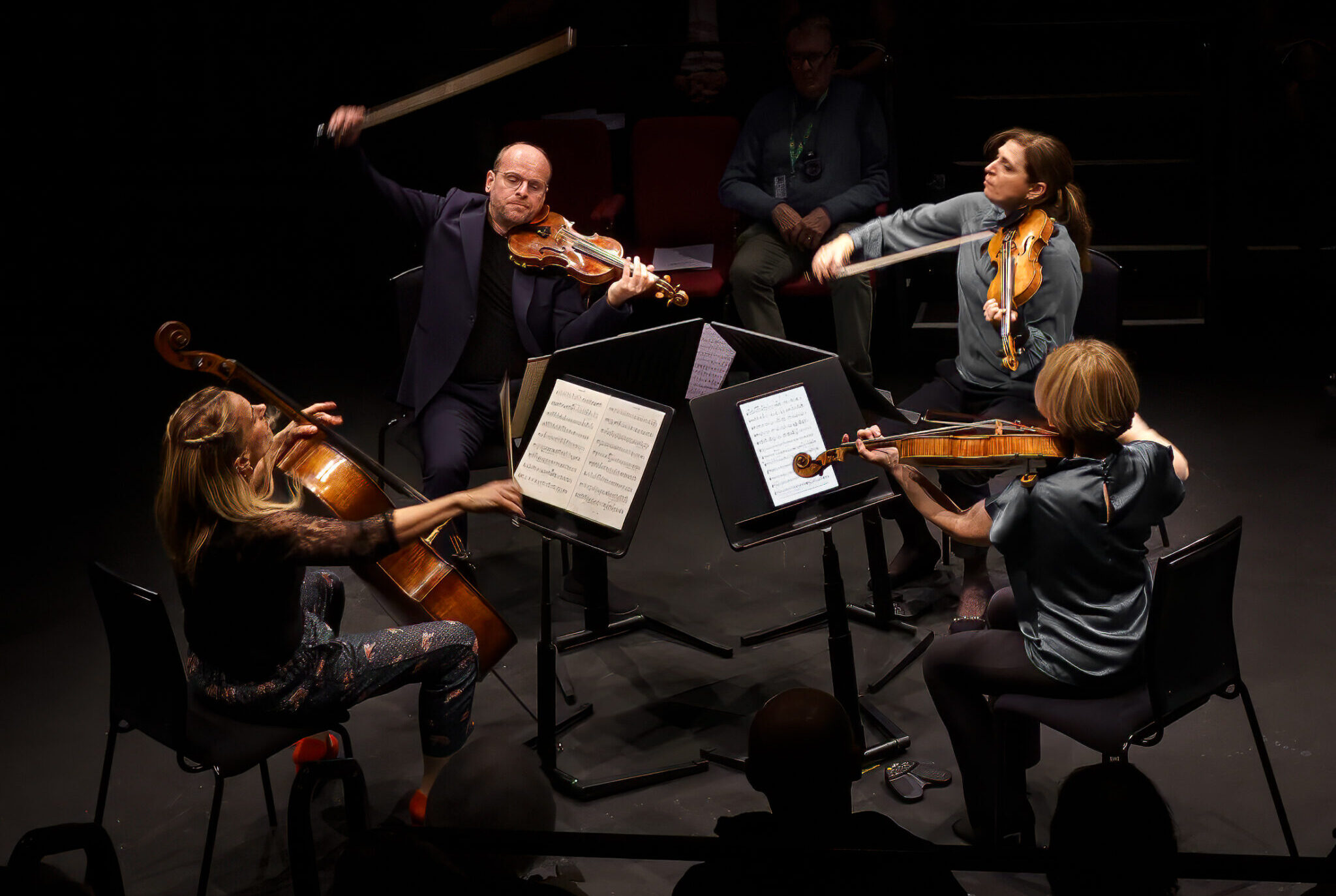
Musicians from the Consone Quartet with their instruments

Beethoven’s creative world is brought vividly to life through music and storytelling.

Pieces by Beethoven and his friends, personally chosen by the Consone Quartet, are interspersed with historical detail as told by Katy Hamilton, one of the most sought-after speakers and writers on music. She provides a human insight into the lives of these exceptional composers and their music.

This promises to be a captivating concert by one of the most rigorous and approachable quartets playing today, who have already been taken to heart by Sheffield audiences through their regular appearances with Music in the Round.

Excerpts from:
FANNY MENDELSSOHN String Quartet in E flat (4’)
CZERNY String Quartet in A minor (7’30)
BEETHOVEN String Quartet in F minor ‘Serioso’ (7’)
ZMESKALL String Quartet No.15 in G minor (5’15)
ONSLOW String Quartet in C minor Op. 8 No.3 (8’)
HAYDN String Quartet in G Op.77 No.1 (5’30)
HUMMEL String Quartet in C Op.30 No.1 (3’)
CHERUBINI String Quartet No.6 in A minor (4’30)

Supported by the Continuo Foundation

Save 20% when you book for 10 or more Music in the Round Sheffield concerts in one transaction. 
Save 10% when you book for 5 or more Music in the Round Sheffield concerts in one transaction. Find out more. 

KAFKA FRAGMENTS

Claire Booth & Tamsin Waley-Cohen

Crucible Playhouse, Sheffield
Thursday 21 May 2026, 9.00pm

Tickets:
£17
£10 UC, PIP & DLA
£5 Students & Under 35s

Book Tickets

KURTÁG Kafka Fragments (60’)  

Comprising 40 short excerpts from Kafka’s writings, diaries, and letters – often heartfelt and confessional – Kurtág’s Kafka Fragments is a work of sparse, lyrical beauty. Scored for violin and soprano, this wide-ranging work encapsulates the scale of the human experience, from dreamlike surrealism to moments of sardonic humour and lyrical beauty.  

Save 20% when you book for 10 or more Music in the Round Sheffield concerts in one transaction. 
Save 10% when you book for 5 or more Music in the Round Sheffield concerts in one transaction. Find out more. 

“[Booth’s] voice blazes with energy and subsides in exhausted despair. It’s a real tour de force. She has done nothing finer.”

The Guardian

THIS SCEPTERED ISLE: BRITISH SONG

Claire Booth & Ensemble 360

Crucible Playhouse, Sheffield
Friday 22 May 2026, 2.00pm

Tickets:
£23
£14 UC, PIP & DLA
£5 Students & Under 35s

Book Tickets

BRITTEN Phantasy Quartet (15’) 
BRITTEN / PURCELL She Loves and She Confesses Too (2’)
BRITTEN / PURCELL Oh Solitude (6’)
BRITTEN / PURCELL Bess of Bedlam (4’)
MATTHEWS Seascapes (13’)
KNUSSEN
Whitman Settings – When I heard the learn’d Astronomer (3’)
Whitman Settings – A Noiseless patient Spider (3’)
Whitman Settings – The Dalliance of the Eagles (2’)
Whitman Settings – The Voice of the Rain (3’)
WALTON Piano Quartet (30’) 

A celebration of British song from one of its finest exponents. Praised for her “radiant, rapturous, wonderfully nuanced performances” (The Scotsman), Claire Booth performs a selection of her best-loved music, from Britten’s stirring reimagining of Purcell songs to Colin Matthews’ evocative seascapes in celebration of the prolific composer’s 80th birthday.  

Save 20% when you book for 10 or more Music in the Round Sheffield concerts in one transaction. 
Save 10% when you book for 5 or more Music in the Round Sheffield concerts in one transaction. Find out more. 

BRITTEN Benjamin, Phantasy Quartet in F sharp minor

Andante con moto – Allegro vivace – Andante con moto

Bridge had already been successful in Walter Wilson Cobbett’s competition to write a ‘Phantasy’ – Cobbett’s reinvention of the Elizabeth Fantasy as new single-movement chamber works – and in 1910 he (along with Vaughan Williams and others) was commissioned by Cobbett to compose a Phantasy Piano Quartet. It’s a work in a satisfying arch form based on free-flowing musical ideas all of which derive from the powerful opening gesture. Bridge’s most famous pupil, Benjamin Britten, wrote in a programme note for the Aldeburgh Festival about this piece. He described the music as ‘Sonorous yet lucid, with clear, clean lines, grateful to listen to and to play. It is the music of a practical musician, brought up in German orthodoxy, but who loved French romanticism and conception of sound—Brahms happily tempered with Fauré.’

Nigel Simeone 2013

MATTHEWS Colin, Seascapes

Sidney Keyes died in Tunisia in April 1943 at the age of 20. Although usually spoken of as a war poet, none of the poems he is believed to have written during his short period of active service survive. However, of the poems I have chosen to set, all but one (The Island City) were written after he had enlisted in April 1942. Their mood is darker than his earlier work, but it is significant that his major ‘war’ poem The Foreign Gate was written while he was still at Oxford in February 1942. He is probably best known for Tippett’s 1950 settings of The Heart’s Assurance and Remember Your Lovers, but his Collected Poems (a volume of little more than 100 pages) reveal a remarkably sophisticated perspective, heavily influenced by Rilke and Yeats but demonstrating an exceptional, individual voice, brutally cut short. Victoria Sackville-West wrote of ‘the astonishing maturity of his mind, the intense seriousness of his outlook, and his innate pre-occupation with major things’. 


Colin Matthews 2026 © 


  1. The Island City

Walking among this island
People inhabiting this island city,
Whose coast recedes, whose facile sand
Bears cold cathedrals, restively:
I see a black time coming, history
Tending in footnotes our forgotten land. 

Hearing the once virginal
But ageing choirs of intellect
Sing a psalm that would appal
Our certain fathers, I expect
No gentle decadence, no right effect
Of falling, but itself the barren fall:
And Yeats’ gold song-bird shouting over all. 


  1. From: North Sea

The evening thickens.
Figures, figures like a frieze
Cross the sea’s face, their cold heads
Disdainful of the wind that pulls their hair
The brown light lies across the harbour wall. 


  1. Night Estuary

And yet the spiked moon menacing
The great humped dykes, scaring the plaintive seafowl,
Makes no right image, wakes no assertive echo.
Though one may stride the dykes with face upturned
To the yellow inflammation in the sky
And nostrils full of the living samphire scent,
There is no kindness in man’s heart for these.
In this place and at this unmeaning hour,
There is no hope for a man’s hope or his sorrow. 


O you lionhearted poet’s griefs, or griefs
Wild as the curlew’s cry of passage;
O hope uneasy as the rising ebb
Among the sedges, cold and questing guest;
Leave me alone this hour with the restive night.
Allow me to accept the witless landscape. 


  1. Interlude


  1. Seascape

Our country was a country drowned long since,
By shark-toothed currents drowned:
And in that country walk the generations,
The dancing generations with grey eyes 
Whose touch would be like rain, the generations
Who never thought to justify their beauty.
There once the flowering cherry grasped the wall
With childish fingers, once the gull swung crying 
Across the morning or the evening mist;
Once high heels rattled on the terrace
Over the water’s talk, and the wind lifted
The hard leaves of the bay; the white sand drifted
Under the worm-bored rampart, under the white eyelid. 


Our country was a country washed with colour.
Its light was good to us, sharp limning
The lover’s secret smile, the fine-drawn fingers;
It drew long stripes between the pointed jaws
Of sea-bleached wreckage grinning through the wrack
And turned cornelian the flashing eyeball.
For here the tide sang like a riding hero
Across the rock-waste, and the early sun 
Was shattered in the teeth of shuttered windows. 


But now we are the gowned lamenters
Who stand among the junipers and ruins.
We are the lovers who defied the sea. 


Text from Sidney Keyes: Collected Poems (1945) 


SONGS WITHOUT WORDS: MENDELSSOHN, BRAHMS & RACHMANINOV

Ensemble 360

Crucible Playhouse, Sheffield
Friday 22 May 2026, 7.00pm

Tickets:
£23
£14 UC, PIP & DLA
£5 Students & Under 35s

Book Tickets
Musicians from Ensemble 360

MENDELSSOHN
Song without Words Op.109 (4′)
Songs without Words Op.62 No.6 ‘Spring Song’ (3′)
Songs without Words Op.19b No.6 ‘Venetian Gondola Song’ (3′)
RACHMANINOV Vocalise from 14 Romances Op.34 No.14 (5′)
BRAHMS Horn Trio in E flat Op.40 (30′)
KNUSSEN Songs without Voices (11′)
DOHNÁNYI Sextet Op.37 (30′)

Mendelssohn’s exquisite ‘Songs Without Words’ – richly lyrical and profoundly heartfelt miniatures – are performed alongside glittering masterpieces of the Romantic era that showcase the vocal influence on instrumental music.  

Brahms’s uniquely expressive Horn Trio is at times muted and intimate, at others soaring and declamatory; Rachmaninov’s ‘Vocalise’ brings poignancy; and Dohnányi’s magnificent Sextet is a passionate, rhapsodic piece full of ardent fervour and lyrical intensity.  


This concert is dedicated to Maurice Millward, who loved music and was a generous supporter of Music in the Round for many years.


Save 20% when you book for 10 or more Music in the Round Sheffield concerts in one transaction. 
Save 10% when you book for 5 or more Music in the Round Sheffield concerts in one transaction. Find out more. 

MENDELSSOHN Felix, Song without Words Op.109

Mendelssohn’s sets of Songs without Words for solo piano include some of the most original of his piano pieces – lyrical miniatures that he started to compose in 1830. The Song without Words Op. 109 was composed in 1845, with a dedication to Lisa Cristiani and this short but warmly expressive piece turned out to be Mendelssohn’s last work for cello and piano. Cristiani was a French cellist who had played with Mendelssohn at a chamber music concert in Leipzig in October 1845 and he was instantly charmed by her. One of the first women to have a successful career as a solo cellist, Cristiani was 18 years old when she met Mendelssohn, and the travelled Europe over the next few years. During a particularly arduous tour to Russia in 1853, Cristiani succumbed to cholera, and she died at the age of 26.

MENDELSSOHN Felix, Songs without Words op.62 no 6

Only five of Mendelssohn’s 36 Songs Without Words received titles from the composer. Mendelssohn hesitated to attach a title to these piano miniatures because he found words ” … so ambiguous, so vague, so easily misunderstood in comparison to genuine music, which fills the soul with a thousand things better than words.” However, the title of Op.62, No.6, ‘Spring Song’, is directly attributable to Mendelssohn. 


This piece comes from the fifth set of Songs Without Words and was published in 1844 in Bonn. The six pieces were composed over about a two-year period and there are a variety of song types. The melody of No.6, features a rising and falling line peppered with occasional chromatic passages. Constant arpeggios provide an accompaniment with a delicate, harp-like sound that continues from beginning to end.  


MENDELSSOHN Felix, Songs without Words Op.19b

Andante con moto
Andante espressivo
Molto allegro e vivace
Moderato
Poco agitato
Andante sostenuto (Venetian Gondola Song)


Mendelssohn’s Songs without Words were highly original character pieces for solo piano. He composed eight sets (of six pieces each) between 1829 and 1845, starting with the present group from 1829–30. Mendelssohn seems to have coined the term: his sister Fanny wrote in 1828 that Felix had written ‘a Song without Words’ for her album, and that he was at work on several others – presumably some of them made their way into the Op. 19b set. (Incidentally, the pieces were originally issued Op. 19, but so were a set of six quite different songs for voice and piano; for the sake of clarity these became known as Op. 19a, and the piano pieces as Op. 19b). Mendelssohn’s careful grouping of the pieces in Op. 19b provide an extremely satisfying sequence, beginning with two Andante movements that are contrasted by key (E major and A minor), a brilliant and rhythmic piece in A major (sometimes known as ‘Hunting Song’), a slower piece in the same key, and an uneasy Poco agitato in F sharp minor, before the final rather melancholy ‘Venetian Gondola Song’ in G minor.

© Nigel Simone 2015

RACHMANINOV Sergei, Vocalise Op.34 No.14

The last of a group of songs published in 1912, the Vocalise is, as its title suggests, a wordless piece for voice and piano. Dedicated to the Russian soprano Antonina Nezhdanova, Rachmaninov quickly set about arranging it himself for soprano and orchestra, then produced a version for orchestra alone. Subsequently it has been transcribed for many different instruments, but the saxophone is an apt choice, not only because of its closeness to the sound of a human voice, but also because Rachmaninov himself used the alto saxophone as a solo instrument on one memorable occasion, in the first of his Symphonic Dances.

Nigel Simeone 2013

BRAHMS Johannes, Trio in E flat Op.40

Andante
Scherzo (Allegro)
Adagio mesto
Allegro con brio 


Composed in May 1865 at Baden-Baden, Brahms’s Trio was written for piano, violin and natural horn. It was first performed on 28 November 1865 at a concert in Zurich, with Brahms at the piano, the violinist Friedrich Hegar and a horn-player called Mr. Gläss. It was – and remains – an extremely unusual instrumental combination, and Brahms adapts the sonata form of the first movement to the exigencies of the natural horn (without too many excursions into remote keys), evoking a mood that seems to capture something of the shadowy romantic forests that surrounded Brahms in Baden-Baden when he wrote the piece. The second movement exploits the ‘hunting’ characteristic of the horn to memorable effect, with a darker contrasting section in the unusual key of A flat minor. The Trio is at its most personal in the slow movement, with its rare marking of mesto (sad, or melancholy). Brahms’s mother had died three months before he composed this piece, and it is easy to hear this heartfelt movement as a lament for her. Just before the end, the horn, then the violin, play a melody that is a premonition of the main theme of the finale. The finale itself is a bucolic delight, galloping to a joyful conclusion.  


Nigel Simeone © 2014 

DOHNÁNYI Ernst von, Sextet in C Op.37

Allegro appassionato
Intermezzo
Allegro con sentimento
Presto, quasi l’istesso tempo

Born in Hungary, Dohnányi’s early compositions had been praised by Brahms, and he always had a strong sense of being part of the Austro-German Romantic tradition. In this respect he was very different from his classmate at the Budapest Academy, Béla Bartók, but his music is always beautifully crafted and has very individual harmonic touches. The Sextet for piano, violin, viola, cello, clarinet and horn was completed on 3 April 1935 and it is the most unusually scored of his chamber works. It was first performed in Budapest on 17 June 1935, with the composer at the piano, and received warm reviews. One critic specifically praised the unusual choice of instruments, commenting that ‘the combination … is neither coincidental nor arbitrary.’

The musical structure is unified by Dohnányi’s use of a dramatic rising motif – often on the horn – that is first heard right at the start. The first movement is brooding and tense, but ends with hope (the rising motif returning in triumph). The Intermezzo includes a rather sinister march, while the third movement is a set of variations that includes one that is scherzo-like. This leads directly into the finale – an almost dizzyingly ebullient movement which suggests a kind of jazzed-up Brahms.

Nigel Simeone © 2011

HENNY PENNY: A CHILDREN’S OPERA

Claire Booth, Ensemble 360 & Children of Sheffield

Crucible Playhouse, Sheffield
Saturday 23 May 2026, 11.00am

Tickets:
£13
£7 UC, PIP & DLA
£5 Under 16s


Book Tickets

PHILIPS Henny Penny – world premiere (20’)
MUNDELLA SCHOOL & ELLEN SARGEN Rumours – world premiere (20’)

A world-first live staging of new opera and song made for – and by – curious young minds.  

‘Henny Penny’ is a charming operatic adaptation of the folk tale about a young chicken who believes the sky is falling when an acorn lands on its head.  

This children’s opera by the acclaimed composer Julian Philips (Glyndebourne Opera’s first ever Composer-in-Residence) will be performed live for the very first time, featuring a cast including a choir of Sheffield primary children.  

‘Rumours’ a song cycle created as part of a new Music in the Round composition project with children in Sheffield schools will also be given its public premiere.  

Save 20% when you book for 10 or more Music in the Round Sheffield concerts in one transaction. 
Save 10% when you book for 5 or more Music in the Round Sheffield concerts in one transaction. Find out more. 

Image: © Positive Note Productions

“It was incredible to see professionals and children perform together… To experience opera in such an accessible way [was] really amazing, innovative and inspiring. I found it incredibly moving.”

Audience feedback from ‘The Monster in the Maze’

FOUR LAST SONGS

Ensemble 360 & Claire Booth

Crucible Playhouse, Sheffield
Saturday 23 May 2026, 7.00pm

Tickets:
£23
£14 UC, PIP & DLA
£5 Students & Under 35s

Book Tickets

R STRAUSS Sextet from Capriccio (12’) 
SARGEN Fallen, felled (world premiere commissioned by Music in the Round) (5’) 
SIBELIUS En Saga (20’) 
WAGNER Siegfried Idyll (20’)
R STRAUSS (arr. Ledger) Four Last Songs (25’)  

“A swansong of sublime beauty” (Classic FM), Strauss’s ‘Four Last Songs’ are among the most touchingly beautiful and richly expressive pieces in the classical repertoire.  

These exquisite works are performed alongside Sibelius’s charmingly evocative tone poem fairytale, presented in its original septet version. This closing concert promises warm melodies and lyrical beauty. 

Post-concert drinks 
Friends of Music in the Round are invited to join us for drinks after the Final concert. Find out more about how you can become a Friend and join the post-Festival party at: www.musicintheround.co.uk/friends


This concert is generously sponsored by Kim Staniforth, in memory of Margaret Staniforth.


Save 20% when you book for 10 or more Music in the Round Sheffield concerts in one transaction. 
Save 10% when you book for 5 or more Music in the Round Sheffield concerts in one transaction. Find out more. 

SIBELIUS Jean, En Saga Op.9

Sibelius arrived in Vienna in the autumn of 1890 to begin his studies with Robert Fuchs and with Karl Goldmark, who encouraged him to study Mozart’s clarinet writing. In 1891 he was working on an Octet including clarinet, which had turned into a Septet for flute, clarinet and strings by September 1892. At the end of 1892 he had produced the first version of his orchestral tone poem En Saga, and Sibelius told one of his biographers that En Saga ‘had as its basis for flute, clarinet, and strings begun in Vienna.’ Sibelius was careful to cover his tracks, and no sketches have been discovered for either this or the equally mysterious Ballet Scene No. 2 (written just before En Saga). Even so, there’s plenty of evidence that En Saga did have an earlier incarnation as a chamber work – first as an octet, then as a septet – and the 1892 version of the orchestral score has been used to reverse engineer a fascinating reconstruction of Sibelius’s original conception for seven instruments.

© Nigel Simeone 2015

WAGNER Richard, Siegfried Idyll

Wagner composed the Siegfried Idyll at Tribschen, on Lake Lucerne. In 1869, his wife Cosima had a son – Siegfried – and a few months later, the piece Wagner had written in honour of mother and son had its first performance. On Christmas Day 1869, thirteen musicians gathered on the stairs outside Cosima’s bedroom and she awoke to the new piece (originally called Tribschen Idyll, with Fidi’s [i.e. Siegfried’s] Birdsong and Orange Sunrise, as a Symphonic Birthday Greeting from Richard to Cosima). Among the musicians in the first performance, the trumpeter was Hans Richter. Seven years later he conducted the first complete performance of Wagner’s Ring Cycle at the inaugural Bayreuth Festival. There’s a direct musical link: Brünnhilde’s music in the final scene of Siegfried – as she is woken by Siegfried on a rock ringed by fire – is drawn directly from the Siegfried Idyll.

Nigel Simeone 2014

SARGEN Ellen, Fallen, felled

This piece is conceptualised as the Finale to RUMOURS, a song cycle for children’s voices and ensemble co-written by Ellen Sargen and children at Mundella Primary School, Sheffield, in Spring 2026. RUMOURS reimagines the tale of Hansel & Gretel as a group of children navigating the fabricated rumours they have heard about a woman who lives in the local woods nearby, and finding the courage to stand against the prejudice this woman encounters from the local town. Across three songs (Curious, Into the Woods and Stand up for her), the characters tackle learning how to trust someone and stand up against prejudice and discrimination.

Fallen, felled looks back on these themes and leans into the darkness that characterises Grimm’s Fairytales. At the centre of this piece ‘the witch’ sings about the Ash tree, which in Scandinavian mythology is the tree that links and shelters all worlds. Here it becomes a central symbol that intertwines the setting from our reimagined story with those who bring politics into protecting others. The piece includes themes written by the children and transformed through this lens.

BEETHOVEN SEPTET

Ensemble 360

Crucible Playhouse, Sheffield
Tuesday 19 May 2026, 2.00pm

Tickets:
£23
£14 UC, PIP & DLA
£5 Students & Under 35s

Book Tickets

BEETHOVEN
  Violin Sonata in F ‘Spring’ (26’)
  String Quartet in C minor Op.18 No.4 (24’)
  Septet Op.20 (40’) 

The hopeful, energetic and lyrical ‘Spring’ Sonata is one of the most famous of all Beethoven’s works for violin, paired here with an intense and stormy early quartet.

Perhaps Beethoven’s most-performed work during his lifetime, the Septet features wind and strings in a marvel of instrumental writing. Captivating from the stately elegance of its opening to the rousing flourishes of its grand finale, this is music to lose yourself in.

Save 20% when you book for 10 or more Music in the Round Sheffield concerts in one transaction. 
Save 10% when you book for 5 or more Music in the Round Sheffield concerts in one transaction. Find out more. 

BEETHOVEN, Ludwig van Violin Sonata in F, Op.24 ‘Spring’

i. Allegro
ii. Adagio molto espressivo
iii. Scherzo. Allegro molto
iv. Rondo. Allegro ma non troppo

The ‘Spring’ Sonata was written in 1800 and first published the following year, originally as the second of a pair of sonatas. Both are dedicated to Moritz von Fries, a banker with an expensive lifestyle (leading to his eventual bankruptcy) and excellent taste in music and art. Beethoven was a regular guest at Fries’s home and as well as the Op. 23 and Op. 24 Violin Sonatas, Fries was also the dedicatee of the Seventh Symphony. The origins of the nickname are obscure, but ‘Spring’ is a very apt choice for this genial work. After the lyrical first movement, the Adagio molto espressivo is a deeply felt song without words, including some elaborate decorations. The Scherzo lives up to its name: a clever and tricky rhythmic joke that plays with the audience’s expectations – and it is also one of Beethoven’s shortest sonata movements. The Rondo is one of Beethoven’s most gentle and unhurried finales, bringing this most radiant of his violin sonatas to an amiable close. The ‘Spring’ Sonata is the first of Beethoven’s violin sonatas to be in four movements (its four predecessors are all in three movements) and it is a work of effortless ingenuity as well as boundless charm.

© Nigel Simeone

BEETHOVEN Ludwig van, String Quartet in C minor Op.18 No.4

Allegro ma non tanto
Andante scherzoso quasi allegretto
Menuetto. Allegretto
Allegro – Prestissimo


C minor was a key that Beethoven used for some of his most dramatic music – works like the Fifth Symphony, the Pathétique Sonata, and the Coriolan Overture – and Sir George Grove wrote that “the pieces for which he has employed it are, with very few exceptions, remarkable for their beauty and importance.” The fourth of the Op.18 quartets has something of the turbulent mood of other pieces in C minor. The first movement is uneasy, though surprisingly, perhaps, this is especially apparent in the so-called Minuet third movement that has a particularly dark, brooding kind of energy. But there’s something paradoxical about this work: Beethoven has no real slow movement, and instead he has written a playful Andante in C major. The rondo finale is reminiscent of Haydn, written in the ‘Hungarian’ style he often used (but a rarity in Beethoven). An exciting minor-key main theme is interspersed with gentler episodes, culminating in a wild dash to the finish.

Nigel Simeone 2013

BEETHOVEN Ludwig Van, Septet in E flat Op.20

Adagio – Allegro con brio 
Adagio cantabile 
Tempo di menuetto 
Tema con variazioni. Andante 
Scherzo. Allegro molto e vivace 
Andante con moto alla marcia – Presto 
 

Beethoven’s Septet was written in 1799. It was first performed at a concert given by Beethoven at the Burgtheater in Vienna on 2 April 1800 and was published – after a typically querulous exchange between Beethoven and his publisher – in 1802. Aiming for the top in terms of potential supporters, Beethoven dedicated it to Maria Theresa – the last Holy Roman Empress and the first Empress of Austria. The Septet’s success was enduring, something Beethoven came to resent since he felt the public should take more interest in his later music. 


The first movement is a genial sonata form Allegro with a slow introduction. The Adagio cantabile opens with a clarinet melody that is taken over by the violin, while clarinet and bassoon play a counter-melody, all supported by a gentle accompaniment on the lower strings. The bucolic Minuet demonstrates Beethoven the recycler, using the same theme as the Piano Sonata Op.49 No.2. The relaxed mood is maintained in the charming theme and variations. The Scherzo is launched by a horn call from which much of what follows is derived. Even the start of the Trio has thematic links with this tune, but a cello theme provides an effective contrast. The finale begins with one of the few significant uses of a minor key in the Septet: a stern march that quickly gives way to a rollicking Presto, its mood unclouded and its themes deliciously memorable. 


© Nigel Simeone 2014 

FELDMAN & BECKETT: WORDS & MUSIC

Vicky Featherstone, George Morton & Ensemble 360

Crucible Playhouse, Sheffield
Monday 18 May 2026, 7.00pm

Tickets:
£23
£14 UC, PIP & DLA
£5 Students & Under 35s

Book Tickets

BECKETT Rockaby (20’)
FELDMAN Why Patterns? (30’)
BECKETT / FELDMAN Words & Music (42’)

Visionary titans in their respective artforms, the warm friendship of composer Morton Feldman and playwright Samuel Beckett resulted in some of the most extraordinary artworks of the 20th century.

This evening of music, theatre and a dramatic meeting of the two includes Beckett’s monologue of memory and loss Rockaby and the pair’s most extraordinary collaboration Words & Music, in which a small group of musicians playing a distinctively taut Feldman score becomes a character in the drama.

Directed by Vicky Featherstone (Artistic Director, Royal Court Theatre 2013-2023 and Founding Artistic Director, National Theatre of Scotland).

Save 20% when you book for 10 or more Music in the Round Sheffield concerts in one transaction. 
Save 10% when you book for 5 or more Music in the Round Sheffield concerts in one transaction. Find out more. 

There isn’t a hint of sentimentality in Vicky Featherstone’s delicately calibrated production of Samuel Beckett’s monologue about mortality.

The Guardian

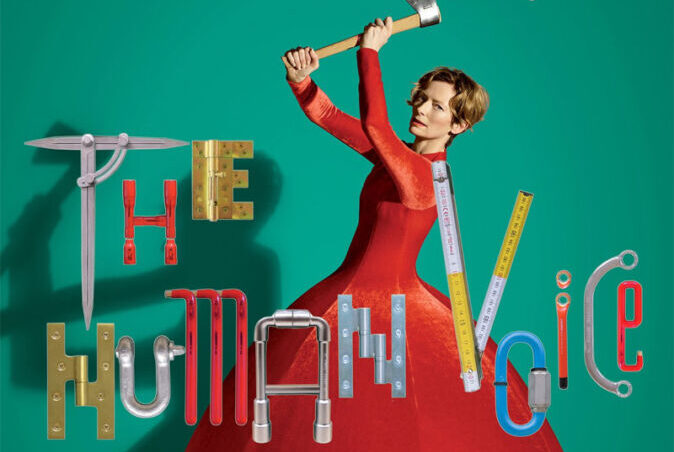
EXPLORING COCTEAU’S ‘THE HUMAN VOICE’

Claire Booth

Showroom, Sheffield
Monday 18 May 2026, 2.00pm

Tickets:
£17
£10 UC, PIP & DLA
£5 Students & Under 35s

Book Tickets

featuring film performances from INGRID BERGMAN, SOPHIA LOREN & TILDA SWINTON.

Ahead of our performance on Tuesday evening, a panel of music and film experts explore the Jean Cocteau masterpiece that gave rise to Poulenc’s adaptation, La Voix Humaine.

Claire Booth and guests discuss the impact and influence of various cinematic versions of the work by luminous actors and some of the greatest directors, before a screening of Pedro Almodóvar’s 30 minute version starring Tilda Swinton from 2021.

Save 20% when you book for 10 or more Music in the Round Sheffield concerts in one transaction. 

Save 10% when you book for 5 or more Music in the Round Sheffield concerts in one transaction. Find out more.