SCHOOLS’ CONCERT: THE STORM WHALE

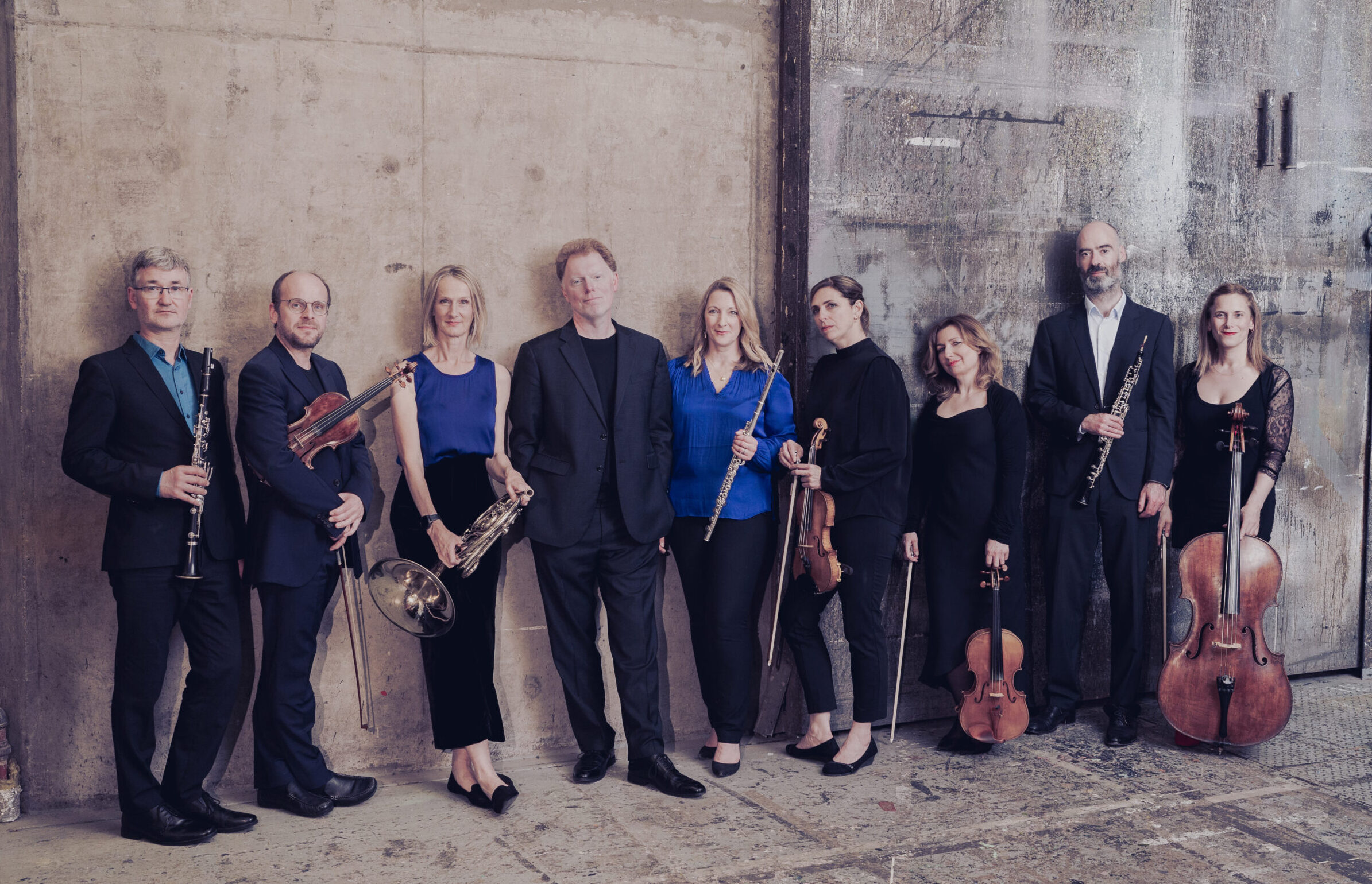
Ensemble 360

Junction, Goole
Thursday 23 April 2026, 1.30pm
Past Event

Music in the Round invites your class to take part in a brilliant music project, culminating in a live concert at The Junction, Goole.

Paul Rissmann (composer) has created a brand-new piece of music based around the modern-classic children’s books by Benji Davies, which includes songs for your class to learn and join in with in the concert.

The Storm Whale tells the story of a boy, a whale washed up on the beach and friendships that will change their lives forever and echo down the generations. Benji Davies’ heart-warming tales of friendship, love and courage are brought to life through music specially written to accompany the book. 

Our EY and KS1 practitioners will support you to embed singing and music-making in classroom learning throughout the project, with training, resources, and in-school support newly developed around The Storm Whale books. The project introduces young children to classical music in a fun and educational setting, including a concert featuring strings, woodwind and horn, presented together with story-telling and projected illustrations.

Performed by the wonderfully dynamic and hugely engaging musicians from Ensemble 360, this concert is a great introduction to live music for early years and KS1 children. It’s full of wit, invention, songs and actions, and plenty of opportunities to join in.

An educators’ classroom pack and other resources are available here.

The Storm Whale tells a simple but powerful story about loneliness and the love between a parent and child… The world may be as big and lonely and incomprehensible as the ocean, but still it’s possible to find tremendous, heart-stopping tenderness.” The New York Times on the book

With many thanks to all our funders, including:

The Sarah Nulty Power of Music Foundation, Gripple Foundation, JG Graves Charitable Trust, Sheffield Town Trust and Wise Music Foundation

“The musicians did a wonderful job of introducing the young audience to enjoyment of the theatre, live music and engaging story-telling. Proof of their success [were] the lines of excited children coming up to meet the musicians who had gathered in the foyer with their instruments.”

The Yorkshire Post (on a previous Music in the Round storybook concert)

SCHOOLS’ CONCERT: THE STORM WHALE

Ensemble 360

The Stables, Milton Keynes
Monday 16 March 2026, 11.00am / 1.00pm

Music in the Round invites your class to take part in a brilliant music project, culminating in a live concert at The Stables, Milton Keynes.

Paul Rissmann (composer) has created a brand-new piece of music based around the modern-classic children’s books by Benji Davies, which includes songs for your class to learn and join in with in the concert.

The Storm Whale tells the story of a boy, a whale washed up on the beach and friendships that will change their lives forever and echo down the generations. Benji Davies’ heart-warming tales of friendship, love and courage are brought to life through music specially written to accompany the book. 

Our EY and KS1 practitioners will support you to embed singing and music-making in classroom learning throughout the project, with training, resources, and in-school support newly developed around The Storm Whale books. The project introduces young children to classical music in a fun and educational setting, including a concert featuring strings, woodwind and horn, presented together with story-telling and projected illustrations.

Performed by the wonderfully dynamic and hugely engaging musicians from Ensemble 360, this concert is a great introduction to live music for early years and KS1 children. It’s full of wit, invention, songs and actions, and plenty of opportunities to join in.

An educators’ classroom pack and other resources are available here.

The Storm Whale tells a simple but powerful story about loneliness and the love between a parent and child… The world may be as big and lonely and incomprehensible as the ocean, but still it’s possible to find tremendous, heart-stopping tenderness.” The New York Times on the book

With many thanks to all our funders, including:

The Sarah Nulty Power of Music Foundation, Gripple Foundation, JG Graves Charitable Trust, Sheffield Town Trust and Wise Music Foundation

“The musicians did a wonderful job of introducing the young audience to enjoyment of the theatre, live music and engaging story-telling. Proof of their success [were] the lines of excited children coming up to meet the musicians who had gathered in the foyer with their instruments.”

The Yorkshire Post (on a previous Music in the Round storybook concert)

FAMILY CONCERT: THE STORM WHALE

Ensemble 360 & Elinor Moran

Palace Theatre, Mansfield
Wednesday 18 February 2026, 11.00am

A brand-new storybook concert, based on the modern classic book series by Benji Davies.

The Storm Whale tells the story of a child, and a whale washed up on the beach,  and friendships that will change their lives forever and echo down the generations. These heart-warming tales of friendship, love and courage are brought to life through music specially written to accompany the book by our Children’s Composer-in-Residence, Paul Rissmann.  

Perfect for 3– 7-year-olds, this is a fun introduction to a live concert experience, brimming with wonderful music, memorable songs, images from the book and plenty of chances to join in. 

The Storm Whale tells a simple but powerful story about loneliness and the love between a parent and child… The world may be as big and lonely and incomprehensible as the ocean, but still it’s possible to find tremendous, heart-stopping tenderness.” The New York Times on the book.

With many thanks to all our funders, including:

The Sarah Nulty Power of Music Foundation, Gripple Foundation, JG Graves Charitable Trust, Sheffield Town Trust and Wise Music Foundation.

“The musicians did a wonderful job of introducing the young audience to enjoyment of the theatre, live music and engaging story-telling. Proof of their success [were] the lines of excited children coming up to meet the musicians who had gathered in the foyer with their instruments.”

The Yorkshire Post (on a previous Music in the Round storybook concert)

MOZART, BEETHOVEN & MORE

Consone Quartet

Junction, Goole
Saturday 22 November 2025, 3.00pm

£16

Past Event
Consone String Quartet

BEETHOVEN String Quartet in F H.34
HAYDN String Quartet in F H.34
MOZART String Quartet in A K464 

Music in the Round’s Visiting String Quartet make their Goole debut. The Consone Quartet has won great acclaim for its authentic interpretations of Romantic and Classical works, with prestigious awards including the Royal Over-Seas League Ensemble prize and as BBC New Generation Artists. 

BEETHOVEN, Ludwig van, String Quartet in F major, H.34

i. Allegro
ii. Allegretto
iii. Rondo. Allegro comodo
String Quartet in F major is an unusual work, in that it is the only piece that Beethoven arranged from his own works. The original piece, Piano Sonata no.9 in E major, was composed in 1798 and dedicated to Baroness Josephine von Braun who was wife of the manager of the Theater an der Wien. He later arranged it for string quartet in 1801 and transposed it from the key of E major to F major, to better fit the open strings on the viola and cello. Beethoven displays great skill by knowing, not only what to add, but also what to leave out when re-imagining piano music for strings, transforming the piece but not replicating it directly. There is great drama in the contrast between the lyrical passages and the lively thematic sections, showcasing that the piece has just as much flair on the strings as it does the piano.

HAYDN Joseph, String Quartet in G major ‘How do you do’

i. Vivace assai 
ii. Largo e cantabile 
iii. Scherzo. Allegro – Trio 
iv. Finale. Allegretto 
 

Haydn’s Op.33 came after a ten-year gap from his previous string quartet. In 1781 he wrote this set of six pieces that have since been called the ‘Russian’ quartets, as Haydn dedicated them to the Grand Duke Paul of Russia. ‘Russian’ quartet No. 5 is also known as ‘How Do You Do’, due to the four-note sequence that opens the first theme, and that is repeated at various intervals throughout all four movements.  The second movement is set apart from the other lively and upbeat movements, holding a darker, more melancholy feeling to it. The Scherzo is by far the most playful of the four pieces, containing displaced accents and long pauses that constantly fool the listener into believing the piece is reaching its end. Together, Op.33 No.5 is a set of sophisticated pieces full of energy and momentum, that audiences have adored since Haydn first composed them. 

MOZART Wolfgang Amadeus, String Quartet in A major K464

i. Allegro 
ii. Menuetto and Trio 
iii. Andante (theme with variations) 
iv. Allegro non troppo 
 

Mozart wrote this String Quartet in A major in 1785, and it was the fifth of his six quartets that he dedicated to contemporary composer Joseph Haydn. Haydn and Mozart held each other’s work in high regard, even sitting down together to play the last three ‘Haydn’ quartets, with Haydn on first violin and Mozart playing viola. String Quartet in A major is much more frugal in its makeup than many of Mozart’s other works, with only a couple of short musical themes being established and explored in each piece. Ironically though, it is one of his longest quartets. It is sometimes known as the Drum because in the sixth variation of the Andante, the cello part has a repeated staccato section that has been likened to a drumbeat. The coda in the Allegro non troppo picks up on Haydn’s practice of ‘joke’ endings, bringing the set to a playful conclusion. 

THE LARK ASCENDING

Ensemble 360

White Rock Studio, Hastings
Monday 27 April 2026, 7.30pm

Tickets
£10 – £20

Past Event

HOLST Phantasy String Quartet (10′)
BRITTEN Three Divertimenti for String Quartet (10′)
HOLBROOKE Ellean Shona (4′)
HOWELLS Phantasy Sting Quartet (13′)
PURCELL Three-part Fantasias (8′)
HARRISON Clarinet Quintet (12′)
VAUGHAN WILLIAMS (arr. Gerigk) The Lark Ascending

The violin soars melodiously above the rest of the quartet in the gorgeous arrangement of Vaughan Williams’ most popular work The Lark Ascending, which concludes this concert of English music for strings and clarinet. Fantasies from the Baroque gems of Purcell’s Three-part Fantasias to Imogen Holst’s Phantasy String Quartet sit alongside this perennial favourite.

Time advertised is start time

HOLST Imogen, Phantasy String Quartet

Imogen Holst (1907-1984) composed her Phantasy String Quartet in 1928 (although it wasn’t premiered until several years after her death, in 2007). The piece typifies the composer’s early style, blending the English pastoral tradition with her own unique talents for melodic development, contrapuntal writing, and idiosyncratic quartet-textures. It won the Cobbet Prize – an award founded by the wealthy industrialist Walter Willson Cobbett to encourage composers to write ‘Phantasies’, works of one movement in the tradition of 16th and 17th-Century English ‘fancies’, ‘fantasies’, or ‘fantasias’. These were short instrumental works which, like Holst’s, did not adhere to strict forms but rather developed in their own imaginative and unexpected ways. Beginning with lush pastoral harmonies, Holst’s Phantasy transitions fluidly through episodes of meditative introspection and spirited energy. 

BRITTEN Benjamin, Three Divertimenti for String Quartet

Britten planned these movements as part of a five-movement Quartetto serioso with a subtitle from Shakespeare’s Winter’s Tale: “Go play, boy, play!” An earlier version of the opening March was written for a suite inspired by the film Emil and the Detectives (the children’s novel by Erich Kästner was a great favourite of Britten’s), but this was never completed. Eventually he settled on a work in three movements, and the first performance was given by the Stratton Quartet at the Wigmore Hall on 25 February 1936. The audience response was chilly and a hurt Britten withdrew the Three Divertimenti, which were only published after his death. His brilliant gift for idiomatic quartet writing is already apparent in this early work – from the arresting rhythms and textures of the March to the beguiling central Waltz, and the driving energy of the closing Burlesque.


© Nigel Simeone

HOLBROOKE Joseph, Eilean Shona for Clarinet and String Quartet

Joseph Holbrooke was a curious and sometimes infuriating character. His chamber music concerts would often include oddly aggressive notes for the audience, presenting – as he put it – ‘music to an apathetic public’ after which he ‘hopes to receive as few blows as possible (with the usual financial loss) in return.’ On another occasion, he refused to perform his Piano Concerto in Bournemouth: an insert in the programme explained that ‘Mr Joseph Holbrooke declines to play today because his name is not announced on the posters in large enough type.’ Setting his personal flaws to one side, he was capable of producing fine music, of which Eilean Shona is a brief and very attractive example. Eilean Shona is a small island off the west coast of Scotland and Holbrooke’s short work for clarinet and string quartet (reworked from a song for voice and piano) is haunting and evocative. 

Nigel Simeone 2024 

HOWELLS HERBERT, Phantasy String Quartet, Op.25

Herbert Howells (1892–1983): Phantasy String Quartet, Op. 25 


In 1905, W.W. Cobbett launched a competition to breathe new life into British chamber music by reviving the ‘Phantasy’, an archaic form which Henry Purcell had made his own in about 1680. The competition’s criteria stated that ‘The parts must be of equal importance, and the duration of the piece should not exceed twelve minutes. Though the Phantasy is to be performed without a break, it may consist of different sections varying in tempi and rhythm.’ Composers including Vaughan Williams, John Ireland, Arnold Bax and Frank Bridge all rose to the challenge, composing works under Cobbett’s auspices. In the 1917 competition, second prize (of 10 guineas) was awarded to Herbert Howells for his Phantasy String Quartet Op. 25 (the first prize that year went to Harry Waldo Warner). In Cobbett’s Cyclopedic Survey of Chamber Music, he wrote that in Howells’s Quartet ‘the fine tunes on which it is built are not traditional, but are by Howells himself … modal colouring persists throughout, and the themes are subjected to a process of permutation, rather than development, which is analogous to the process which tunes undergo when transmitted orally.’ Cobbett went on to say that Howells ‘contrives in the single movement of a phantasy to let his themes pass through a series of moods which are equivalent, in miniature, to the fully expressed phrases of a four-movement work’. The result is a quartet that has moments of striking beauty, with occasional echoes of the Tallis Fantasia by his friend Vaughan Williams. 

© Nigel Simone 2025 

PURCELL Henry, Three-Part Fantasias

Henry Purcell (1659–1695) was one of the most celebrated English composers of the Baroque era. Among his remarkable works is a series of Fantasias (or Fancies), composed in 1680 when Purcell was only 21 years old. Showcasing his profound skill with contrapuntal writing – in which each of the instrument’s melodic lines work both independently and as part of the musical-whole – the Fantasias are considered among the finest examples of the form and are regarded by many to be the ‘jewel in the crown of English consort music’. This wasn’t always the case, however. When Purcell composed these works, the Fantasia was quite unfashionable. King Charles II is said to have had ‘an utter detestation of Fancys’. Out of favour in the Royal court, Purcell’s Fantasias were therefore likely intended to be performed in domestic settings. Originally written for three viols, they are here transcribed for string trio (violin, viola, and cello). 

HARRISON PAMELA, Clarinet Quintet

Allegro moderato
Lento
Allegro molto e agitato 

Pamela Harrison is a lesser-known English composer of the 20th Century. Born in Orpington, Greater London in 1915, Harrison produced many of her works during the Second World War. She studied at the Royal Northern College of Music under Australian pianist Arthur Benjamin, and regularly performed her own piano compositions as a student.  Her Clarinet Quintet (1956) was one of three pieces inspired by and written for her friend Jack Brymer, who was one of the most renowned clarinettists of the 20th Century. The opening Allegro Moderato begins in a jaunty manor, but quickly gives way to an unsettled feeling, in both the rhythm and the melody. The Lento movement is spacious and full of emotional intensity, with the clarinet line floating above a static string accompaniment. The final movement, the Allegro molto e agitato sees the return of the opening theme, riding a flurry of notes in the accompanying parts. Ensemble 360’s Robert Plane has championed Harrison’s music and was responsible for the world premiere recordings of her clarinet chamber pieces. 


© Nigel Simeone    


VAUGHAN WILLIAMS Ralph, The Lark Ascending

Vaughan Williams began The Lark Ascending before the outbreak of the First World War, taking his inspiration from George Meredith’s 1881 poem of the same name. But he set this ‘Romance’ aside during the war and only finished it in 1920. The violinist Marie Hall gave the first performance of the original version for violin and piano in Shirehampton Public Hall (a district of Bristol) on 15 December 1920. Vaughan Williams dedicated the work to her, and she went on to give the premiere of the orchestral version six months later, when it was conducted by the young Adrian Boult at a concert in the Queen’s Hall in London. Free, serene and dream-like, this is idyllic music of rare and fragile beauty.

© Nigel Simeone

DEATH & THE MAIDEN

Dudok Quartet

White Rock Studio, Hastings
Monday 24 November 2025, 7.30pm

Tickets:
£10 – £20

Past Event

SAARIAHO Terra Memoria (18’)
GESUALDO Moro, lasso, al mio duolo (4’)
MUSSORGSKY Songs and Dances of Death (selection) (10’)
LISZT Via Crucis (selection) (10’)
SCHUBERT String Quartet No.14 in D minor, ‘Death & the Maiden’ (35’) 

Described as “quite simply revelatory” (The Irish Times) and “stylish, open-minded and adventurous” (The Guardian), the Dudok Quartet Amsterdam has made its name as playful, inventive interpreters of the string quartet repertoire. Coached by Peter Cropper (first violin of the Lindsay String Quartet and founder of Music in the Round) in the early years of their collaboration, they have since gone from strength to strength. Presenting Schubert’s extraordinary and profound ‘Death and the Maiden’ String Quartet alongside their own arrangement of a 17th century Italian madrigal by Carlo Gesualdo and Kaija Saariaho’s modern masterpiece, Terra Memoria (‘Earth Memory’), this concert promises to thrill, intrigue and delight.

Time advertised is start time.

SAARIAHO Kaija, Terra Memoria

“I feel when writing for a string quartet that I’m entering into the intimate core of musical communication,” the late Kaija Saariaho wrote of her second string quartet, Terra Memoria, in 2006. Twenty years separated her first and second outings for these forces, and while the electronics have departed in the journey from the initial Nymphéa to here (and the acute focus on timbre has relaxed), the pieces share a common musical argument. For one, there’s Saariaho’s continued fascination with the particular timbres and textures available to stringed instruments, like tremolandos, trills, and bowing techniques like playing at the bridge. What the two quartets also share is the sense of the music gleaming, resulting from these carefully chosen combinations. 


Terra Memoria is a pretty straightforward title. “Earth refers to my material, and memory to the way I’m working on it,” Saariaho wrote. “The piece is dedicated “for those departed,” she continued. “Those of us who are left behind are constantly reminded of our experiences together: our feelings continue to change about different aspects of their personality, certain memories keep on haunting us in our dreams. Even after many years, some of these memories change, some remain clear flashes which we can relive.” 


Saariaho died from brain cancer in 2023, so the piece becomes a kind of meta memorial today. But Terra Memoria is no redolent, misty-eyed tribute. Score indications vacillate frequently and distinctly, between misterioso, espressivo, and dolce (sweetly), followed by rasping sections called things like con violenza, impetuoso. The piece aches like a piece written a century before, full of expressive anguish and volatility. Listen for the waterfall-like constructions of limpid textures, and the stunning moment halfway through when the tiny, sky-high texture is delicately snuffed out.  


© Hugh Morris 2025

GESUALDO Carlo, Moro, lasso, al mio duolo

The name of Carlo Gesualdo, Prince of Venosa, first spread across Italy because of a grand scandal. In 1590, after discovering his wife and her lover in flagrante, Gesualdo killed them both on the spot. Given all of the actors in this honour killing were drawn from nobility, news of the murder travelled particularly quickly; only later did his idiosyncratic corpus of strange harmonies emerge. 


Moro, lasso, al mio duolo, a morose yet sparkily inventive madrigal for five voices, comes from Gesualdo’s sixth and most stylistically adventurous book of madrigals, published in 1611, two years before his death aged 47. Gesualdo’s late madrigals are notable for their harmonic ingenuity. They are heavily chromatic, emotionally volatile, and utilise false relations—chromatic contradictions, where two voices overlap by a semitone at the same time to create a particularly scrunchy moment—frequently. The effect is polarising. Eminent 18th century music historian Charles Burney described the opening of Moro, lasso as “extremely shocking and disgusting.” But, over 400 years since Gesualdo’s death, it still sounds strikingly unlike anything else in the musical canon. 


© Hugh Morris 2025

MUSSORGSKY Modest, Songs and Dances of Death

Like Pictures at an Exhibition and his opera Khovanshchina, Mussorgsky’s Songs and Dances of Death number among the many works that required finishing or orchestrating by his composer friends. Today, they exist in many orchestrated versions, even serving as a jump-off point for Shostakovich’s Fourteenth Symphony, but the first version to exist was completed by Alexander Glazunov and Nikolai Rimsky-Korsakov, published in 1882, a year after Mussorgsky’s death. 

Each of the four songs—Lullaby, Serenade, Trepak, and Field Marshal—are a poetic snapshot of a specific death; respectively, of a child, a girl, a drunken peasant, and a soldier. Mussorgsky set texts by Arseniy Golenishchev-Kutuzov, a younger friend of the composer, who lodged with Mussorgsky in the mid 1870s. 

In some ways the collection is a tale of Mussorgsky’s domestic situation, setting words by one housemate, and later having it orchestrated by another, in Rimsky-Korsakov. It also tells of Mussorgsky’s preoccupations. Death was firmly on his mind, having experienced the loss of friends—the death of painter Victor Hartmann inspired him to write Pictures at an Exhibition—as well as suffering from frequent alcohol-induced health problems himself.  

This cycle is certainly shadowed by death, but it’s interesting to note how death becomes an inevitable, inescapable fact, and in that way, a figure approaching the benign. (In this way, it bears a resemblance to Schubert’s calm, consoling figure who appears in the second stanza of Death and the Maiden.) In the first setting, Death appears at the door of a mother, then as a mysteriously seductive knight in the second, an enticing figure to a drunken figure in the third, and finally, the inevitable consequence of battle. 


© Hugh Morris 2025

LISZT Franz, Via Crucis

One of the great surprises of 19th century musical history was the about turn of Franz Liszt, the flamboyant pianist and supporter of radical progressive motion in music, who later took minor orders at the Vatican in 1865, and closed out his life as Abbé Liszt. However, Liszt approached church music with the much the same spirit that he sought the music of the future among the members of Allgemeiner Deutscher Musikverein in his earlier years; writing in 1835 in De la musique religieuse, Liszt sought a “regeneration” of religious music, and saw the composer’s social role extending into the church as well as secular musical contexts. 

Though there is a continuation of spirit, this is a Liszt unlike the fireworks of the B Minor sonata, the symphonic poems or the piano concerti. Via Crucis is a collaged work of musical pictures corresponding to the stations of the cross found in many Catholic churches. He finds a passionate if contained expressivity in this collection, which draws on plainchant and Bach’s Passion settings. 


© Hugh Morris 2025

SCHUBERT Franz, String Quartet in D minor ‘Death and the Maiden’

i. Allegro
ii. Andante
iii. Scherzo
iv. Presto
The beginning of 1824 was a very difficult period for an ill, penniless and depressed Franz Schubert. “I find myself to be the most unhappy and wretched creature in the world,” he wrote to his friend Josef Kupelwieser. “I might as well sing every day now, for upon retiring to bed each night I hope that I may not wake again, and each morning only recalls yesterday’s grief.” 

But he succeeded in channeling this moroseness into creation, and Schubert produced some of his most celebrated contributions to chamber music literature during this sorrow-filled period. Not only did he produce the String Quartet in A Minor D804, he returned—perhaps driven by his own reckoning with mortality—to his 1817 setting of Matthias Clodius’s Death and the Maiden, a two-stanza text which opens with the maiden’s frightened plea and closes with Death’s calm response. 

This music forms the basis of the second movement, a theme which spins out in variations before turning towards its somber home. It follows an explosive first movement which introduces the composition’s underlying principles: a throbbing, unrelenting triplet figure, and a hewing towards minor tonalities. This is a work that plumbs the depths of despair. 

The triplet theme returns as an accompaniment to the first violin’s descant in the first variation of the second movement. Then, two dances of death: A fast, jolting Scherzo, with a rare glimpse of the major mode sets up a galloping tarantella-rondo finale. It ends, completely spent, with two huge chords. 


© Hugh Morris 2025

THE ART OF STORYTELLING

Nicholas Jubber

Crucible Adelphi Room, Sheffield
Wednesday 20 May 2026, 11.00am

Tickets:
£10
£7 UC, PIP & DLA
£5 Students & Under 35s

Book Tickets

Launching a day of music inspired by myths, legends and fairytales, author and storyteller, Nicholas Jubber (The Fairy Tellers, 2022 and Monsterland, 2025), explores the enduring appeal of enchanting folk tales, often laced with a monstrous darkness.  

Join him for a fascinating morning of illustrated storytelling, as he delves deeper into some of these wondrously strange traditional tales and their origins. 

Save 20% when you book for 10 or more Music in the Round Sheffield concerts in one transaction. 
Save 10% when you book for 5 or more Music in the Round Sheffield concerts in one transaction. Find out more. 

“Jubber masterfully uses these legends as jumping-off points for meditations on the longevity of such stories and on what they mean for society … Fans of folk horror will love this.”

Publishers Weekly

LA VOIX HUMAINE

Claire Booth & Christopher Glynn

Crucible Playhouse, Sheffield
Tuesday 19 May 2026, 7.00pm

Tickets:
£23
£14 UC, PIP & DLA
£5 Students & Under 35s

Book Tickets
Soprano Claire Booth and pianist Christopher Glynn

POULENC
   La Dame de Monte Carlo (7’)  
   Toréador (2’)
   Corcardes (6’)
DUREY Trois Chansons Basques (4’)
AURIC Huit Poèmes de Jean Cocteau (19’)
MILHAUD Trois Poèmes de Jean Cocteau Op.59 (3’)
POULENC La Voix Humaine (40’) [semi-staged] 

A voice. A telephone. A fractured love affair. 

Claire Booth is joined by GRAMMY-winning pianist Christopher Glynn to present Poulenc’s searing operatic melodrama. Take a seat at the heart of the action to absorb this most intimate operatic setting of Jean Cocteau’s ground-breaking play, eavesdropping on a life in the balance. 

Opening with a bravura tour through a variety of songs influenced by Cocteau’s poetry, you are invited to a recital which becomes an opera like no other. 

Save 20% when you book for 10 or more Music in the Round Sheffield concerts in one transaction. 
Save 10% when you book for 5 or more Music in the Round Sheffield concerts in one transaction. Find out more. 


Cocteau’s Music

Jean Cocteau was many things, but above all unpindownable. Poet, playwright, artist, filmmaker, collaborator, provocateur, self-inventor: each description fits, but none is sufficient. His work darts and pivots, one mask slipping as another appears. But beneath the surface, the same fixations recur: love, death, dependence and abandonment. This album stays close to his restlessness, touching melodrama and popular culture, prayer and aphorism, dance, cabaret and theatre, as styles collide, and the masks occasionally fall.

We first met him over twenty years ago, through Francis Poulenc’s setting of his monologue La Voix Humaine. It’s the piece we have returned to more than any other, and one we’ve long wanted to record. Finding the right context proved harder. The solution, eventually, was to build a programme around a poet rather than a composer. Cocteau belongs naturally among the disrupters and misfits who have preoccupied us in earlier recordings: figures who resist categories, or who are remembered for one thing while the rest fades.

We open with La Dame de Monte Carlo, Poulenc’s bleak portrait of an ‘old, wretched tart.’ Her despair is real, though lacquered over with wit and bravado. This suicide note doubles as a love letter to the Riviera that both Poulenc and Cocteau adored, where casinos and sunlight can hold despair at bay, for a while. La Voix Humaine stands at the other end of the disc. Between these two solitary women we’ve placed ten songs by composers drawn to Cocteau’s voice, from both his immediate circle and later generations. And as an afterword to Voix, we offer a few lines from Cocteau’s famous prose-poem Discours du Sommeil, spoken — in the spirit of his great collaborator Jean Marais — over music by his favourite composer Bach, to whom he returned repeatedly, not least in Le Jeune Homme et la Mort, his ballet about a young man driven to suicide by an unfaithful lover.

We make no apologies for incompleteness. Any attempt to engage fully with a figure like Cocteau would be doomed from the outset. So this is a partial portrait, shaped by affection and curiosity rather than any claim to being comprehensive. In other words, we’ve chosen a few of our favourites.

Poulenc’s miniature song cycle Cocardes captures poet and composer early on, alive to the energy of the street. Slogans and absurd juxtapositions tumble forward in a breathless loop, each line beginning with the last syllable of the one before, like a verbal circus trick.

Louis Durey’s Prière offers a stark contrast. Written after Cocteau heard the song of a young shepherd during a stay in the Basque country in 1919, it portrays a soldier returning from war, speaking plainly of what he longs for. A more oblique Cocteau is embraced by Arthur Honegger in Locutions. Here, the images arrive through fragments and utterances – falling petals, discarded masks, moments of beauty glimpsed, then gone.

In Sobre las olas, Maurice Delage shows us the sea as a place of play and possibility. Boys heave at the waves, girls flirt with the sky’s reflection, and the whole scene is set to a teasing waltz. A sadder Valse langoureuse haunts Le Bel Indifférent, the play Cocteau crafted for Édith Piaf. In Laurent Chaslin’s setting, it becomes a half-remembered chanson, charm gradually giving way to disillusion as the dance winds down.

With Darius Milhaud, the pulse quickens, in every sense, as American jazz rubs up against Parisian wit in Caramel Mou. This shimmy is steeped in the atmosphere of Le Bœuf sur le Toit, Cocteau’s favourite night-time haunt, devoted to what he called ‘life’s visceral pleasures.’ A quieter, later echo of Cocteau’s world comes from Guy Sacré. Composing in Paris in the 1970s, he set little-known fragments such as Que ne suis-je un de cette Égypte, which contemplates mortality with images of ancient ritual and imagined afterlives.

Finally, a salute to a Sphinx-like presence that hovers over the whole programme. In Hommage a Erik Satie, Cocteau honours France’s most elusive composer by way of another sublime eccentric, the painter Henri Rousseau, whose voluptuous jungle scenes depicted distant worlds he never saw. Georges Auric’s job was simply to add the music, lightly, ironically and with a smile Satie would surely have relished.

All of which leads us to La Voix Humaine. Cocteau’s 1930 play was a stroke of genius, diagnosing the modern ache of ‘depersonalised communication’. We are in pre-war Paris, eavesdropping on a woman, known simply as Elle, as she speaks to a lover who has already left her. We hear only her side of the conversation: the evasions, the revisions, the sudden rushes of hope and despair. The telephone, promising intimacy, delivers its opposite, as interruptions, crossed lines and silences intensify the drama, turning technology itself into an accomplice in emotional cruelty. The problem feels uncannily familiar to our social media age, where connection is easier than ever, but intimacy can feel harder.

When Poulenc transformed the play into a tragedie lyrique, he did so under intense personal strain, having already lost one lover and fearing the loss of another. The role was written for Denise Duval, his favourite singing actress, and became, in Poulenc’s words, a shared ‘diary of suffering’. And Elle’s predicament mirrors Cocteau’s deepest anxieties too. Unrequited love was the great obsessive fear of his life and poetry became a means of testing whether expression could still reach beyond the self – even, as in Discours du Sommeil, from the far side of silence.

Every performer knows the feeling: sending a sound out into a concert hall or recording studio, unsure how it will be received. Cocteau understood the risk instinctively and the urgency never left him. Each work was a renewal, a bet against indifference. The signal has to be sent again, because silence is always possible. Or worse, the line goes dead.

Christopher Glynn 2026 ©

“Booth’s expressiveness [is] so intense, the colours of the voice so beautiful… [she] makes it wholly unforgettable.”

The Guardian

PLAYING PATTERNS: PERCUSSION & STRINGS

Colin Currie & Ensemble 360

Upper Chapel, Sheffield
Saturday 14 February 2026, 7.00pm

Tickets:
£23
£14 UC, PIP & DLA
£5 Students & Under 35s 

Past Event
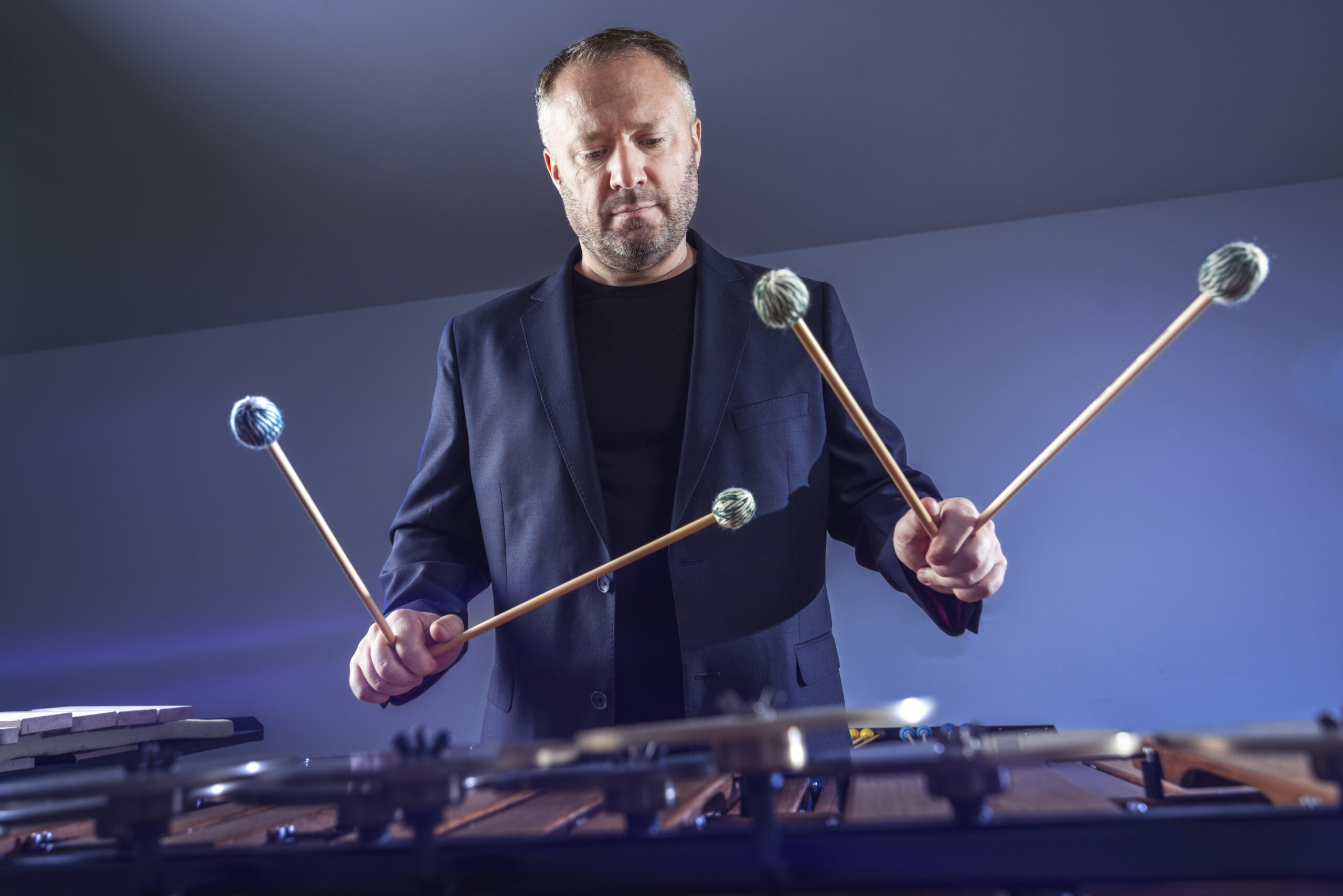
Colin Currie playing percussion

KEVIN VOLANS Asanga (7’)
DAVID HORNE Pulse (12’)
ANDY AKIHO Spiel (7’)
BRYCE DESSNER Tromp Miniature (7’)
ROLF WALLIN Realismos Magicos (10’)
ANDY AKIHO Aluminous (8’)
ROBERT HONSTEIN Continuous Interior (18’)
SAM ADAMS Sundial (16’) 

Virtuoso percussionist Colin Currie, described by Steve Reich as “one of the greatest musicians in the world today” and by Gramophone as “at the summit of percussion performance”, is joined by members of Ensemble 360 for this concert of life-affirming music for percussion and string quartet. Highlights include ‘Tromp Miniature’, a hypnotic, meditative marimba solo by GRAMMY-winning composer Bryce Dessner (also guitarist with rock band, The National), and Andy Akiho’s ‘Aluminous’, in which minimalist percussion loops are underscored by ravishingly expressive strings.  

Part of our Percussion, Pattern & Primes weekend. 

Save 20% when you book for 10 or more Music in the Round Sheffield concerts in one transaction. 
Save 10% when you book for 5 or more Music in the Round Sheffield concerts in one transaction. Find out more. 

VOLANS Kevin, Asanga

The Sanskrit title Asanga means ‘freedom from attachment’ I wrote the piece as a gift for Robyn Schulkowsky on the death of her father. It was written with no conscious techniques or concept. The first performance was in Stockholm in 1998.

© Kevin Volans

HONSTEIN Robert, Continuous Interior

Imagine walking through a shopping mall, a large warehouse, an airport terminal, Ikea. These are spaces with seemingly no end or beginning. They unfold in one unbroken path, creating a sense of limitless interior within a bounded, enclosed space. As you walk details change, but the feeling of being within the same, vast, open space remains. This is a very modern feeling. In thinking about this, I felt resonance with the idea of moving through a musical space. I often experience music similarly: contained by the form, yet also a sense of being within one stretch of a long, continuous stream of musical thought. For my piece, Continuous Interior, I imagined a stroll through this kind of limitless space, with each movement being a stop along the way. On this walk we experience three distinct places. The first movement draws out waves of rocking strings against a ringing vibraphone texture. Long lines emerge as echoes of accented  ibraphone tones float plaintively above the undulating string texture. The second movement is slow and lyrical, somewhat wistful yet also mysterious and dreamy. The final movement pushes forward with a churning, dance-like energy, reveling in the vibraphone sound against the clock-like, mechanical pulsation of the string quartet. The piece ends, certainly, but perhaps it could also go on and on.

© Robert Honstein

ADAMS Samuel, Sundial

Sundial, scored for string quartet and percussion, engages with the tradition of works for string quartet ‘plus one’—works like W.A. Mozart’s Clarinet Quintet, Franz Schubert’s Cello Quintet D956, not to mention the numerous piano quintets.

Like much of my recent music, this work explores ideas of resonance and brightness. I treat the five voices a little bit like a sustain pedal on a piano. In many passages, the strings elongate the percussion sounds and vice versa, so much so that the instruments on stage might sound like one polyphonic organism arranged not in a hierarchy but in a symbiotic web in which the roles of the instruments are balanced and consistently in flux.

The form possesses a shape similar to its namesake: the five musicians project a series of musical shadows that, unbroken, reveal the passage of time in the shape of an inverted arc. The work is made of two distinct types of music: rocking music—fast, pulsing dual harmonies that sway back and forth—and cyclic music—slightly off-kilter contrapuntal figurations that blossom over long stretches of time. Only in the final minutes of the work does the music break out of these two types of material, ascending to a ringing, intensely bright conclusion.

Although the piece is not explicitly autobiographical, I wrote it during a period that saw a number of immense personal changes, not the least of which was the birth of my first child. The almost blinding joy of having him around has been a counterbalance to the bizarre, shadowy last two years. To me, this duality is the essence of the piece: it is at once a rippling shadow and a meridian sun.

© Samuel Adams

“A five-star percussive performance… Almost as much drama and tension came from seeing what was happening on stage as from the sounds. ”

The Times

FRACTALS AND FUGUES: MATHEMATICS IN MUSIC

Prof Sarah Hart

Channing Hall, Sheffield
Saturday 14 February 2026, 2.00pm

Tickets:
£5 / free for ticket-holders for any of the Percussion, Pattern & Primes concerts, though booking is required

Past Event

What role do magic squares, fractals and probability theory play in music composition? How does pattern underpin a Bach fugue? And why is the mathematics of Pythagoras key to understanding music’s emotional power? Professor Sarah Hart, Professor Emerita of Mathematics at Birkbeck, University of London, and Gresham Professor of Geometry, answers these questions and more as she explores the connections between music and mathematics. Author of ‘Once Upon a Prime’, she is sure to shine an entertaining light onto the intriguing links between numbers and notes. 

Part of our Percussion, Pattern & Primes weekend. 

RELAXED CONCERT: PETER AND THE WOLF

Claire Booth, Ensemble 360 & Nicholas Jubber

Crucible Playhouse, Sheffield
Wednesday 20 May 2026, 2.00pm

Tickets:
£5 / carers free

Book Tickets
Ensemble 360 musicians

RAVEL (arr. Strivens) Shéhérazade (20’)  
PROKOFIEV Peter and the Wolf (30)  
 
For this ‘Relaxed’ concert of storytelling music featuring Prokofiev’s beloved musical folk story, doors will be left open, lights raised, a break-out space provided, and there will be less emphasis on the audience being quiet during the performance.  
 
People with an Autism Spectrum, sensory or communication disorder or learning disability, those with age-related impairments and parents/carers with babies are all especially welcome.

Find out more about what to expect with our Relaxed Performance information pack.

Download

PETER AND THE WOLF & OTHER STORIES

Claire Booth, Ensemble 360 & Nicholas Jubber

Crucible Playhouse, Sheffield
Wednesday 20 May 2026, 5.00pm

Tickets:
£23
£14 UC, PIP & DLA
£5 Students & Under 35s

Book Tickets
Ensemble 360 musicians

DEBUSSY Danse Sacrée et Profane (10’) 
RAVEL (arr. Strivens) Shéhérazade (20’)
DEBUSSY Trio for Flute, Viola and Harp (16’) 
PROKOFIEV ‘Peter and the Wolf’ (30’)

Timeless tales of far-off adventure and daring triumphs have long inspired composers to bring stories to life through music.  

Prokofiev’s beloved symphonic tale, ‘Peter and the Wolf’, delights audiences of all ages, with its story of the fearless Peter and his encounter with a ferocious wolf, narrated here by storyteller and author Nicholas Jubber.  

Ravel’s ‘Shéhérazade’ (in an intimate chamber arrangement) evocatively conjures an ancient wonderland of fairytales and lovers through captivating melodies.  

Music for harp and strings by Debussy completes this charming programme. 

Save 20% when you book for 10 or more Music in the Round Sheffield concerts in one transaction. 
Save 10% when you book for 5 or more Music in the Round Sheffield concerts in one transaction. Find out more. 

DEBUSSY Claude, Sonata for Flute, Viola and Harp

Pastorale 
Interlude 
Finale 
 

Debussy originally planned a set of six instrumental sonatas but only lived to complete three of them. The first was for cello and piano (August 1915), the third for violin and piano (finished in April 1917), but in terms of instrumentation the most unusual of the three was the second sonata, scored for flute, viola and harp. Debussy completed it in October 1915 at the end of a productive summer spent on the Normandy coast, and the first performance took place on 7 November in Boston, Massachusetts. Debussy heard the work for the first time a month later, on 10 December, when it was given in Paris at one of the concerts put on by his publisher Durand. The viola part was played on that occasion by Darius Milhaud. 


The work was inspired by the clarity and elegant proportions of French Baroque music, but the musical language is very much of its own time. The ethereal Pastorale is based on fragmentary but distinctive musical ideas, while the central Interlude, delicately coloured in places by whole-tone harmonies, is marked ‘Tempo di minuetto’ – the most obvious nod to the Baroque. The finale is directed to be played ‘Allegro moderato ma risoluto’ and the muscular quality of the ideas presented at the start dominate the movement. There’s a brief recollection of the ‘Pastorale’ before a short, exultant coda. 


© Nigel Simeone